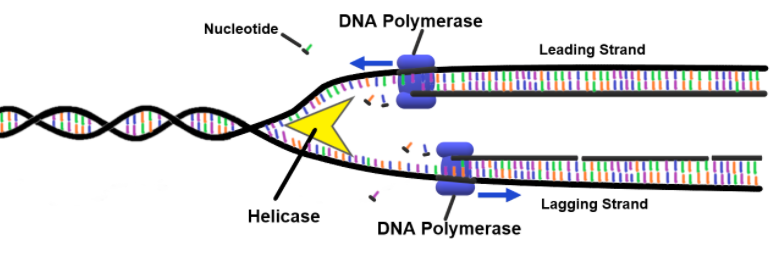
Match the description to the image. (Not in Order)
| Draggable item | arrow_right_alt | Corresponding Item |
|---|---|---|
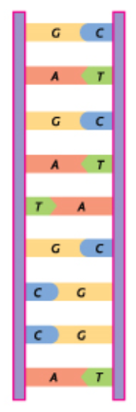
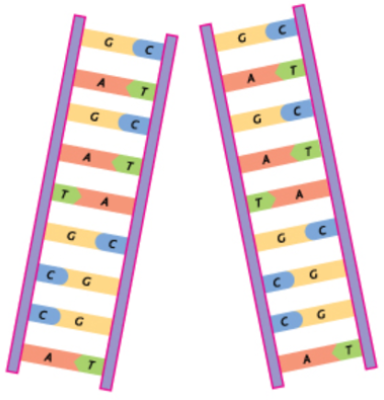
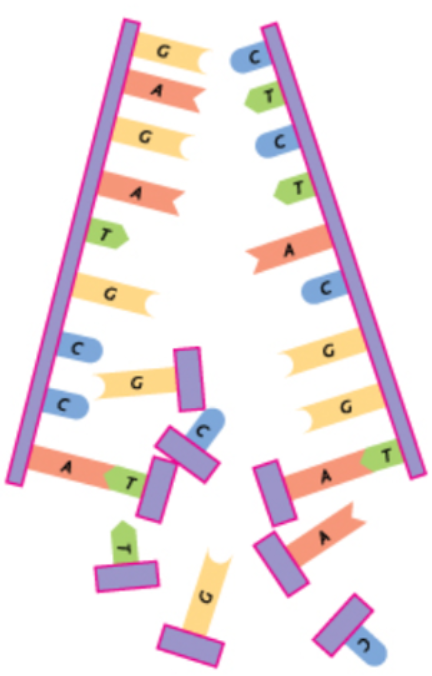
Two complete DNA molecules after replication has occurred. | arrow_right_alt | |
DNA Polymerase matches complementary nucleotides to the unzipped DNA. | arrow_right_alt | |
The original DNA molecule before replication has occurred. | arrow_right_alt | |
DNA Helicase unzips the DNA. | arrow_right_alt |
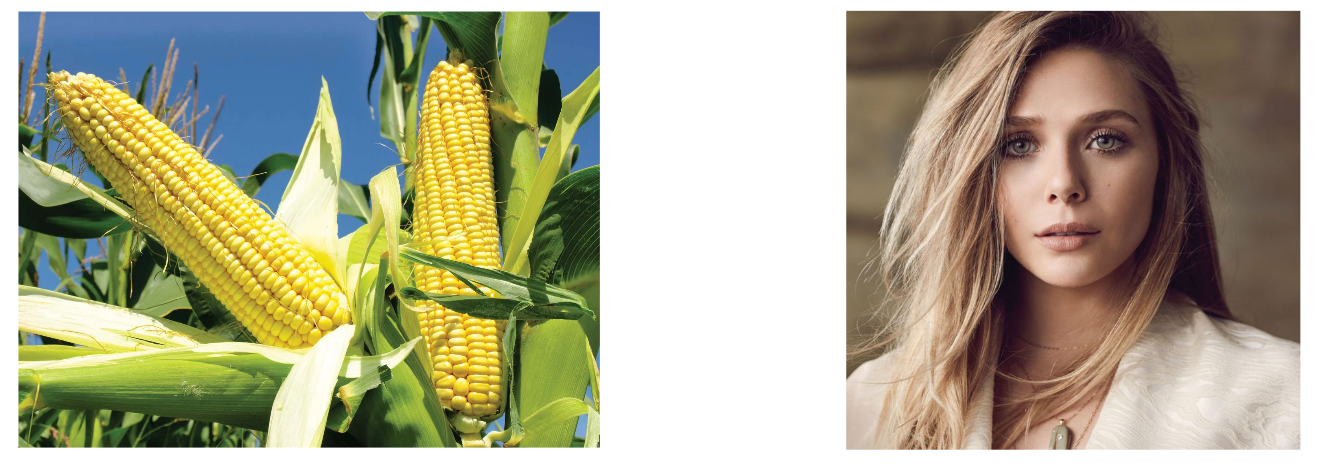
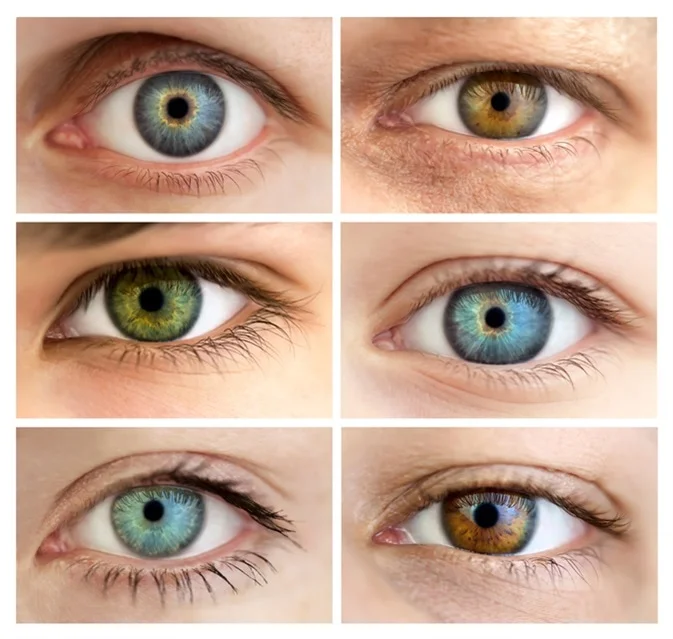
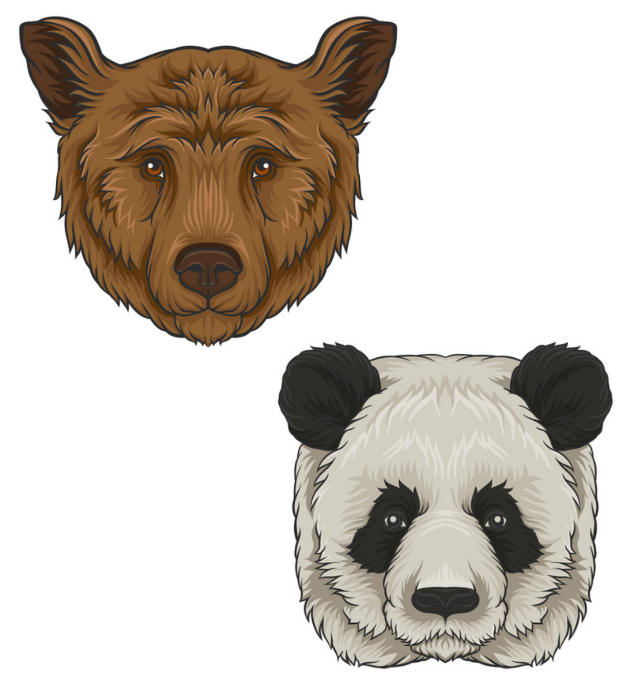
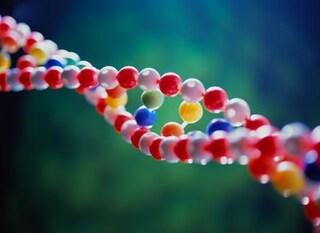
What do these have in common?
What determines the appearance of traits?
What part of DNA codes for traits?
Why is DNA important?
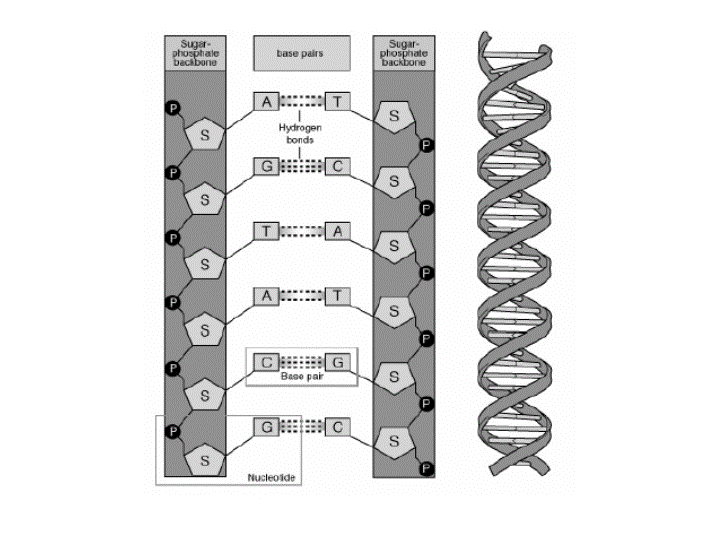
Which 2 molecules form the backbone (sides) of the DNA double helix?
What are the components of a DNA nucleotide?
The nitrogen bases (letters) on the inside of a DNA molecule are connected by which type of bond?
Match the Nitrogen Base on the left with its complementary base pair on the right.
| Draggable item | arrow_right_alt | Corresponding Item |
|---|---|---|
Cytosine (C) | arrow_right_alt | Thymine (T) |
Adenine (A) | arrow_right_alt | Cytosine (C) |
Guanine (G) | arrow_right_alt | Adenine (A) |
Thymine (T) | arrow_right_alt | Guanine (G) |
What is the significance of the sequence (order) of the nitrogen bases in DNA?
Which part of a DNA molecule actually codes (provides instructions) for your traits?
How is the evolution of RNA to DNA similar to the evolution of Prokaryotic cells to Eukaryotic cells?
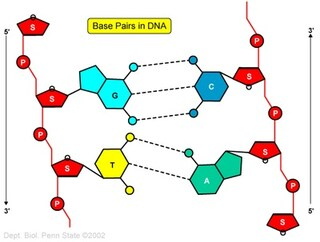
Each strand of a DNA molecule contains nitrogenous (nitrogen) bases that pair with other nitrogenous (nitrogen) bases in a very specific way. A diagram of a section of DNA is shown below.
Which DNA strand is complementary to the one shown above?
Differences in traits, such as hair color, are determined by differences in...
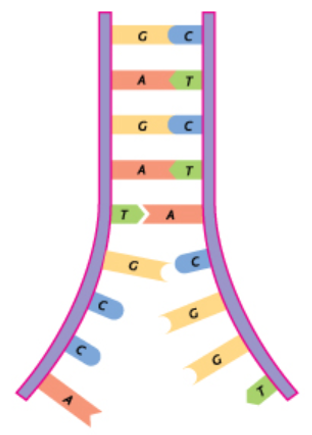
The diagram below represents an important cellular process that must occur in all cells.
In the image above, a is being produced. This process is called
Which property is shared by the cells of all living things?
Put the correct function with the correct part of the DNA
In charge of holding the genetic information | In charge of giving the DNA molecule structure | Holds the two complementary strands together | |
|---|---|---|---|
Hydrogen Bonds | |||
Nitrogen Bases | |||
Sugar - phosphate backbone |
Which of the following is #17?
Which of the following is #18?
Which of the following is #19?
Which of the following is #20?