Match the vocabulary terms to their definition.
| Draggable item | arrow_right_alt | Corresponding Item |
|---|---|---|
Active Transport | arrow_right_alt | The process of molecules moving into and out of the cell. |
Equilibrium | arrow_right_alt | When molecules move from a high concentration to a low concentration until equilibrium is reached - without energy. |
Passive Transport | arrow_right_alt | When molecules are moved from a low concentration to a high concentration - using energy. |
Cell Transport | arrow_right_alt | The state of balance of molecules across a cellular membrane. |
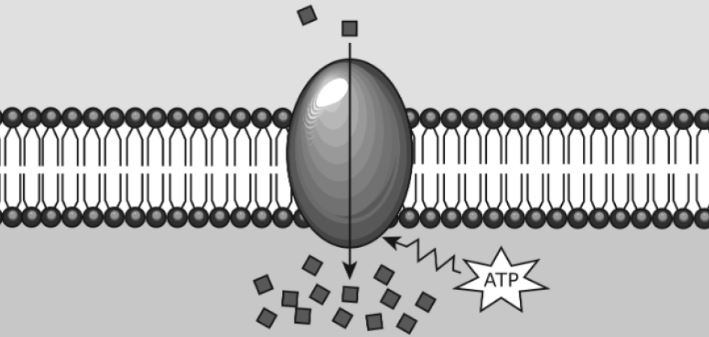
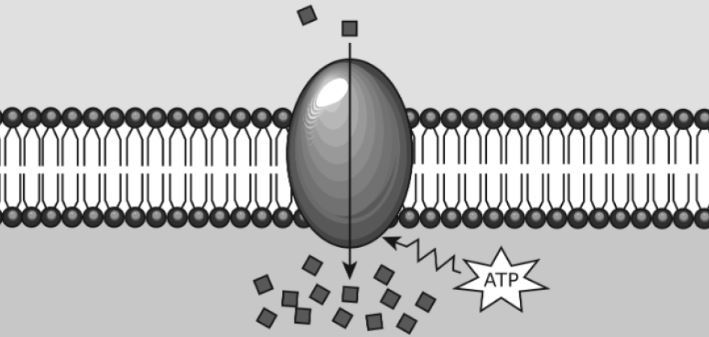
The diagram below shows activity occuring across the plasma membrane (cell membrane).
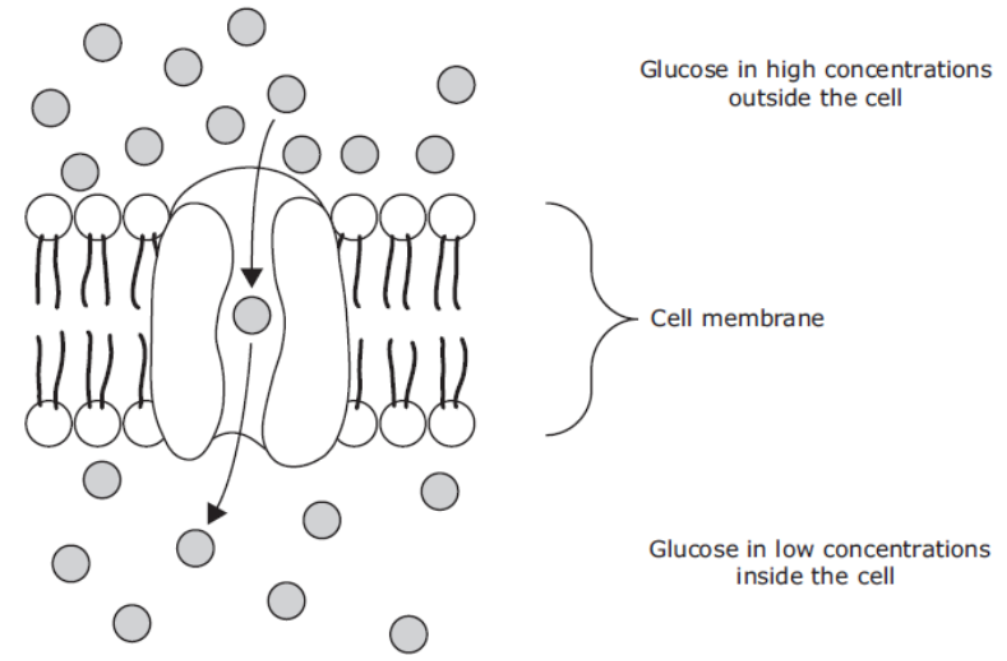
Which two processes does this diagram model?
Which of the following correctly identifies how the cell membrane contributes to the maintenance of cellular homeostasis?
Determine which characteristic applies to each type of cell transport.
Select the correct answer in each row.
Molecules move from HIGH to LOW concentration | Energy is Needed | |
|---|---|---|
Osmosis | ||
Facilitated Diffusion | ||
Protein Pump | ||
Endo/Exocytosis |
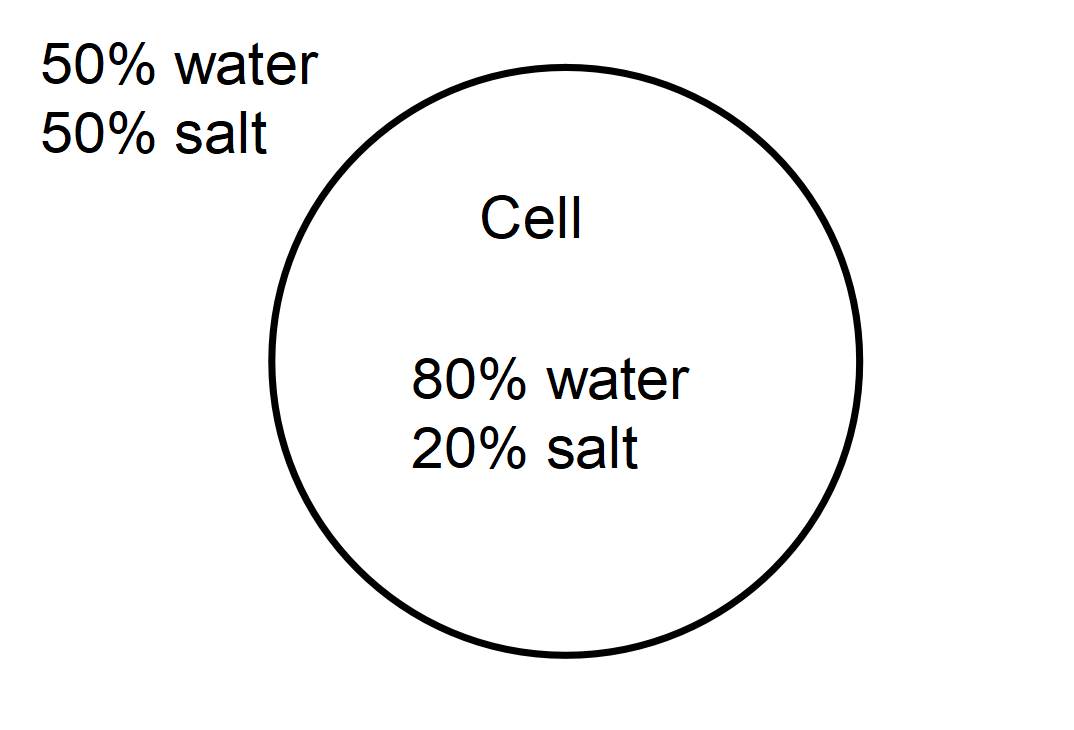
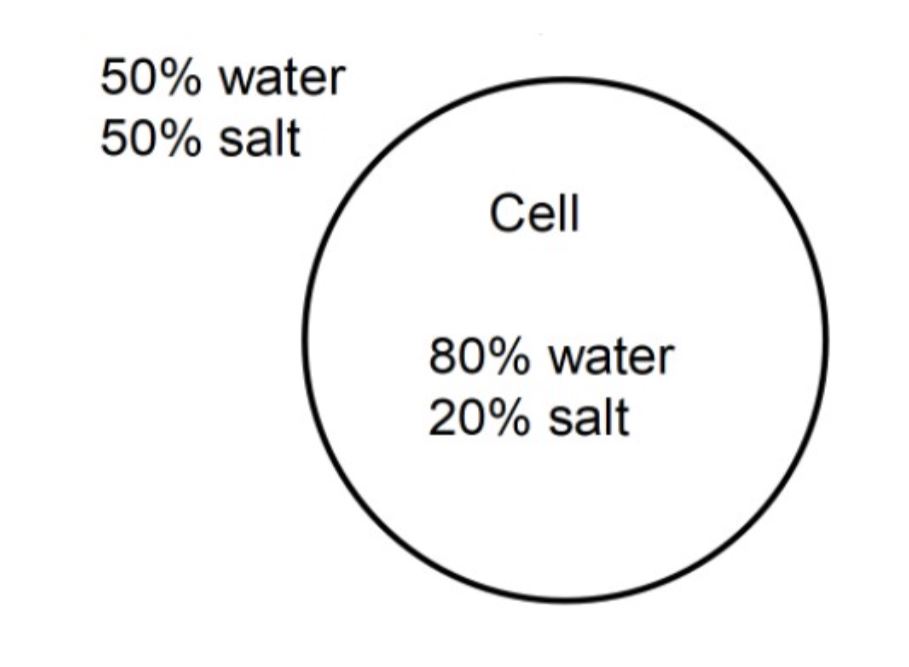
The diagram below shows a cell that is placed into a salt-water environment.
Move ONE correct answer to each box. Not all answer choices will be used.
The diagram below shows a cell that is placed into a salt-water environment.
Based on this information, which of the following statements is TRUE?
AFTER passive cell transport has occurred, which of the following is TRUE?
Label the diagram below.
Move ONE correct answer to each box. Not all answer choices will be used.
Identify the concentrations observed in the diagram below.
Move ONE correct answer to each box. Not all answer choices will be used.
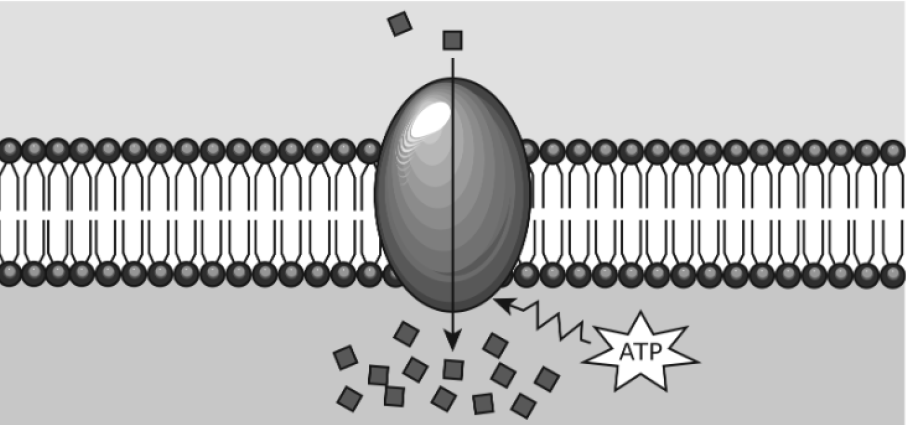
Complete the sentence below by selecting the correct answers from the drop-down menus.
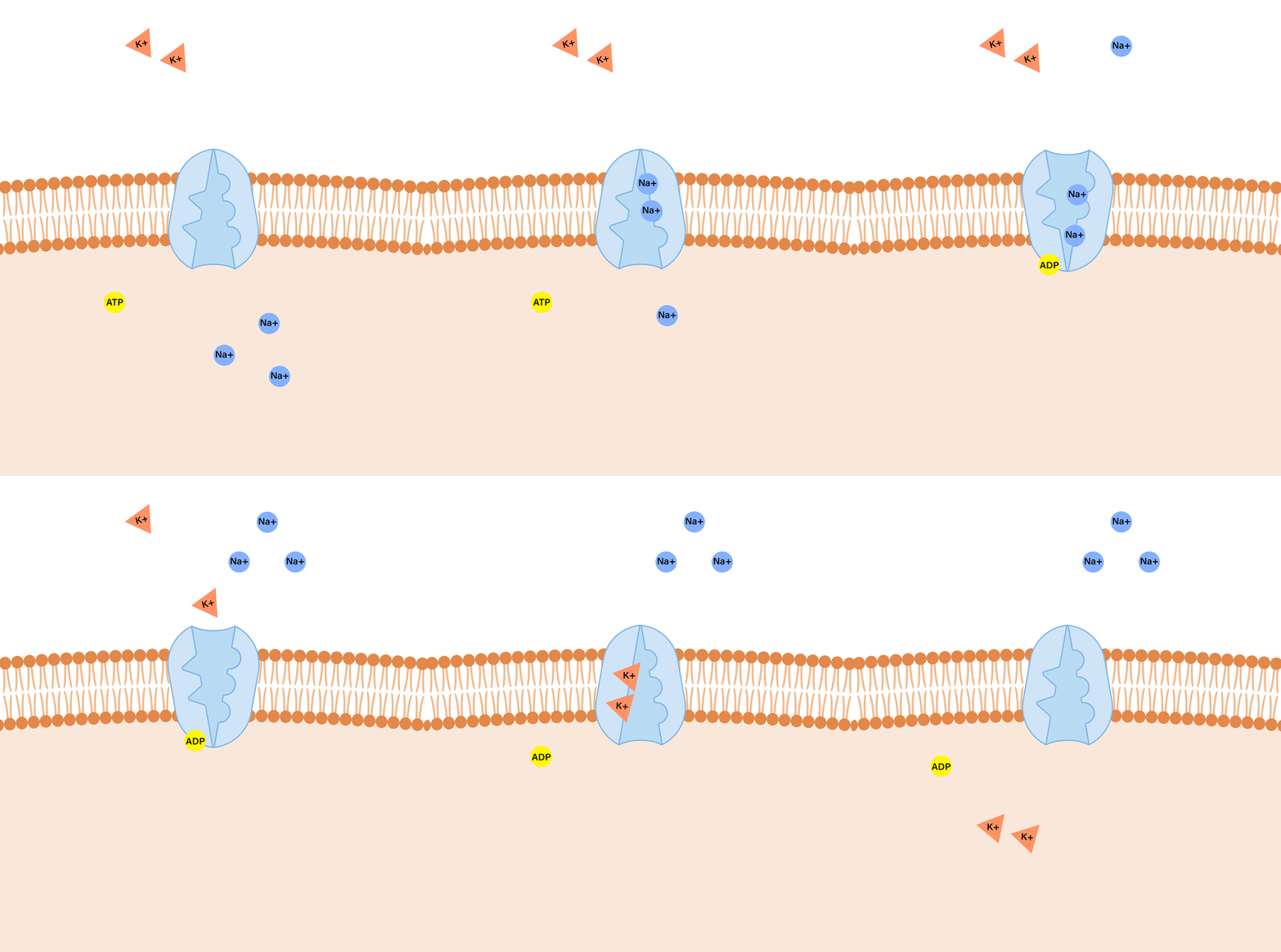
is shown above because energy is being used to move molecules against the concentration gradient from a concentration.
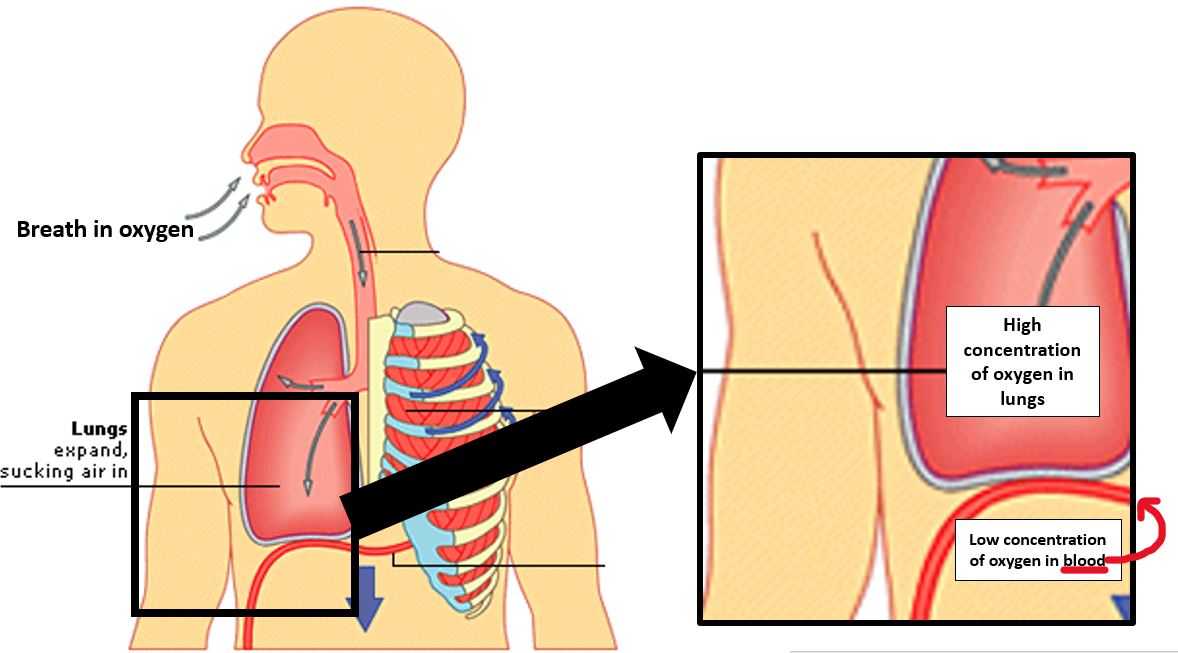
The lungs exchange gas with our blood to maintain homeostasis. When we breathe in, there is a high concentration of oxygen in our lungs and a low concentration of oxygen in our blood. Because of this, the oxygen molecules move from the lungs into the blood.
This movement of oxygen molecules from a high to low concentration is an example of what type of cell transport?

In order to send electrical signals throughout the body, the cell membrane must use energy to send sodium ions (Na+) from a low concentration inside the cell to a high concentration outside the cell.
This is an example of which method of transport?