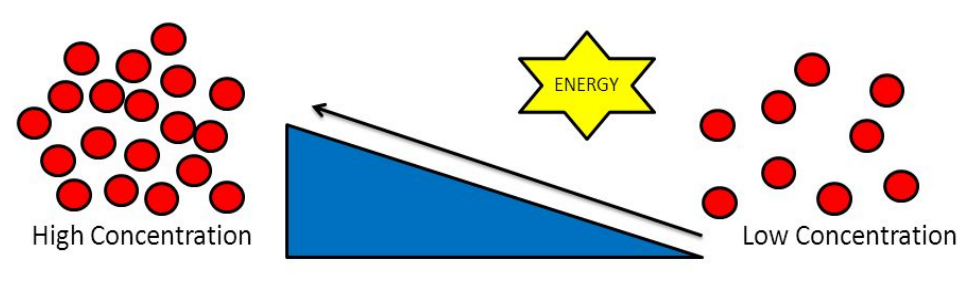
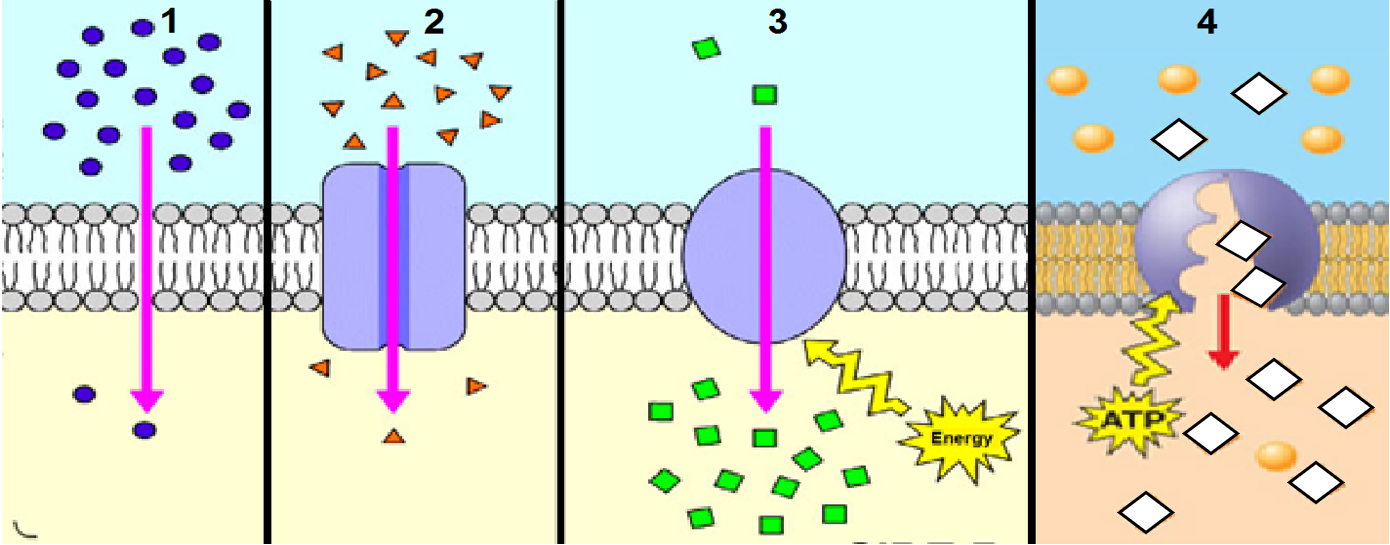
Identify the membrane proteins below:
Andre svarmuligheder:
Protein Pump
Diffusion
Facilitated Diffusion
Osmosis
Which type of molecule forms the MAJORITY (most) of the cell membrane?
How does the cell membrane maintain homeostasis for the cell?
Determine if the following statements are for Passive Transport or Active Transport:
Passive Transport | Active Transport | |
|---|---|---|
No energy is required | ||
Requires energy | ||
Does NOT end in equilibrium | ||
Ends in equilibrium | ||
Molecules move from LOW --> HIGH concentration | ||
Molecules move from HIGH --> LOW concentration |
Determine if the following examples are for Passive Transport or Active Transport:
Passive Transport | Active Transport | |
|---|---|---|
Endocytosis | ||
Diffusion | ||
Protein Pump | ||
Exocytosis | ||
Osmosis | ||
Facilitated Diffusion |
Identify the membrane proteins below:
Identify the following examples of cell transport:
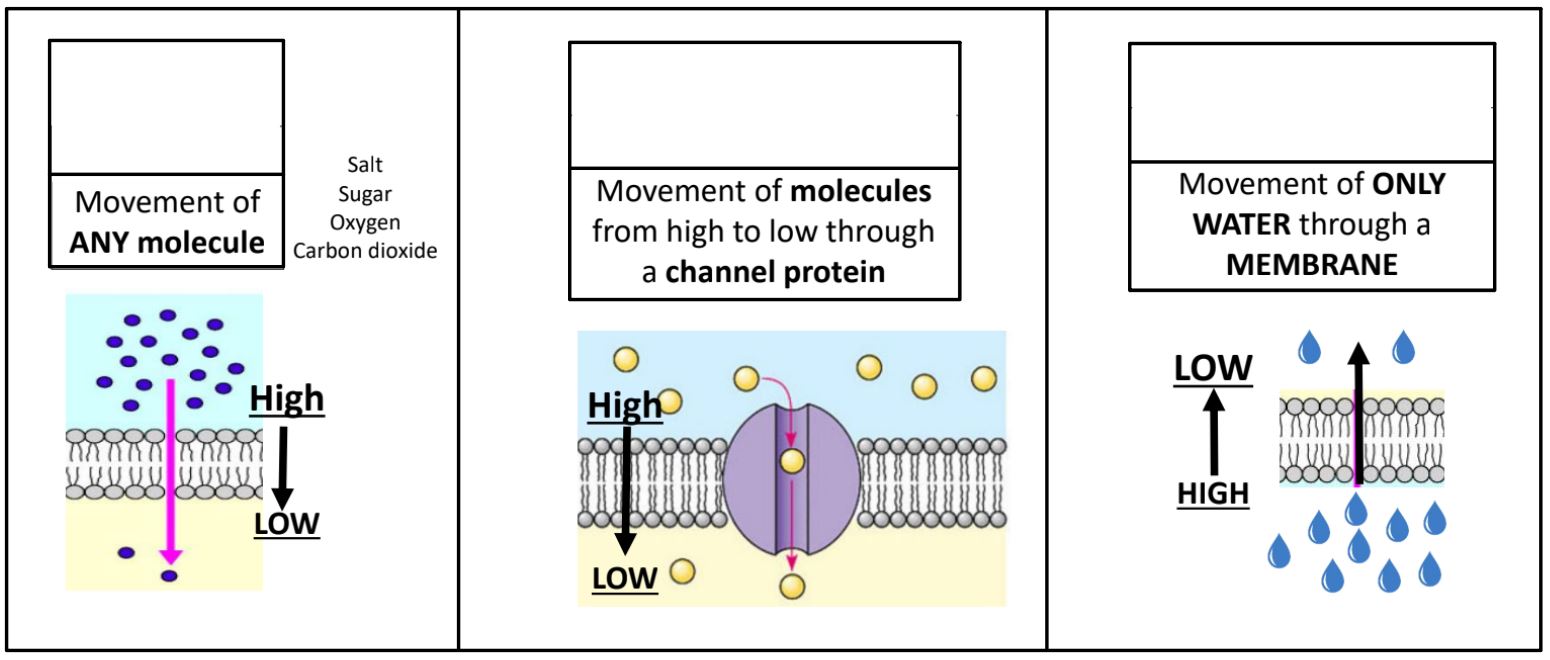
Identify the following examples of cell transport:
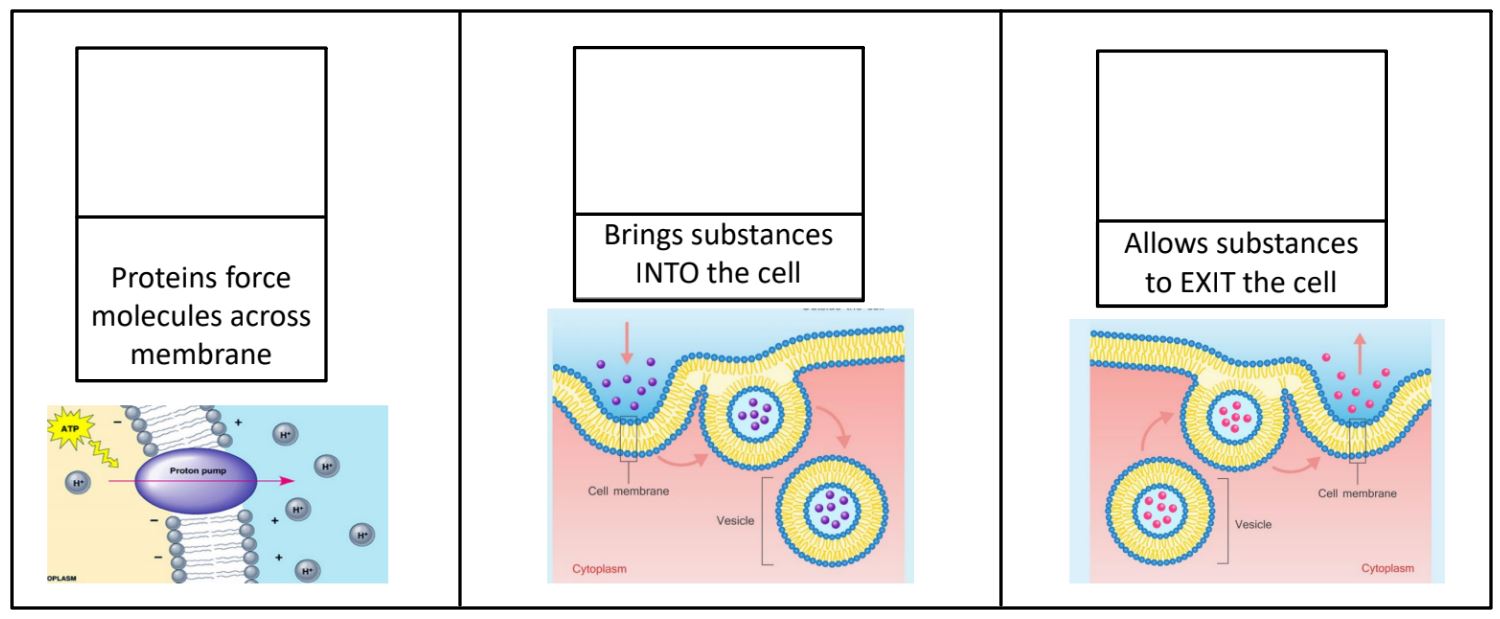
Which option below best describes the concentration of molecules after passive transport?
Complete the following statement to describe active transport:
After active transport, there is concentration of molecules on one side of the cell membrane because molecules have moved .
Complete the diagram below to compare and contrast Passive Transport vs Active Transport
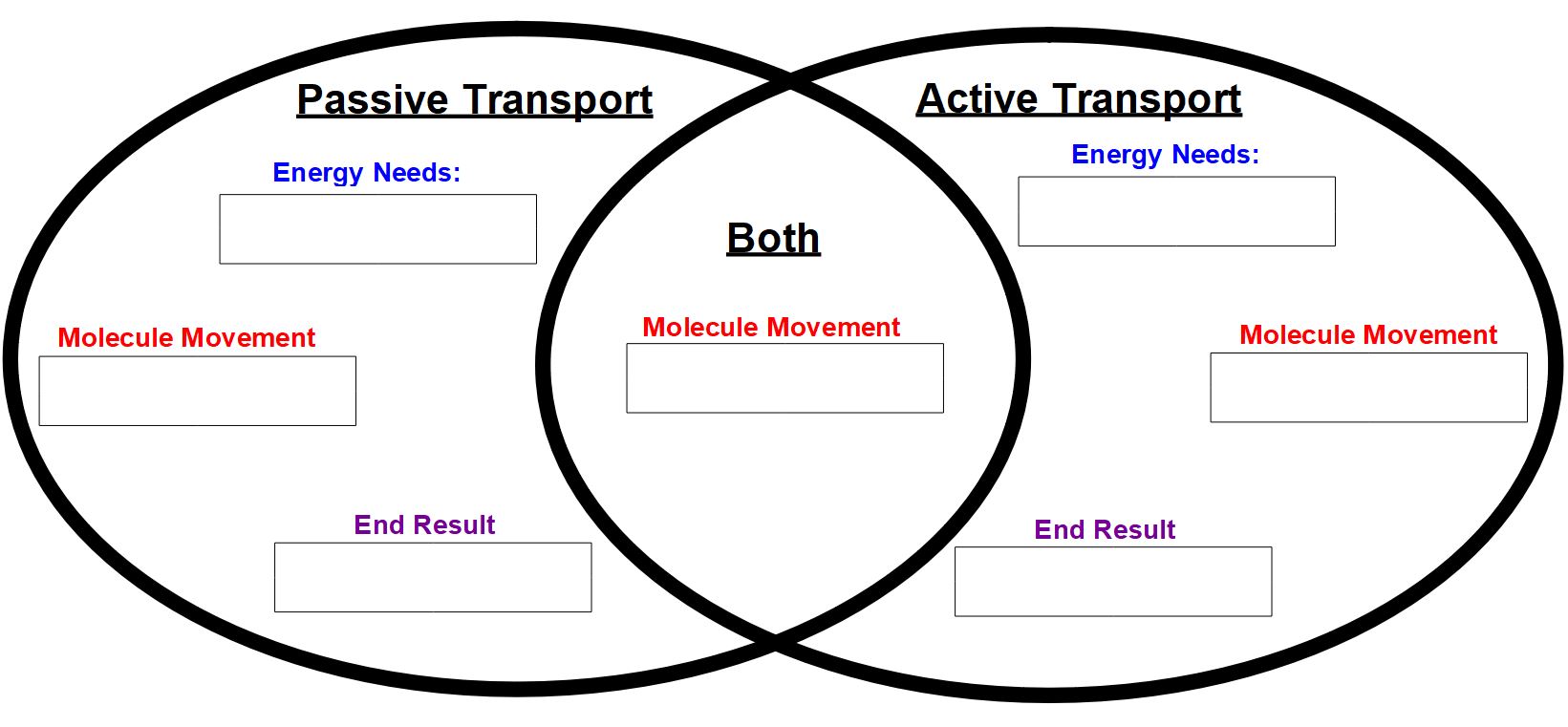
No energy needed
Equilibrium
No equilibrium
Needs energy
Which of the following best describes Passive Cell Transport?
Which of the following best describes Active Cell Transport?
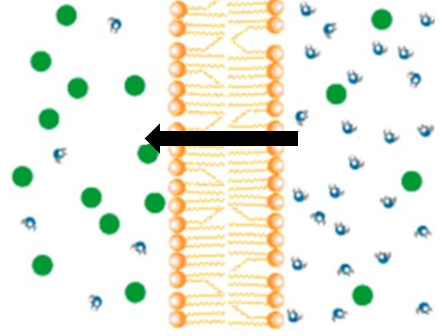
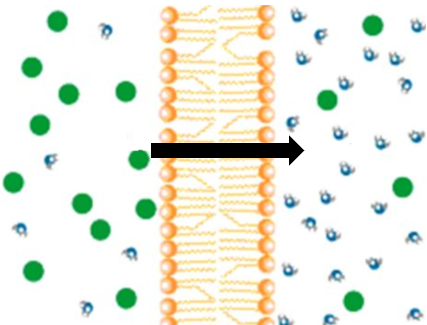
Based on the fact that the BLUE molecules are WATER molecules, which process does this picture best represent?
Based on the fact that the GREEN molecules are OXYGEN molecules, which process does this picture best represent?
Based on the fact that the GREEN molecules are GLUCOSE molecules, which process does this picture best represent?
As the concentration of molecules outside of the cell increases, more molecules will enter the cell, because...
A watermelon, which is made up of about 94% water, is placed into a sugar-water solution that contains 30% sugar.
What is the concentration of WATER inside and outside the cell?
Move ONE correct answer to each box.
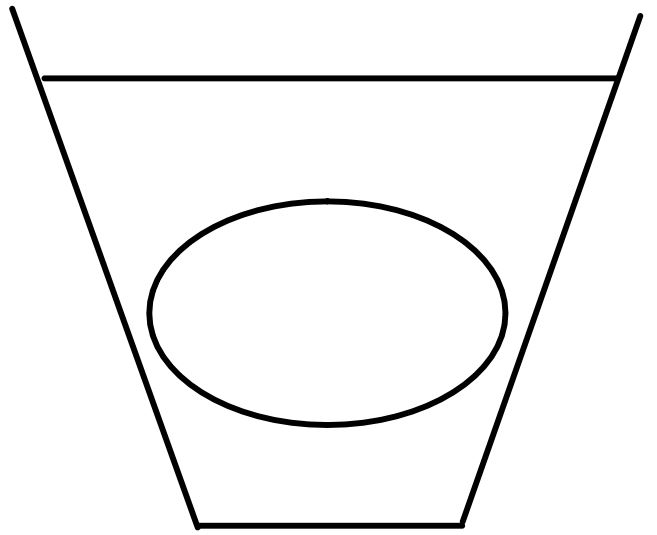
A watermelon, which is made up of about 94% water, is placed into a sugar-water solution that contains 30% sugar.
Determine the HIGH concentration, LOW concentration, and DIRECTION (arrow) water will move.
Move ONE correct answer to each box.


What will happen to the size of the watermelon and why?
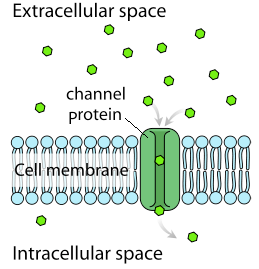
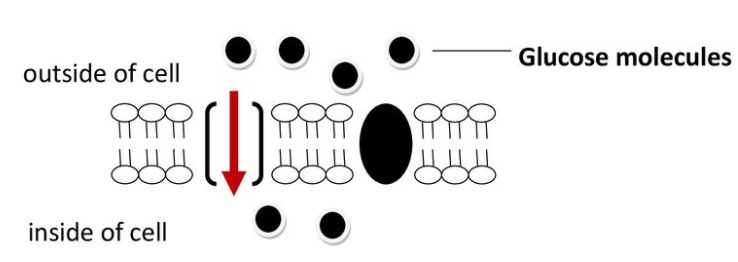
The diagram below shows how glucose molecules move down a concentration gradient to enter a cell with the help of transport proteins (protein channels). What type of transport is this?
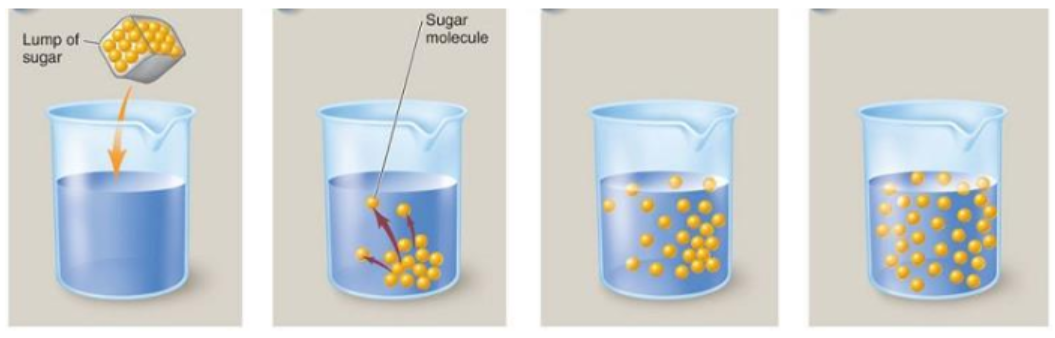
As a result of diffusion, the concentration of many types of substances...
Refer to the illustration below. This process is known as...
Proteins that serves as tunnels for specific substances through the phospholipid bilayer are known as...
Glucose molecules want to move from a high concentration outside of the cell to a low concentration inside of the cell. However, glucose molecules are too large to enter the cell membrane through the holes between the phospholipids.
Instead, they must cross the cell membrane by...
Which of the following does NOT require the use of energy?
Unlike passive transport, active transport...
Which of the following is a form of active transport?
Molecules that are too large to be moved across the cell membrane can be brought into the cell by...
Molecules that are too large to be moved across the cell membrane can be removed from (taken out of) the cell by...
Label the concentrations in the diagram below.
Move ONE correct answer to each box. Not all answer choices will be used.
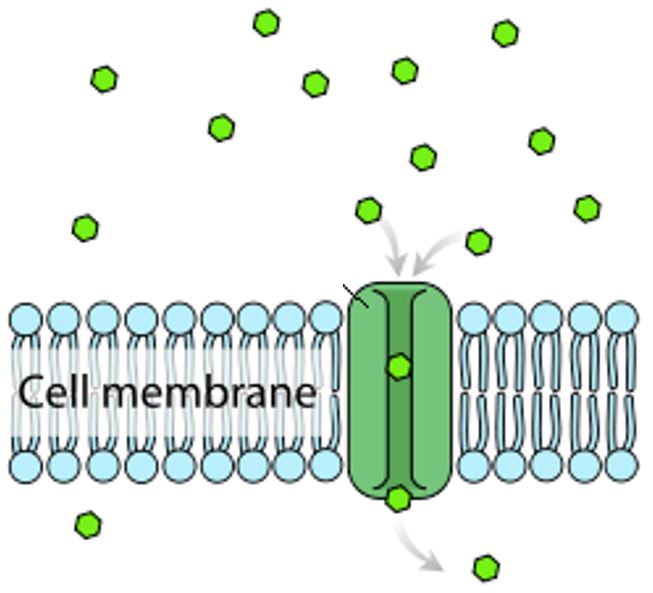
Label the structures in the diagram below.
Move ONE correct answer to each box. Not all answer choices will be used.
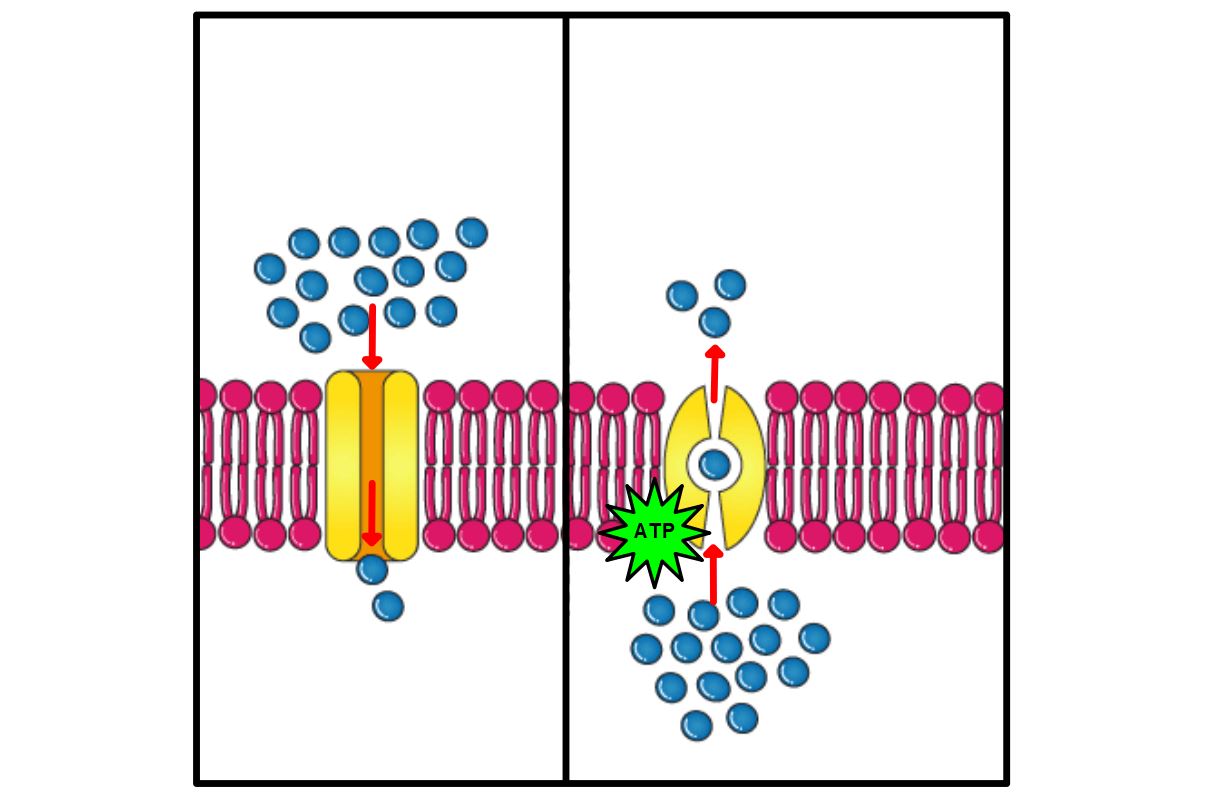
Which section(s) represent Passive Cell Transport? (SELECT ALL THAT APPLY!)
Which section(s) represent Active Cell Transport? (SELECT ALL THAT APPLY!)
Which section(s) represent the use of a PROTEIN CHANNEL? (SELECT ALL THAT APPLY!)
Which section(s) represent the use of a PROTEIN PUMP? (SELECT ALL THAT APPLY!)
Which section(s) would end in EQUILIBRIUM? (SELECT ALL THAT APPLY!)
Label each type of cell transport below.
Move ONE correct answer to each box.
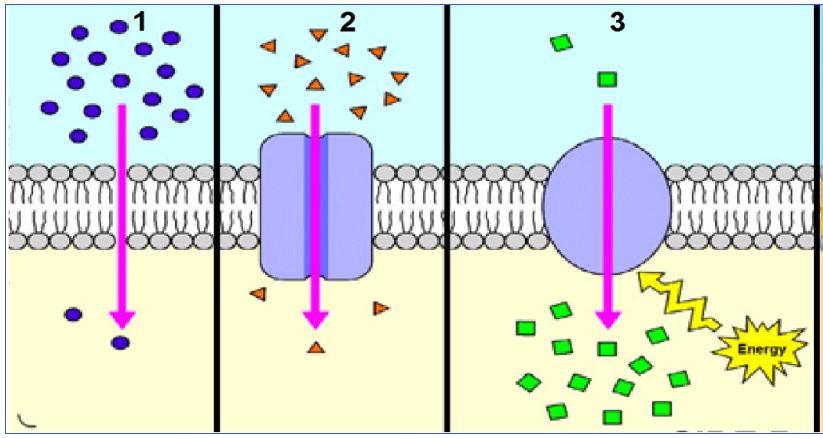
Read the following characteristics and determine whether it is diffusion or osmosis.
Diffusion | Osmosis | |
|---|---|---|
Movement of ANY molecule from high to low concentation | ||
Movement of water molecule across a selectively permeable membrane from high to low concentration |
Read the following characteristics and determine whether it is active transport or passive transport.
Active Transport | Passive Transport | |
|---|---|---|
Requires energy input by the cell | ||
Molecules move along (down) a concentration gradient from a high to low concentration | ||
Molecules move against (up) a concentration gradient from a low to high concentration | ||
No energy required |
Read the following characteristics and determine whether it is diffusion or osmosis.
Diffusion | Osmosis | |
|---|---|---|
The movement of CO2 molecules across a cell membrane. | ||
The movement of H2O molecules across a cell membrane. | ||
The movement of C6H12O6 molecules across a cell membrane. |