As shown in the picture, the cell membrane is made of two layers of fat molecules. The main function of this organelle is to control what molecules enter and leave the cell so that the cell can maintain homeostasis.
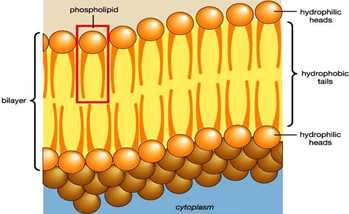
The are the most important biomolecule for maintaining the cell's internal balance.

Antibiotics are medicines that treat infections by killing bacteria. Some antibiotics work by piercing holes in the cell membrane of bacteria.
What effect would piercing holes in the CELL MEMBRANE of a bacteria have?
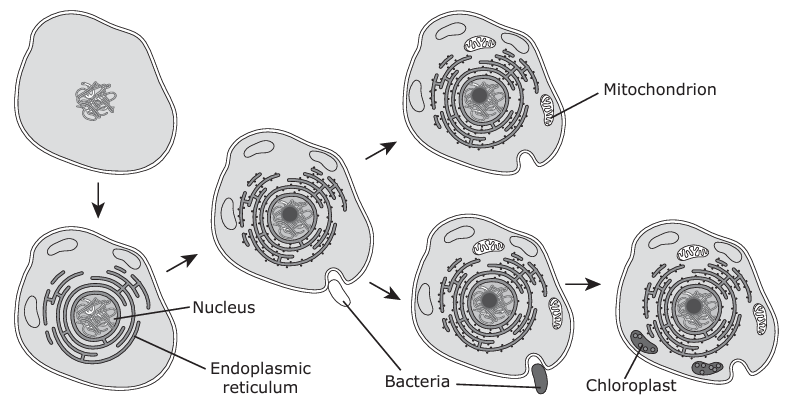
The diagram represents the endosymbiotic theory.
(Note: Mitochondrion is singular, Mitochondria is plural)
Which of these best describes the endosymbiotic theory?
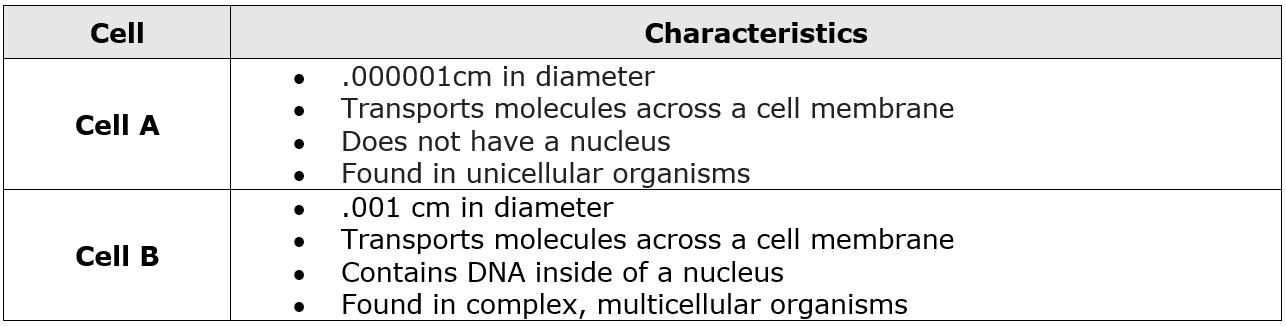
Some students used information they gathered from lab investigations to prepare a table. They entered the table in their lab notebooks.
Which of these correctly identifies the two cells described in the table above?
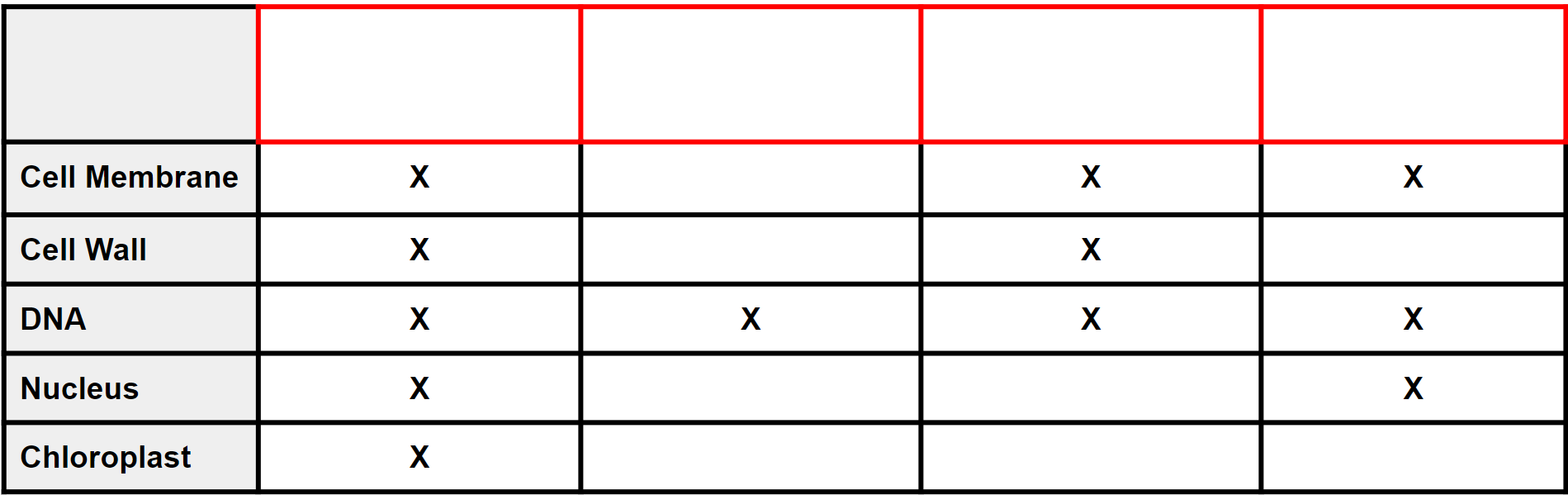
The table below indicates which structures are present in four different pathogens.
Identify which pathogens are shown based on their structures.
Note: The X indicates structures that are present in each pathogen.

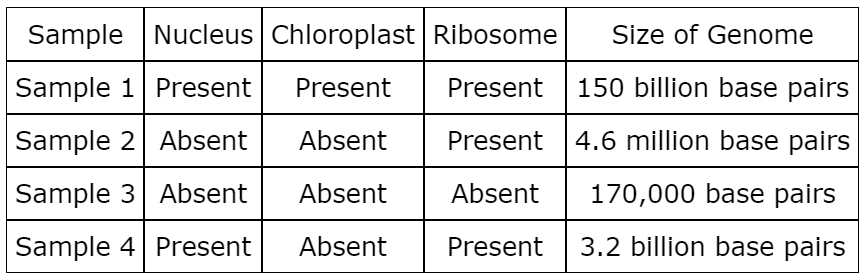
A table comparing the characteristics of four samples is shown.
Which sample most likely contains viruses?
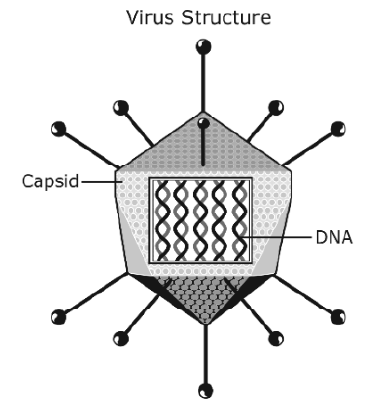
A student produces a labeled drawing of a virus for a presentation. The student states that the capsid has a function similar to the nucleus found in animal cells.
Which of these describes the similar functions of a capsid and a nucleus?
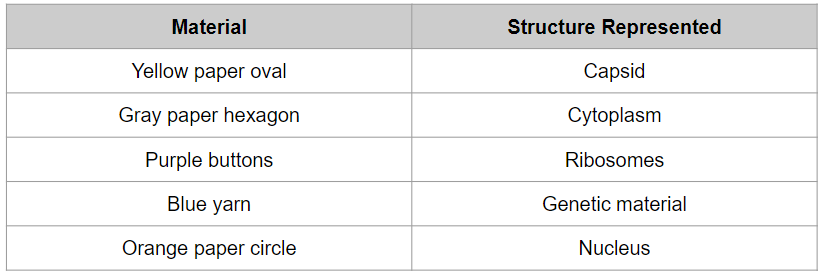
Materials are provided to students to build models of a prokaryotic cell, a eukaryotic cell, and a virus. The materials and the structures they represent are listed in the table shown.
Which material will students use in all three models?
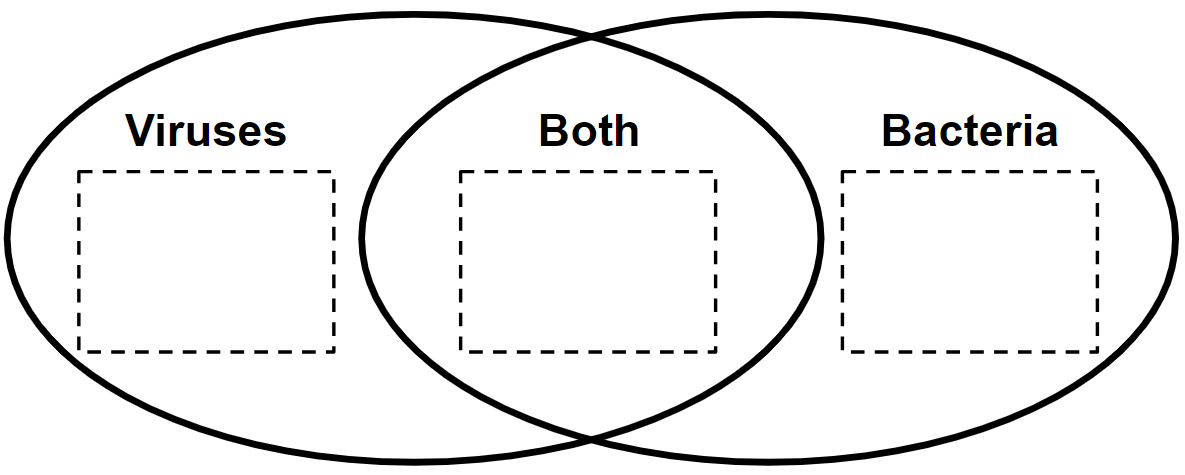
A Venn diagram comparing viruses to bacteria is shown. Which traits apply to each section of the diagram?
Move the answers to the correct boxes.

In 1898 Friedrich Loeffler and Paul Frosch found evidence that the cause of the highly contagious hoof-and-mouth disease in livestock was a microscopic infectious particle. It was discovered that this particle requires a host cell to reproduce.
Which pathogen is most likely responsible for causing hoof-and-mouth disease in livestock?
A student claims that the influenza virus replicates in the air and then infects people.
Is this student correct? Why or why not?
The student is because .
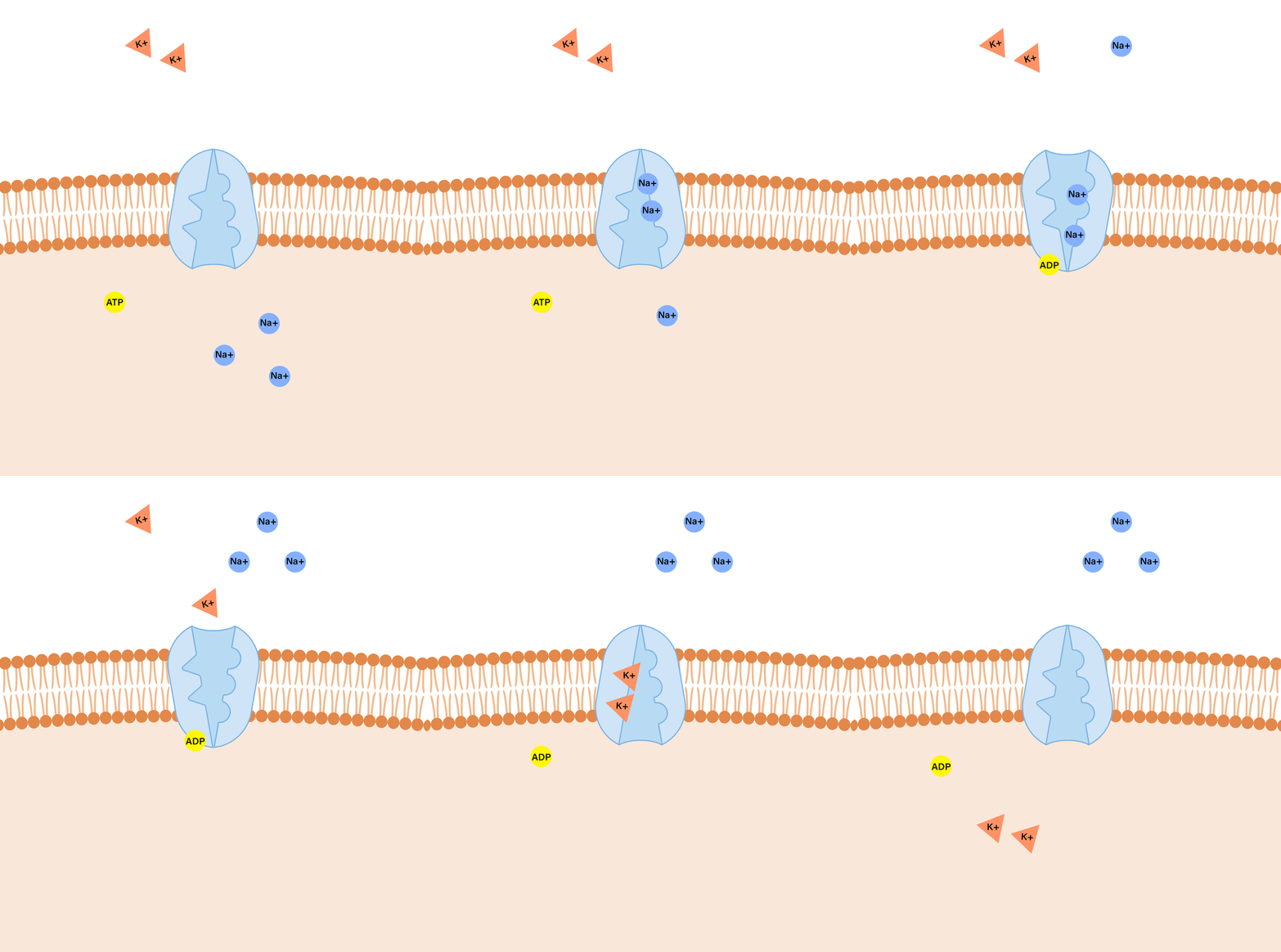
In animal cells, the sodium potassium pump moves sodium and potassium ions against the concentration gradient across the cell membrane.
Is this an example of passive or active transport
AND what does the sodium potassium pump need to transport ions against the concentration gradient?
Read the questions carefully. Then enter your answer in the box provided.
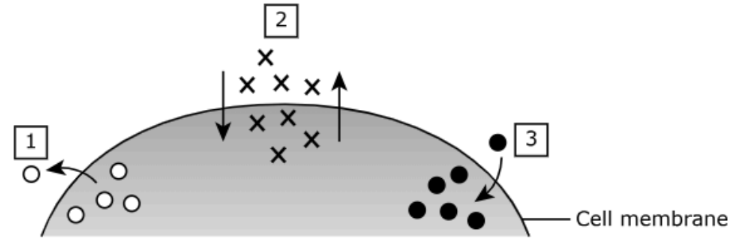
The diagram represents the movement of three different substances across a cell membrane.
Moving which of these substances across the cell membrane requires energy from ATP?
Complete the statement below to describe the difference between passive and active transport.
Passive transport moves molecules across the cell membrane while active transport moves molecules across the cell membrane .
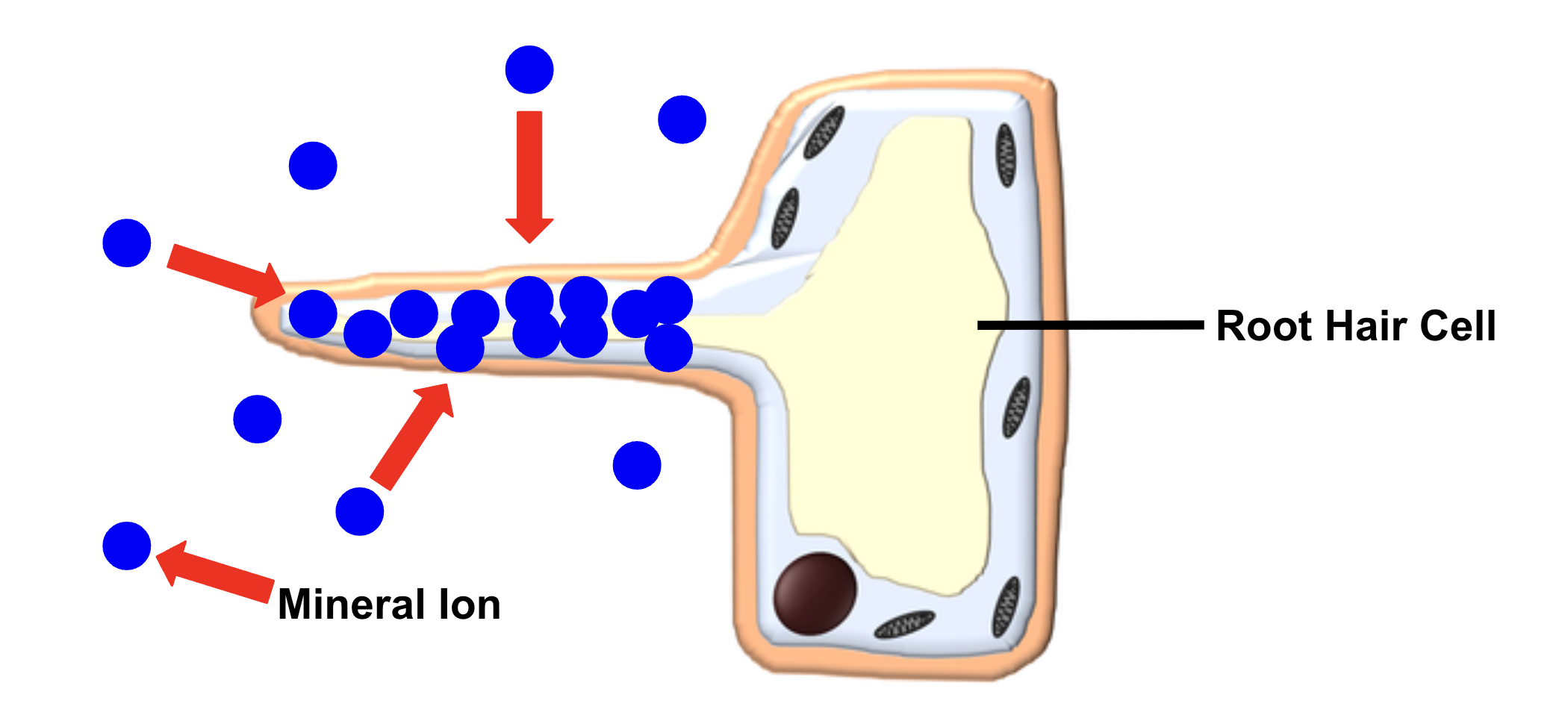
Many plants in the desert have limited access to nutrients and rainfall. As a result, they have specialized cells called root hairs whose job is to take in as many minerals as possible.
The diagram below shows a root hair cell continuously taking in many mineral ions (the blue molecules) into the root hair, even though there is already a high concentration inside the cell.

Mineral absorption is a form of in which molecules move .
Which statement describes the process of osmosis in an animal cell?
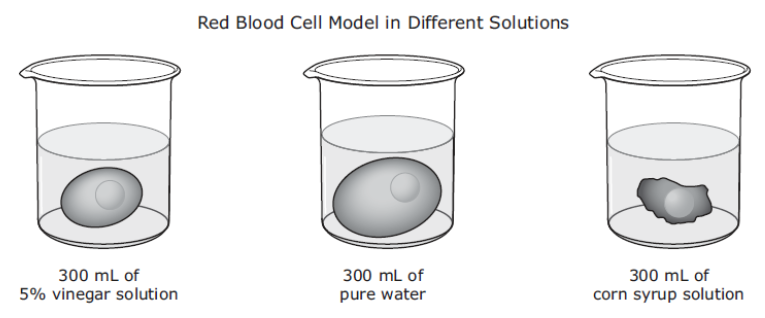
Some students used vinegar to dissolve away the shells of three eggs and used these eggs as models of human red blood cells. The students observed the changes in the eggs when they were placed in different solutions.
Which statement best describes the role of the cell membrane in this model?
Which table correctly describes the lytic and lysogenic cycles?
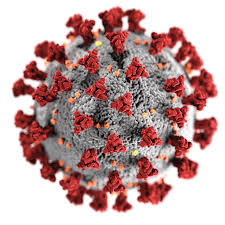
COVID-19 is an illness caused by the coronavirus "SARS-CoV-2". Symptoms include: high fever, dry cough, loss of taste and smell, shortness of breath, fatigue, headaches, and body aches. These symptoms typically occur within two to seven days after infection by the virus.
This information suggests that SARS-CoV-2 reproduces by the…
A person infected with HIV may not have any symptoms for an extended period of time, sometimes up to 10 years after initial exposure to the virus. However, a person with the Ebola virus shows symptoms within days after exposure to the virus.
What can you conclude about the life cycles of these two viruses?
The cellular process known as the sodium-potassium pump was discovered in the 1950's by Jens Christian Skou, a Danish scientist. This process is a form of active transport that moves three sodium ions to the outside of a cell for every two potassium ions that it moves into the cell.
![]()
Which of these best explains why energy is needed for active transport?
A person with swollen gums rinses his mouth with warm salt water, and the swelling decreases. Which of the following has occurred?