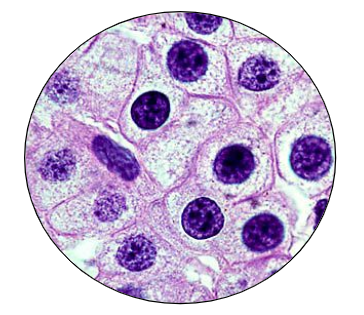
Which of the following conclusions could you draw about the cell shown?

Which of the following conclusions could you draw about the cell shown?
An example of a prokaryotic cell is a _____ cell.
This organelle is found in plant cells but not animal cells
If a cell contains a nucleus, it must be a(n) ____.
Which of the following conclusions could you draw about the cell shown?
Which organelles are involved in energy conversion?
The primary function of the cell wall is to
Which of the following structures serves as the cell's boundary from it's environment?
Which of the following is a function of the cell membrane?
A student groups different types of cells as shown below.
Identify the groups the student created by moving the correct answer to the boxes provided.
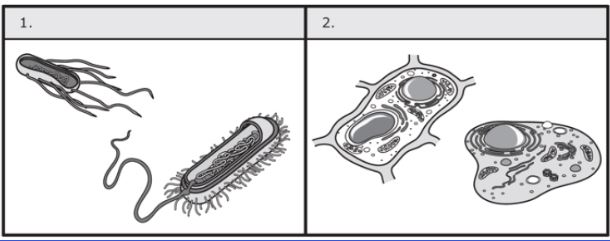
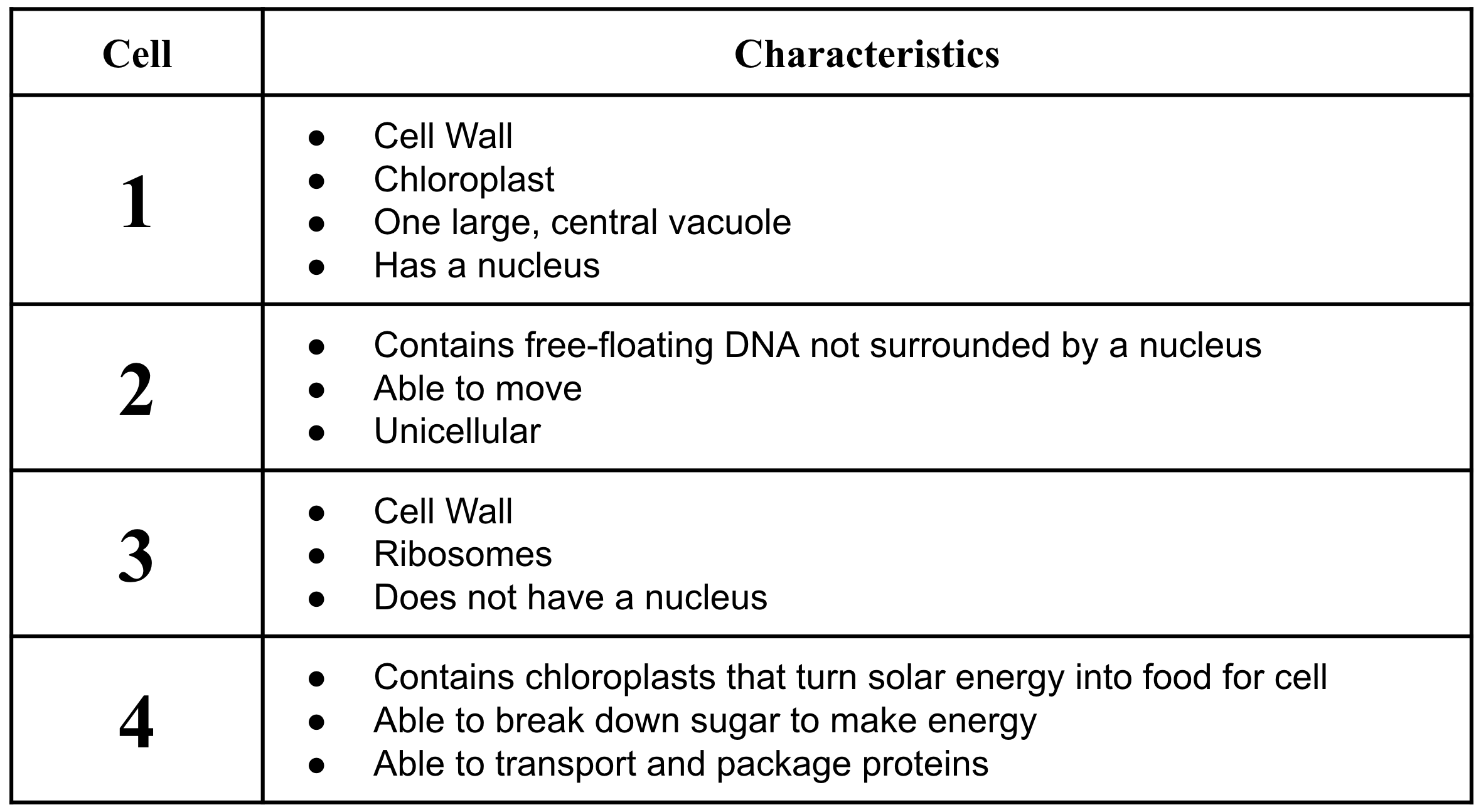
Based on the information in the table below, which of the cell(s) would be classified as EUKARYOTIC?
Select TWO correct answers.
Correctly match the cell organelle to its function (job).
| Draggable emne | arrow_right_alt | Korresponderende emne |
|---|---|---|
Cell Membrane | arrow_right_alt | Provides Instructions for Making Proteins |
Chloroplast | arrow_right_alt | Responsible for making the proteins that build our physical traits. |
Ribosome | arrow_right_alt | Creates ATP (energy) by breaking down glucose (food) for both plant and animal cells. |
DNA | arrow_right_alt | Uses solar energy(sun) to make glucose (food) for plant cells. |
Mitochondria | arrow_right_alt | Maintains homeostasis by controlling what can enter and leave the cell. |
Observe the slide below and answer the questions that follow.
The structures observed from this cell are:
The cell is a .
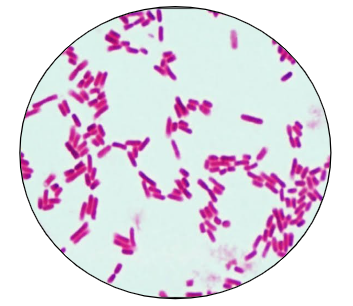
Observe the slide below and answer the questions that follow.
The structures observed from this cell are:
The cell is a .
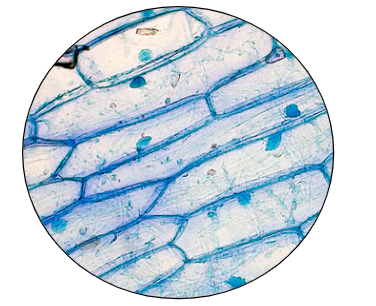
Observe the slide below and answer the questions that follow.
The structures observed from this cell are:
The cell is a .
How can you tell a prokaryote from a eukaryote?
How can you tell a plant cell from an animal cell?
What do plant cells, animal cells, and prokaryotes have in common?