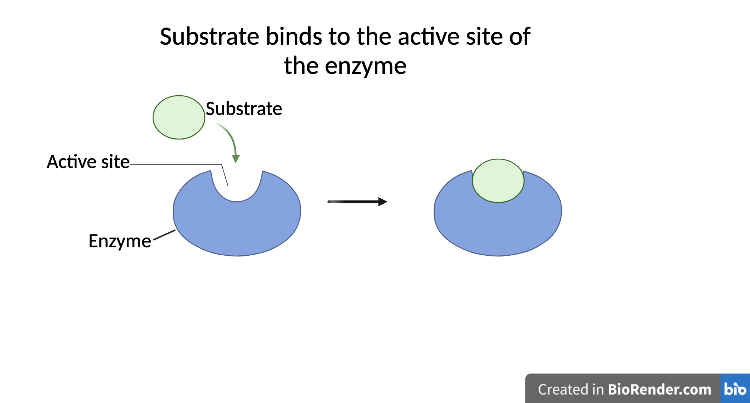
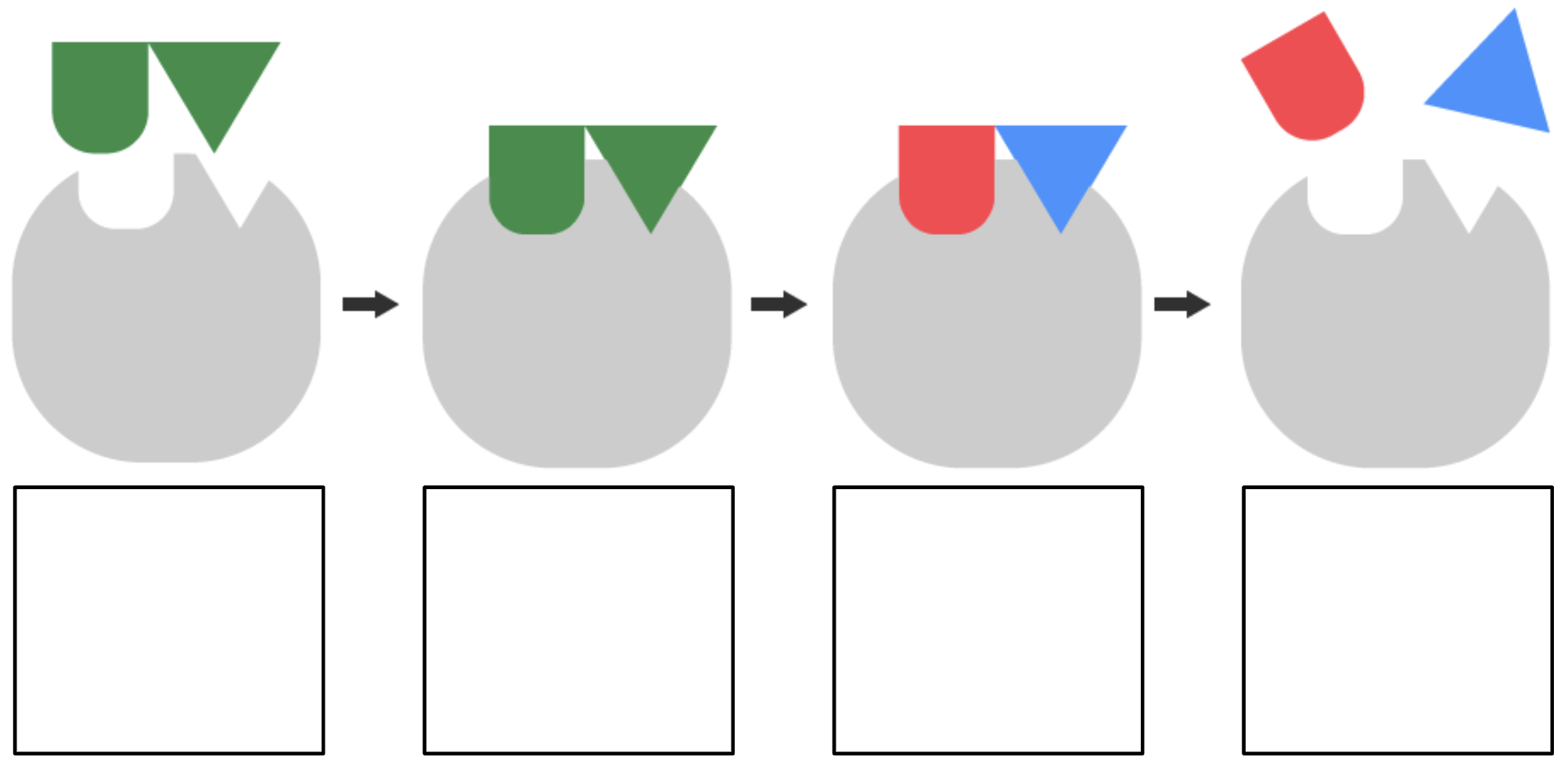
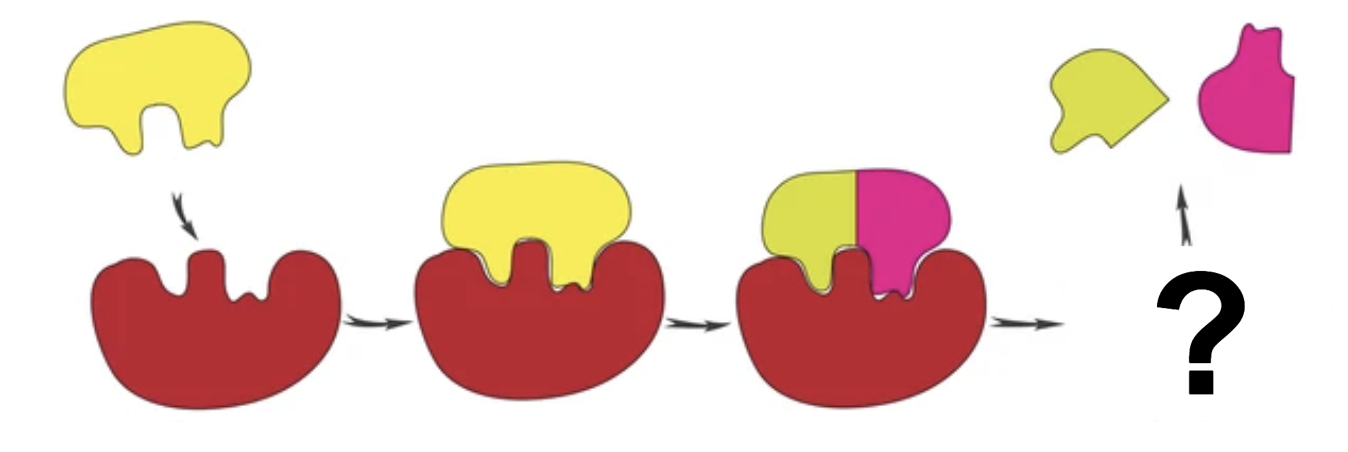
The diagram illustrates how an enzyme interacts with a substrate to produce a product. Describe what is happening at each step of the process:
Andre svarmuligheder:
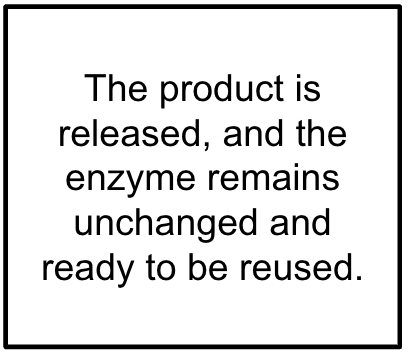
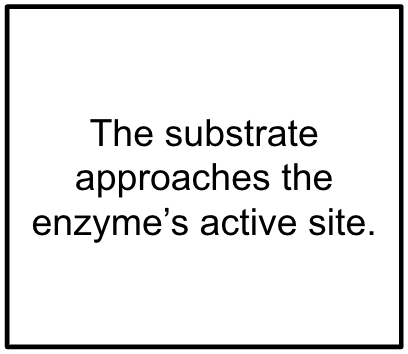
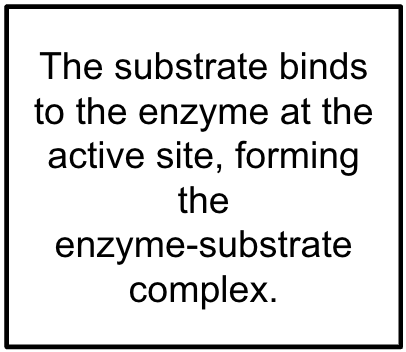
The diagram illustrates how an enzyme interacts with a substrate to produce a product. Describe what is happening at each step of the process:
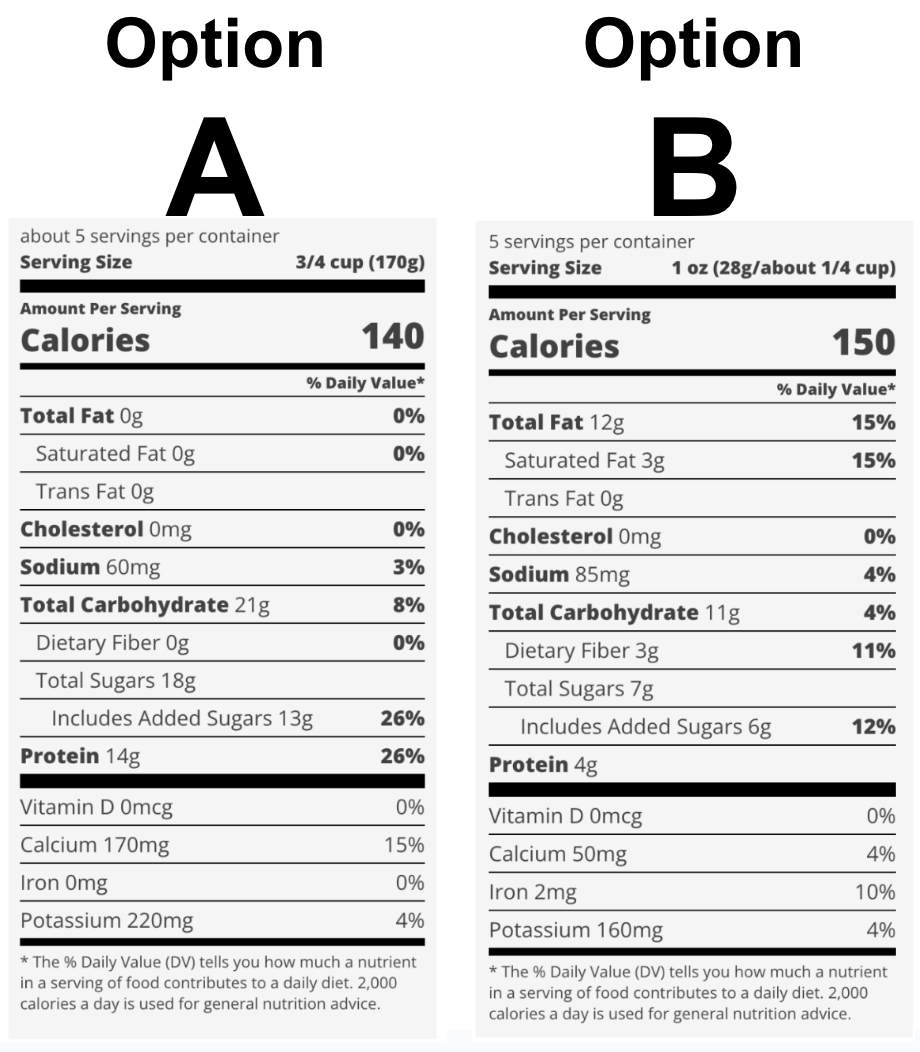
Jordan lives in a northern city where winters are very cold. His doctor recommends that he eat foods that not only give him energy but also help his body maintain warmth through insulation.
Based on Jordan’s nutritional needs, which breakfast option would give him the greatest benefit in maintaining body heat and providing long-term energy, and what evidence from the nutrition labels supports this choice?
Catecholase is an enzyme found in fruits such as apples, bananas, and avocados. When exposed to oxygen in the air, catecholase breaks down catechol and results in brown spots forming on the surface of fruits.
In an experiment, avocado was added into a test tube by itself, with water, and with lemon juice. The results of the experiment are shown below.
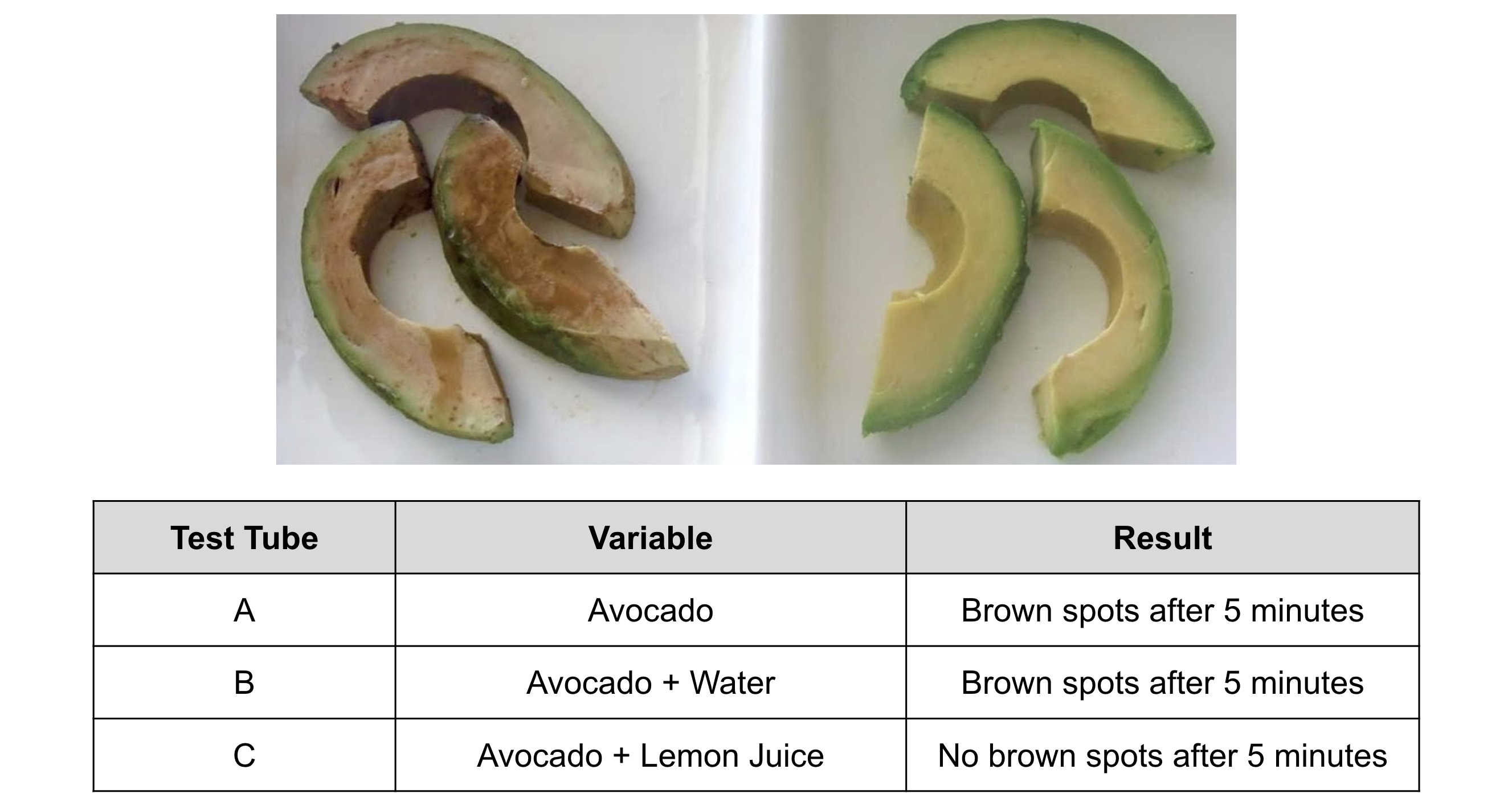
Test Tube C did not show any brown spots because the lemon juice , resulting in .
Different organisms use biomolecules for structure in unique ways. Plants rely on carbohydrates like cellulose to provide rigidity to their cell walls. In animals, lipids such as phospholipids form the structural framework of cell membranes, creating a barrier that separates the inside of the cell from its environment.
Which statement BEST classifies the biomolecules responsible for structural support in this scenario?
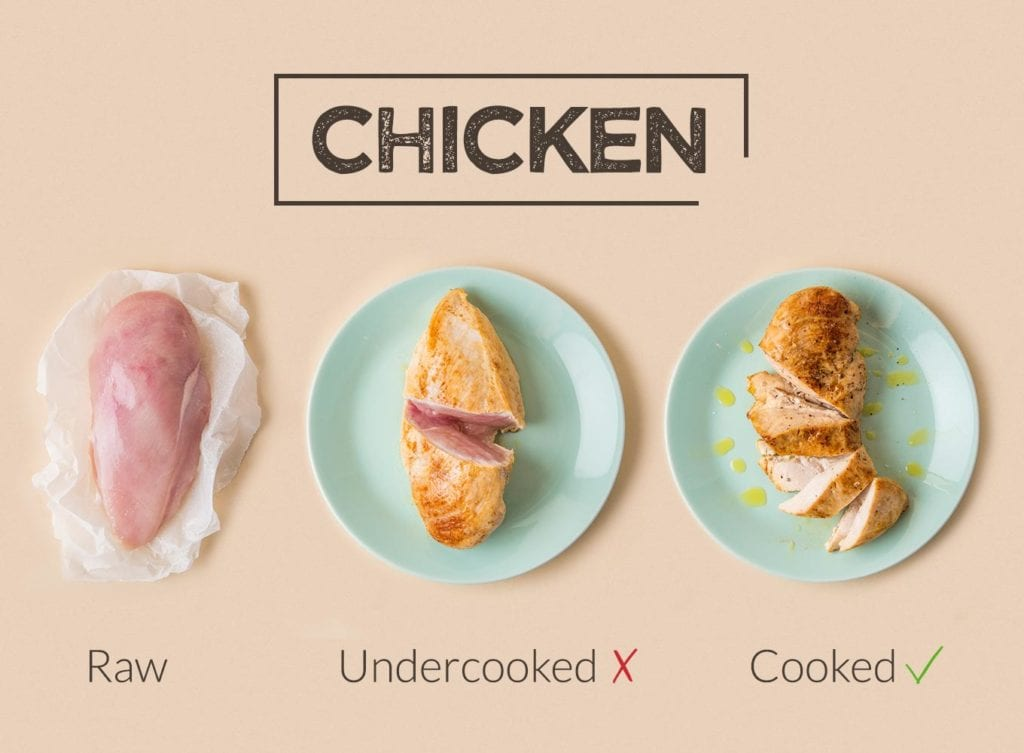
When people eat undercooked chicken, they are at risk for contracting salmonella poisoning, a disease caused by the Salmonella bacteria. Symptoms include diarrhea, fever, stomach cramps, nausea, vomiting, chills, headache, and blood in stool. The CDC advises cooking chicken to the proper internal temperature to kill the bacteria inside of the food and avoid getting sick.
Why does heating your chicken to the proper temperature kill the Salmonella bacteria?
Match each of the four biomolecules with its function (job) in your body...
| Draggable emne | arrow_right_alt | Korresponderende emne |
|---|---|---|
Proteins | arrow_right_alt | Provides your cells with the instructions they need to make their proteins. |
Lipids | arrow_right_alt | Cells in your body metabolize (break down) this for a quick source of energy. |
Nucleic Acids | arrow_right_alt | Used for long-term energy storage and insulation (keeps you warm). |
Carbohydrates | arrow_right_alt | Builds your physical traits (Hair, skin, nails, muscles, etc.). Enzymes are this biomolecule. |
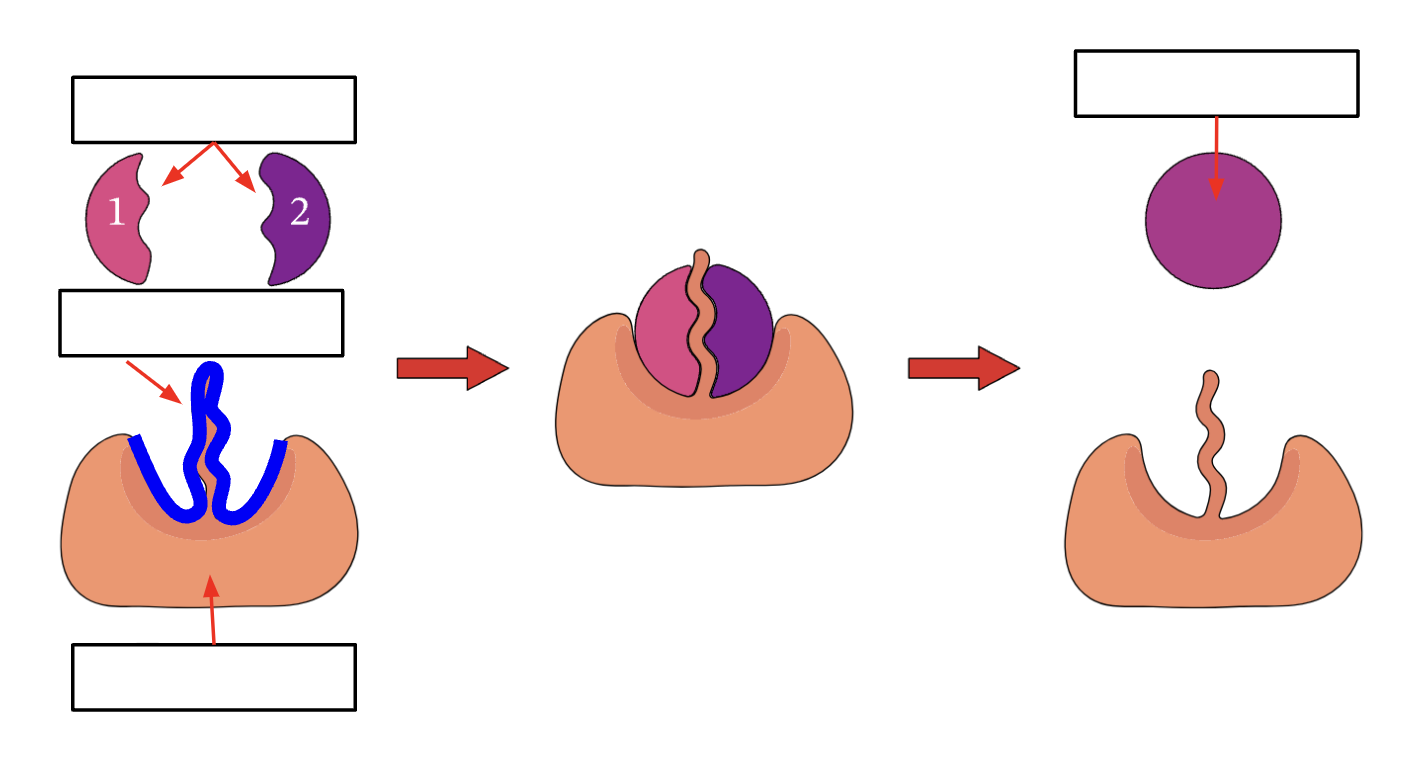
Label the diagram below.
Determine if each statement applies to Carbohydrates, Lipids, or Both.
Ex: Cellulose (provides structure)
Cell Membrane
Ex: Starch (found in potatoes)
Provides Energy for Cell
Provides Insulation
Carbohydrates (2 items)
Lipids (2 items)
Both (1 item)
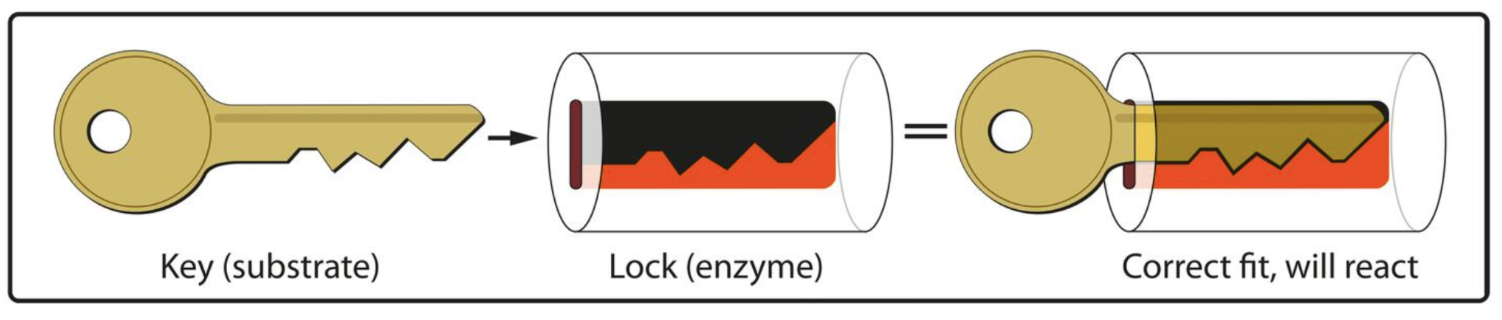
In order for a substrate to bind with an enzyme and catalyze a reaction, they need:
Place the biomolecule with the correct description in the table below.
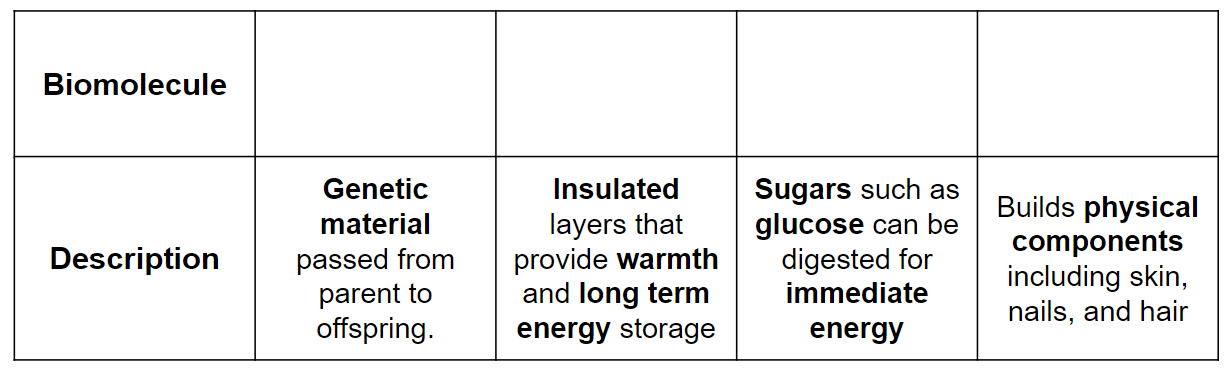
Lipids
Nucleic Acids
Proteins
Carbohydrates
The animation below shows a molecule called an inhibitor acting on an enzyme.
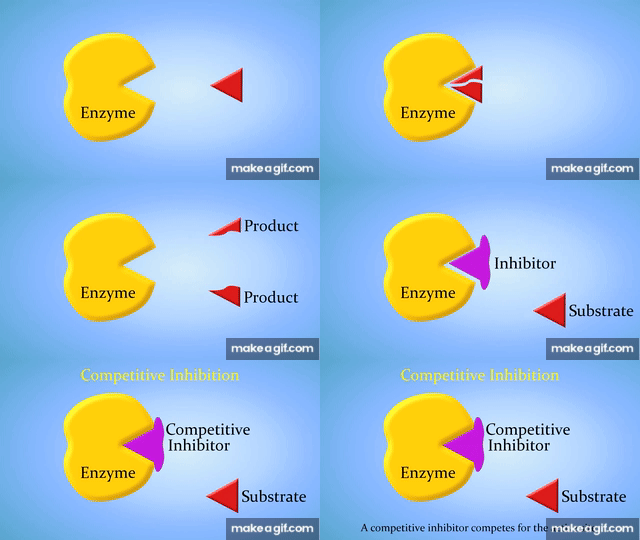
Can the enzyme still catalyze the reaction as normal? Use the drop downs to complete the sentence.
The enzyme catalyze the reaction because .
Various carbohydrates and their uses are listed below.
Determine whether each carbohydrate is used for energy or for structural support.
Cellulose (makes up plant cells walls)
Chitin (makes cell walls of fungi)
Glycogen (modified form of glucose and is stored in liver cells until needed)
Starch (stored in plant seeds for food)
Carbohydrates used for Energy (2 items)
Carbohydrates used for Structural Support (2 items)
Catalase is an enzyme found in many plant and animal cells that breaks down hydrogen peroxide into water and oxygen. Normally, catalase works best at moderate temperatures.
Which statement explains what happens to catalase activity when plant cells are exposed to very high heat?
Complete the sentence below.
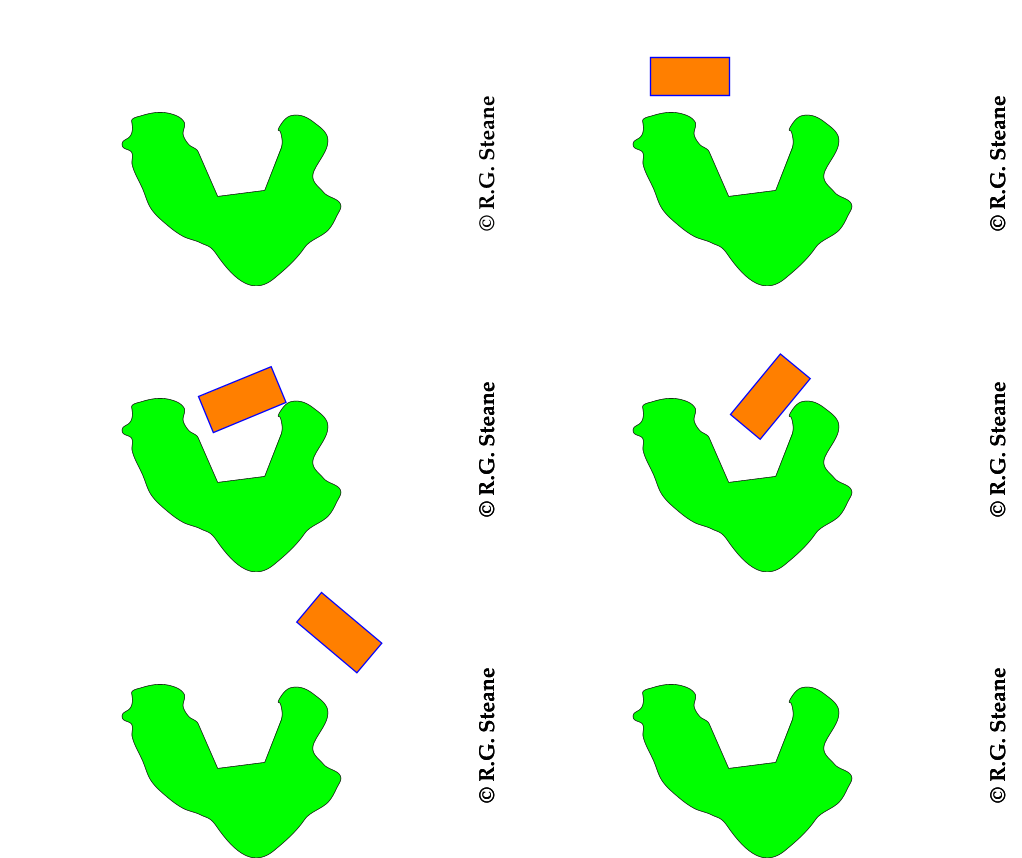
A change in can cause the enzyme to change shape and denature, so it .
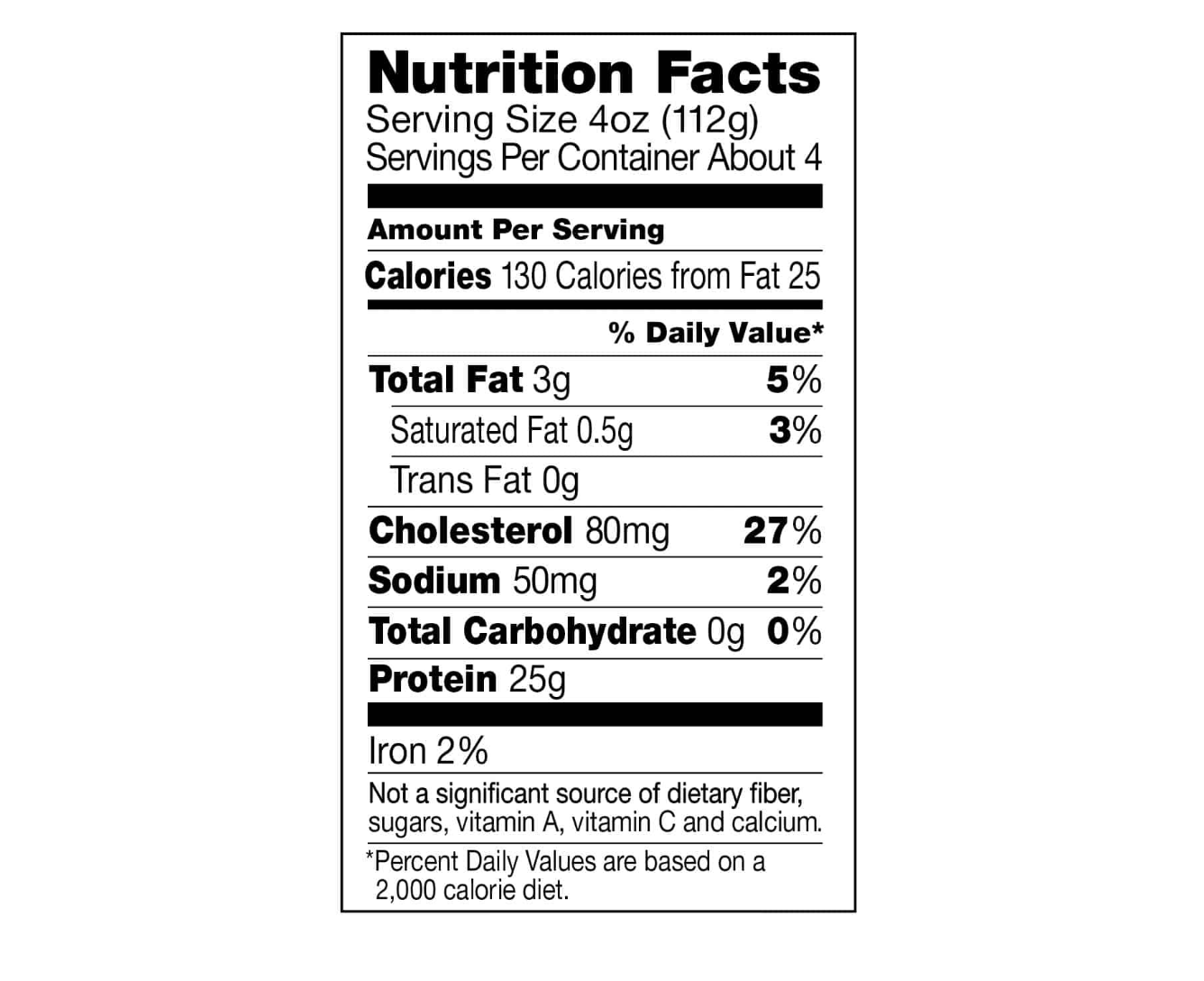
Maximus has been going to the gym and wants to increase his muscle mass. Which portion of the label should provide him with information relevant to gaining muscle mass?
Which molecule should be placed at the question mark to complete the diagram correctly?
Which of the following is TRUE about the function of lipids and proteins in the cell?
People who eat starchy foods like bread, rice, or potatoes rely on enzymes in their saliva to begin digestion. One of these enzymes, amylase, helps break down starch molecules into smaller sugars that can later be absorbed by the body for energy.
Which statement explains how amylase most likely works in the body?
For each of the 4 biomolecules, determine whether they provide energy for your body or they are used to build things for your body.
(HINT: 2 provide energy and 2 are used to build things for your body!)
Nucleic Acids
Proteins
Carbohydrates
Lipids
Provides energy for your body.
(2 items)
Used to build things for your body.
(2 items)
Determine which biomolecules belong to the following functions.
Lipids
Nucleic Acids
Carbohydrates
Proteins
Structure (3 items)
Energy (2 items)
Transport (2 items)
genetic information of traits (1 item)
building traits (1 item)
What is the purpose of an enzyme?
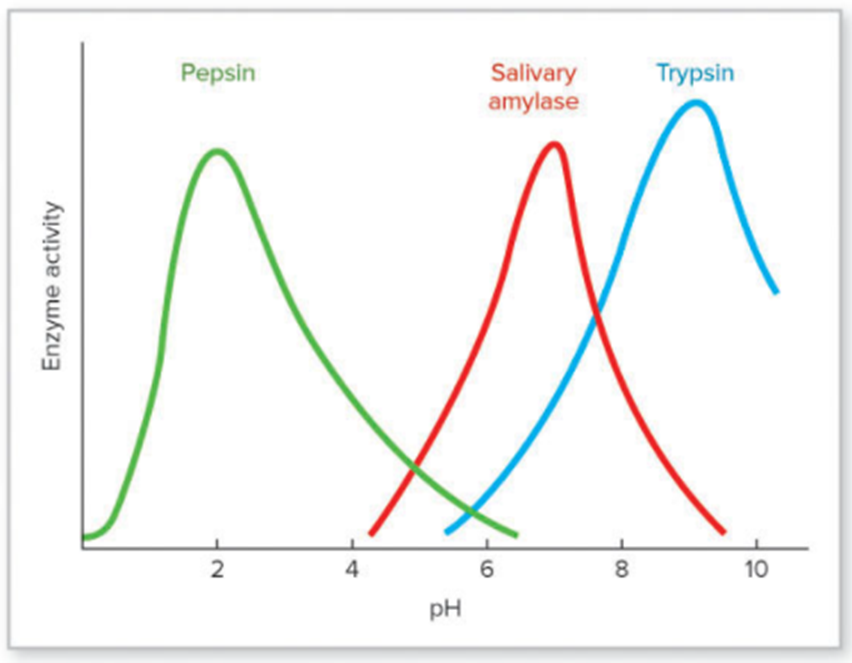
What is the optimal pH of Pepsin?
What is the optimal pH of Trypsin?
What is the optimal pH for both Amylase and Trypsin?
What occurs to the enzyme Pepsin and Amylase during pH of 7?