Spring til hovedindhold
Log ind
Sign up for FREE
arrow_back
Bibliotek

Thursday (10/03) - Immortal Cells Practice and Exit Ticket AAC

star
star
star
star
star
Sidst opdateret 20 days ago
16 Spørgsmål
Nødvendig
1
Nødvendig
1
Nødvendig
1
Nødvendig
1
Nødvendig
1
Nødvendig
1
Nødvendig
1
Nødvendig
1
Nødvendig
1
Spørgsmål 1
1.

Which of the following best describes cancer?

Spørgsmål 2
2.

When cells lose their ability to regulate the cell cycle, they can divide at an accelerated rate and form a mass of cells. This mass of cells is referred to as...

Spørgsmål 3
3.

What is the role of a tumor suppressor gene?

Spørgsmål 4
4.

If we have genes that protect us against cancer, why does cancer still exist?

Spørgsmål 5
5.

What are carcinogens?

Spørgsmål 6
6.

What are some examples of carcinogens?

Spørgsmål 7
7.

It is possible to be born with genetics that enhance the chances of developing cancer.

Spørgsmål 8
8.

What is the difference between Benign and Malignant Tumors?

Draggable emnearrow_right_altKorresponderende emne

Malignant Tumors

arrow_right_alt

Do not move, spread, or invade other tissues.

Benign Tumors

arrow_right_alt

Move, Spread, and invade other tissues.

Spørgsmål 9
9.

What are possible cancer treatment options?

The Immortal Cells of Henrietta Lacks

Henrietta Lacks sadly passed away from cervical cancer at the age of 31. However, her cells continue to be grown and used in laboratories to this day. We call her cells HeLa Cells, and they are the first "immortal" cell line in the world because they continue to reproduce where normal cells would have already died.
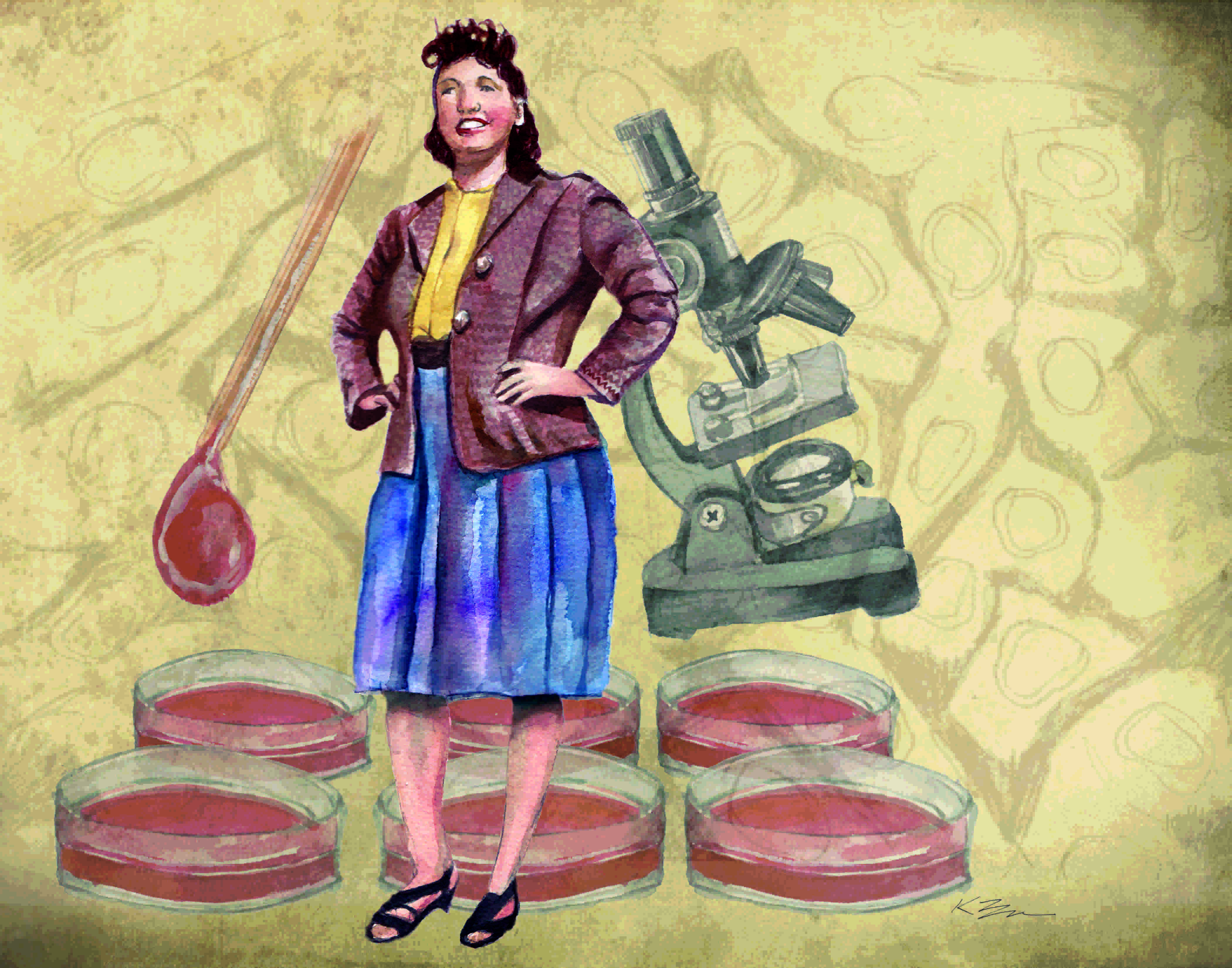
When she went to Johns Hopkins Hospital for treatment in 1951, she was originally diagnosed with an epidermoid carcinoma in her cervix (this is the scientific way of saying she had a tumor growing in her reproductive tract). Without her knowledge or permission, a sample of her cells were taken for testing and grown inside one of the laboratories in the hospital.

Nødvendig
1
Spørgsmål 10
10.

Why do we consider HeLa cells to be "immortal"?

Nødvendig
1
Nødvendig
1
Spørgsmål 12
12.

After her passing, a medical examiner found that the cancerous cells in Henrietta's cervix had spread throughout her body.

This means the tumor she had was...

Why are HeLa Cells Important?

Up until 1951, scientists were unable to keep cells alive in the laboratory. HeLa cells were special because they could be kept alive and grown in the lab over and over again.

These cells were sent across the globe and grown in labs all over the world.

Due to the immortal nature and durability of HeLa cells, they have been used to develop a vaccine for Polio, and have also been used to study diseases such as measles, mumps, HIV, leukemia, and ebola.

Scientists learned that human cells have 46 chromosomes after studying HeLa cells- even though HeLa cells themselves have 80 mutated chromosomes.

These cells were also the first cells to ever be cloned, have traveled to outer space, and were even used in research for a COVID-19 vaccine.

Nødvendig
1
Spørgsmål 13
13.

What makes HeLa cells important?

Nødvendig
1
Nødvendig
1

HeLa Cell Controversy?

While HeLa cells are an important part of medical research and have been used to help millions of people across the world, many people question the ethics behind using these cells.

Remember, Henrietta Lacks never gave permission or consent to have her cells taken and grown in the laboratory. At the time, the doctor who took her cells also did not know that her cells would be immortal.

Her family was not told that her cells were taken and grown in labs, and they did not find out that her cells had already been sent across the world until over 20 years later.

Her family still has not received any compensation (money) from any research facilities who use HeLa cells in their labs and who have profited from discoveries using her cells.

Henrietta Lacks herself lived in poverty, and her family continues to live in poverty. When interviewed, her daughter said "..if our mother cells done so much for medicine, how come her family can’t afford to see no doctors?"

Nødvendig
1
Spørgsmål 16
16.

Do you think scientists should be able to use HeLa cells for medical research, even though Henrietta Lacks never gave permission for her cells to be used that way?

Spørgsmål 11
11.

What was Henrietta Lacks diagnosed with?

Spørgsmål 14
14.

What have HeLa cells been used for?

Spørgsmål 15
15.

How many chromosomes are in a normal human cell?