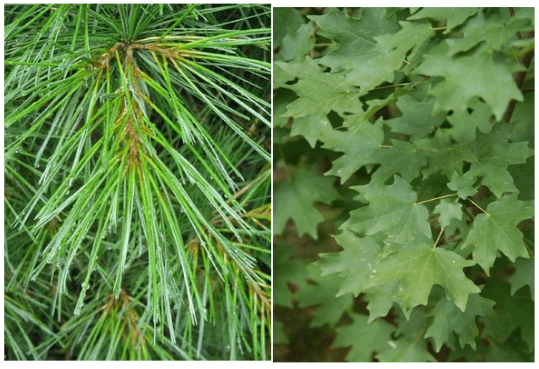
Which of the following best describes the function of the LEAVES?
Which of the following best describes the function of the LEAVES?
Match the key word on the left to the plant part on the right.
| Draggable emne | arrow_right_alt | Korresponderende emne |
|---|---|---|
"Absorption" | arrow_right_alt | Leaves |
"Photosynthesis" | arrow_right_alt | Stem |
"Transport" | arrow_right_alt | Roots |
Which of the following best describes the function of the LEAVES?
Match each vocabulary term to its picture and description.
| Draggable emne | arrow_right_alt | Korresponderende emne |
|---|---|---|
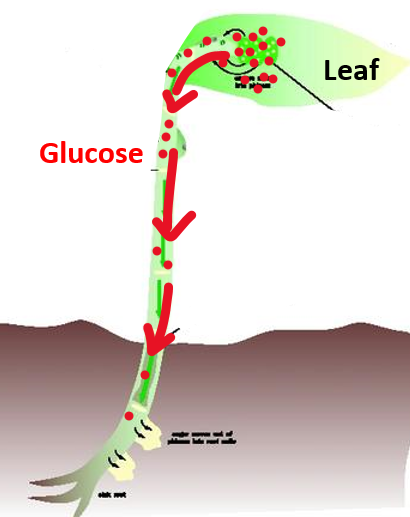
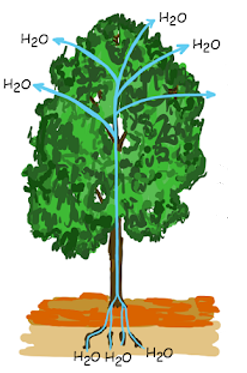
Stomata | arrow_right_alt | Type of vascular tissue that transports glucose (C6H12O6) throughout the plant. |
Phloem | arrow_right_alt | Type of vascular tissue that transports water (H2O) throughout the plant. |
Xylem | arrow_right_alt | Regulates gas exchange and prevents water loss by opening and closing the stomata. |
Guard Cells | arrow_right_alt | Carbon dioxide (CO2) enters and oxygen (O2) exits the leaf. |
Categorize what goes in each vascular tissue?
Transports carbohydrates/glucose
Transports water
Moves only up the stem
Can move up and down the stem
Phloem
Xylem
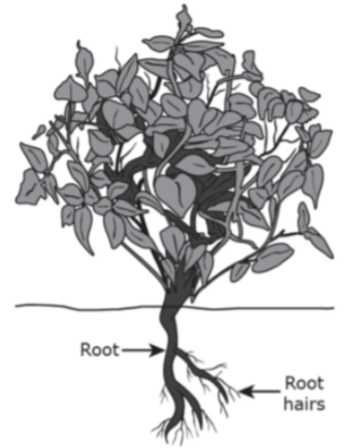
Plant roots have extensions called root hairs. These root hairs are important in the homeostasis of the plant.
Root hairs increase the surface area of the roots. How does this help the roots with their function?
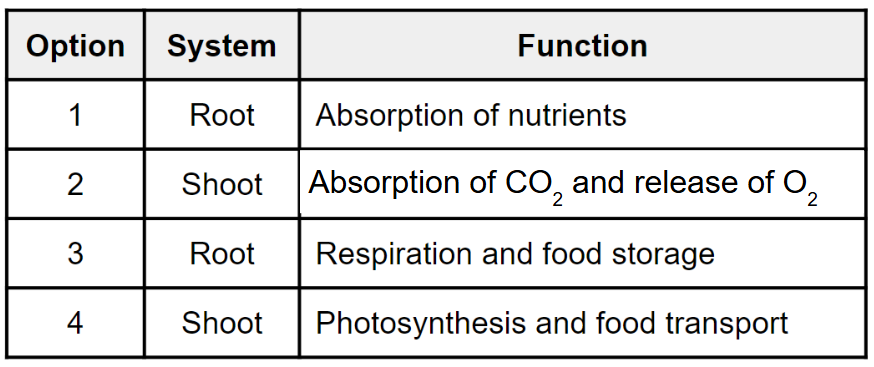
A chart of some plant systems and functions is shown.
Which system interactions are dependent on the plant's ability to do gas exchange? (pick 2)
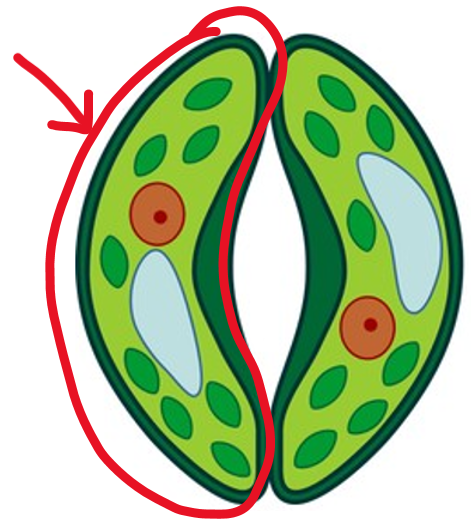
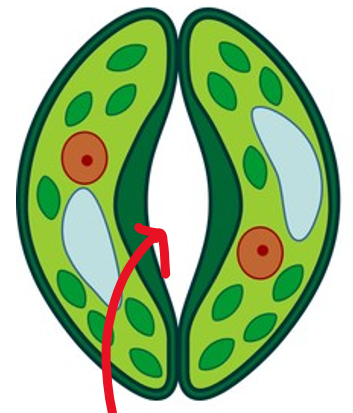
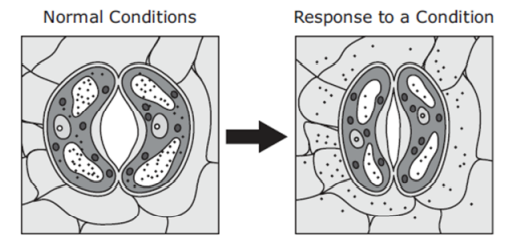
Structures represented in the illustration below are found in the lower epidermis (on the bottom) of a plant leaf.
The illustration on the left is under normal conditions, while the illustration on the right shows the response to a certain environmental condition.
The response represented in the illustration above would most likely be caused by...
The stem and leaves are part of a plant's shoot system. The phloem tissue in the stem and leaves transports the .
Plants maintain homeostasis through specialized structures that regulate internal conditions in response to environmental changes. Which of the following best describes how plant structures interact to achieve this? (pick 2)
Plants have specialized systems that help them sense and respond to environmental changes. They have cells called phytochromes that detect light, where in the plant are these phytochromes found, and why are they important?
Plant hormones play a crucial role in growth and development by being transported through vascular tissues. Which of the following correctly describes how hormones move through a plant?
Organize the functions into root system or shoot system (based on next question)
Absorb water
Produce sugar
Perform photosynthesis
Stores glucose (sugar)
Ground the plant
Root system
Shoot system
The xylem plays a vital role in transporting water and minerals throughout a plant. Which of the following best explains how xylem functions?
Phloem is responsible for transporting sugars and amino acids throughout a plant. Which of the following best describes how phloem functions?
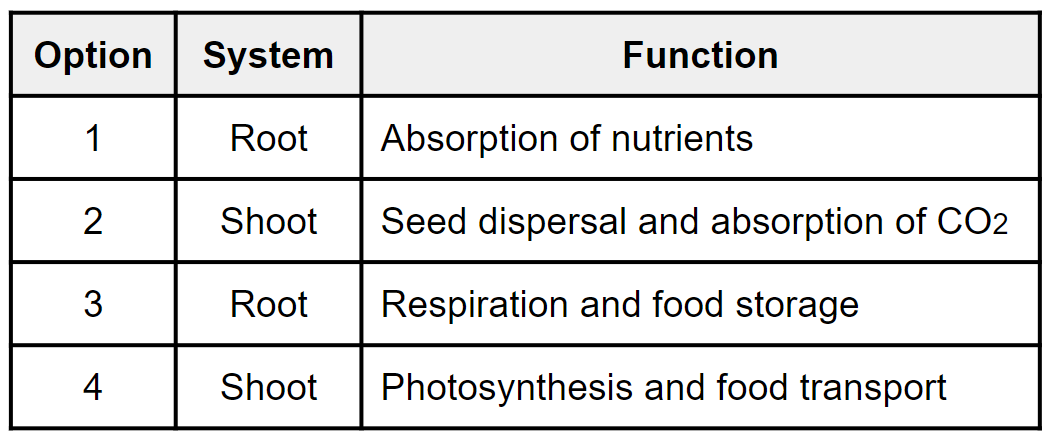
A chart of some plant systems and functions is shown.
Which system interactions are dependent on the plant's ability to sense and uptake water?