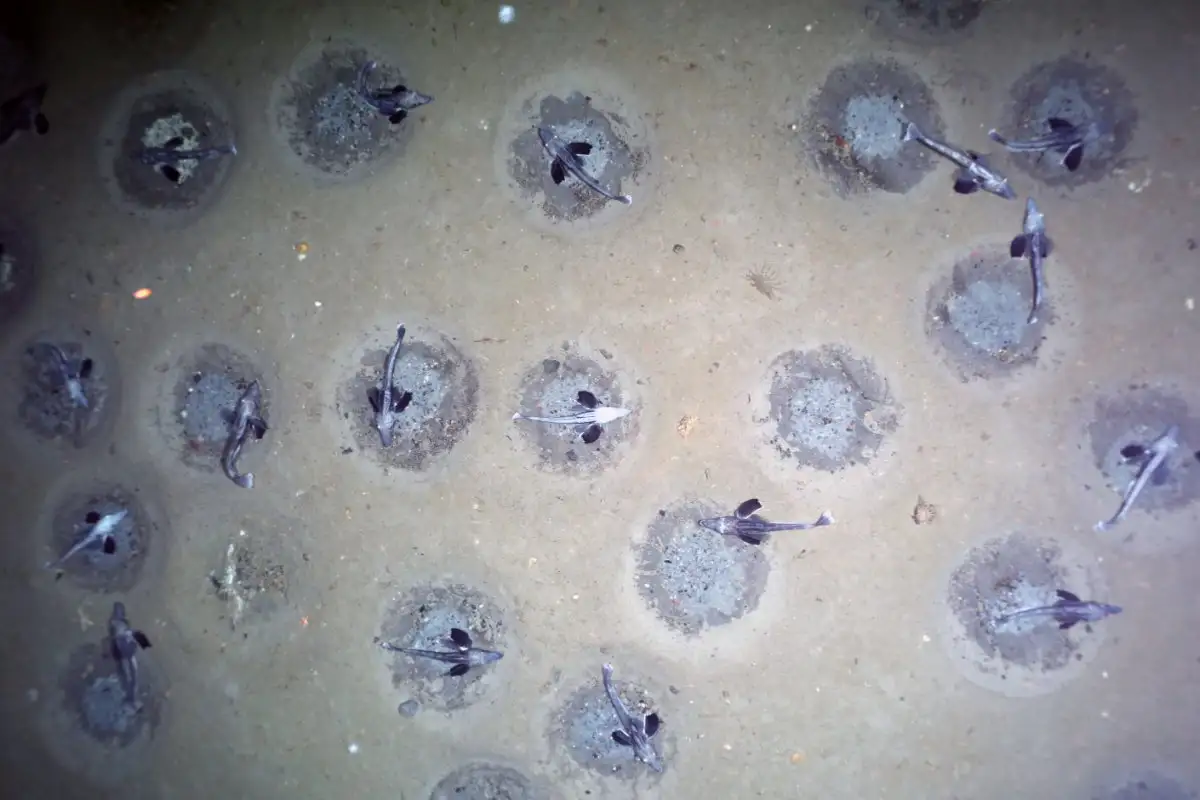
A group of scientists placed four groups of icefish embryos (group of cells that will become a baby) into water tanks at various incubation (heat) temperatures. After 24 hours, they counted to see how many embryos developed normally and how many had some type of damage. Their results are shown below.
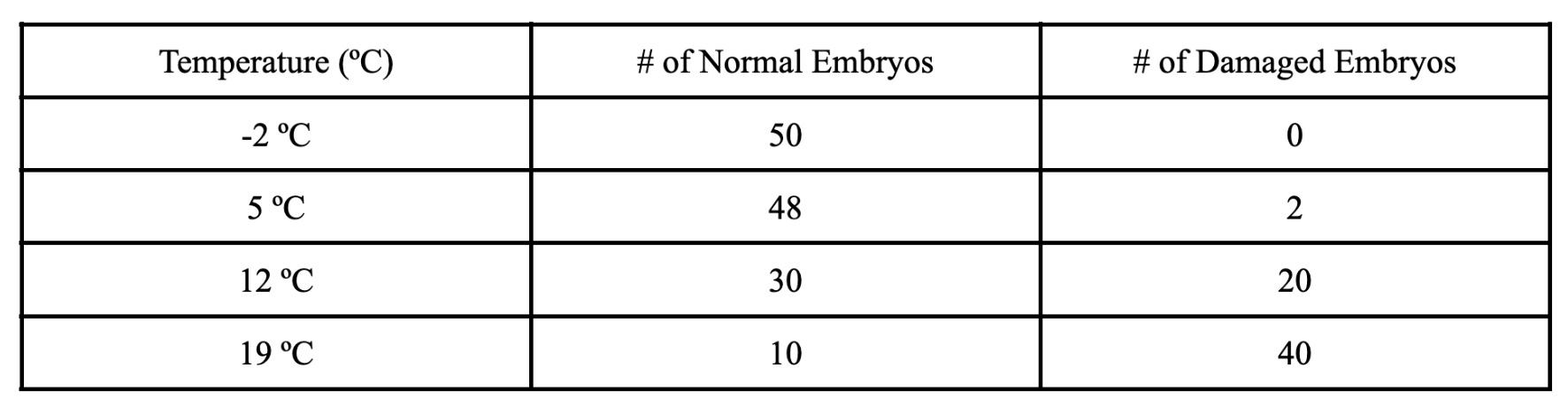
What can scientists conclude about the effect of temperature on developing icefish embryos?
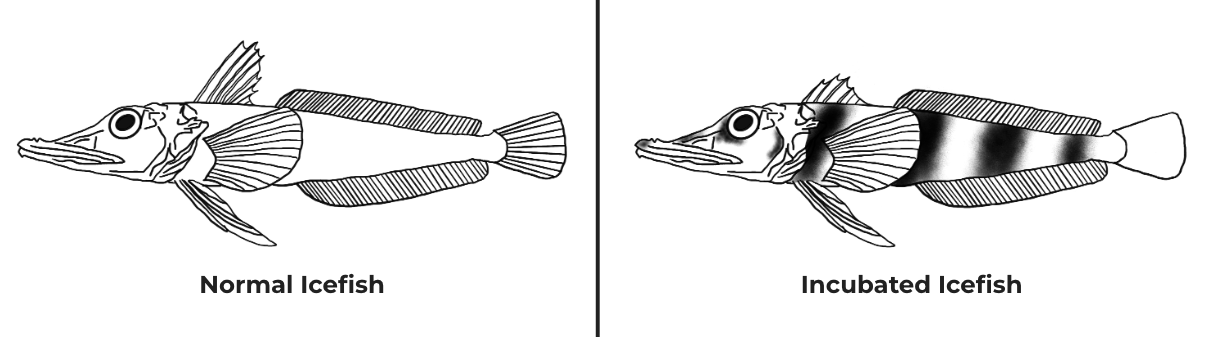
What similarities and differences do you observe between the Normal Icefish and the Incubated Icefish?
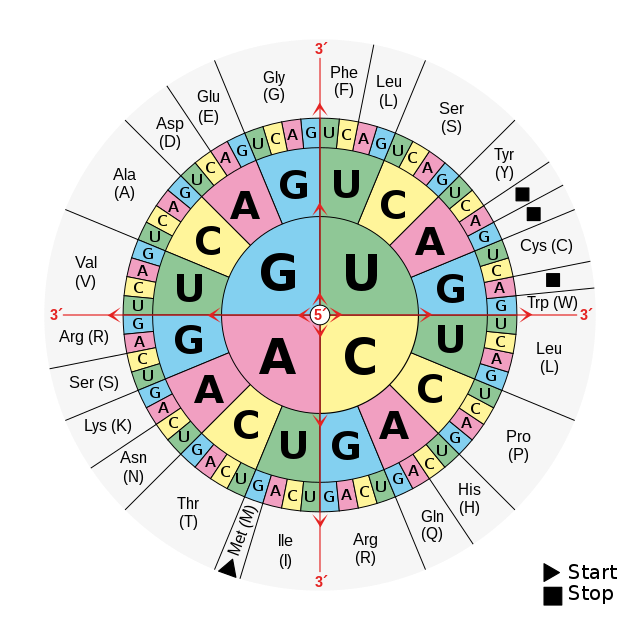
Here is a codon chart if you need one!
DNA Sequence:
What is the name of Gene 1?
DNA Sequence:
What is the name of Gene 2?
DNA Sequence:
What is the name of Gene 3?
DNA Sequence:
What is the name of Gene 4?
DNA Sequence:
What is the name of Gene 5?
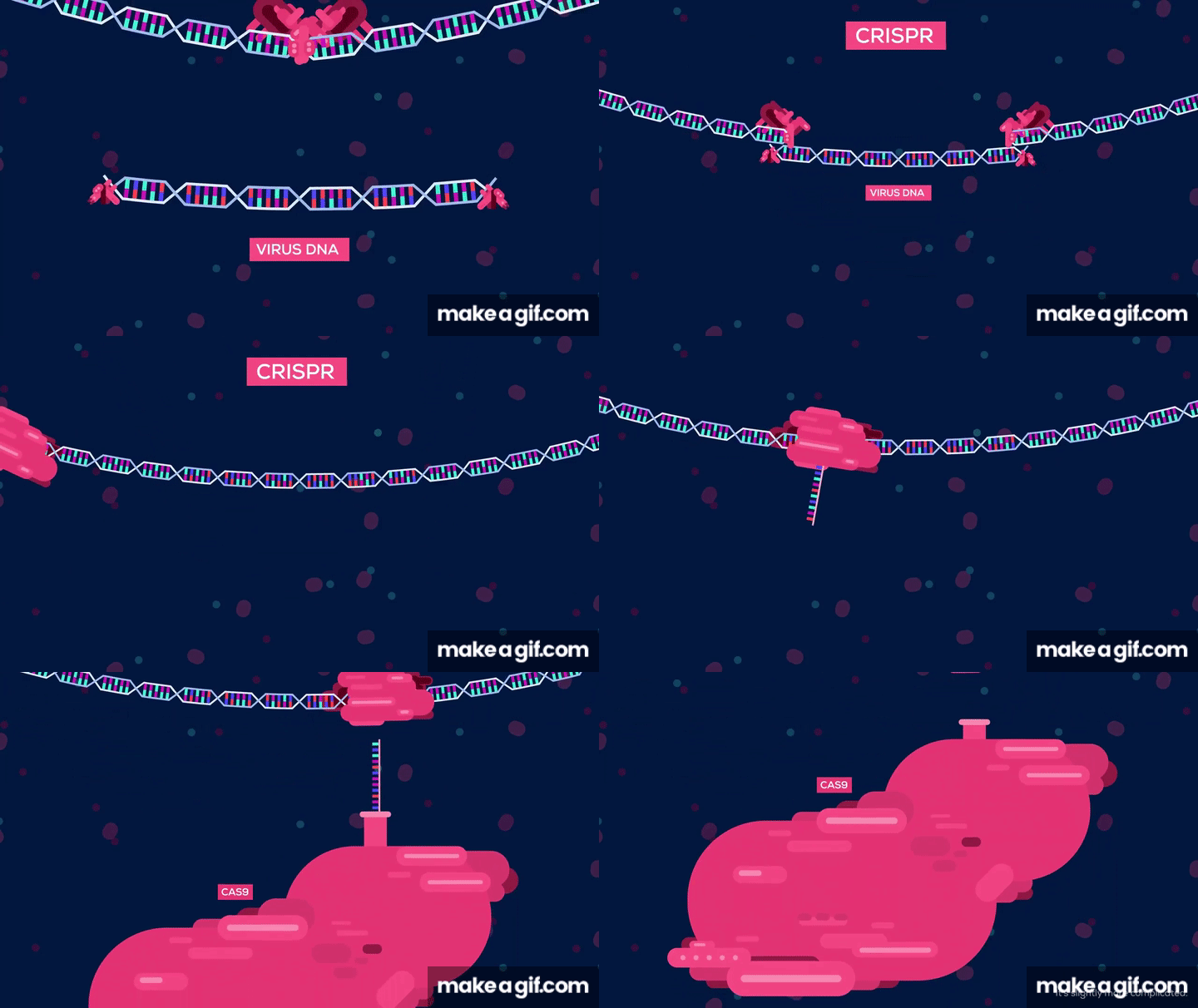
What is CRISPR/Cas9?
How do scientists "edit" (remove/add genes to) sequences of DNA?
How does CRISPR/Cas9 relate to gene expression?
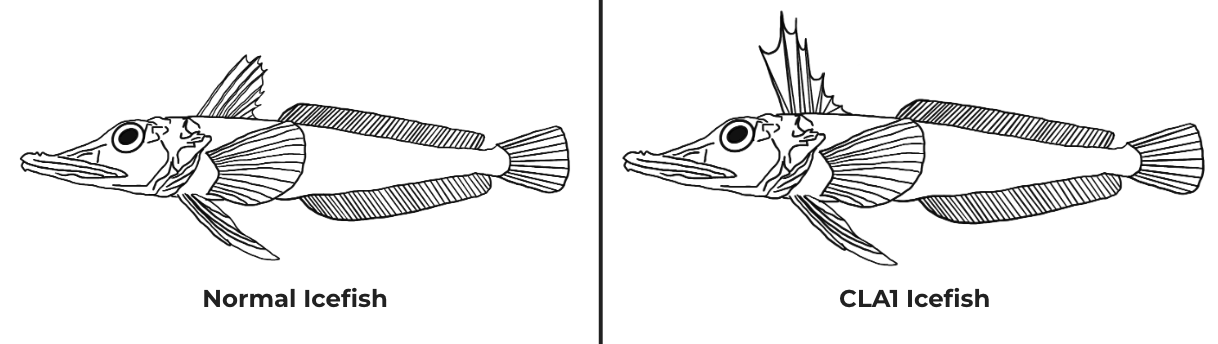
When CRISPR/Cas9 is used to continually express the CLA1 gene, then of the CLA1 protein is produced, resulting in .
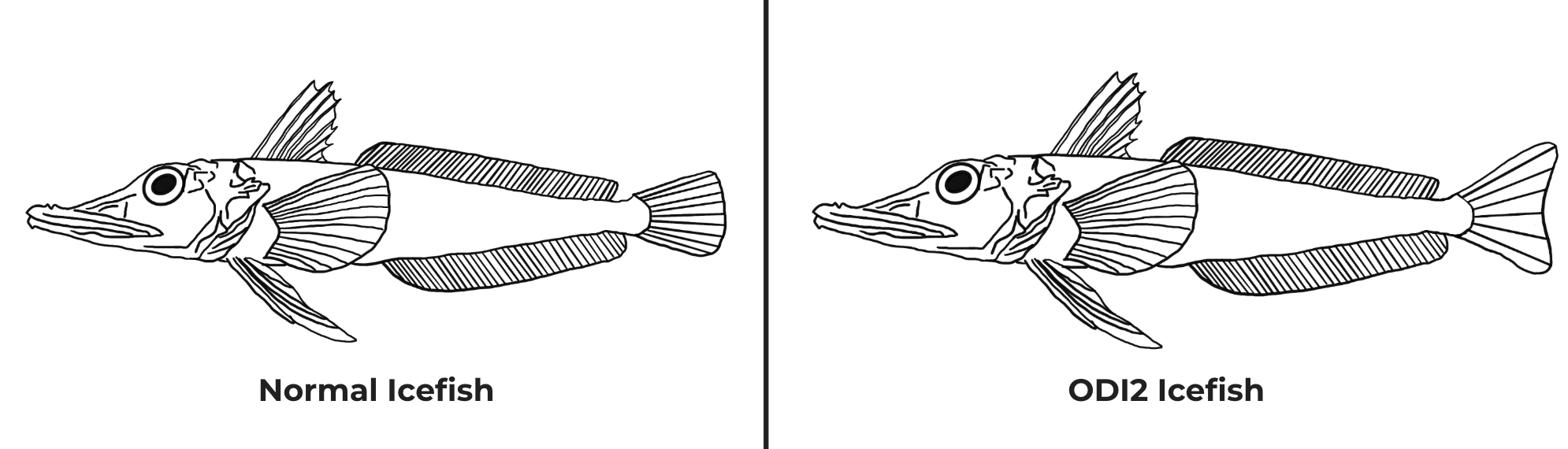
When CRISPR/Cas9 is used to deactivate the ODI2 gene, then of the ODI2 protein is produced, resulting in .
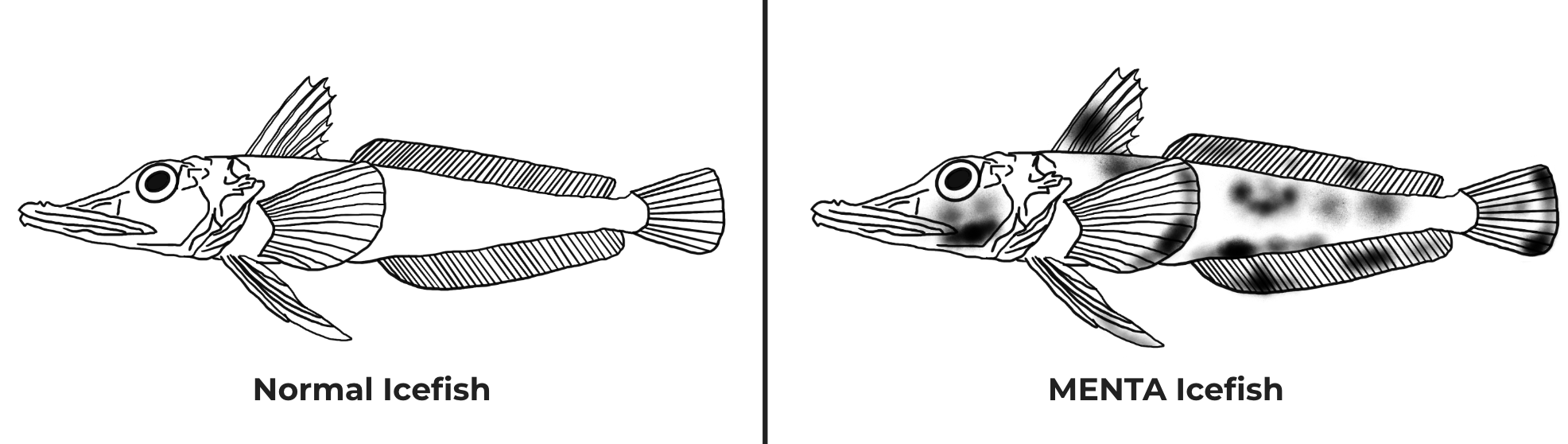
When CRISPR/Cas9 is used to activate the MENTA gene, then of the MENTA protein is produced, resulting in .
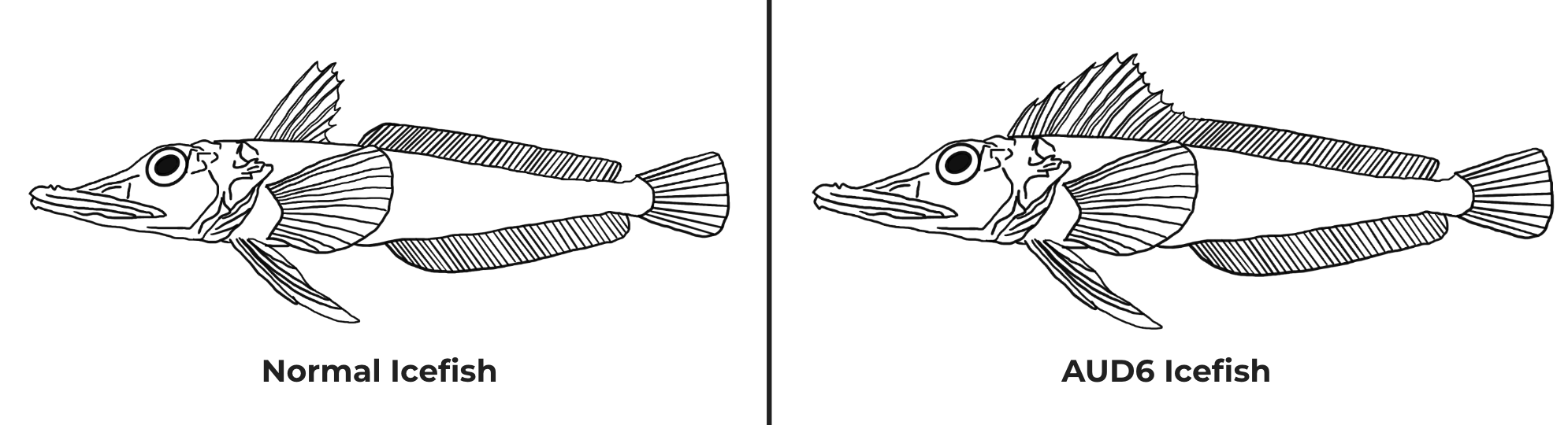
When CRISPR/Cas9 is used to turn off the AUD6 gene, then of the AUD6 protein is produced, resulting in .
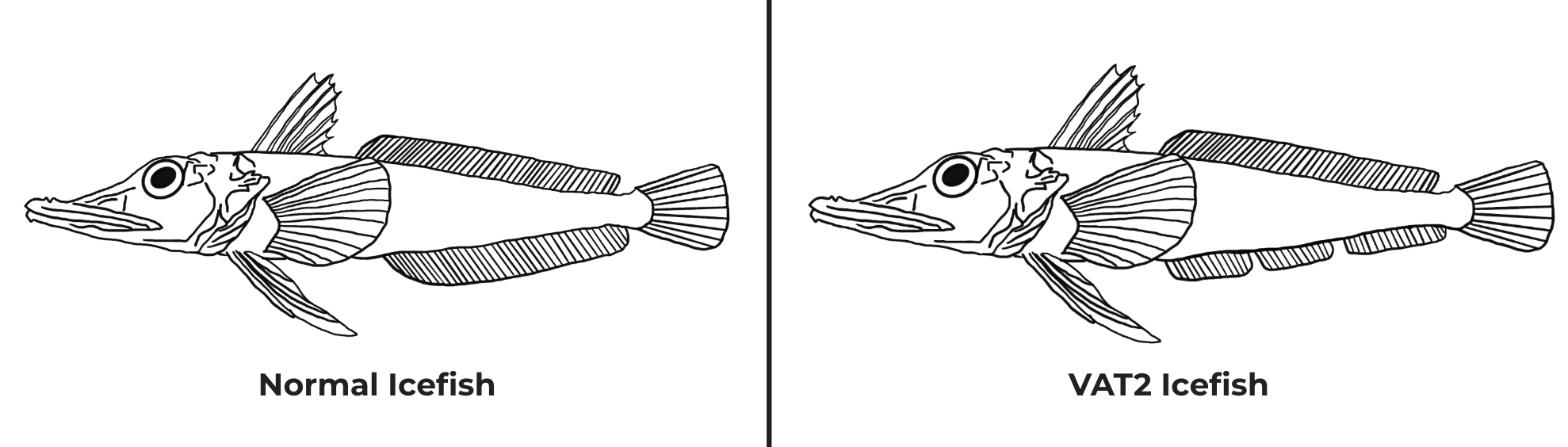
When CRISPR/Cas9 is used to inactivate the VAT2 gene, then of the VAT2 protein is produced, resulting in .
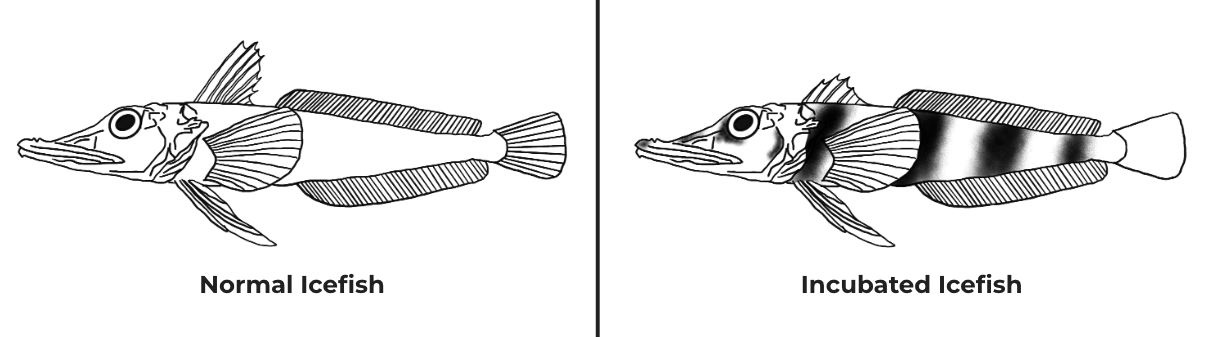
Which gene or genes do you think might be responsible for creating the mutations in the incubated icefish? Why do you think so?
Scientists were curious to research how the activation of various genes affects the types of cells that are produced as the icefish embryo develops over time. The charts below show the percentage of different genes activated in various types of cells. Use the information in the charts to answer the questions that follow.
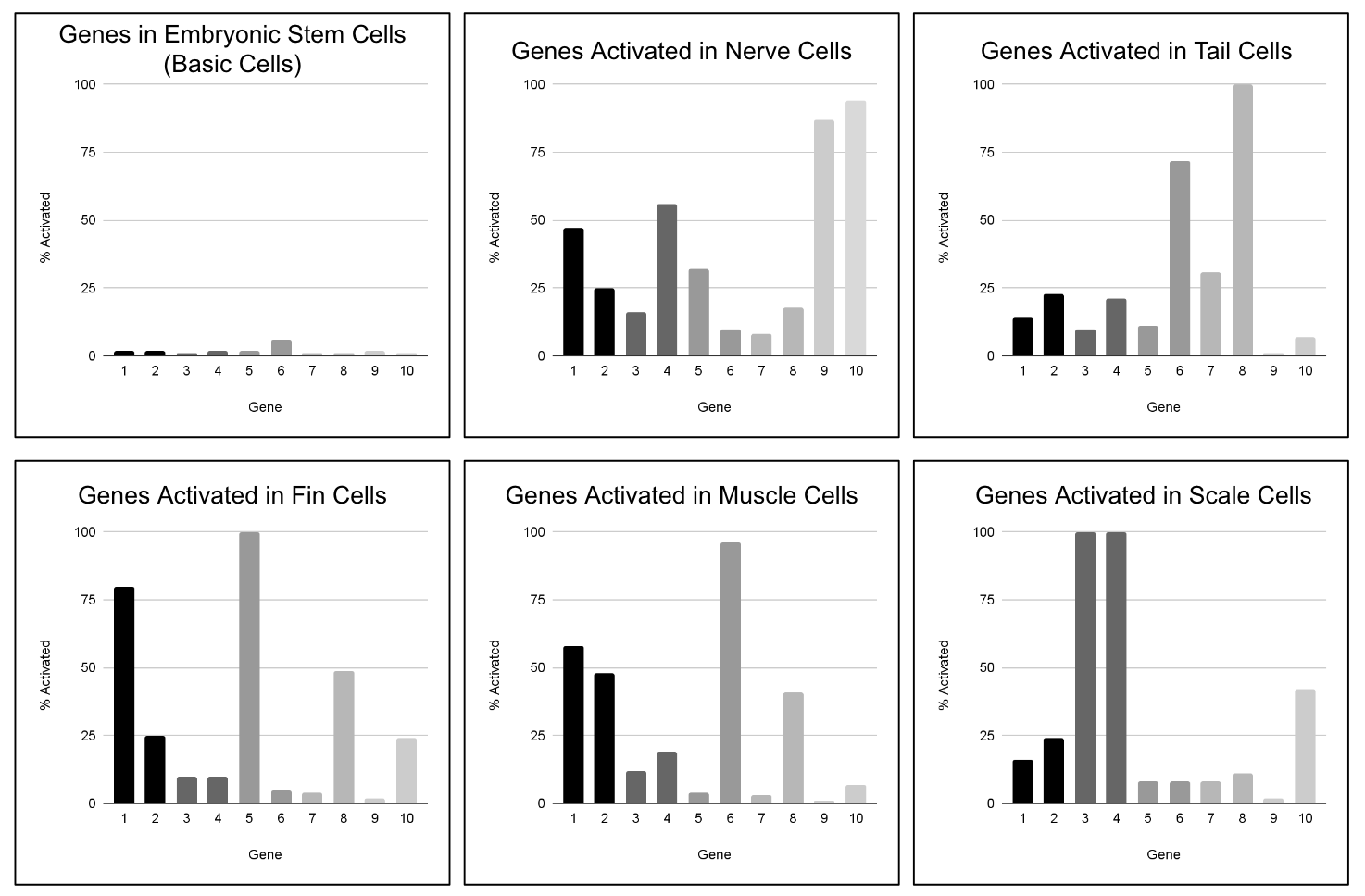
What is the biggest difference between embryonic stem cells (basic cells) and nerve cells?
Which TWO genes are most active in tail cells?
Which TWO genes are most active in scale cells?
When studying the genetic factors that influence the development of muscle cells, researchers find that when certain genes are turned off, the cells fail to develop into functional muscle cells and instead remain basic embryonic stem cells.
Which of these best explains why the cells did not develop into functional muscle cells?
Based on the information in the charts, if all of these cell samples were taken from the same icefish embryo with the same DNA in its cells, why are there different cell types present?