Twa kɔ nsɛm atitiriw so
Log in
Sign up for FREE
arrow_back
Laabri

Copy of Monday (04/27) - Reproductive Systems Explore Activity 2026 (5/2/2026)

star
star
star
star
star
Last updated about 3 hours ago
28 Nsɛmmisa
Station 1: True/False Card Sort

Instructions: Read the cards at station 1 and enter your response below:

1
1
1
1
1
1
1
1
1
1
Station 2: Female Reproduction Puzzle

Instructions: Complete the puzzle provided on the lab table and identify the structures.

1
1
1
1
1
Station 3: Male Reproduction Puzzle

Instructions: Complete the puzzle provided on the lab table and identify the structures.

1
1
1
1
1
Station 4: Fertilization

Instructions: Watch the clip below and describe the process.

1
Exit Ticket
Ɛhia
1
Ɛhia
1
Ɛhia
1
Asemmisa {{asɛmmisaAhyɛnsode}}
1.

Statement 1:

Every sperm produced carries a unique genetic package.

Asemmisa {{asɛmmisaAhyɛnsode}}
2.

Statement 2:

The fastest sperm has a better chance at fertilizing the egg.

Asemmisa {{asɛmmisaAhyɛnsode}}
3.

Statement 3:

Fertilization occurs in the vagina.

Asemmisa {{asɛmmisaAhyɛnsode}}
4.

Statement 4:

Fertilized eggs move from the fallopian tube toward the uterus.

Asemmisa {{asɛmmisaAhyɛnsode}}
5.

Statement 5:

Eggs (ovules) are stored in the ovaries.

Asemmisa {{asɛmmisaAhyɛnsode}}
6.

Statement 6:

Sometimes the mother's immune system sends out white blood cells to attack the fertilized egg, resulting in a miscarriage.

Asemmisa {{asɛmmisaAhyɛnsode}}
7.

Statement 7:

An embryo with the sex chromosomes “XX” will develop into a boy.

Asemmisa {{asɛmmisaAhyɛnsode}}
8.

Statement 8:

An embryo with the sex chromosomes “XY” will develop into a boy.

Asemmisa {{asɛmmisaAhyɛnsode}}
9.

Statement 9:

The embryo grows and develops in the ovary.

Asemmisa {{asɛmmisaAhyɛnsode}}
10.

Statement 10:

40% of new cases of syphilis and gonorrhea (STDs) are in high school students.

Asemmisa {{asɛmmisaAhyɛnsode}}
11.

Structure A

Asemmisa {{asɛmmisaAhyɛnsode}}
12.

Structure B

Asemmisa {{asɛmmisaAhyɛnsode}}
13.

Structure C

Asemmisa {{asɛmmisaAhyɛnsode}}
14.

Structure D

Asemmisa {{asɛmmisaAhyɛnsode}}
15.

Structure E

Asemmisa {{asɛmmisaAhyɛnsode}}
16.

Structure A

Asemmisa {{asɛmmisaAhyɛnsode}}
17.

Structure B

Asemmisa {{asɛmmisaAhyɛnsode}}
18.

Structure C

Asemmisa {{asɛmmisaAhyɛnsode}}
19.

Structure D

Asemmisa {{asɛmmisaAhyɛnsode}}
20.

Structure E

Asemmisa {{asɛmmisaAhyɛnsode}}
21.

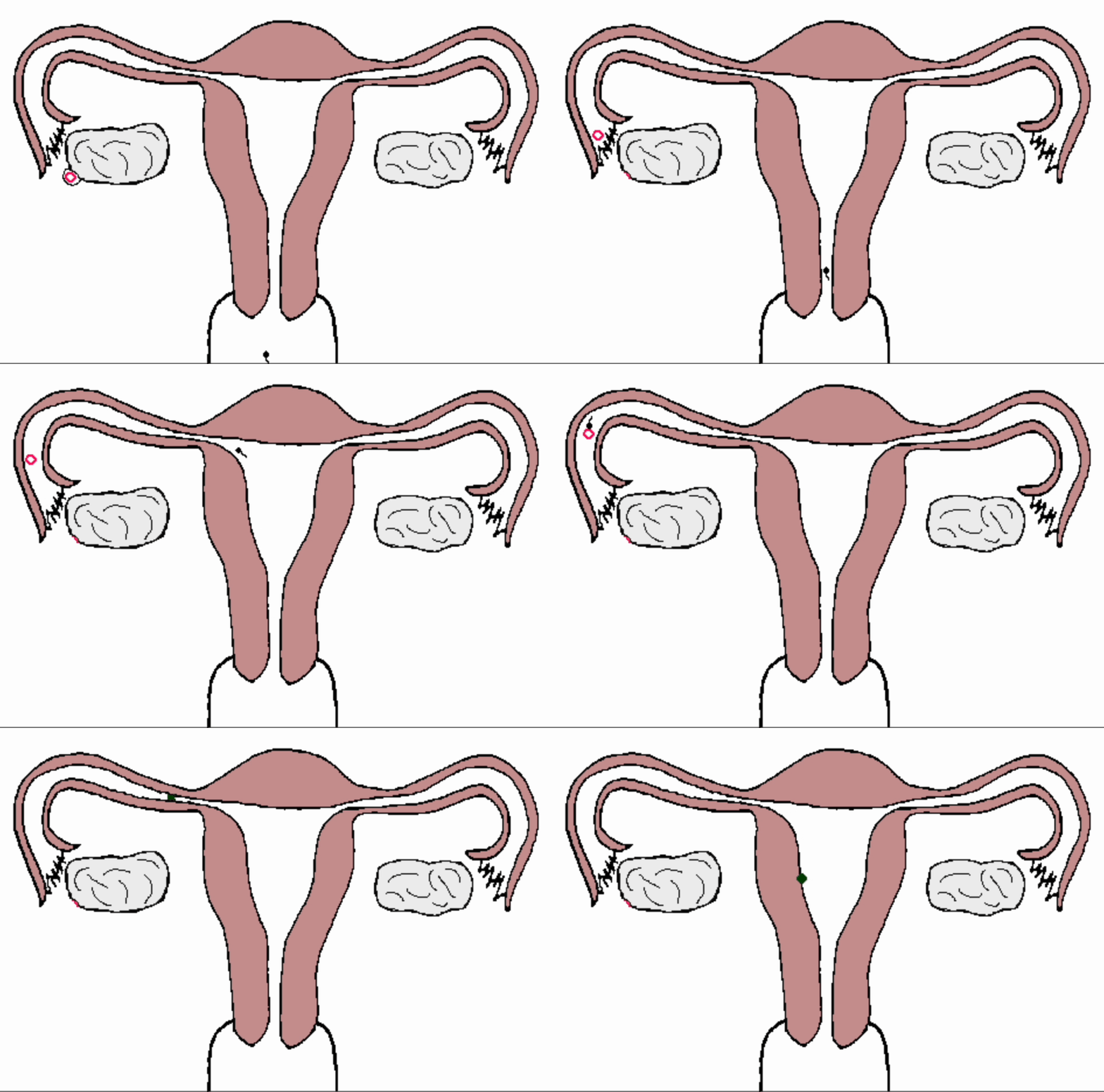
Describe what you see happening in the clip above.

  • Can you identify the black and pink structures at the beginning of the clip?

  • What does the green ball represent?

  • What is this process? What results from this process?

Sentence Stem:

The black structure is _____________ and the pink structure is _____________.

The green ball represents _______________.

The process is called _________________ and the result of the process is __________________.

Write your answer in complete sentences in the box below.
Seeing Double

Have you ever wondered where twins come from?

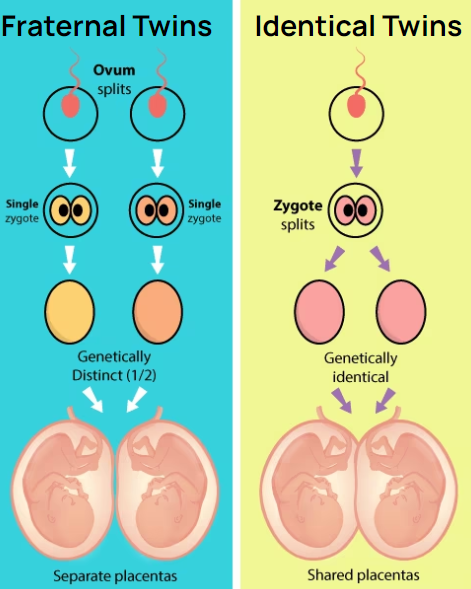
There are two kinds of twins: fraternal twins and identical twins.

Fraternal twins form when two separate ova (egg cells) are fertilized by two separate sperm. These twins are genetically different because each gamete has a unique genetic combination. Fraternal twins will look similar because they came from the same parents, but they will not look exactly identical.

Identical twins form when a single ovum (egg cell) is fertilized by a single sperm, but then it splits and develops into two genetically identical twins. These twins are identical because they came from the same original fertilized egg (called a zygote).

However, even identical twins will start to accumulate differences over their lifetime due to environmental factors (such as a broken arm, tanning, diet, illnesses).

1
Asemmisa {{asɛmmisaAhyɛnsode}}
22.

What is the difference between identical and fraternal twins?

1
1
1
Asemmisa {{asɛmmisaAhyɛnsode}}
26.

Categorize the following as either belonging to the female or male reproductive system:

  • Prostate gland

  • Testes (testicles)

  • Uterus

  • Vagina

  • Fallopian tubes

  • Cervix

  • Penis

  • Ovary

  • Female Reproductive System

    (5 items)

  • Male Reproductive System

    (3 items)

Asemmisa {{asɛmmisaAhyɛnsode}}
27.

What is the function of the reproductive system?

Asemmisa {{asɛmmisaAhyɛnsode}}
28.

If a pair of twins are male and female, are they fraternal or identical?

Explain your answer with at least one piece of evidence in complete sentences below.

Asemmisa {{asɛmmisaAhyɛnsode}}
23.

Where do fraternal twins come from?

Asemmisa {{asɛmmisaAhyɛnsode}}
24.

Where do identicaI twins come from?

Asemmisa {{asɛmmisaAhyɛnsode}}
25.

How could one identical twin develop a disease such as cancer but not the other?

Respond using complete sentences below.