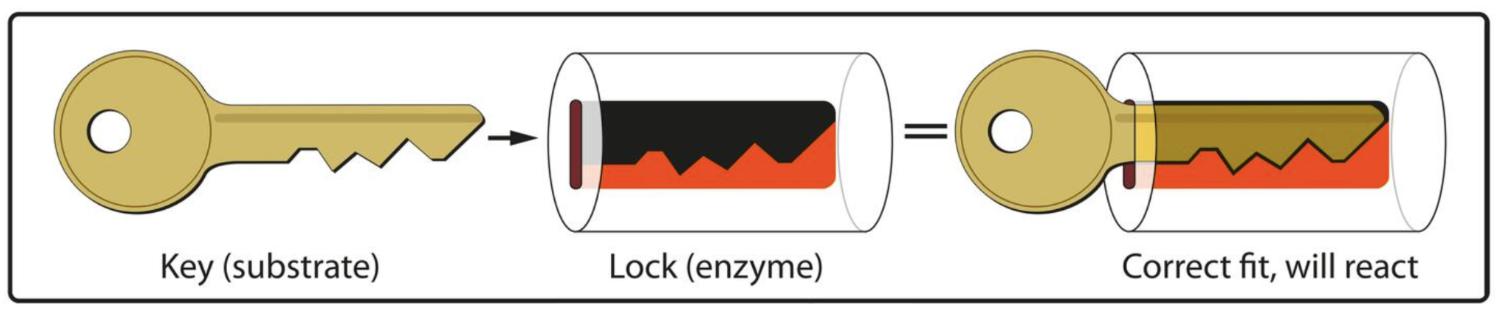
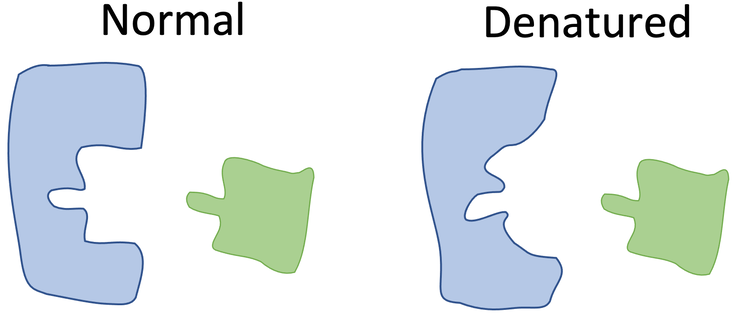
Enzymes are special found in our bodies that help (speed up)
chemical reactions.
If an enzyme and substrate have a shape, a reaction will occur. However, if an enzyme is not in its optimal conditions, it will (change shape) and can no longer function.
Spørgsmål 2
2.
Which factors can denature an enzyme?
Select TWO correct answers.
Spørgsmål 3
3.
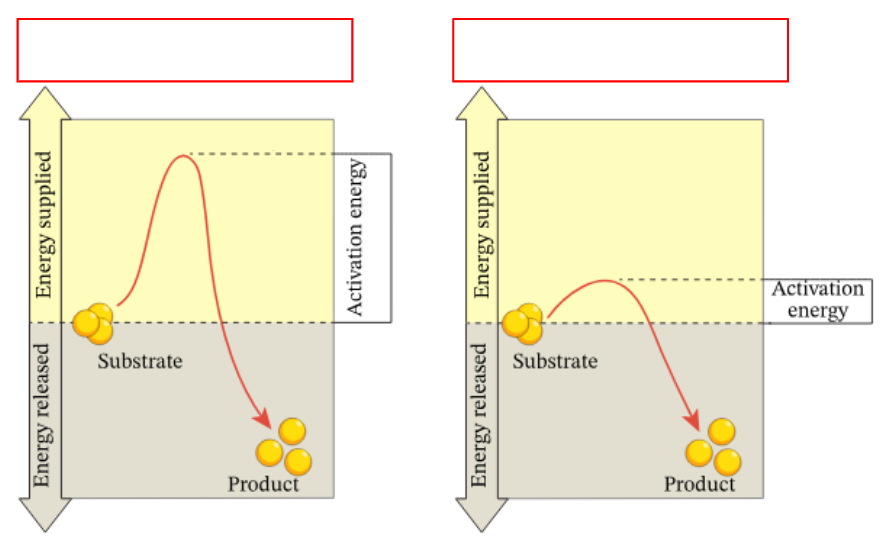
Add the appropriate title to the enzyme activation diagrams below:
Andre svarmuligheder:
Chemical Reaction WITH an enzyme
Chemical Reaction WITHOUT an enzyme
Nødvendig
1
Spørgsmål 4
4.
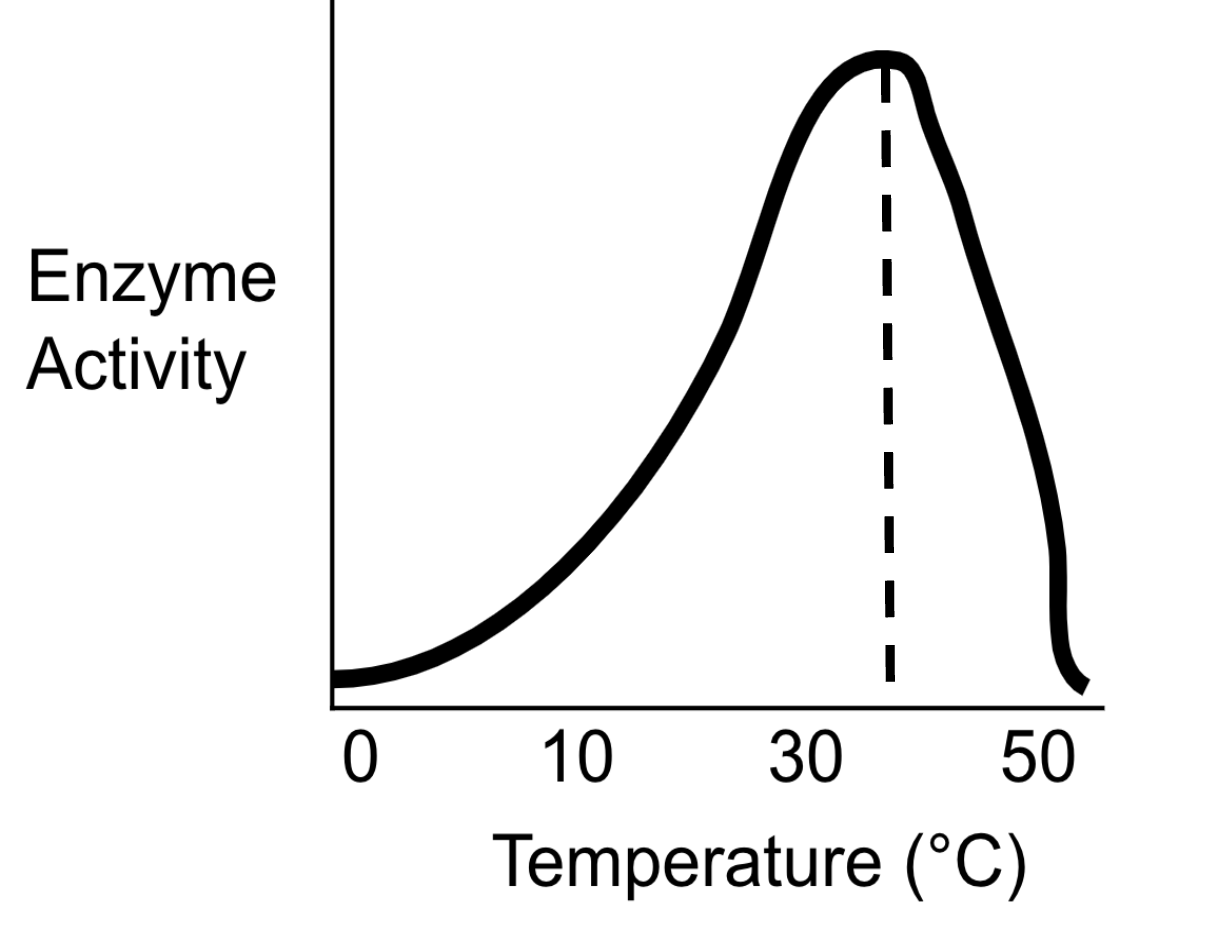
What is the optimal temperature of this enzyme?
Nødvendig
1
Nødvendig
1
Spørgsmål 7
7.
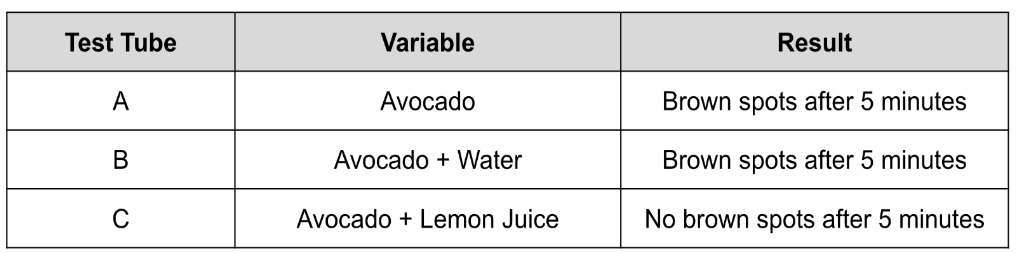
Catecholase is an enzyme found in fruits such as avocados. When exposed to oxygen in the air, catecholase breaks down catechol and results in brown spots forming.
In an experiment, avocado was added into a test tube by itself, with water, and with lemon juice. The results of the experiment are shown below.
Natalie claims that the lemon juice changed the temperature of the avocado which denatured the enzyme. She says this is why there are no brown spots.
Is Natalie correct? Complete the sentence below:
Natalie in her claim because adding lemon juice changes the which results in denatured enzymes.
Spørgsmål 8
8.
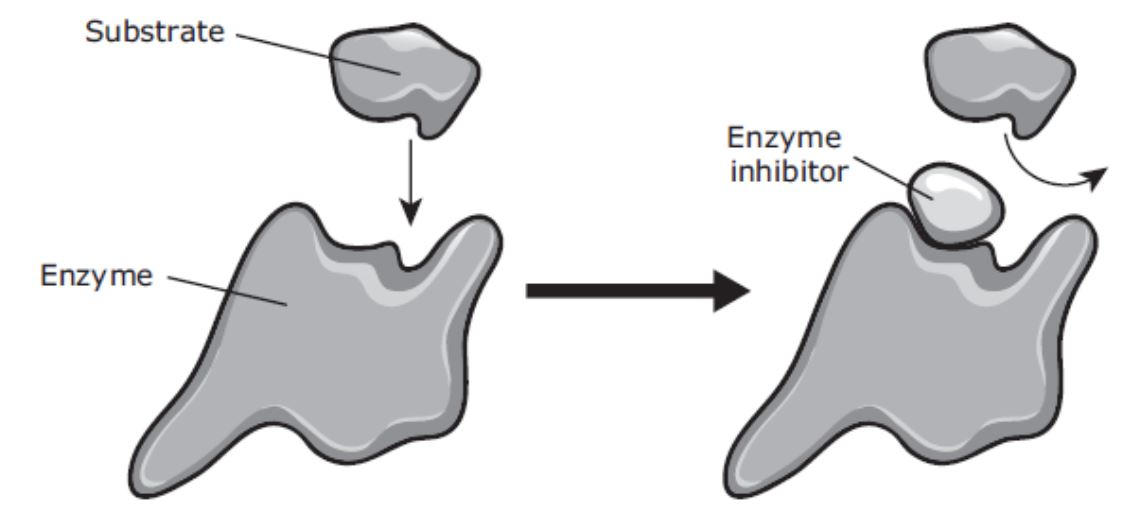
The diagram represents one way an enzyme can be inhibited.
Which statement explains the effect of an inhibitor on an enzyme?
Spørgsmål 9
9.
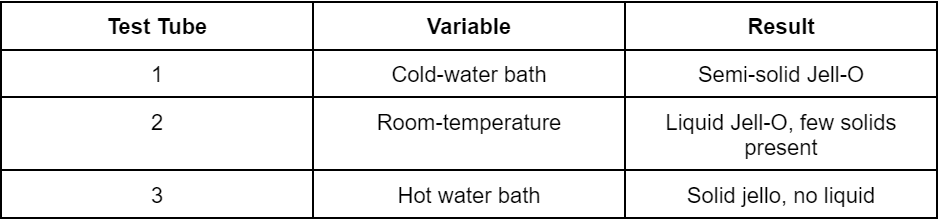
Meat tenderizer has an enzyme called papain, which breaks down long chains of proteins, like the ones found in Jell-O. Papain was added to three different test tubes with Jell-O. Each test tube was then placed in a water bath for ten minutes. The data collected during the experiment is shown below.
Which statement best explains the results of test tube 3?