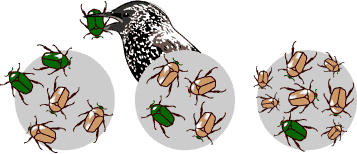
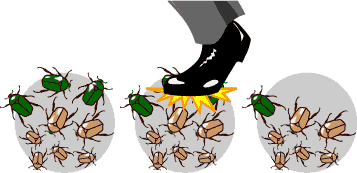
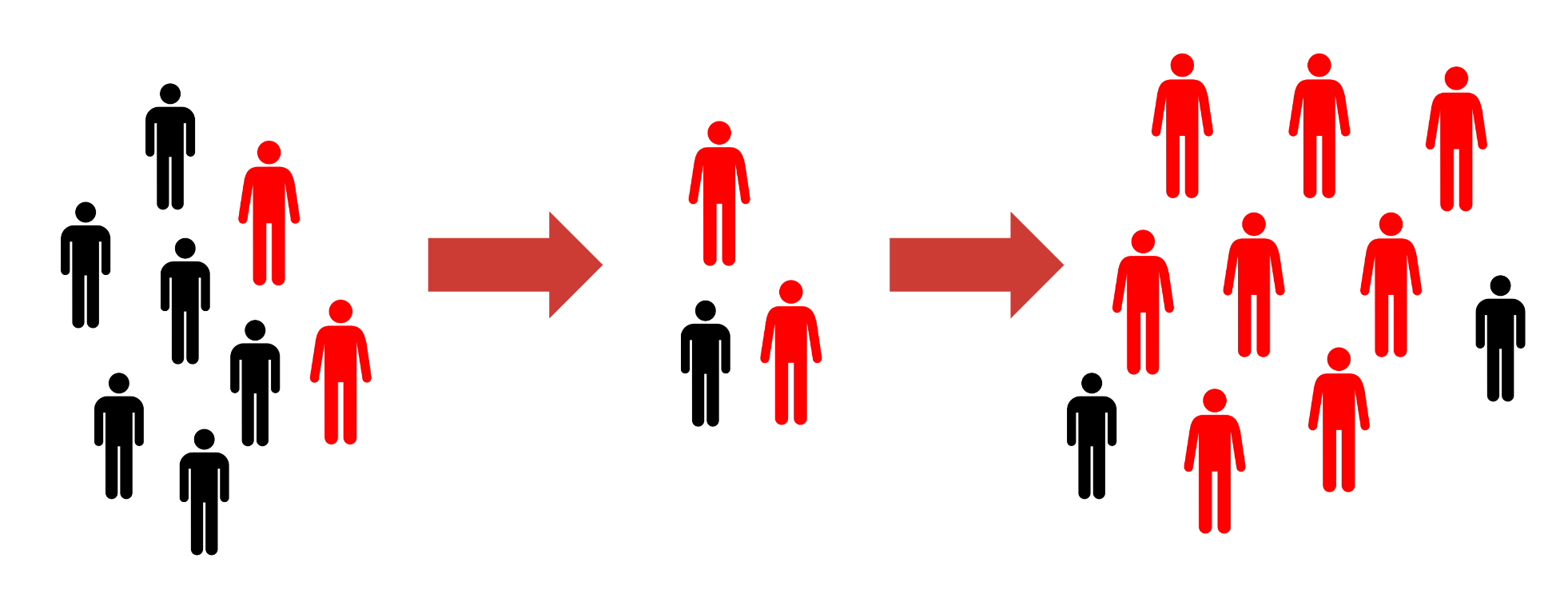
What is happening to the number of green beetles over time (from left to right)?

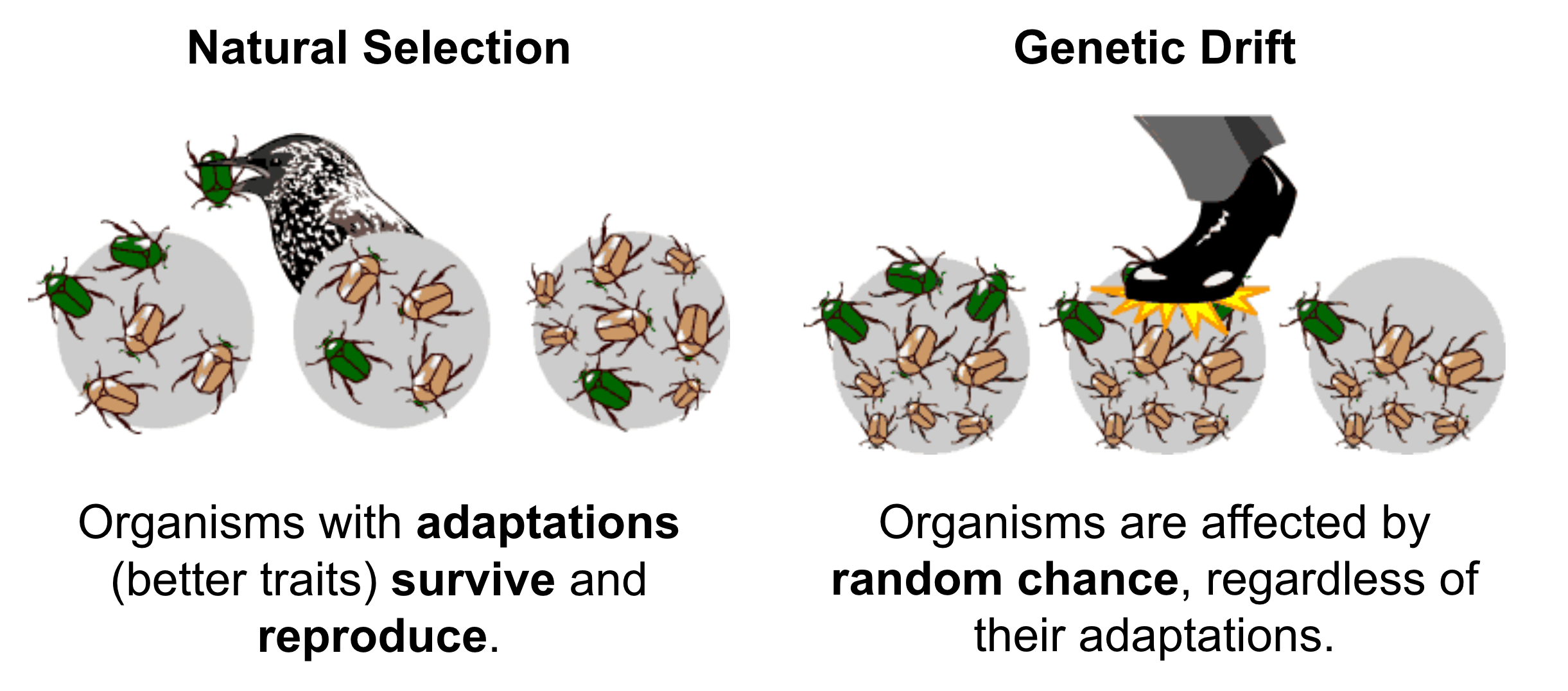
What is the difference between Natural Selection and Genetic Drift?
Natural selection is the ONLY driving force behind evolution.


Which alleles were present in the original population?
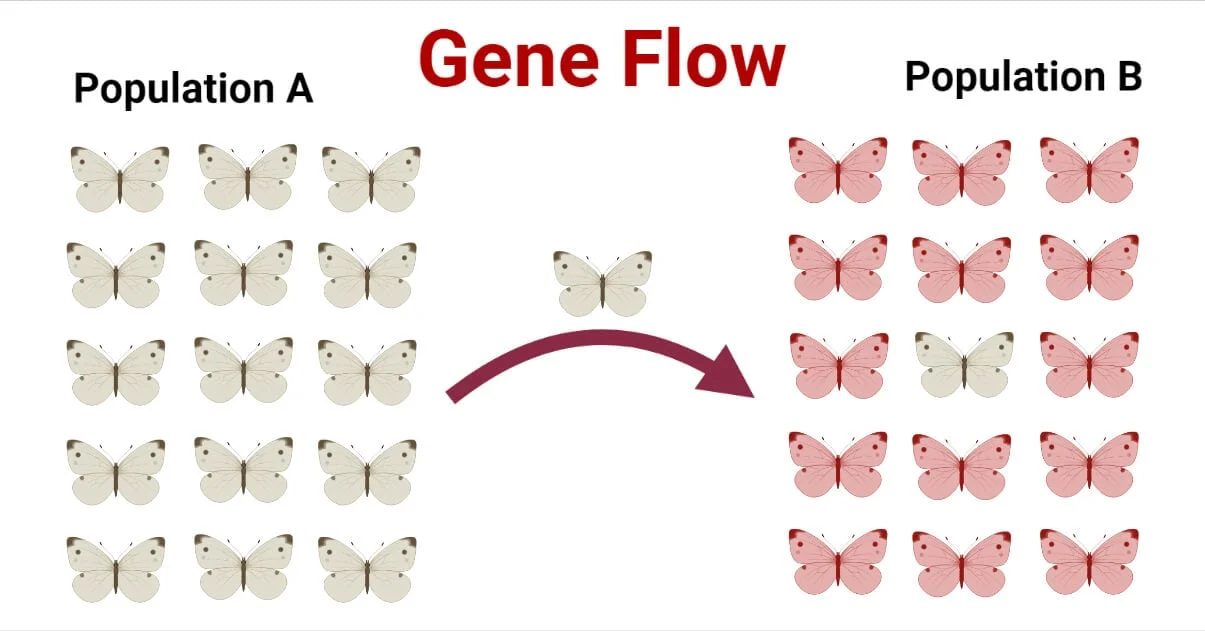
If Population A and Population B were to combine, what would happen to the variation within the gene pool?

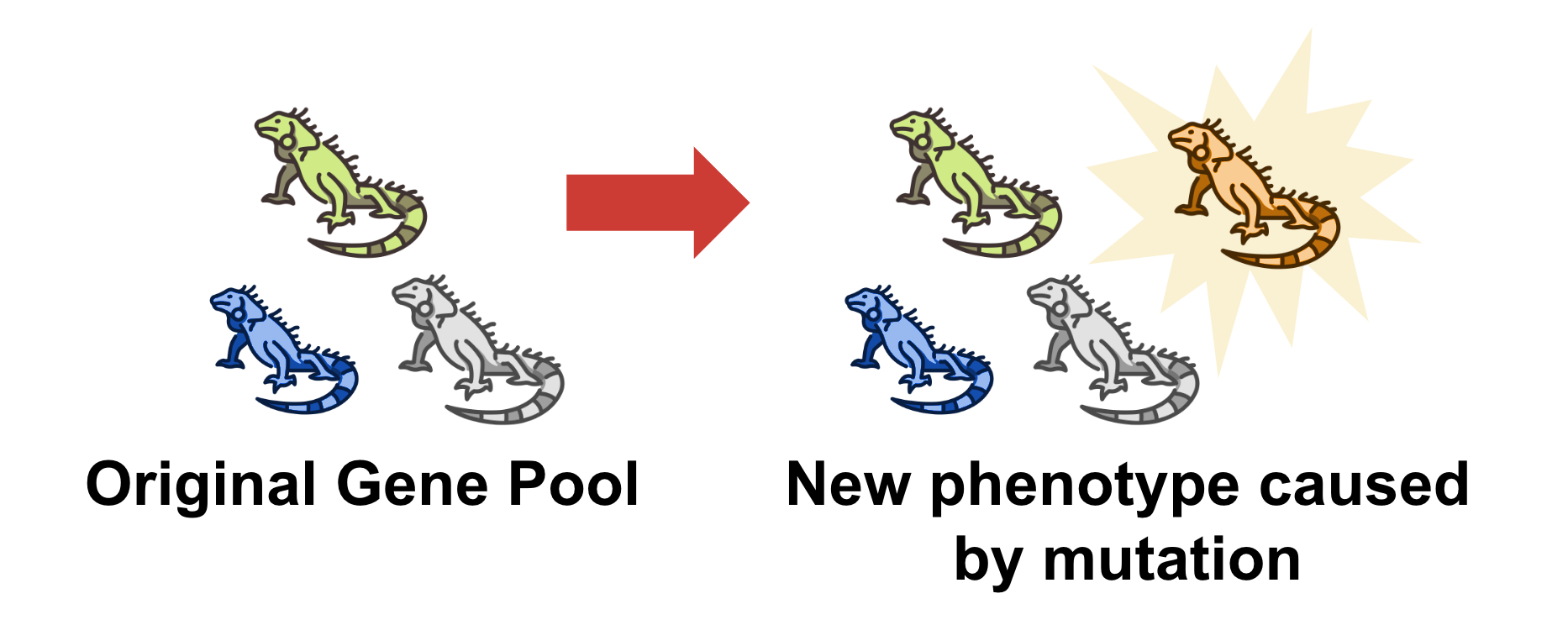
What happens to genetic variation as a result of Mutations?

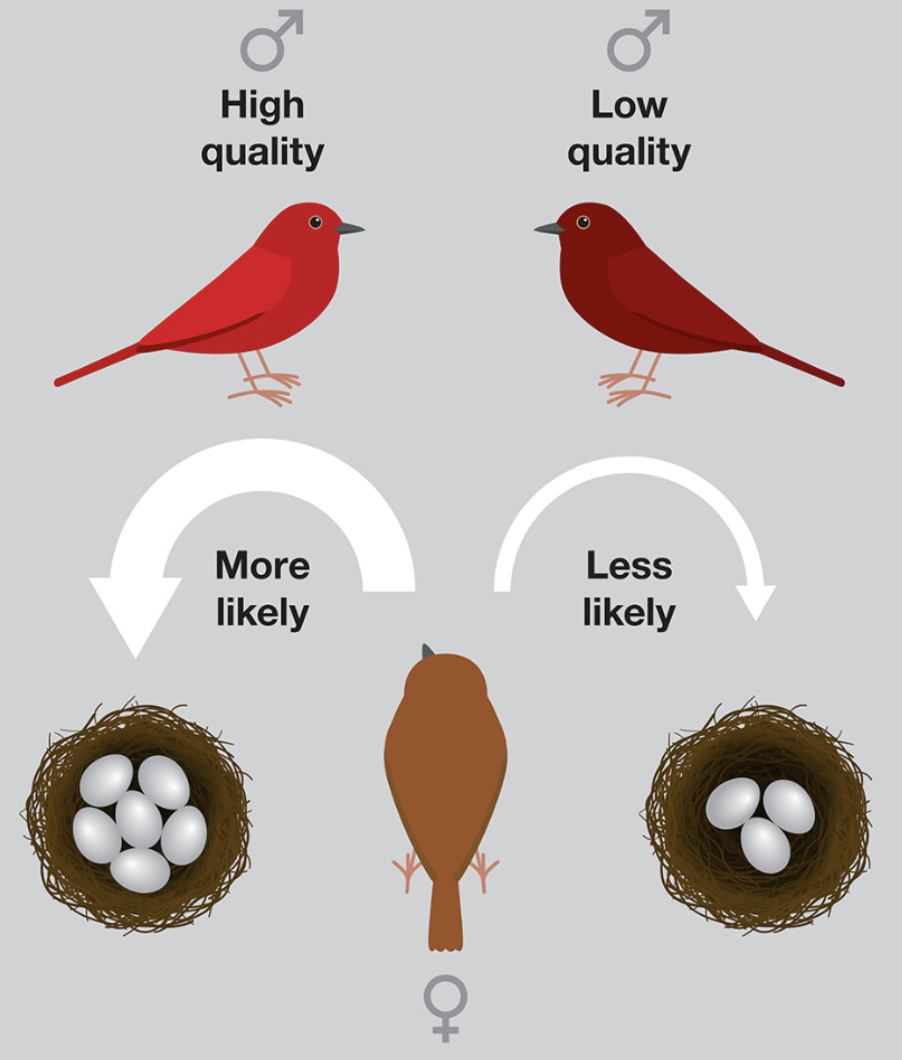
Suppose the brown females in a particular species of bird prefer to mate with bright red male birds over dark red male birds. What will happen to the dark red allele frequency over time?
Match each mechanism of evolution with its definition.
| Draggable item | arrow_right_alt | Corresponding Item |
|---|---|---|
Mutations | arrow_right_alt | Nature chooses; organisms with better traits survive and reproduce. |
Founder Effect | arrow_right_alt | Sudden random decrease in population that also decreases variation. |
Natural Selection | arrow_right_alt | When a small population is isolated from the larger population, then forms a new colony. |
Non-Random Mating | arrow_right_alt | Movement or exchange of alleles into or out of a population. |
Gene Flow | arrow_right_alt | Random change in DNA that creates new alleles in the population. |
Bottleneck Effect | arrow_right_alt | When certain characteristics are preferred over others in a population. |
The Afrikaner population in South Africa came from a few colonists that settled there hundreds of years ago.
Today, the Afrikaner population has an unusually high frequency of the gene that causes Huntington’s disease. Scientists believe this is because the original colonists who settled in this new colony carried the gene with high frequency.

Which mechanism of evolution explains the high frequency of Huntington's disease in the population?
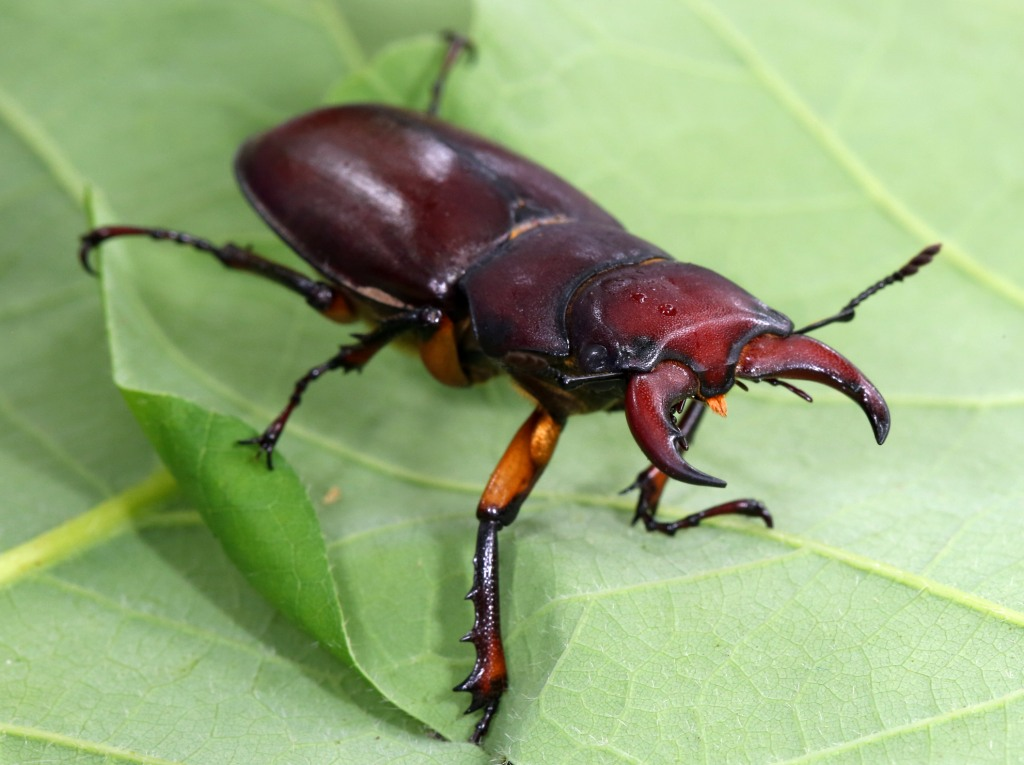
In a forest, beetles with flat legs stay on the ground, while beetles with hooks can climb trees. A certain predator eats beetles close to the ground. Over time, the frequency of beetles with hooks increases in the population, while the frequency of beetles with flat legs decreases.
Which mechanism of evolution explains the change in allele frequency in the population?
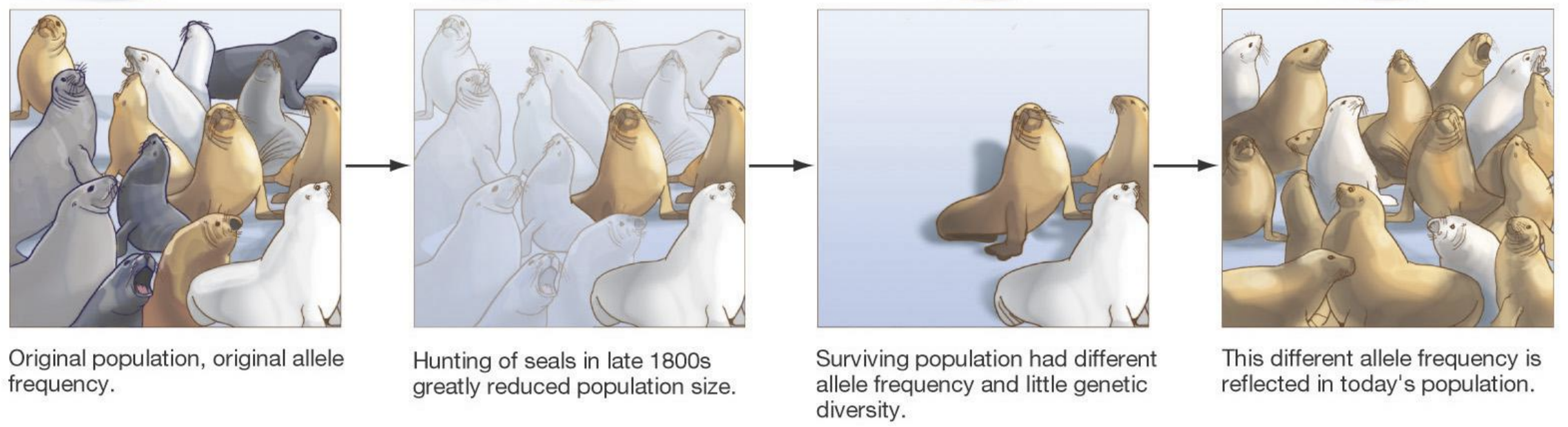
In Antarctica, there used to be 4 different allele variations of seals: those with brown fur, white fur, gray fur, and black fur. Seals with gray fur and black fur were hunted in the 1800s in order to make dark fur coats.

Which mechanism of evolution explains the change in allele frequency in the population?
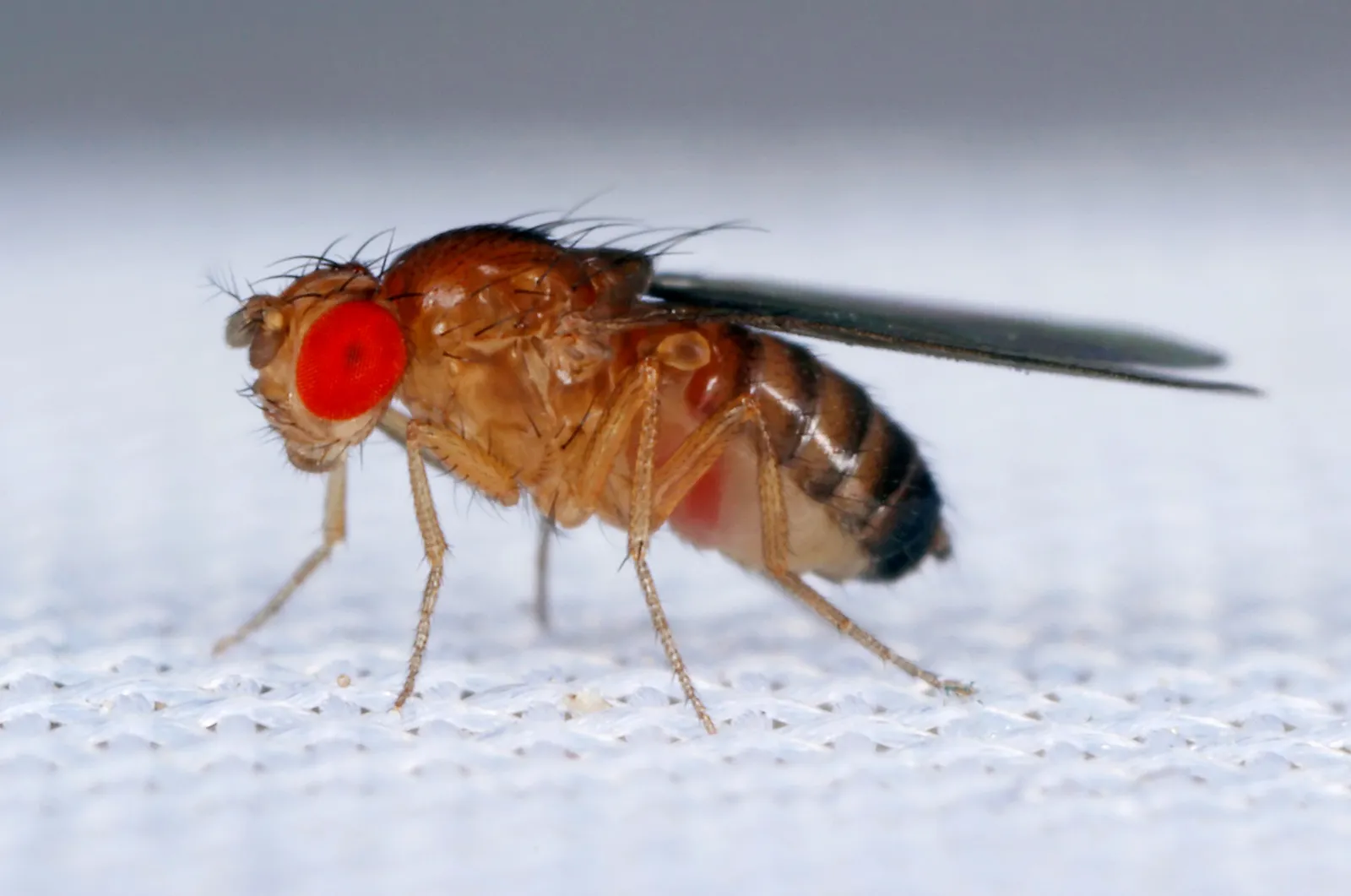
Sara is studying flies inside of her genetics lab. In week 1, she records that 75% of the population has red eyes and 25% of the population has white eyes. After 3 weeks, she notices that 50% have red eyes, 25% have white eyes, and 25% have orange eyes.
If no other flies have entered or left the population, which mechanism of evolution explains this change in allele frequency?
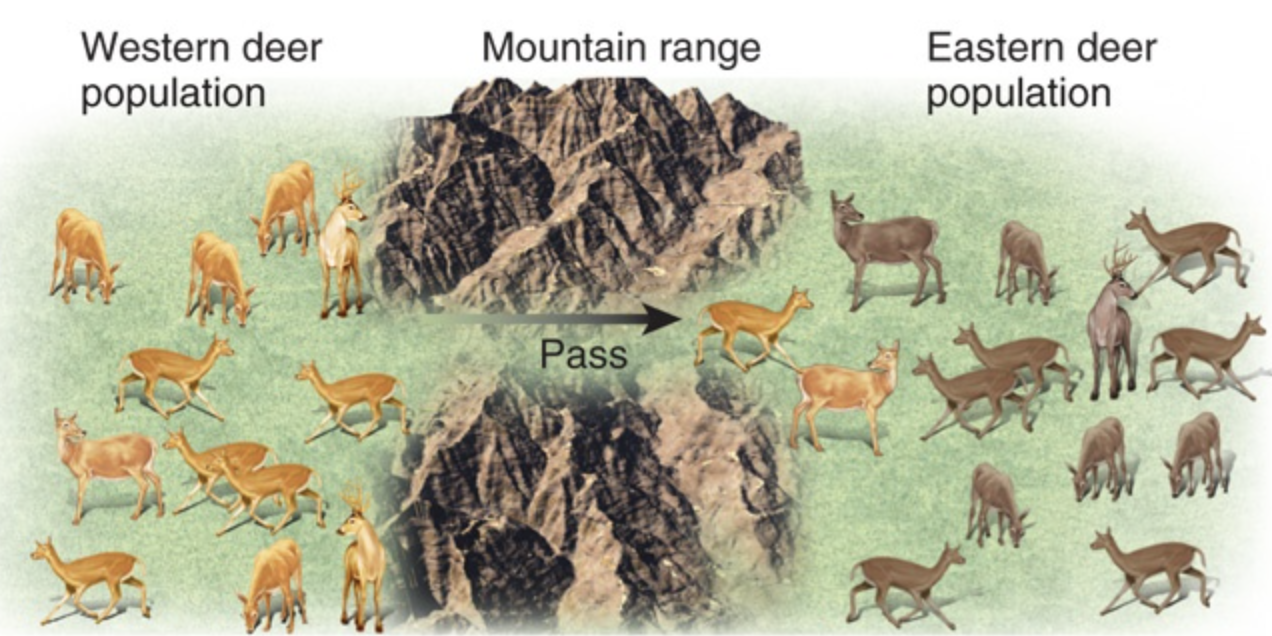
The Rocky Mountains are home to two populations of deer. In the Western deer population, 100% of the population has light brown fur. In the Eastern deer population, 100% have dark brown fur. In 1906, a clearing was created through the mountain range, allowing the two populations to interact for the first time in centuries. We now observe that in the Eastern deer population, 80% have dark brown fur, and 20% have light brown fur.

Which mechanism of evolution explains the change in allele frequency in the population?
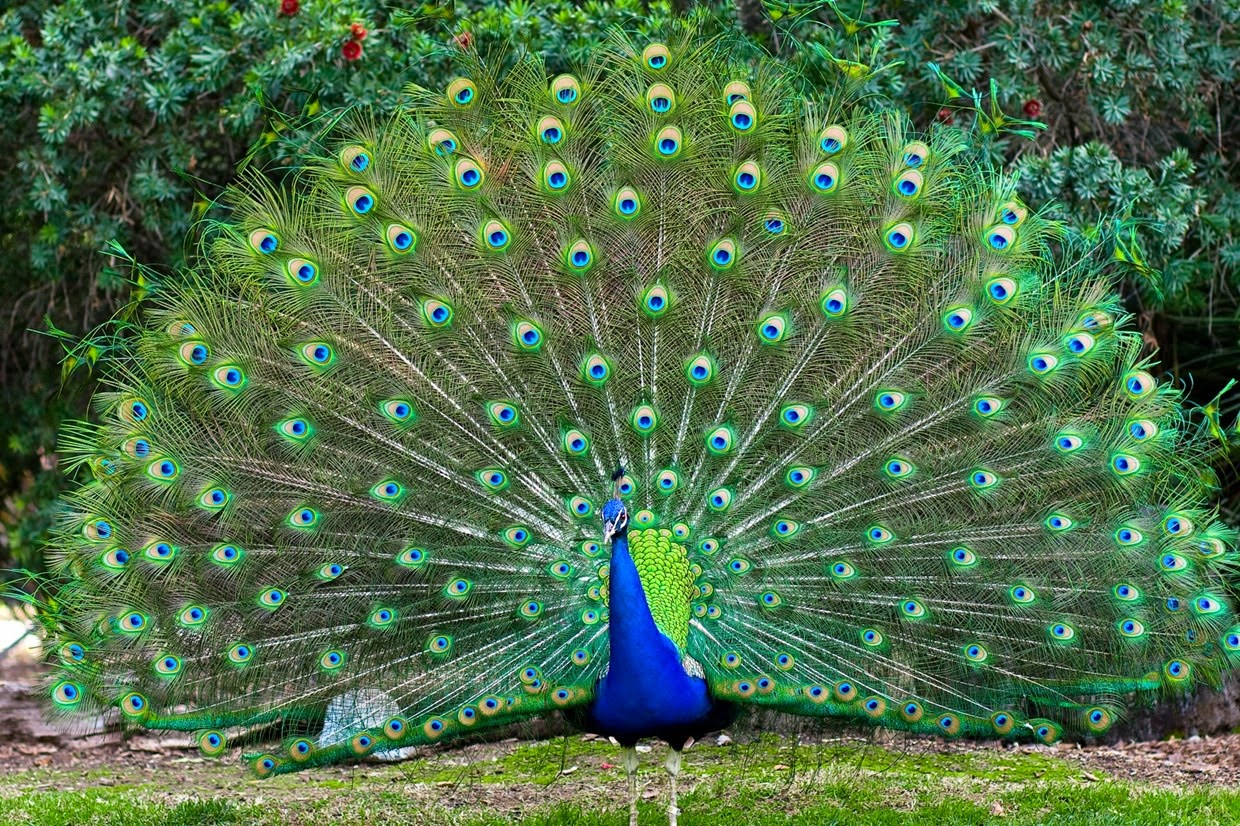
In the Kampong Gardens of Florida, 50% of male peacocks have 250 eyespots and 50% have 100 eyespots on their feathers. After 5 years, researchers have noticed that 80% of males have 250 eyespots, and only 20% have 100 eyespots.
Which mechanism of evolution explains the change in allele frequency in the population?
What is happening to the number of brown beetles over time (from left to right)?
Which variation of beetle would be considered the most "fit"?
Would this change within the beetle population be considered an example of Natural Selection? (Did nature choose what the better trait was?)
Which allele had more survivors?
Which variation of beetle would be considered the most "fit"?
Would this change within the beetle population be considered an example of Natural Selection? (Did nature choose what the better trait was?)
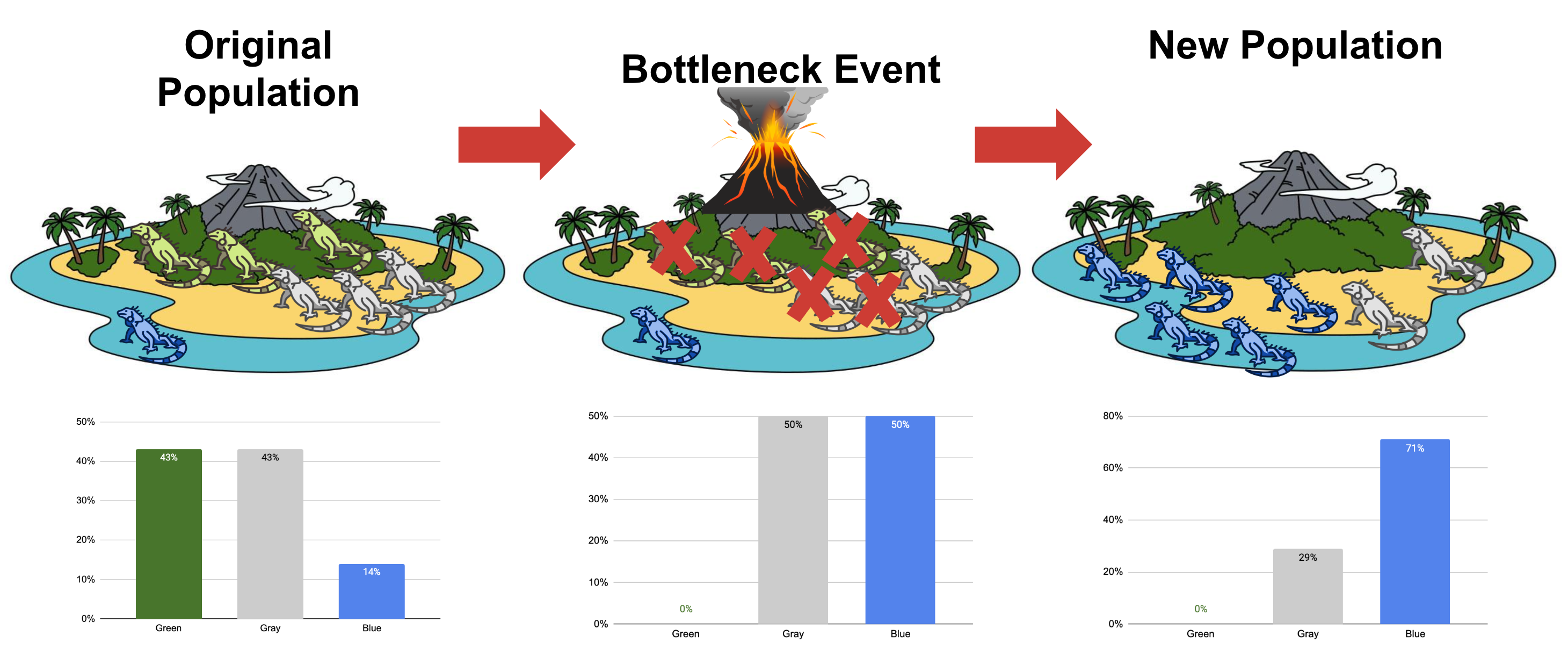
Which alleles had the highest frequency in the original population?
Which alleles had the highest frequency after the bottleneck event?
What happened to the variation after the bottleneck event?
Suppose a disease spreads in the new population. What would happen to the population if only the green iguanas had a gene to protect against it?
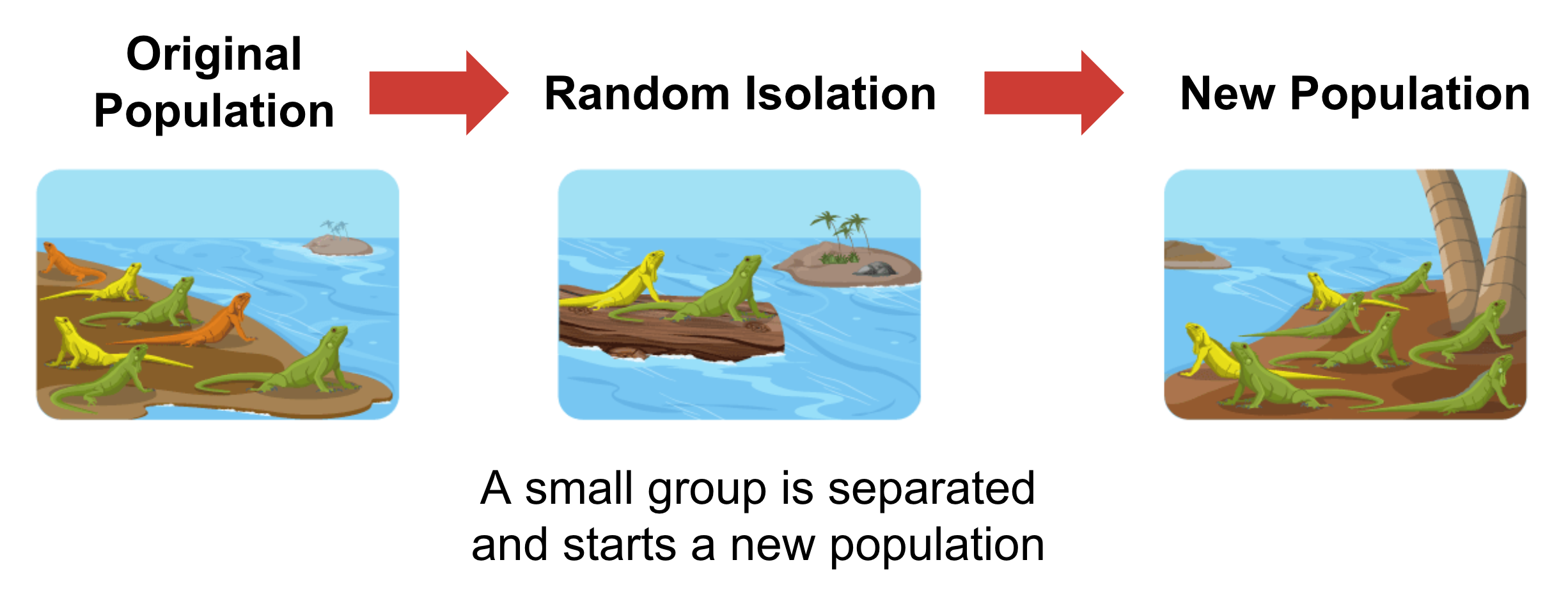
Which alleles were present in the new population?
What happens to genetic variation as a result of the Founder Effect?
What is meant by the term "gene pool"?
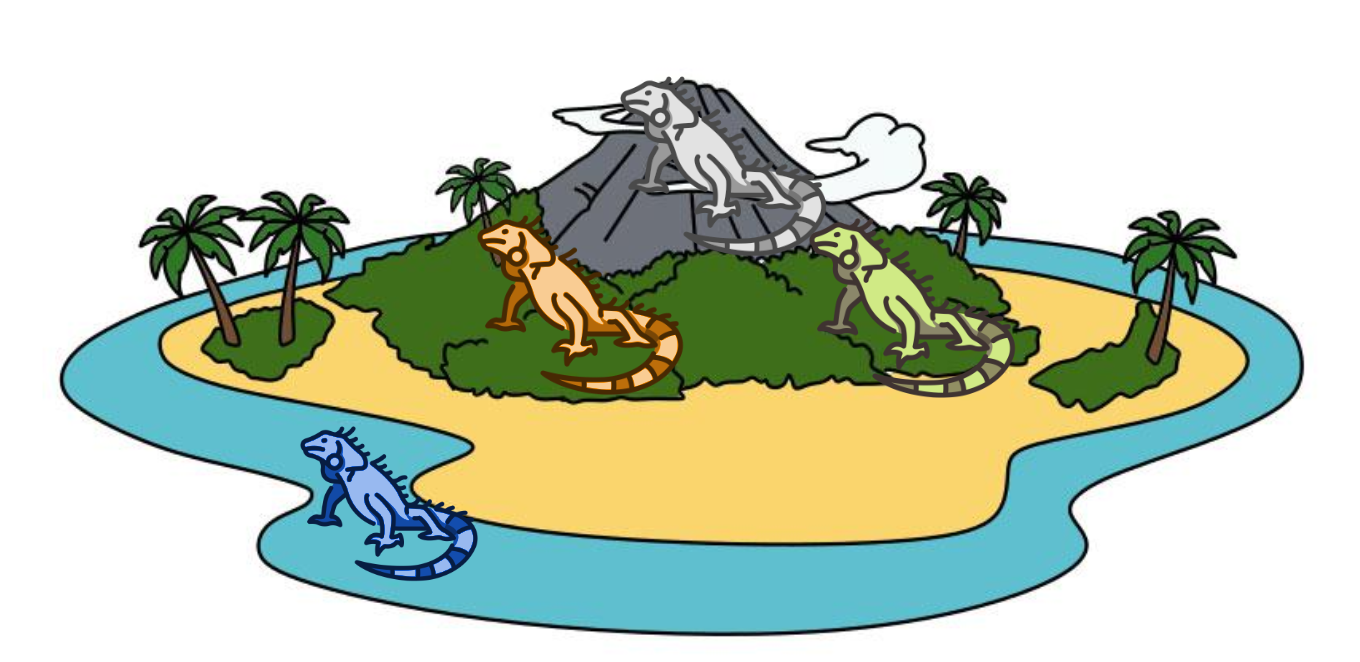
Suppose the mutation that created the orange iguana prevents them from camouflaging in the forest from predators.

Is the mutation good or bad, and what will happen to the population of orange iguanas over time?
Suppose the mutation that created the orange iguana allows them to produce toxins from their skin to protect themselves against predators.

Is the mutation good or bad, and what will happen to the population of orange iguanas over time?