Notes from Ash:
Hey team! tried to compile info a bit more clearly/relevant to meeting our goal.
Goal - Determine which questions we will have for the unit test and quizzes based on reflection of focus with "new TEKS"
Unit 2 Test:
Cells and Viruses
Cell Transport
Readiness:
B.5A - Relate the functions of different types of biomolecules including C/L/P/NA to the structure and function of a cell
B.5C - Investigate homeostasis through the cellular transport of molecules
B.5D - compare the structures of viruses to cells and explain how viruses spread and cause disease
Supporting:
B.5B - compare and contrast prok and euk cells, including their complexity, and compare and contrast scientific explanations for cellular complexity
Build as a D&D - 3 blanks for prokaryotic / euk. plant / euk. animal
Modified from 2019 Q6
(Does not align)
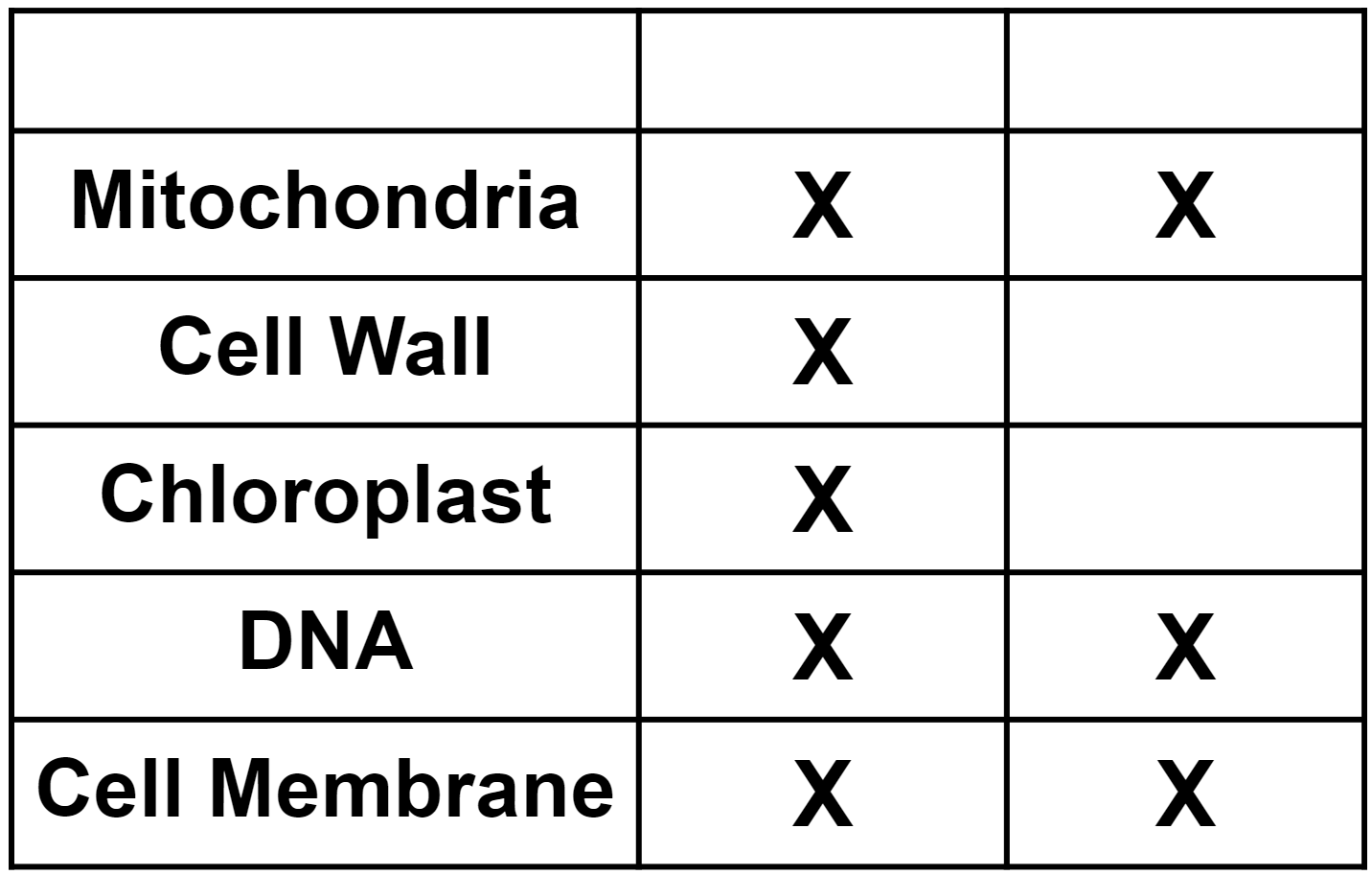
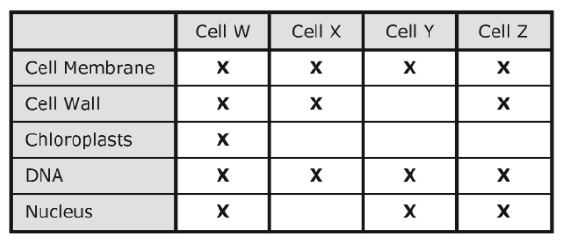
Student use a microscope to look for structures present in four different cells. The students placed an X for each structure that was viewed for each cell on the table shown.
Which cell that was viewed is more likely a prokaryote?
Below is a table demonstrating the difference between a plant cell and an animal cell.
Move ONE correct answer to each box.

In animal cells, the sodium potassium pump moves sodium and potassium ions against the concentration gradient across the cell membrane.
What type of transport is used, AND why is this type of transport necessary?
Read the question carefully. Then enter your answer in the box provided.
B.5(C) investigate homeostasis through the cell transport of molecules
(old: B.4B - investigate and explain cellular processes including homeostasis and transport of molecules)
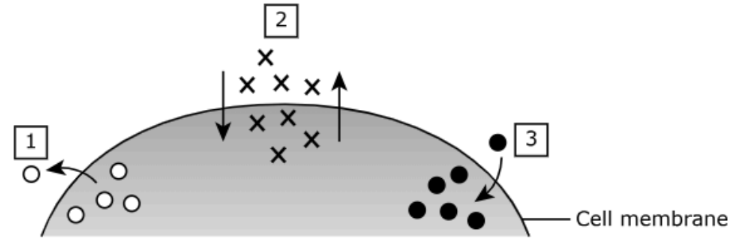
The diagram represents the movement of three different substances across a cell membrane.
Moving which of these substances across the cell membrane requires energy from ATP?
-Potentially change to
B.5(C) investigate homeostasis through the cell transport of molecules
(old: B.4B - investigate and explain cellular processes including homeostasis and transport of molecules)
Which statement best describes the difference between active transport and passive transport?
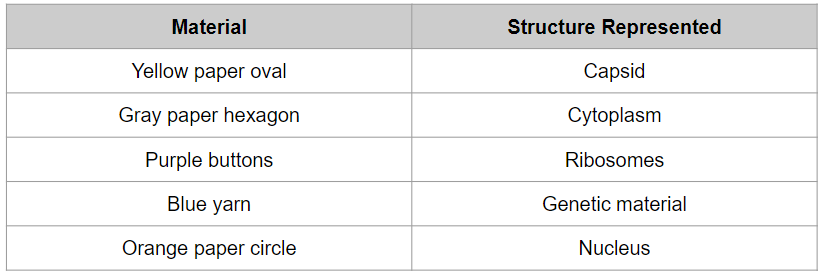
Materials are provided to students to build models of a prokaryotic cell, a eukaryotic cell, and a virus. The materials and the structures they represent are listed in the table shown.
Which material will students use in all three models?
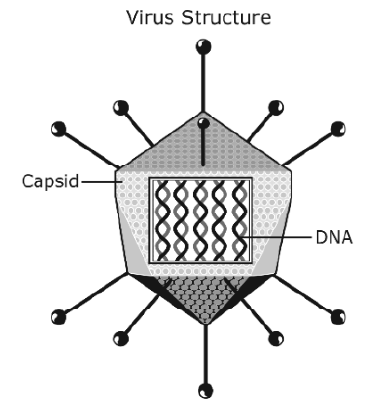
A student produces a labeled drawing of a virus for a presentation. The student states that the capsid has a function similar to the nucleus found in animal cells.
Which of these describes the similar functions of a capsid and a nucleus?
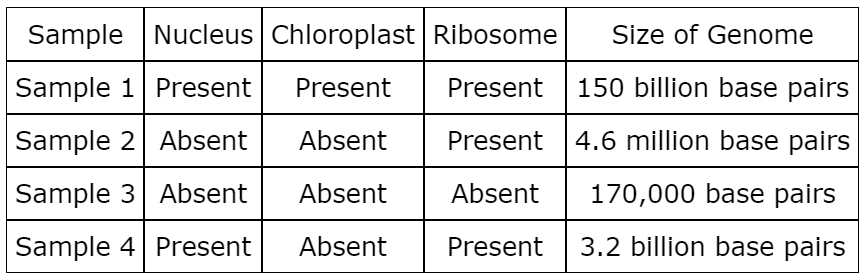
A table comparing the characteristics of four samples is shown.
Which sample most likely contains viruses?
Which statement correctly compares eukaryotic cells and prokaryotic cells?
A student claims that the influenza virus replicates in the air and then infects people. Which statement BEST describes the claim?
Which table correctly describes the lytic and lysogenic cycles?
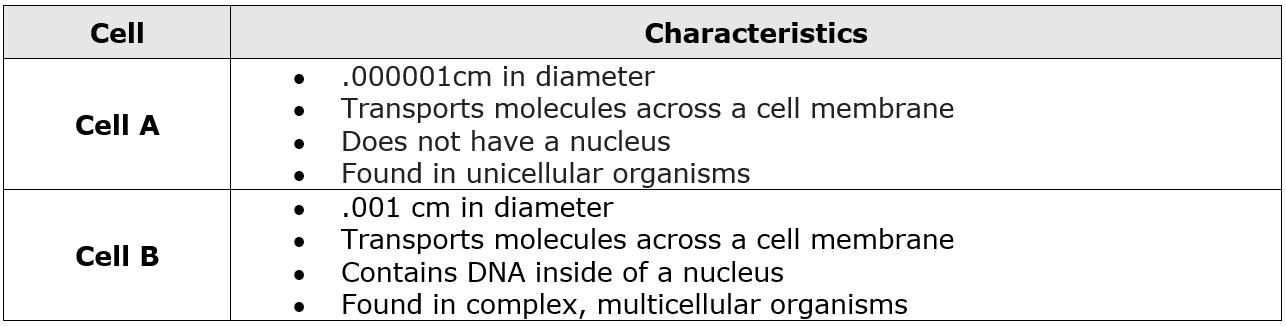
Some students used information they gathered from lab investigations to prepare a table. They entered the table in their lab notebooks.
Which of these correctly identifies the two cells described in the table above?
Build as a D&D - 3 blanks for prokaryotic / euk. plant / euk. animal
Modified from 2019 Q6
(Does not align)
Student use a microscope to look for structures present in four different cells. The students placed an X for each structure that was viewed for each cell on the table shown.
Which cell that was viewed is more likely a prokaryote?
Below is a table demonstrating the difference between a plant cell and an animal cell.
Move ONE correct answer to each box.

Due to a recent infection, the cells in your body need to synthesize (make) more enzymes, which are made of proteins, to break down the bacteria that your immune system has been killing off.
Which cell organelle will MAKE these new enzymes?
Antibiotics are medicines that treat infections by killing bacteria. Some antibiotics work by piercing holes in the cell membrane of bacteria.
What effect would piercing holes in the CELL MEMBRANE of a bacteria have?
B.5A - Relate the functions of different types of biomolecules including C/L/P/NA to the structure and function of a cell
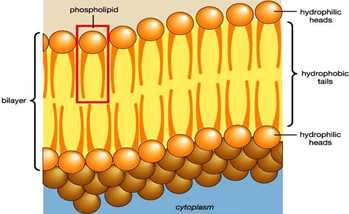
As shown in the picture, the cell membrane is made of two layers of fat molecules. The main function of this organelle is to control what molecules enter and leave the cell so that the cell can maintain homeostasis.
The are the most important biomolecule for maintaining the cell's internal balance.
TEST
2015 Q37 - As is
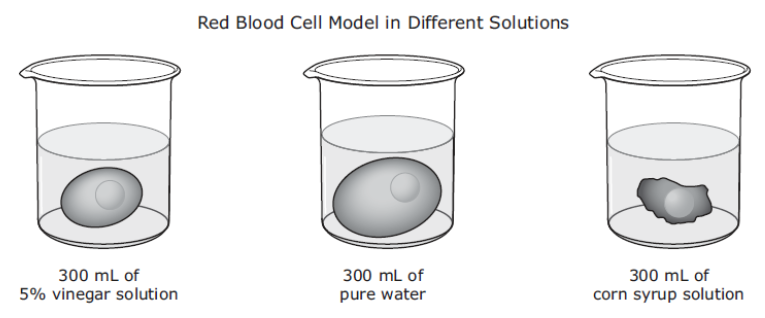
Some students used vinegar to dissolve away the shells of three eggs and used these eggs as models of human red blood cells. The students observed the changes in the eggs when they were placed in different solutions.
Which statement best describes the role of the cell membrane in this model?
Which statement describes the process of osmosis in an animal cell?
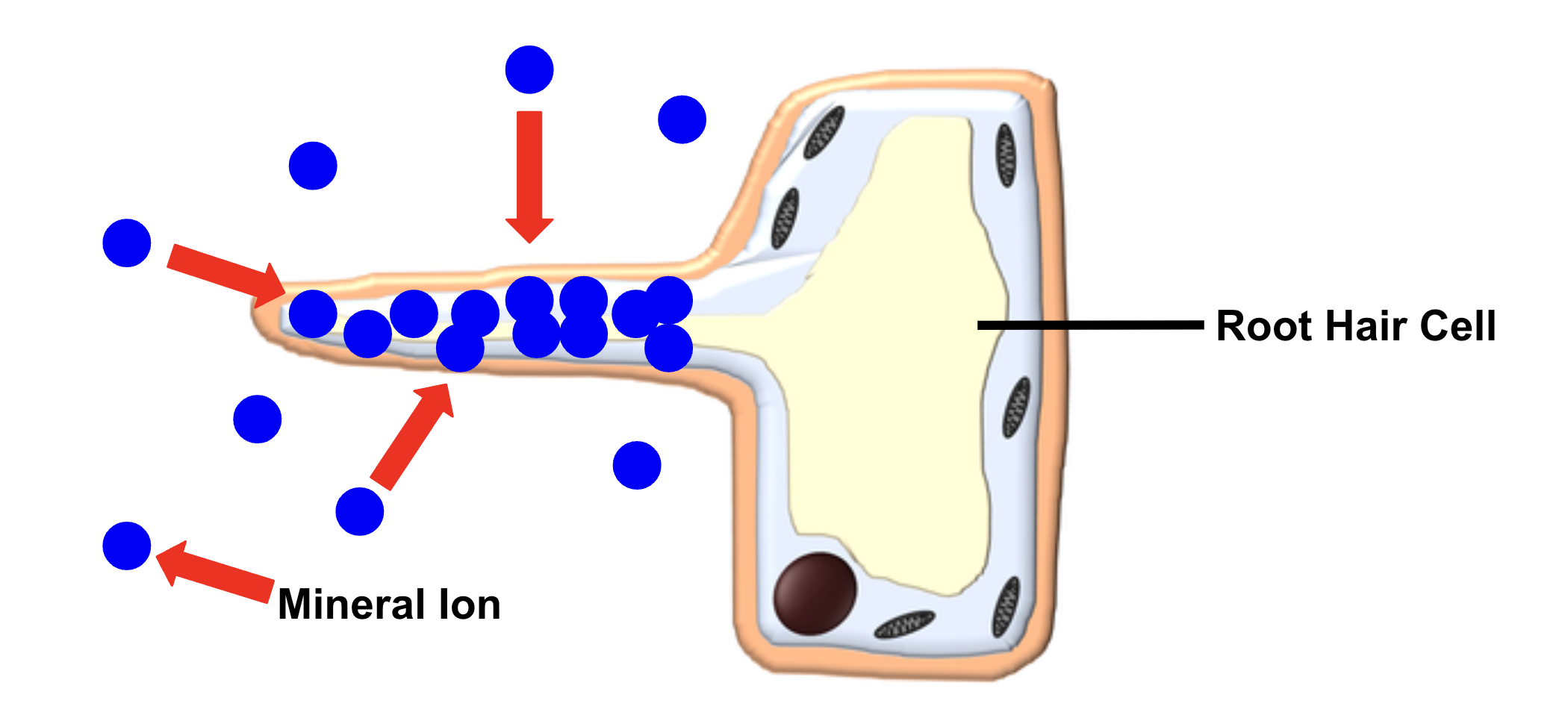
Many plants in the desert have limited access to nutrients and rainfall. As a result, they have specialized cells called root hairs whose job is to take in as many minerals as possible.
The diagram below shows a root hair cell continuously taking in many mineral ions (the blue molecules) into the root hair, even though there is already a high concentration inside the cell.

Mineral absorption is a form of in which molecules move .
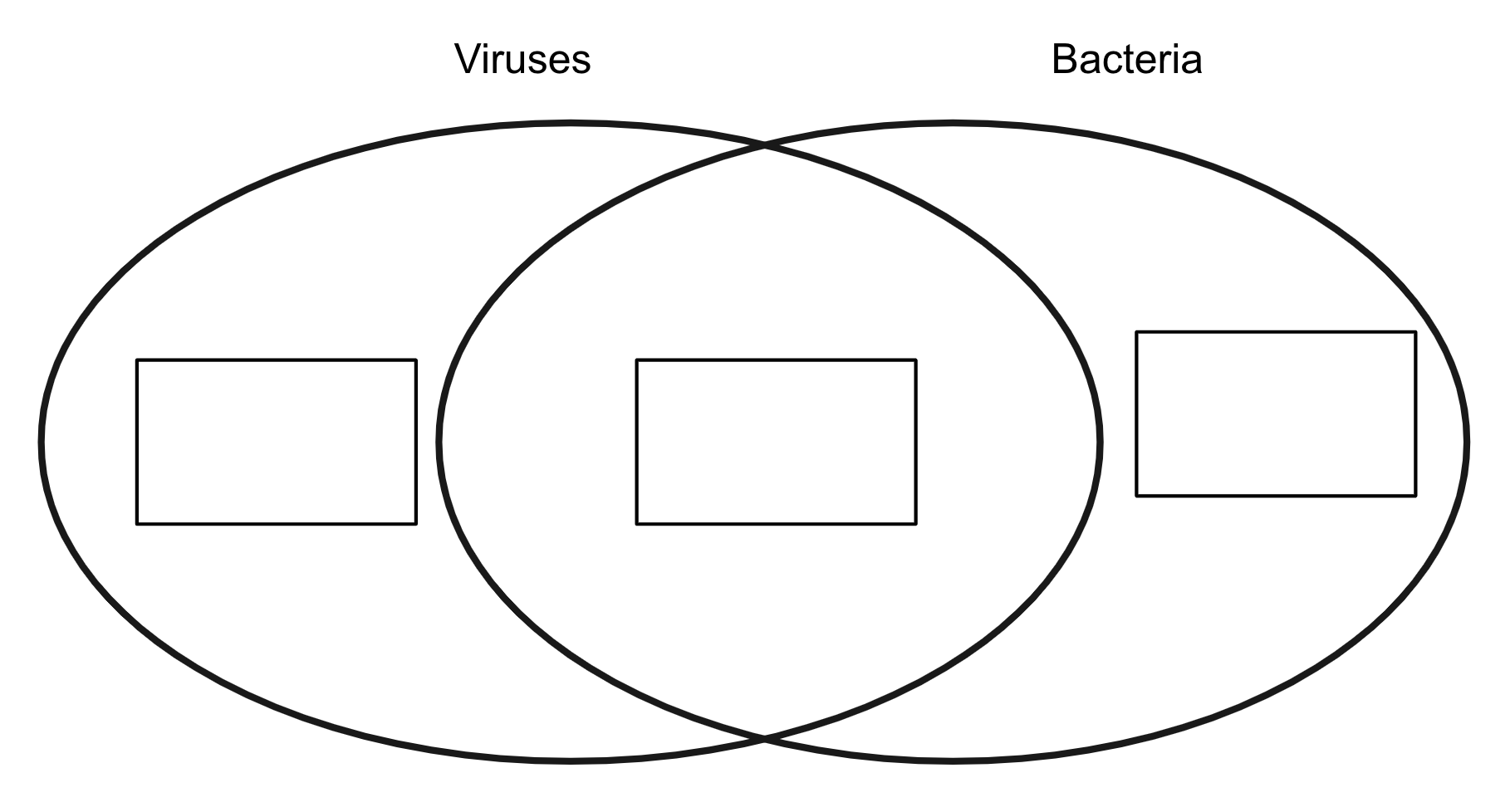
A Venn diagram comparing viruses to bacteria is shown. Which traits apply to each section of the diagram?
Move the answers to the correct boxes.

Viruses can be transmitted through air, water, food, insect bites, and direct skin contact. Once a virus gains entry to the body, it invades a host cell in order to-
In 1898 Friedrich Loeffler and Paul Frosch found evidence that the cause of the highly contagious hoof-and-mouth disease in livestock was a microscopic infectious particle. It was discovered that this particle requires a host cell to reproduce.
Which pathogen is most likely responsible for causing hoof-and-mouth disease in livestock?