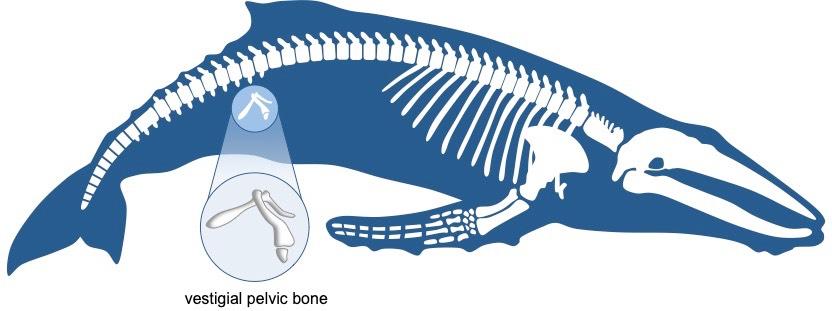
Which of the following vestigial structures in dolphins provides the strongest evidence for their evolutionary relationship with terrestrial (land) mammals?
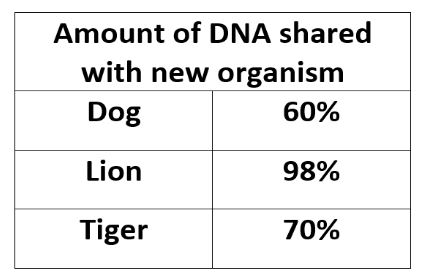
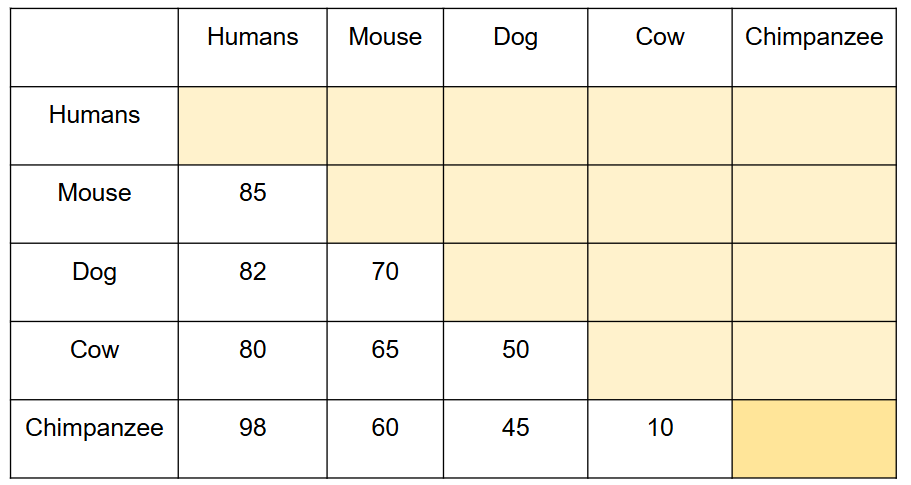
The table below shows DNA similarities in different organisms.
A scientist found a new organism and wanted to know its evolutionary background. Based on the chart above, who is MORE CLOSELY related to the new organism? Why?
Which two organisms are the MOST CLOSELY related?
The Pace of Evolution
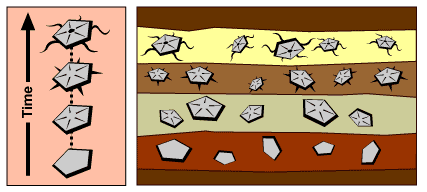
In the above example, the preservation of many transitional forms, through layers representing a length of time, gives a complete record of slow and steady evolution.
This represents the concept of in evolutionary theory because .
What role do fossils play in supporting the theory of gradualism?
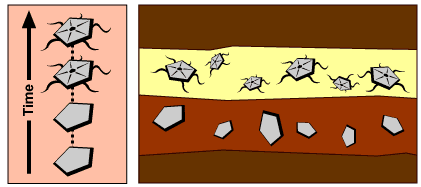
In the above example, we see the descendant preserved in a layer directly after the ancestor, showing a big change in a short time, with no transitional forms.
This represents the concept of in evolutionary theory because .
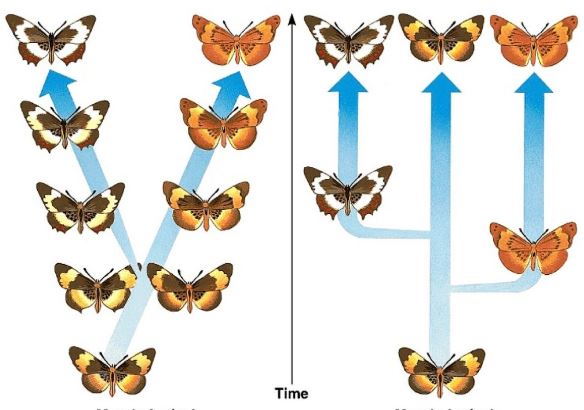
Gradualism and punctuated equilibrium are two theories of how species evolve. Drag the correct theory to the correct picture below.
Which of the following best explains how punctuated equilibrium contributes to patterns of biodiversity in the fossil record?
Which condition is most likely to lead to evolutionary patterns consistent with punctuated equilibrium?
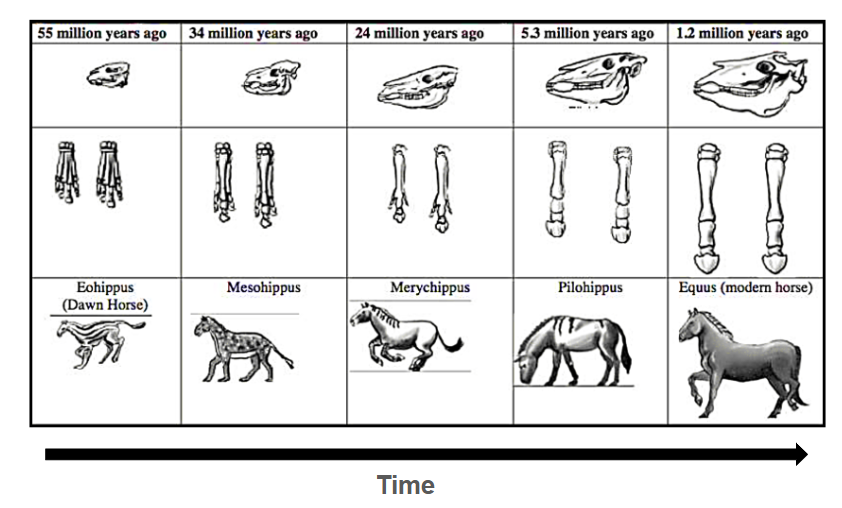
The evolutionary lineage of the horse is among the best-documented in all paleontology. The history of the horse family, Equidae, began during the Eocene Epoch, which lasted from about 55 million to 1.2 million years ago.
Which interpretation of the evolutionary changes depicted in the horse lineage best supports the concept of gradualism?
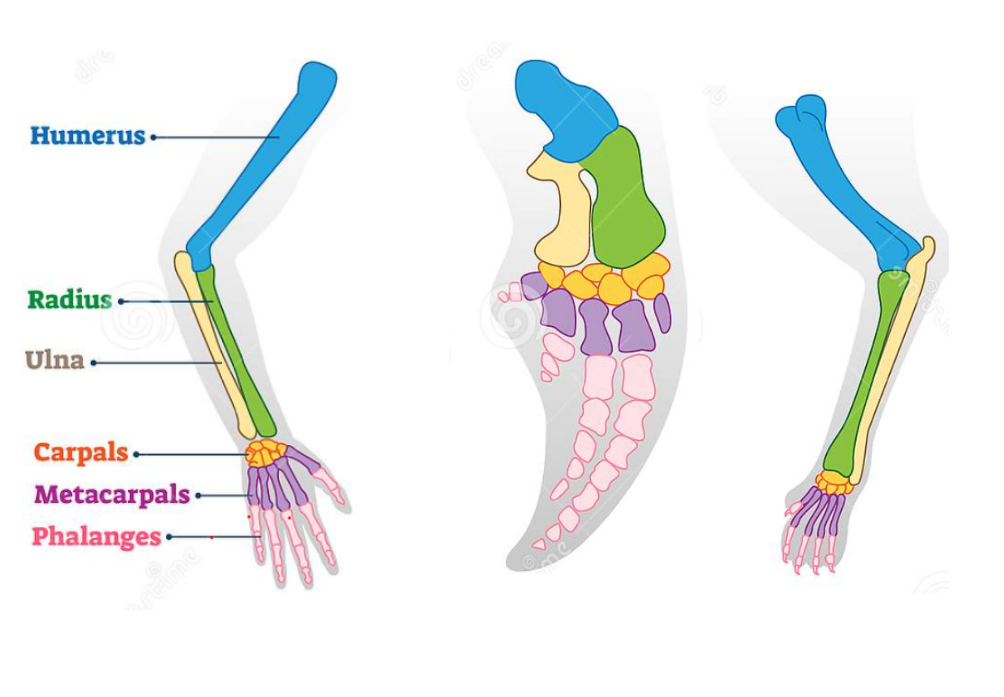
Which of the following is true about the limbs shown above?
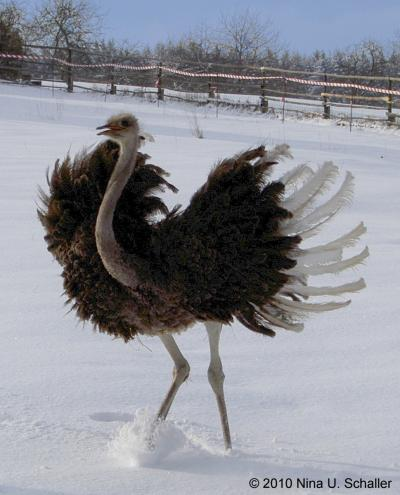
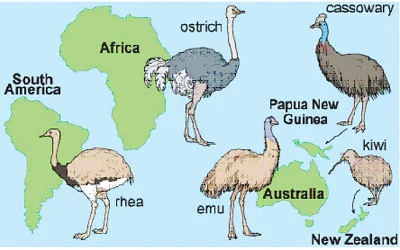
Which of the following best explains how the vestigial wings of ostriches provide evidence for their evolutionary history and common ancestry?
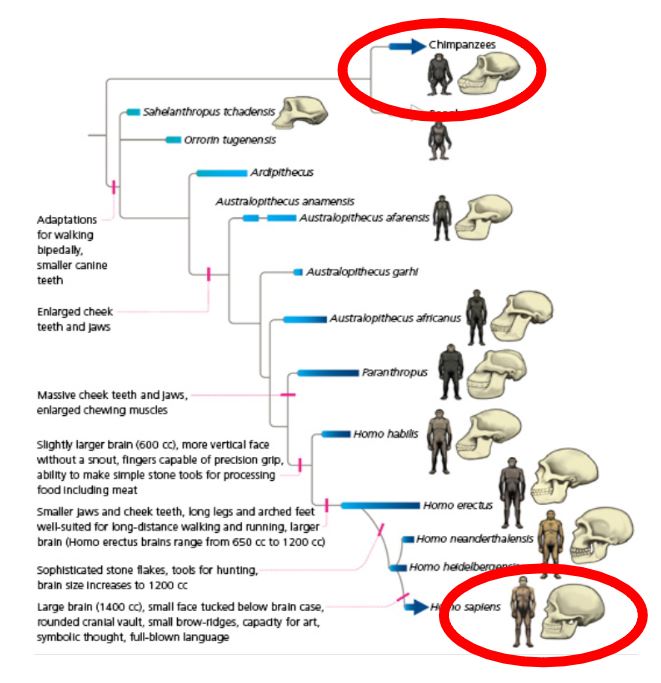
What do you notice about the shape/appearance of chimpanzees and human skulls?
Chimpanzees share 95% of their DNA with humans, horses share 87% of their DNA with humans.
Table practice? (think grid squares)
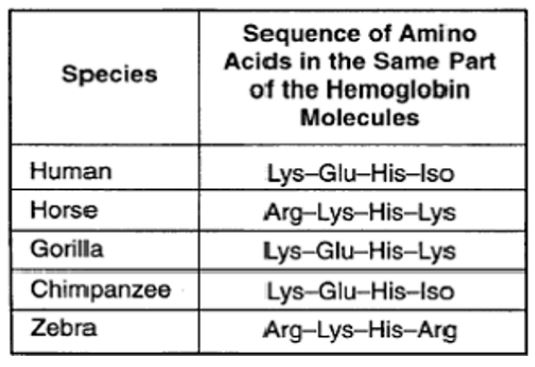
The following table shows the percentage similarities in the DNA sequence of a highly conserved protein-coding gene among humans, chimpanzees, and other mammals:
What conclusion about relatedness is supported by this data?
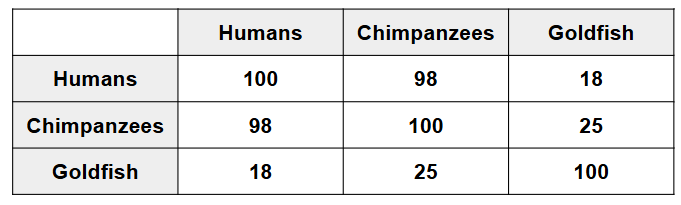
Using the table, which compares the percentage similarity in genetic sequences between humans, chimpanzees, and goldfish, what conclusion can best be drawn regarding evolutionary relationships?
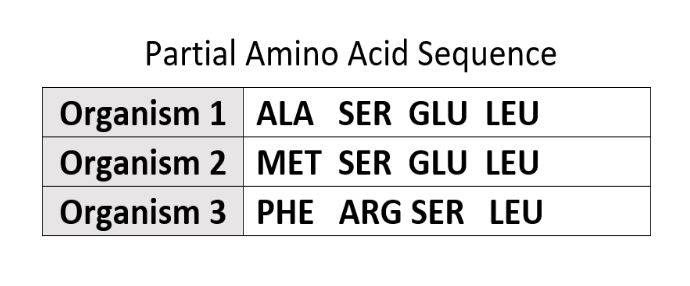
Who is more closely related to organism 2?
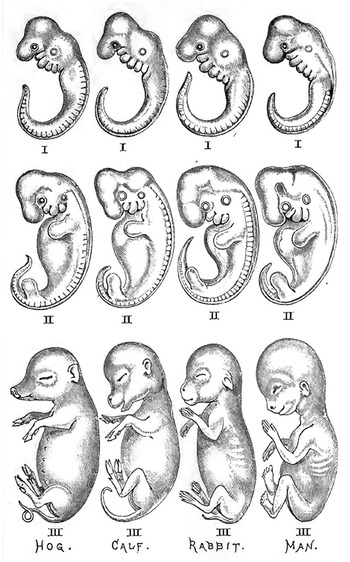
Which of the following best illustrates how embryological similarities among vertebrates support the theory of evolution?
Which of the following best explains the significance of the embryological similarities observed in the developing embryos of a hog, calf, rabbit, and human as shown in the image?
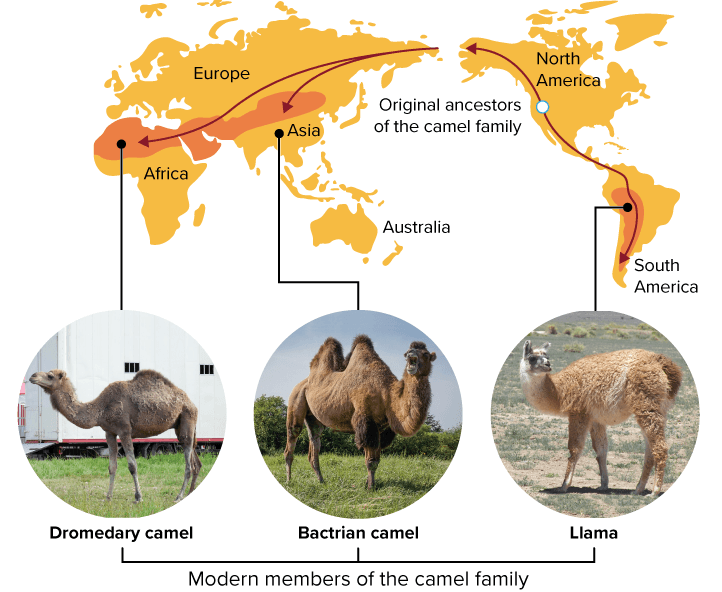
Which of the following best defines biogeography?
How does the image best illustrate the concept of biogeography?
How does biogeography provide evidence for the concept of common ancestry?