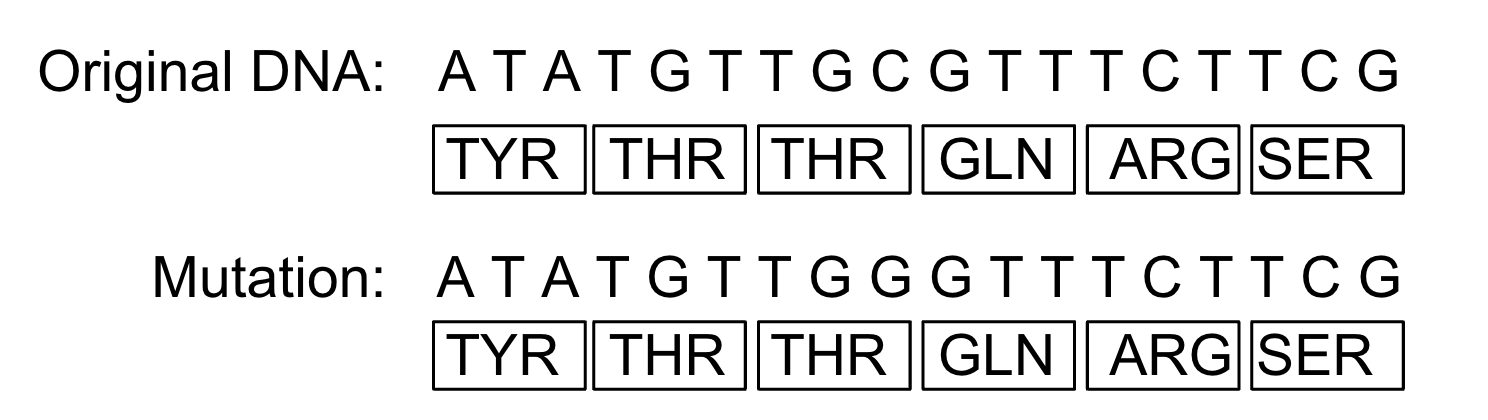
This mutation is considered a .
CLA1 is a(n) mutation because .
This mutation is considered a .
CLA1 is a(n) mutation because .
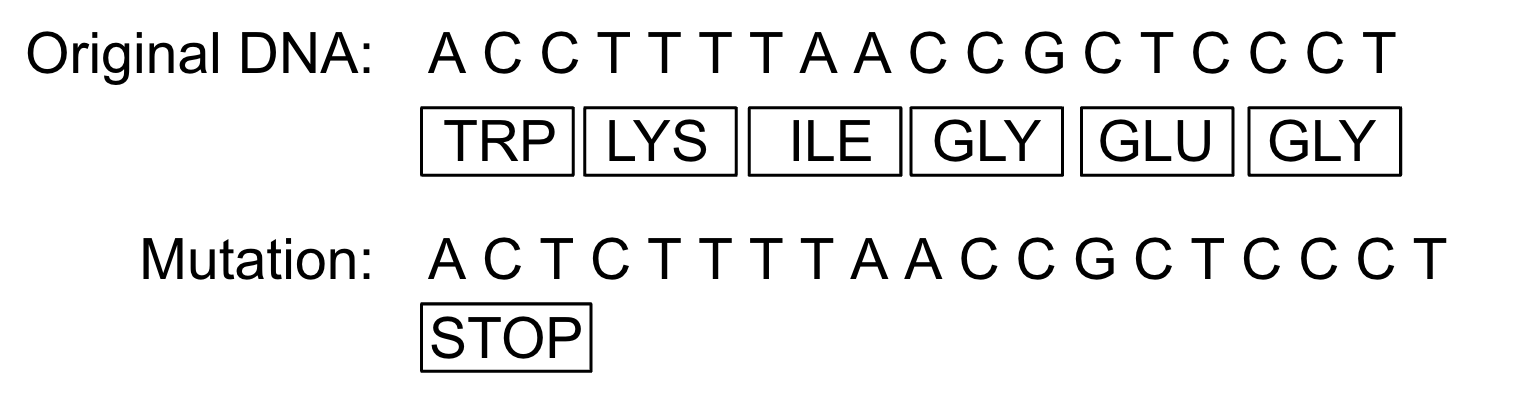
This mutation is considered a .
ODI2 is a(n) mutation because .
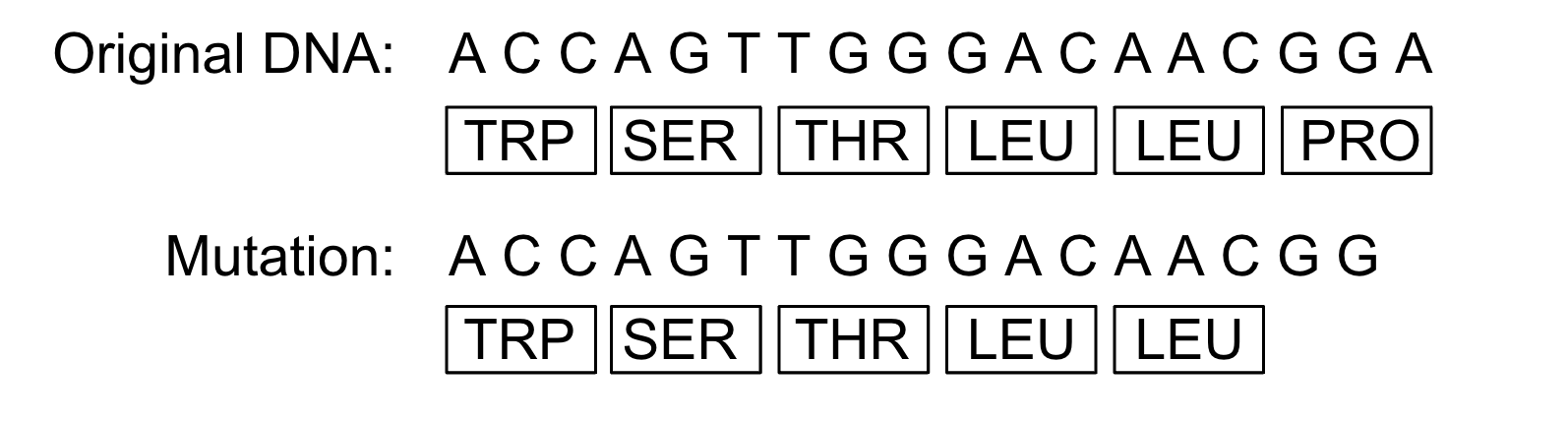
This mutation is considered a .
MENTA is a(n) mutation because .
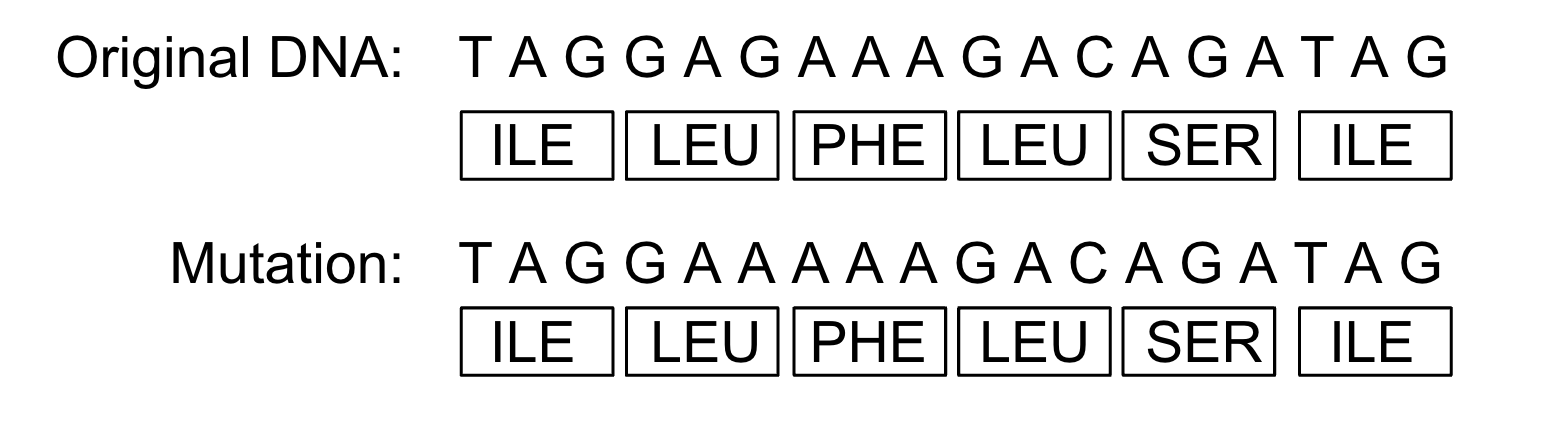
This mutation is considered a .
AUD6 is a(n) mutation because .
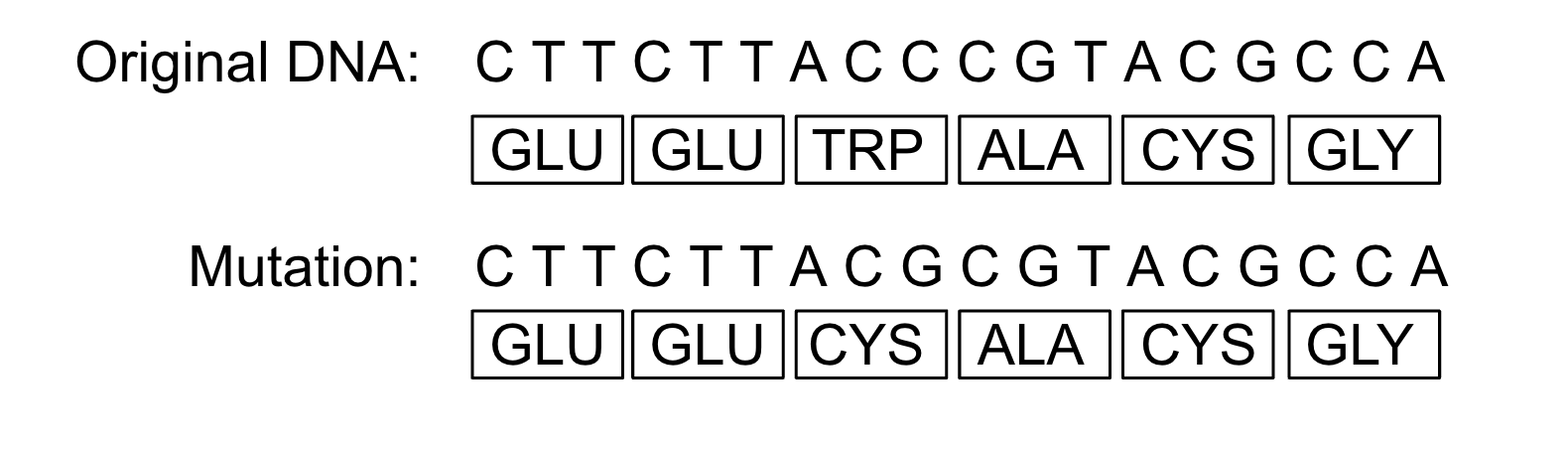
This mutation is considered a .
VAT2 is a(n) mutation because .
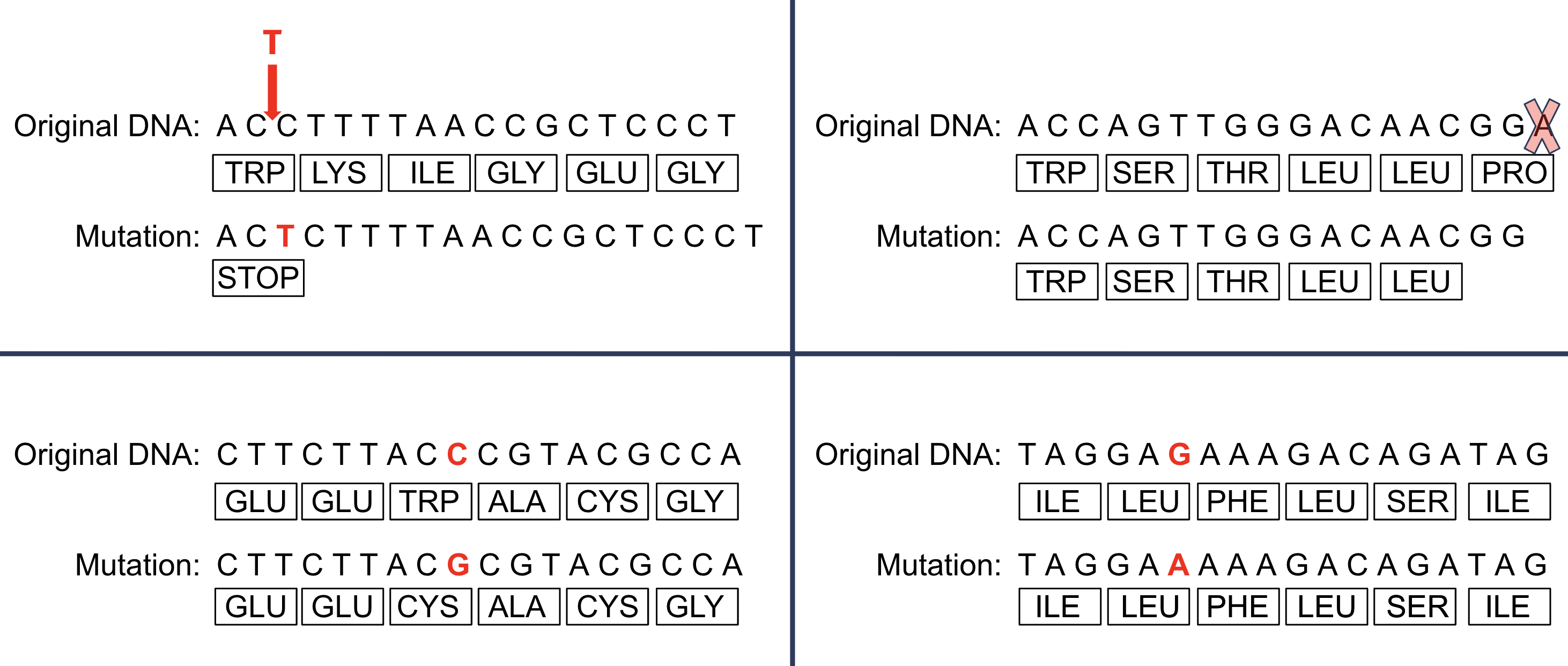
Which type of mutation has the greatest impact on the resulting amino acid sequence?
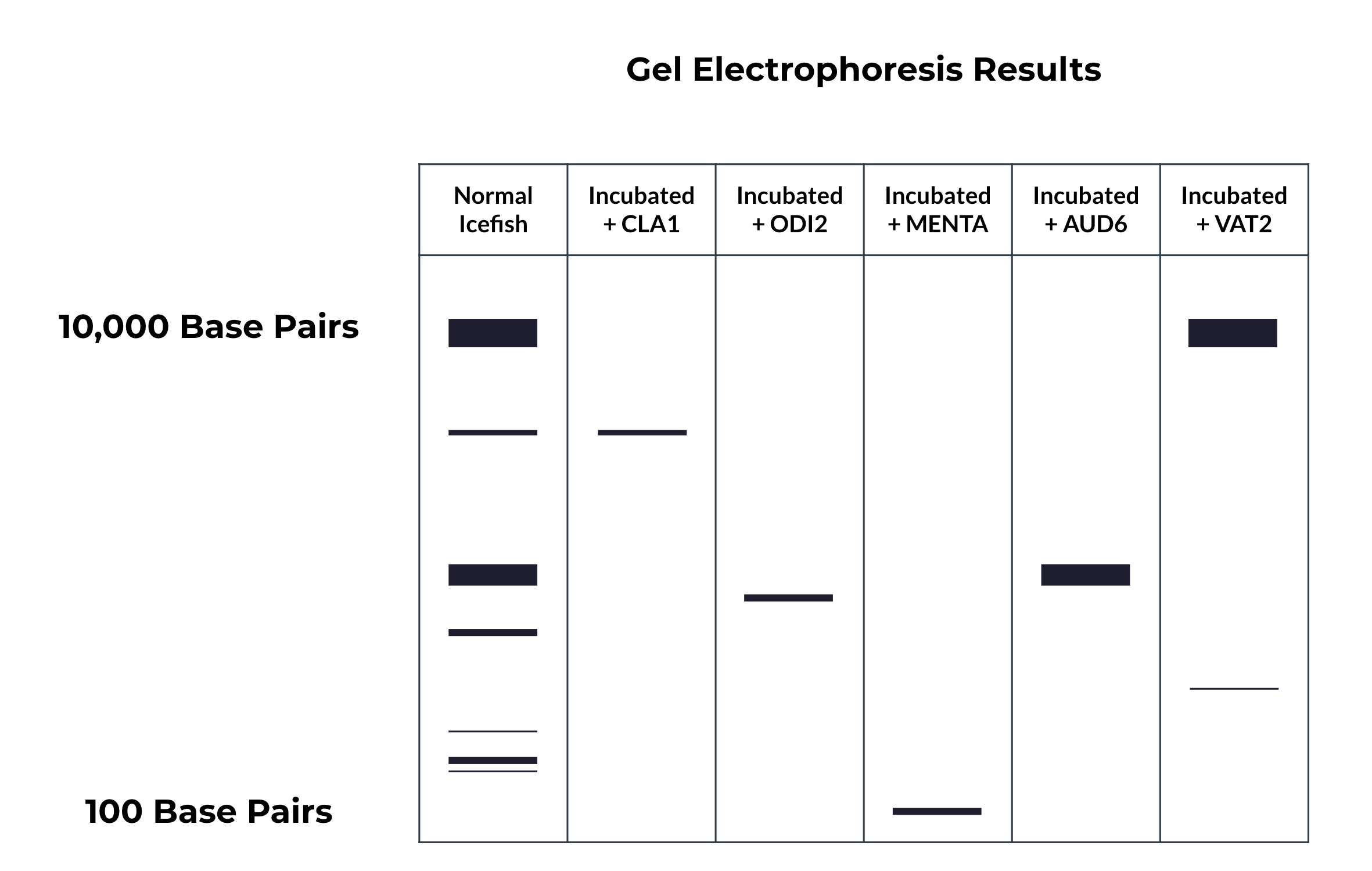
Which TWO genes are found ONLY in the incubated icefish?
Hint: these will NOT be present in the normal icefish!!!!!
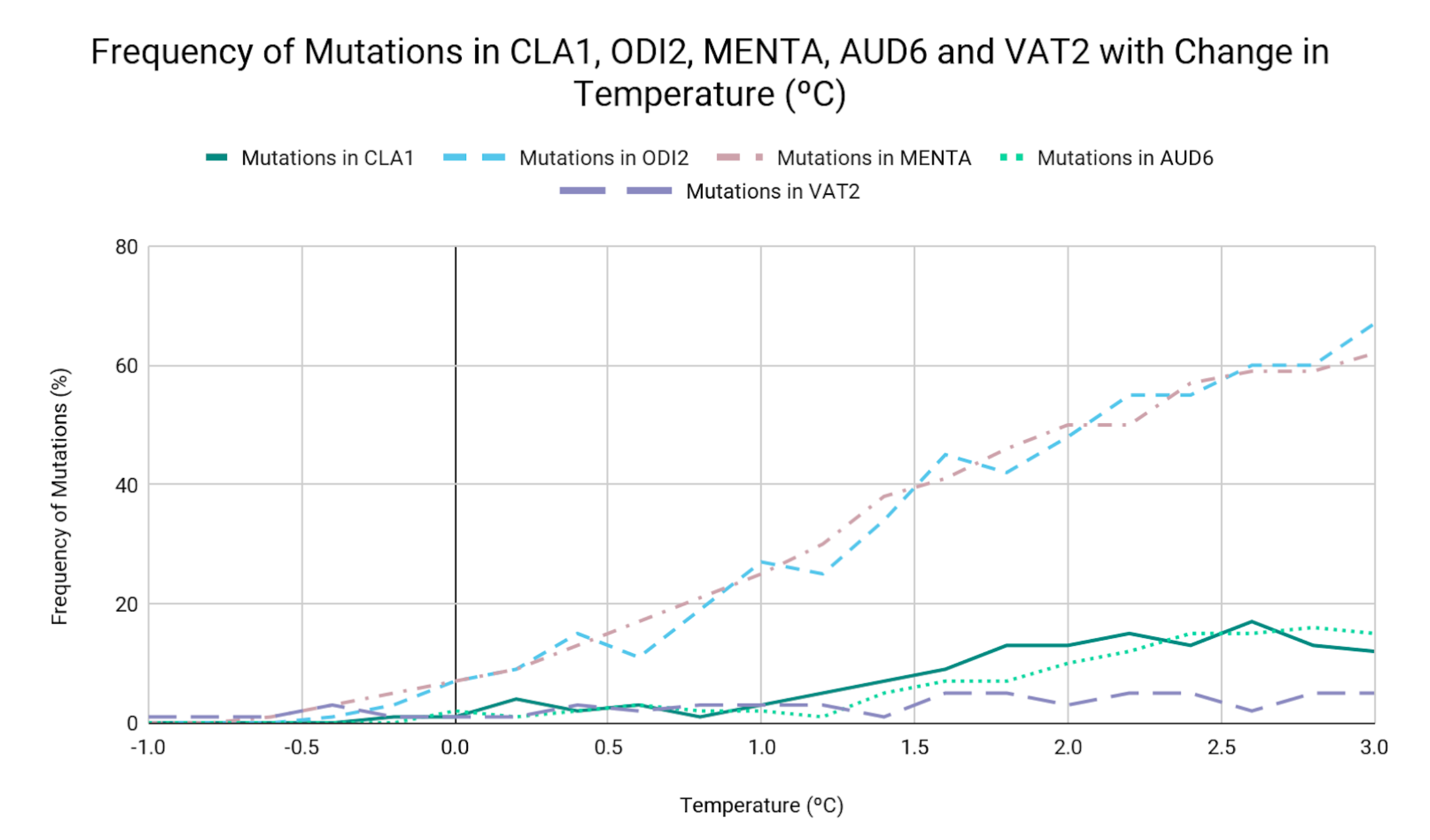
What happens to the frequency of mutations as temperature increases?
Which mutations occur most frequently as temperature increases? Are these the same mutations identified in your Incubated (heated) fish?
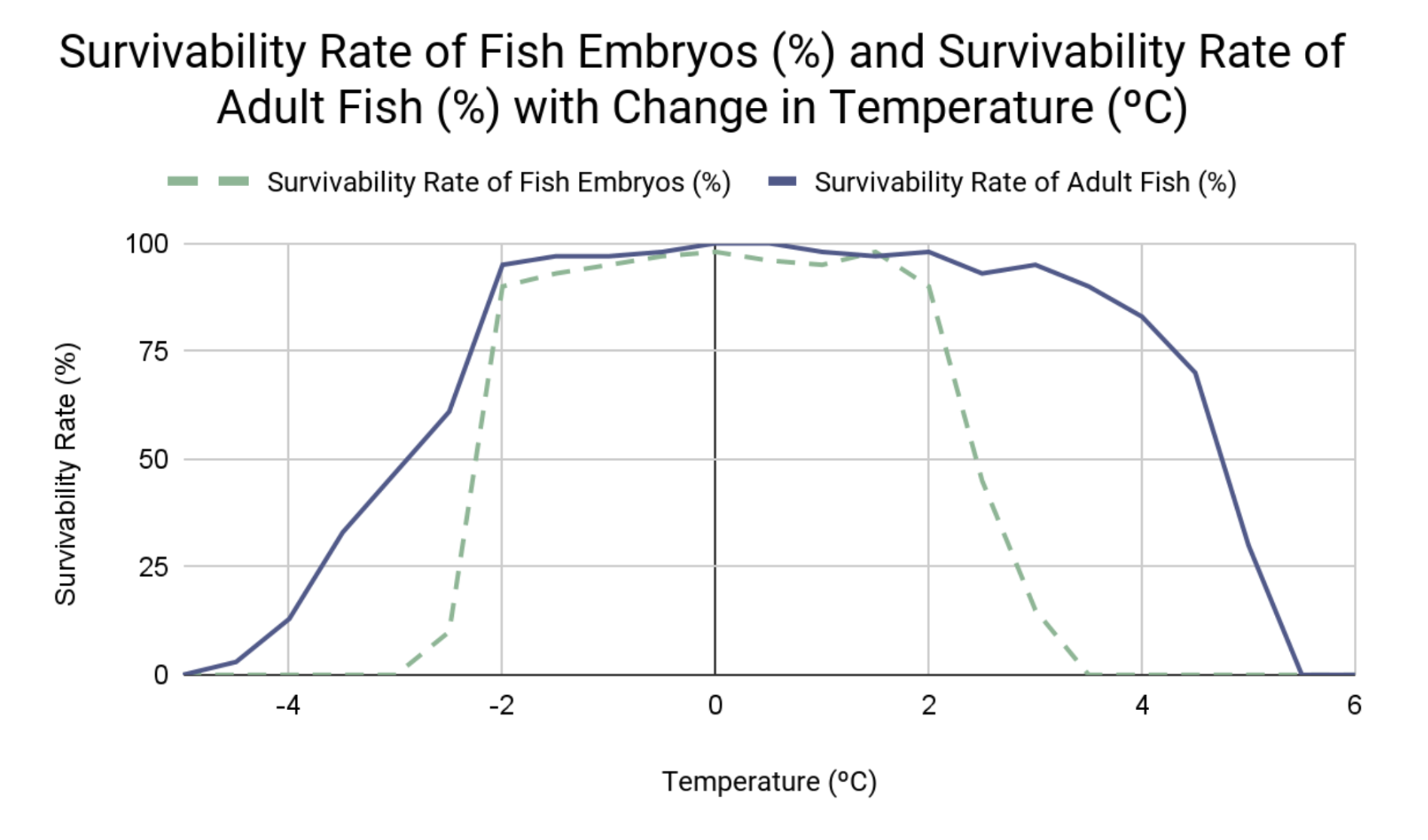
The temperature range that fish embryos can survive in is between .
The temperature range that adult fish can survive in is between .
How are the temperature ranges between fish embryos and adult fish different?
Which gene or genes is most likely present in the Incubated Icefish AND what specific kinds of mutations are they? How do you know?
Support your answer with at least 2 pieces of evidence. WRITE IN CER FORMAT. USE COMPLETE SENTENCES!
Sentence Stem: The _____ and _____ genes are both present in the incubated icefish.
____ is a _________ mutation because .....
____ is a _________ mutation because .....
The temperature of the water in Antarctica ranges between -2ºC in the winter to 2ºC in the summer. Climate change models have predicted that global ocean temperatures will increase by another 3.2ºC in the next 80 years. How will this affect the population of Icefish over time?
Support your answer with at least 2 pieces of evidence. WRITE IN CER FORMAT. USE COMPLETE SENTENCES!