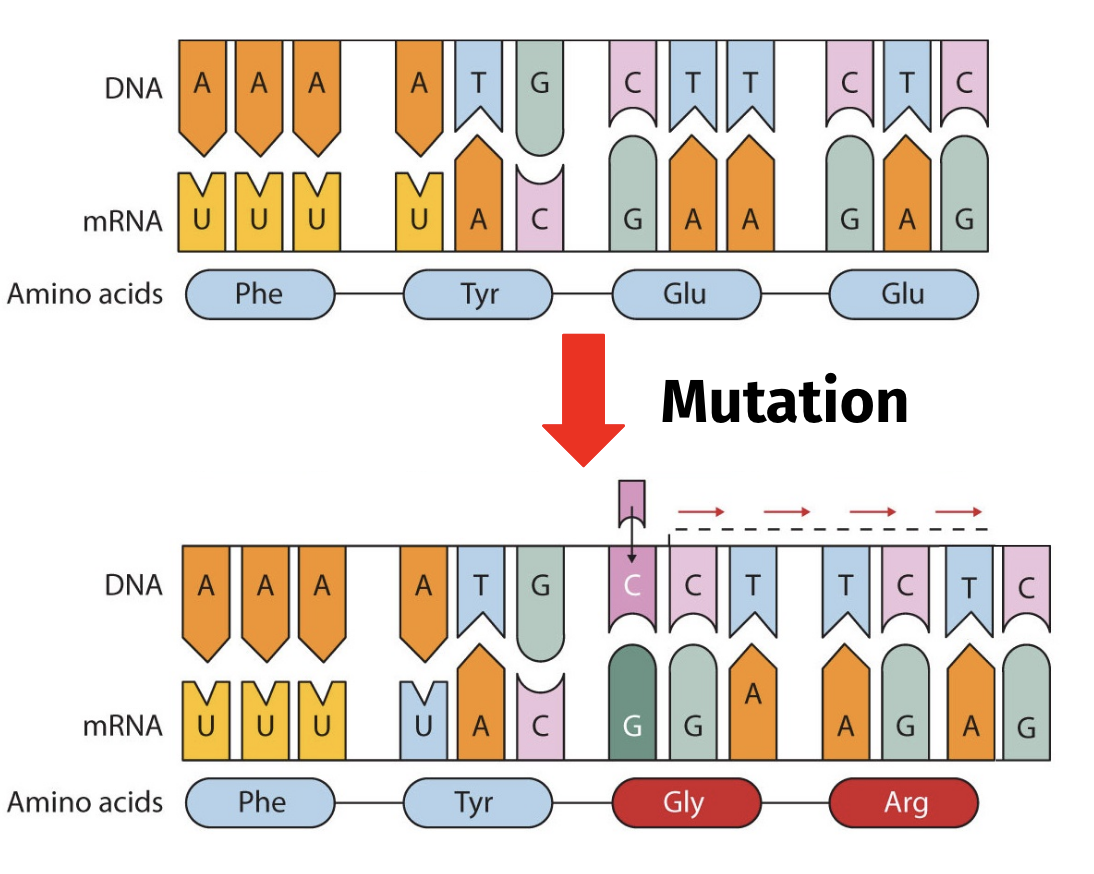
A mutation is a permanent change in the of DNA. Mutations occur in the of the cell cycle during .
Mutations are caused by .
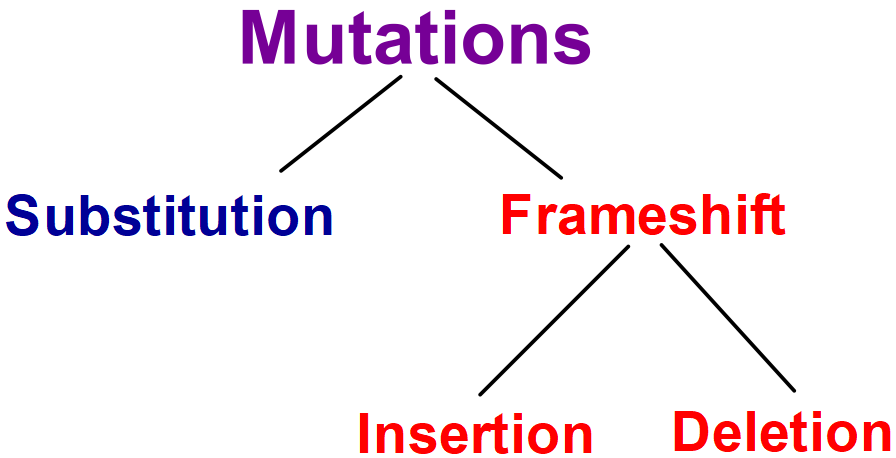
Why do frameshift mutations have a greater impact on the protein made than substitution mutations?
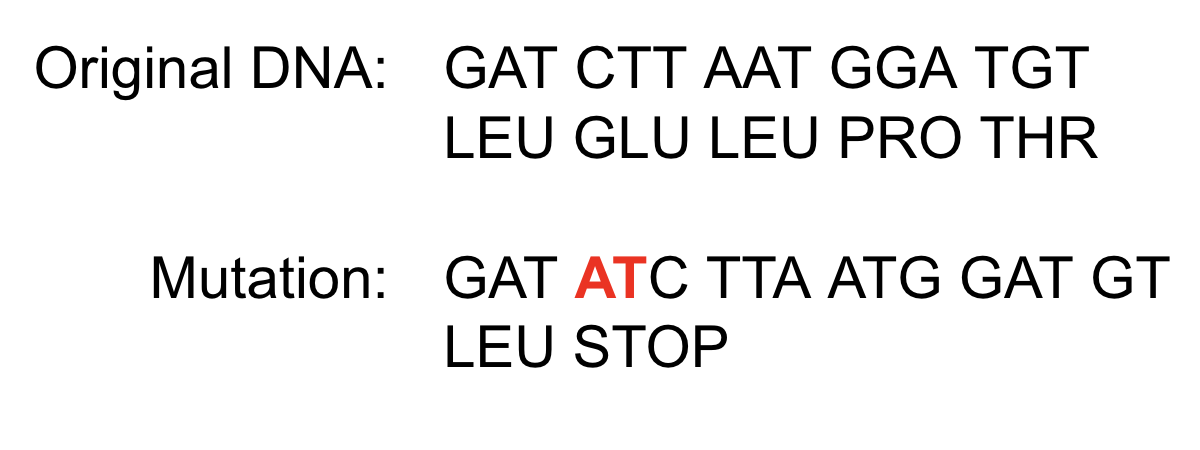
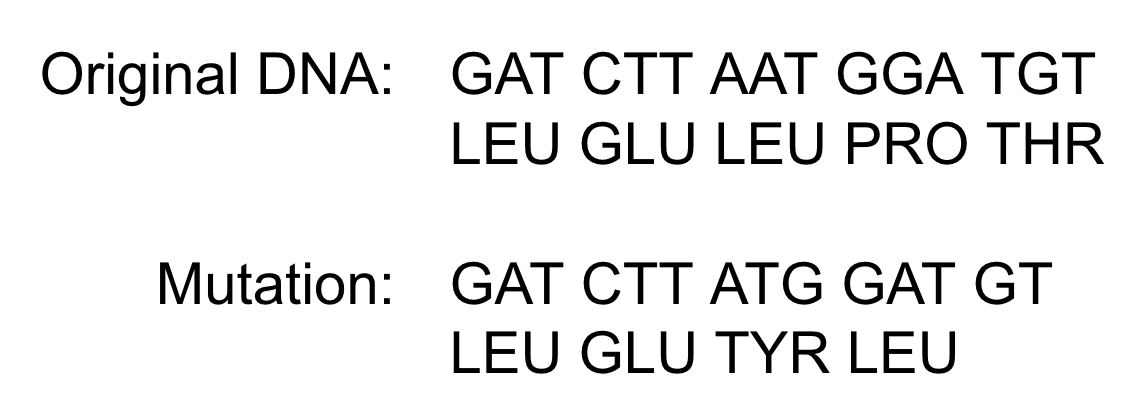
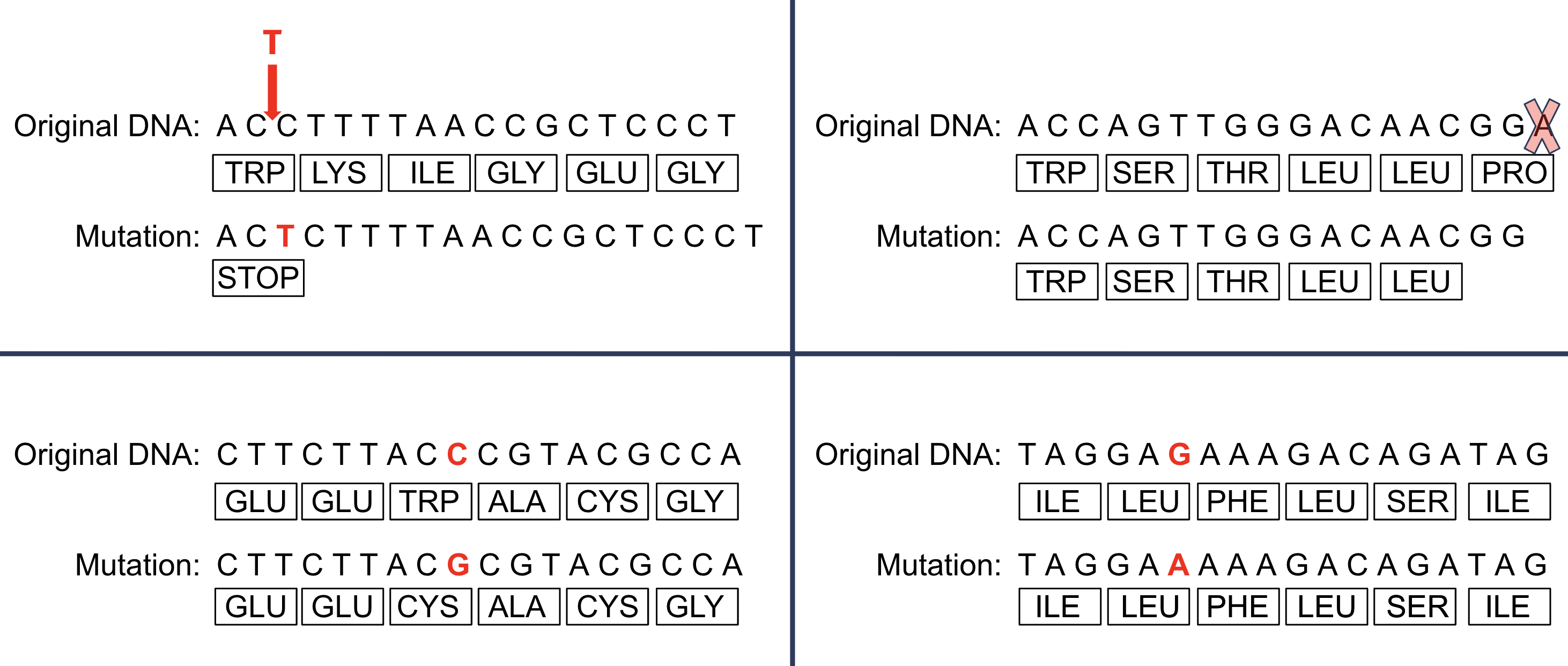
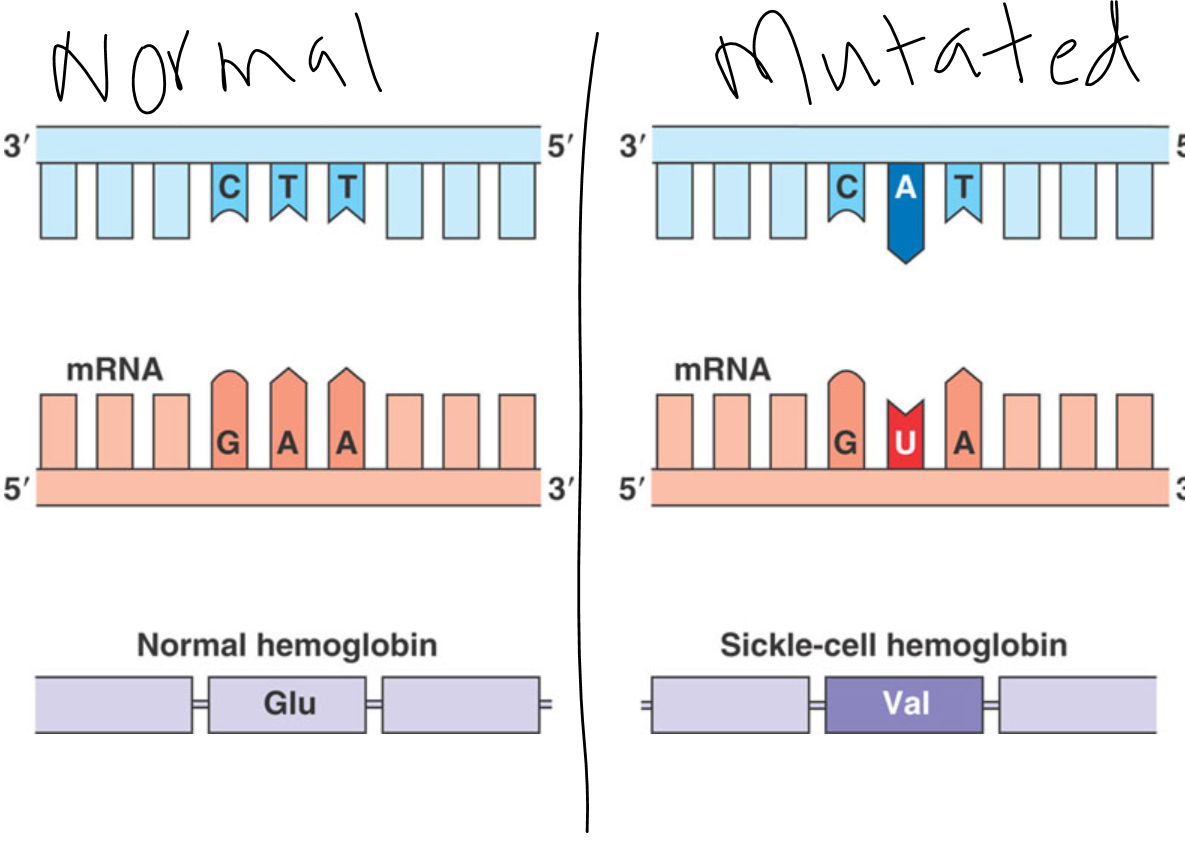
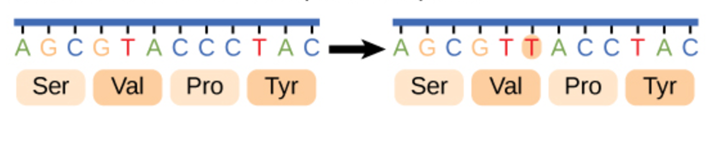
What type of mutation is this? (Compare the Normal DNA to the Mutated DNA)
This is an example of ___ mutation.

This mutation is considered a(n) mutation because .

This mutation is a(n) mutation because .

Which type of mutation has the greatest impact on the resulting amino acid sequence?
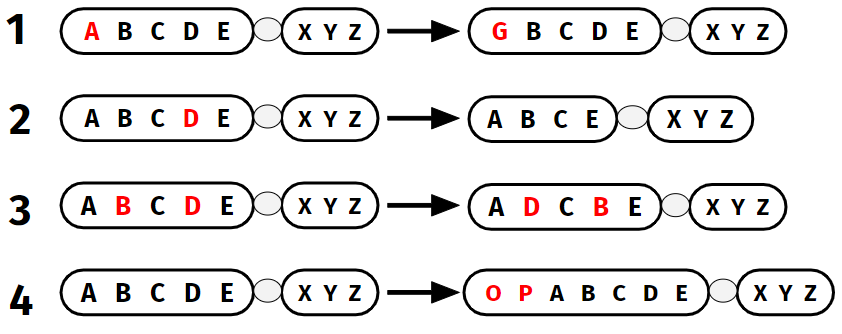
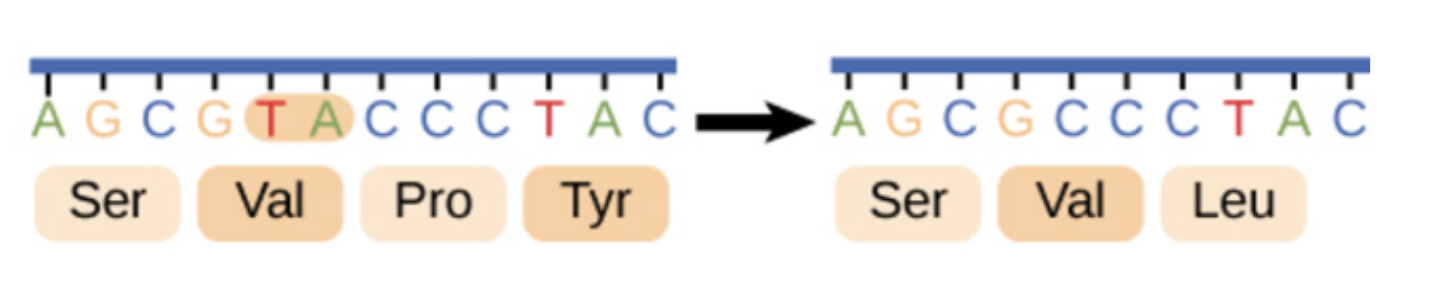
Observe the mutations in the diagram below.
Which mutations would cause a frameshift? Select TWO (2) mutations.
A frameshift mutation occurs when... (SELECT ALL THAT APPLY!) (2)
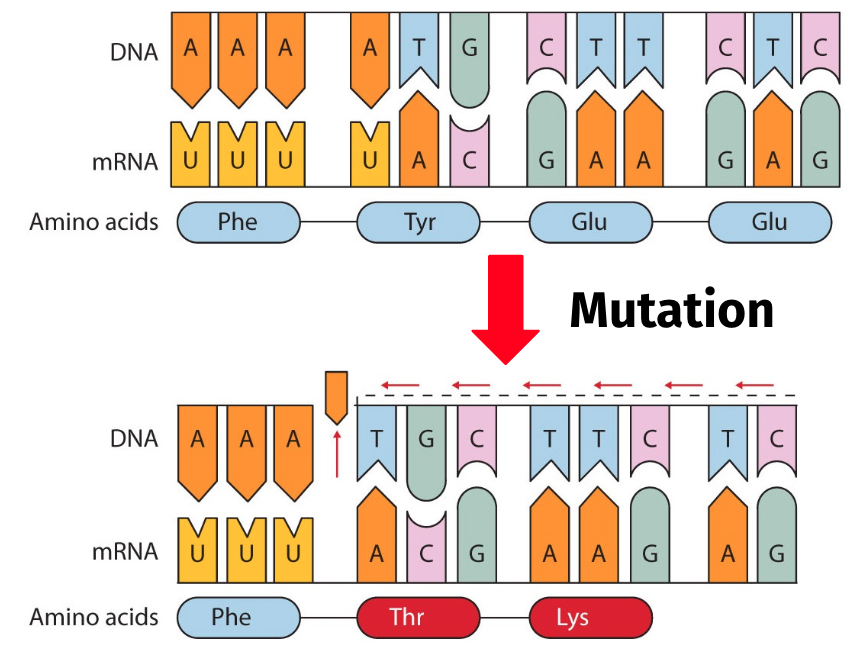
The mutation above is...
This mutation is a(n) mutation because it .
This an example of a frameshift mutation.
Do all changes to the original DNA result in a mutated protein?
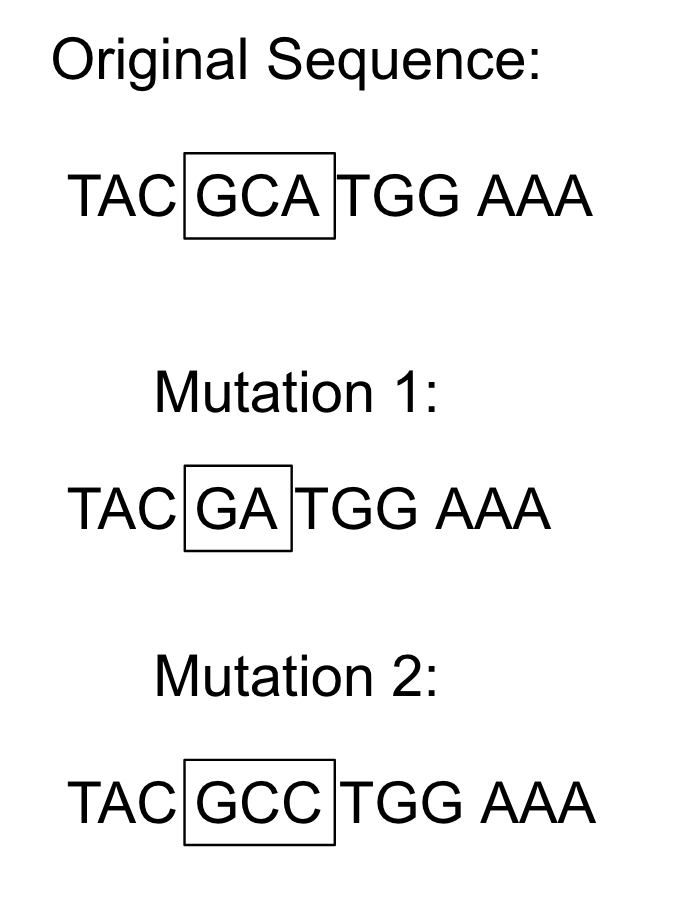
Two mutations of a genetic sequence are shown below. Compare the original sequence to the mutations, then answer the question.

Answer the following prompt in complete sentences:
Which mutation will have the MOST significant impact on the gene product?
Why would the impact be so significant?
Sentence stem:
Mutation _____ will have the most significant impact on the gene product. This has the most significant impact because ________________.
A strand of mRNA reads:
Which of the following mutations would cause the biggest change in the protein produced?
Which of the following mutations would have the GREATEST affect on the amino acid sequence of a protein?
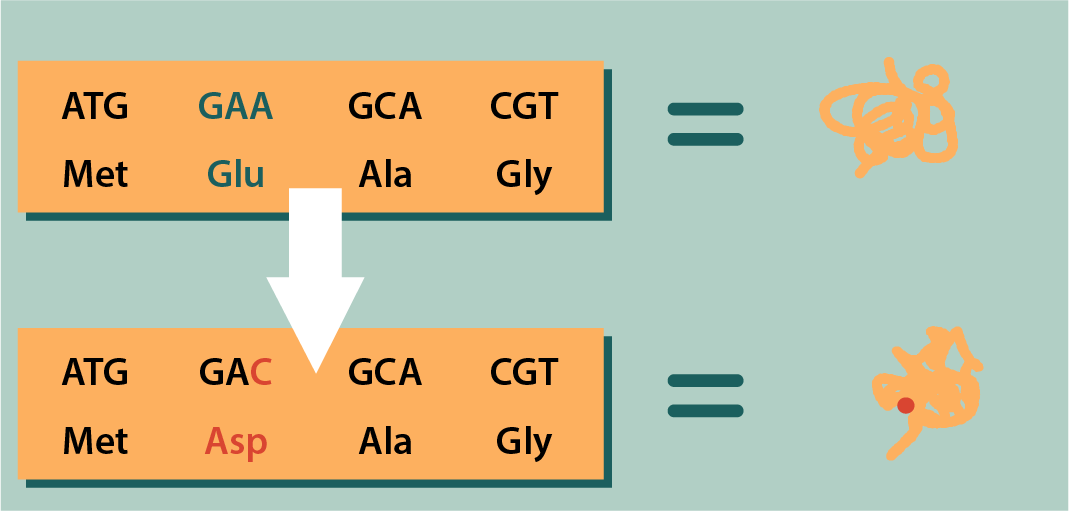
The mutation shown above is a . As a result of this mutation, the protein formed function normally. This is because

The mutation above change the amino acid sequence.
This would be a .
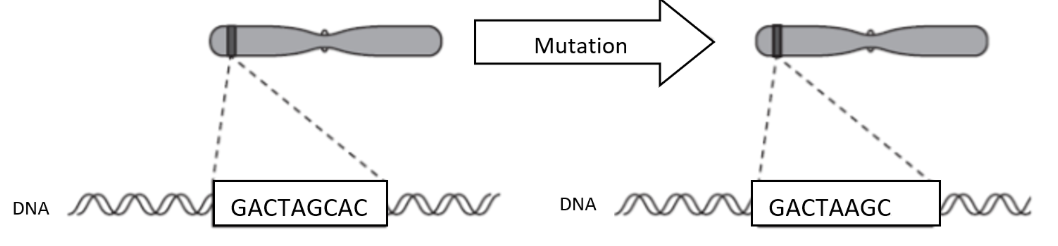
The following mutation is an mutation. One way of knowing this is that a has been .

What type of mutation is this? (Hint: count the bases)
This is a mutation because .
amino acids were changed due to this mutation.