Spring til hovedindhold
Log ind
Sign up for FREE
arrow_back
Bibliotek

Intro to Cell Cycle 2024

star
star
star
star
star
Sidst opdateret 20 days ago
30 Spørgsmål
Section 1: Salamander Regeneration?
1
1
1
Section 2: Intro to Cellular Reproduction
Section 3: Cell Cycle Overview
Nødvendig
1
Nødvendig
1
Section 4: Exit Ticket
Nødvendig
1
Nødvendig
1
Nødvendig
1
Nødvendig
1
Spørgsmål 1
1.

What happened in the salamander video?

Spørgsmål 2
2.

Why do you think the salamander is capable of regeneration?

Spørgsmål 3
3.

What else might cells be able to do?

Where do cells come from?

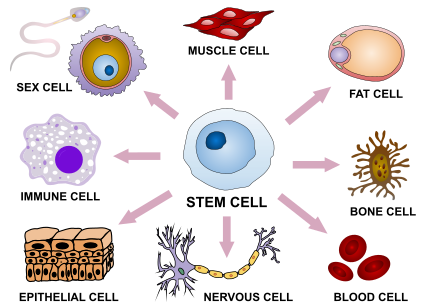
The human body is made of over 100 trillion cells. There are over 200 different types of cells, each with their own special function.

Cells give our bodies their shape, allow us to move, provide us with energy, let us have children, and much more.
Nødvendig
1
Nødvendig
1
Spørgsmål 5
5.

The cells of our body all have the same shape and perform the same function.

Nødvendig
1
What do you remember about cells?

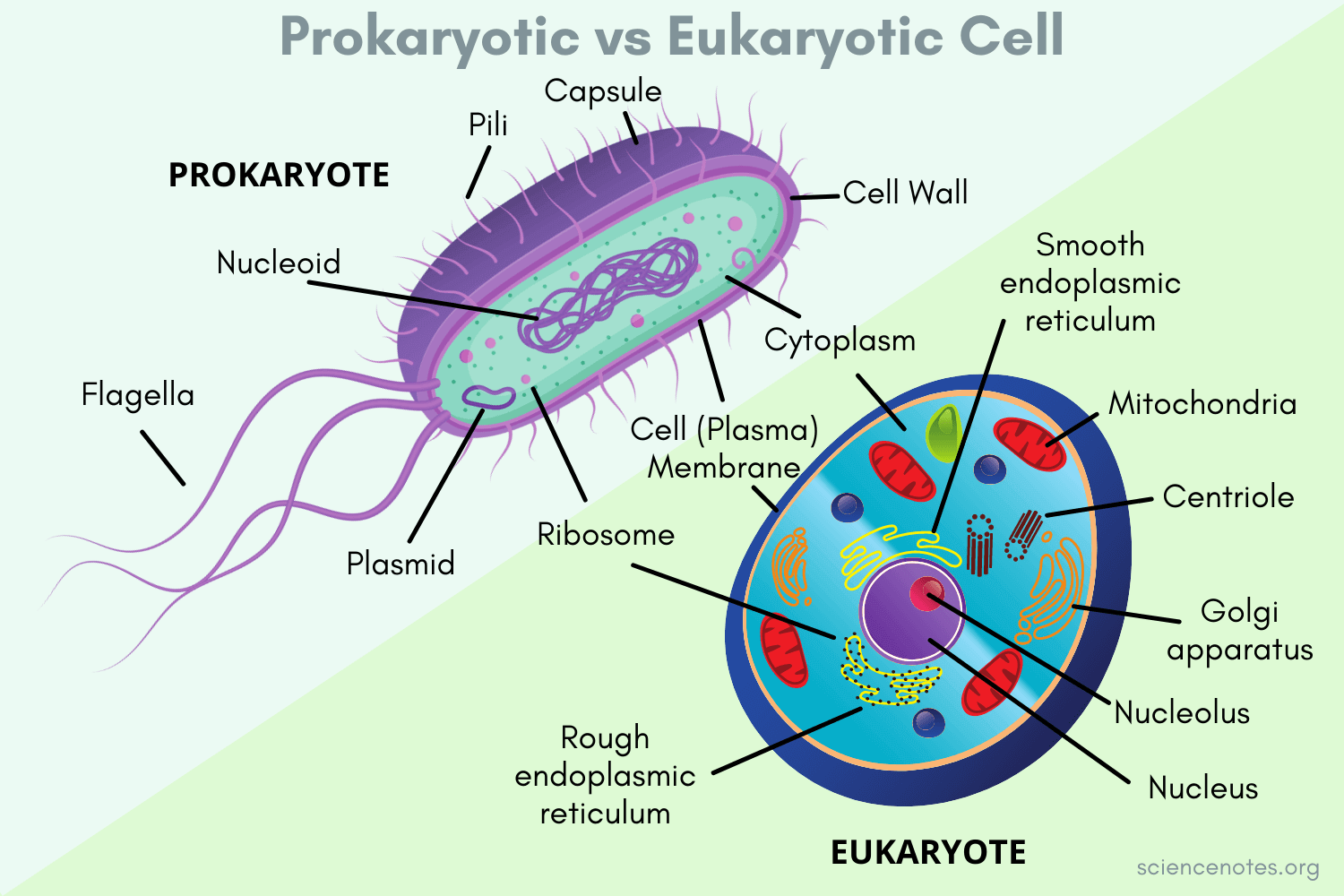
There are two categories of cells: prokaryotic cells and eukaryotic cells.

The biggest difference between these two groups is that prokaryotic cells (bacteria) DO NOT have a nucleus. They are small and simple.

In addition to having DNA inside a nucleus, eukaryotic cells (plant and animal cells) are also large, complex, and have membrane-bound organelles.

Regardless of whether a cell is prokaryotic or eukaryotic, all cells have the ability to make more cells. This is known as cellular reproduction.

Nødvendig
1
Spørgsmål 7
7.

What are the two major categories of cells?

Nødvendig
1
Nødvendig
1

Cells can reproduce?

In short, yes. Think back to cell theory: all cells come from pre-existing cells.

Cellular reproduction might not happen like how you're imagining it.

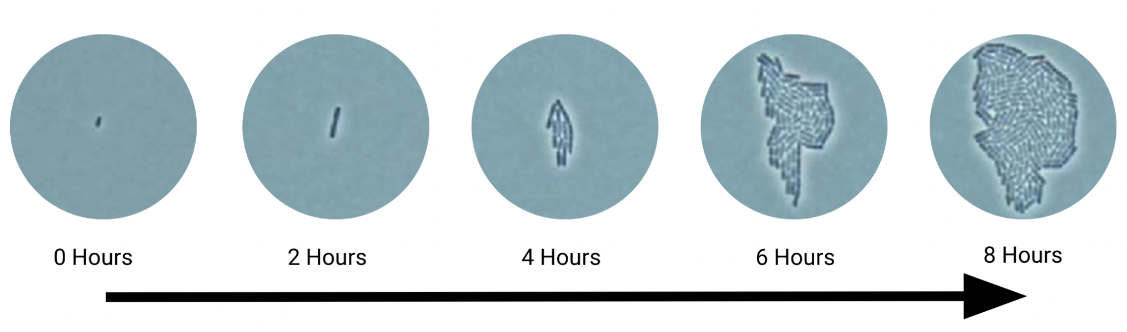
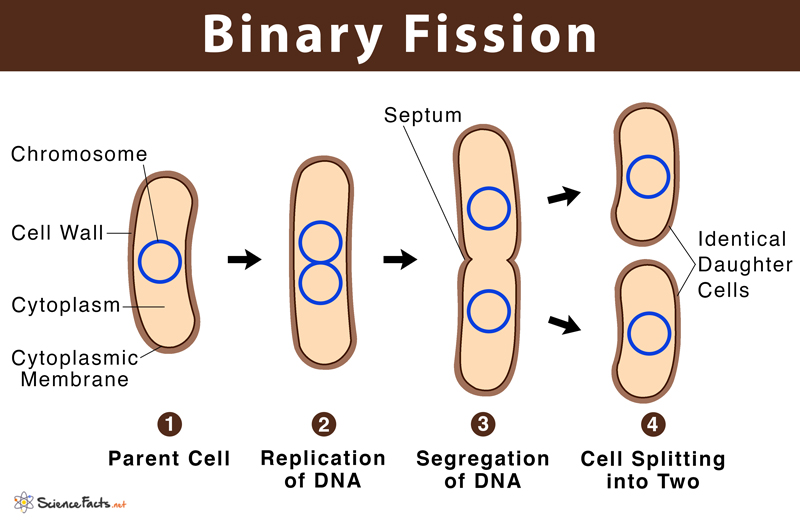
Prokaryotes divide to create two new cells in a process called binary fission.

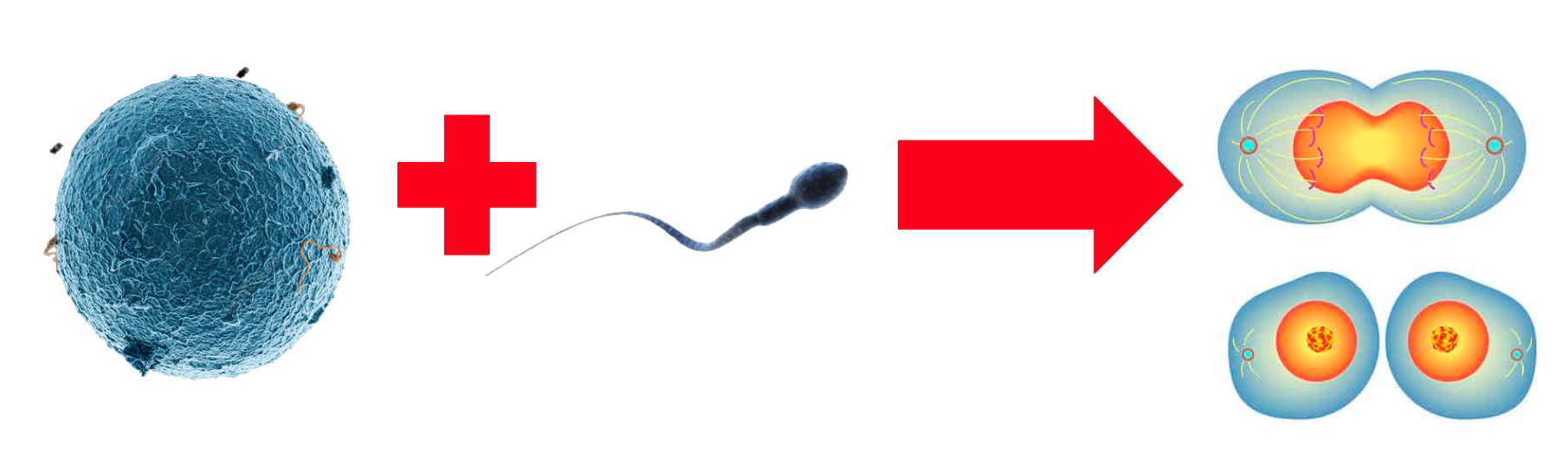
Eukaryotes also divide, but in a different process called mitosis. This type of cellular reproduction produces genetically identical body cells (all cells EXCEPT for sperm and egg). After a sperm and egg cell come together, the single cell starts going through mitosis in order to create more cells to build-a-baby.

Nødvendig
1
Nødvendig
1
Nødvendig
1
Nødvendig
1

Why do cells need to reproduce?

In this unit, we will take an in-depth look at mitosis, the process of how eukaryotic cells reproduce.

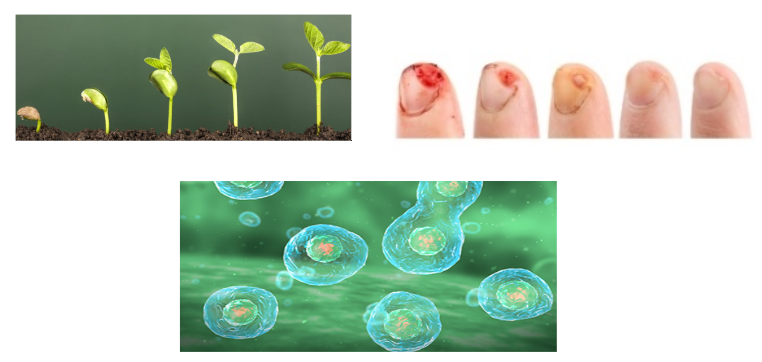
Remember: most eukaryotes (plants and animals) are multicellular organisms. Mitosis is how multicellular eukaryotes grow larger in size, repair themselves, and replace old cells.

Nødvendig
1
Spørgsmål 14
14.

Most eukaryotes, such as plants and animals, are multicellular.

Nødvendig
1

What is the Cell Cycle?

Living organisms are constantly making new cells for growth, repair, and to replace old dead cells.

In the previous section, you read that eukaryotes make new cells through mitosis. This is the final step in cell division in the cell cycle.

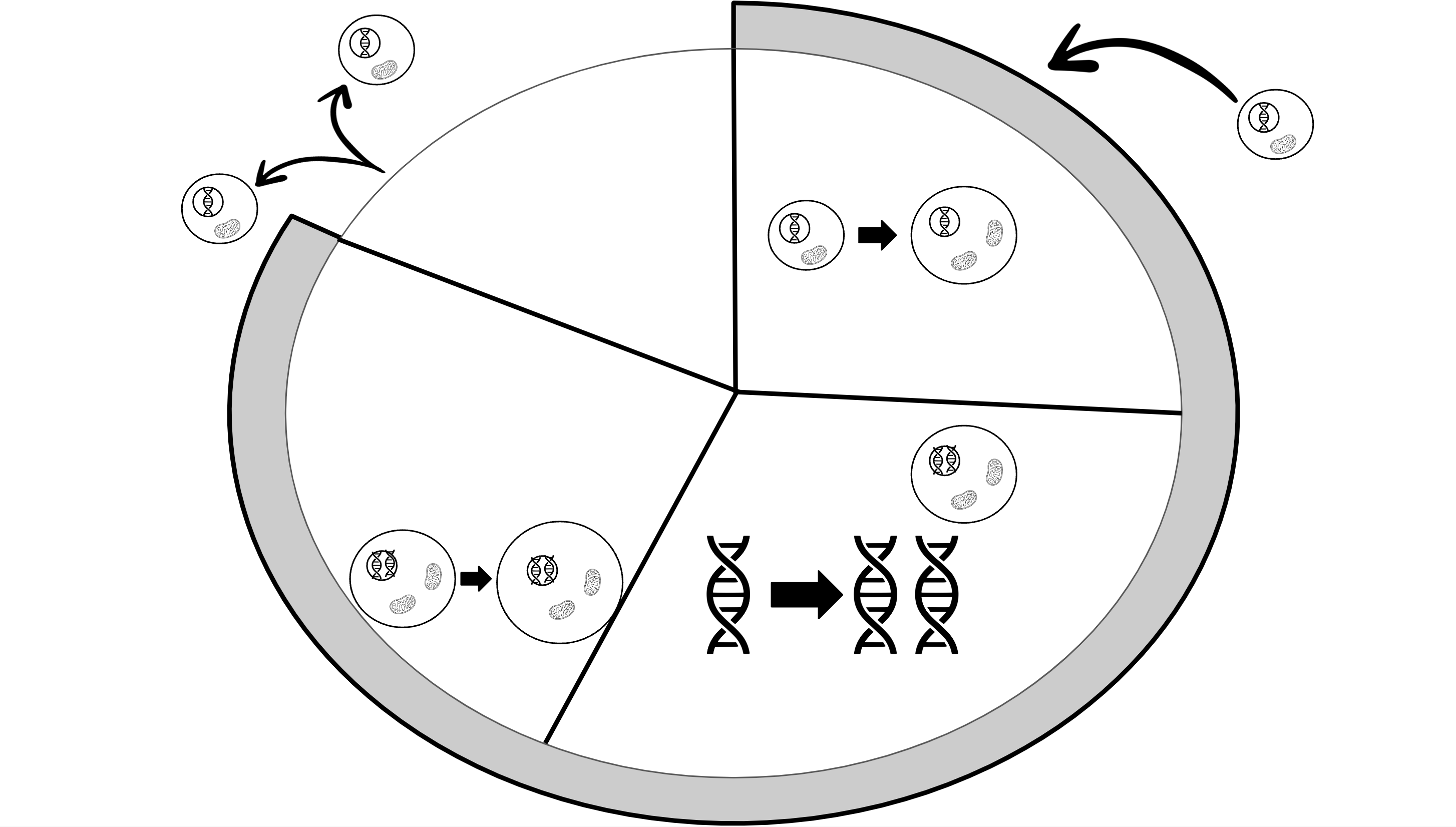
The Cell Cycle is broken up into 2 main phases.

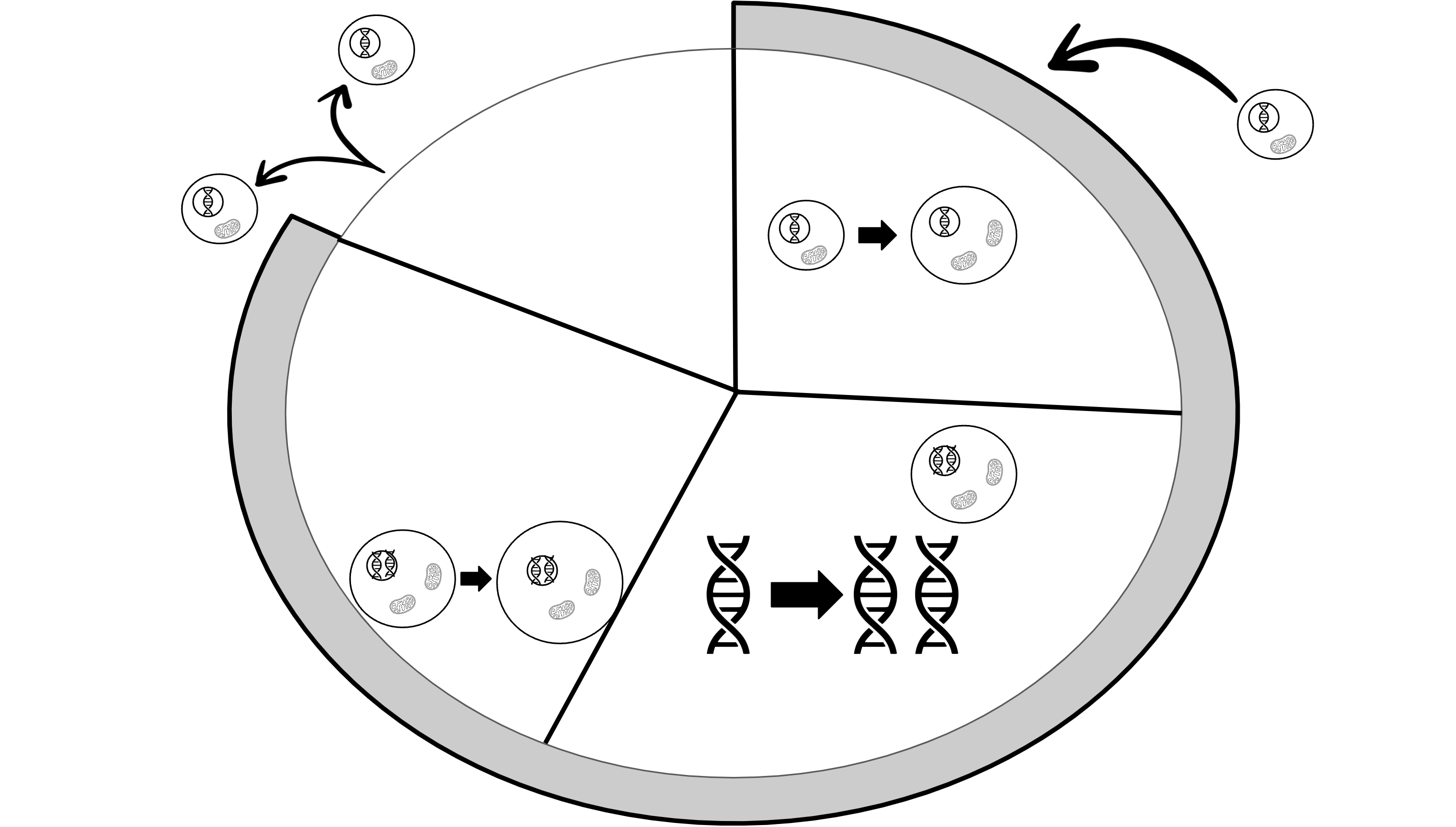
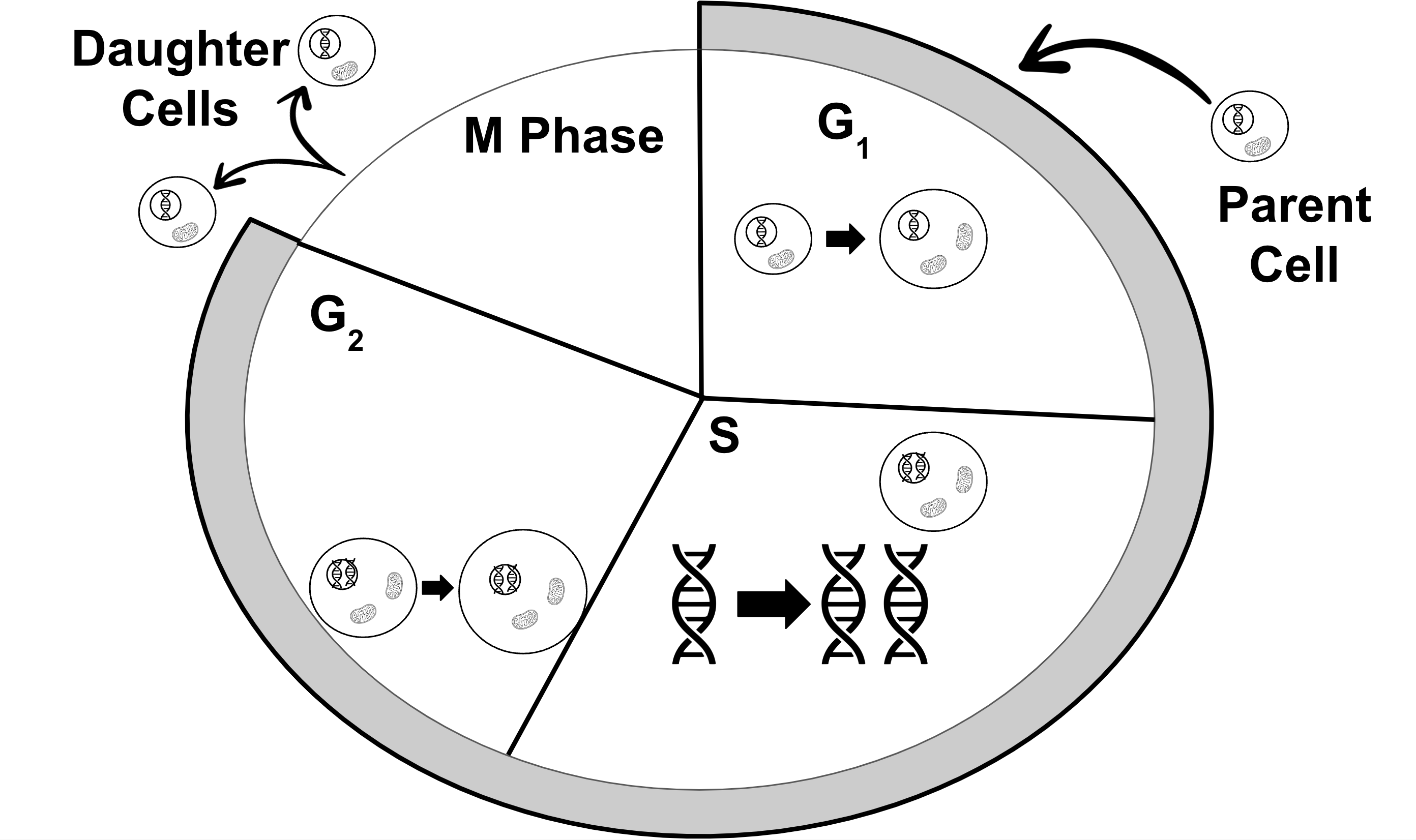
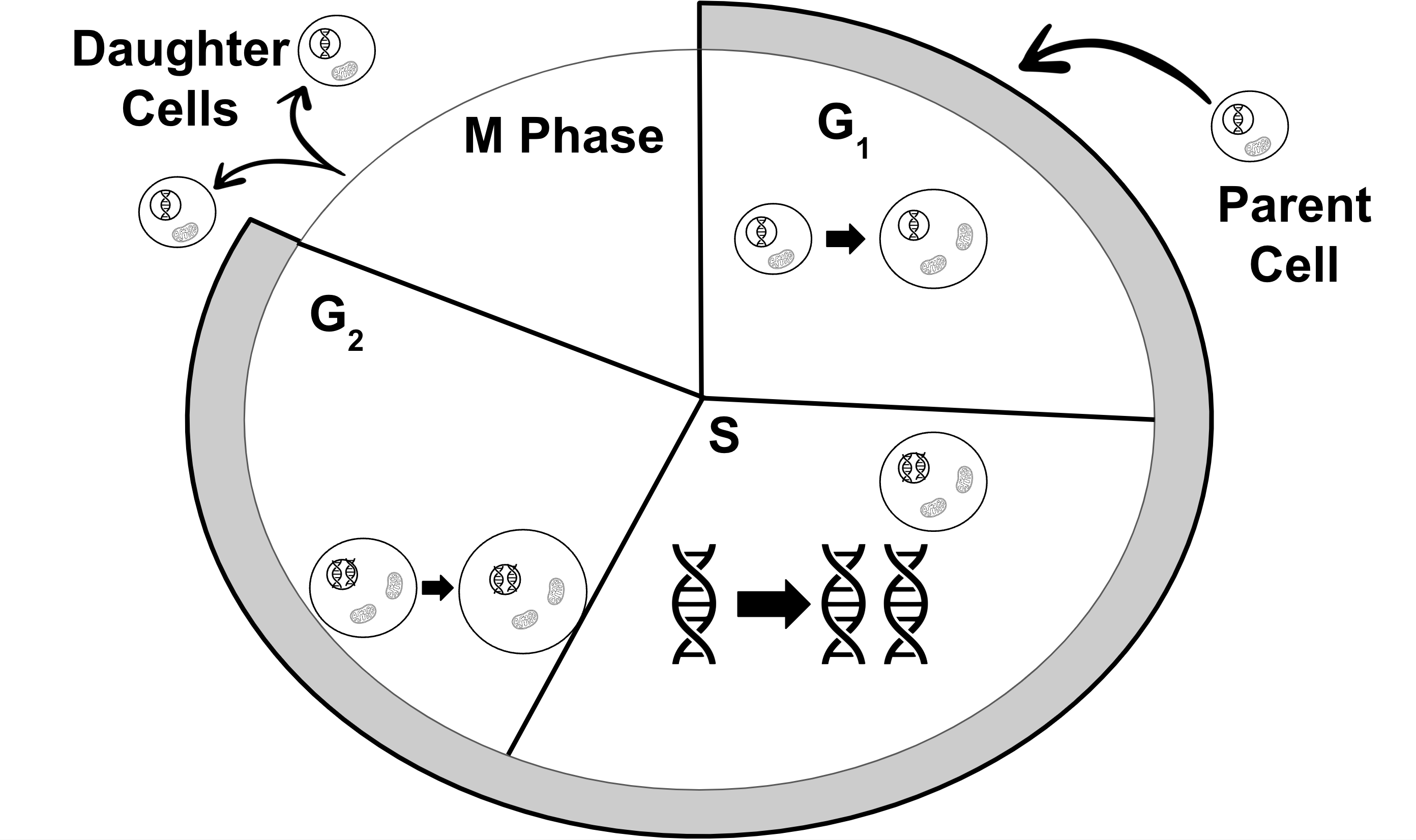
The first phase is called Interphase. It is made up of 3 parts: G1, S, and G2. This is where the cell spends most of its time doing normal cellular processes (maintaining homeostasis, endo/exocytosis, cellular respiration, photosynthesis, etc.)

The second phase is called M phase. It is made up of 4 parts: Prophase, Metaphase, Anaphase, Telophase. This is where the DNA within the cell is moved into two nuclei (plural form of "nucleus").

The "split second" where the Cell Cycle ends is called Cytokinesis. This is when the cell finally splits into two identical daughter cells.

Nødvendig
1
Nødvendig
1
Nødvendig
1
Nødvendig
1

Have your station mats out! You should be adding labels to the diagram as you complete the reading.

The Longest Part of the Cell Cycle - INTERPHASE

Our cycle begins with a single parent cell - the cell that first enters the cycle and goes through the process of cell division (cellular reproduction). This cell starts with interphase, the longest phase of the cell cycle.

INTERPHASE: G1, S, and G2

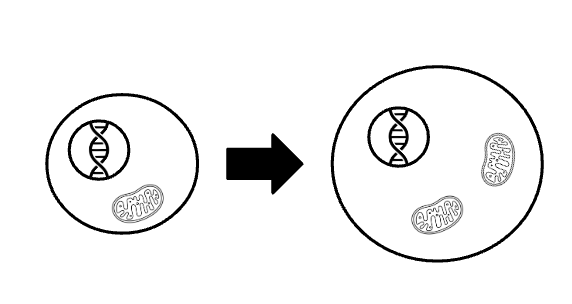
As soon as the parent cell enters the Cell Cycle, it starts G1. This is where the cell grows in size and organelles replicate (double).

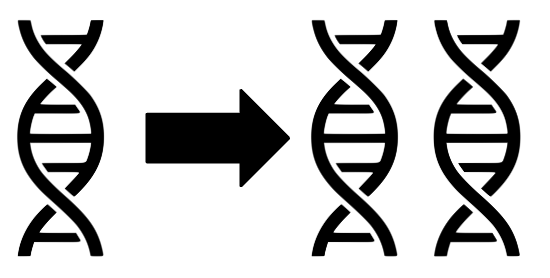
Next, the cell goes through Synthesis (S) Phase. This is where the DNA is doubled / replicated / copied.

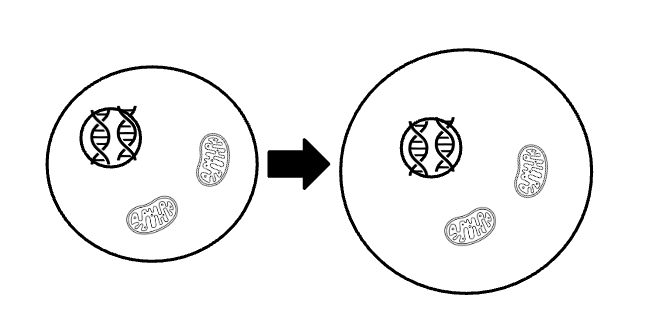
The last part of Interphase is G2. This is where the cell grows for the second time and has a final checkpoint before starting cell division. During G2, the cell has to make sure all of the organelles have been copied, all of the DNA has been copied correctly, and that the cell has grown large enough to produce two normal-sized daughter cells.

Nødvendig
1
Nødvendig
1
Spørgsmål 21
21.

The parent cell will spend most of its time in interphase.

Nødvendig
1

The Shortest Part of the Cell Cycle - M PHASE

Once the cell has passed the final checkpoint at G2, the cell will make final preparations to divide.

During M Phase, DNA within the cell is moved into two nuclei. This ensures that each daughter cell has a full and complete set of instructions (DNA).

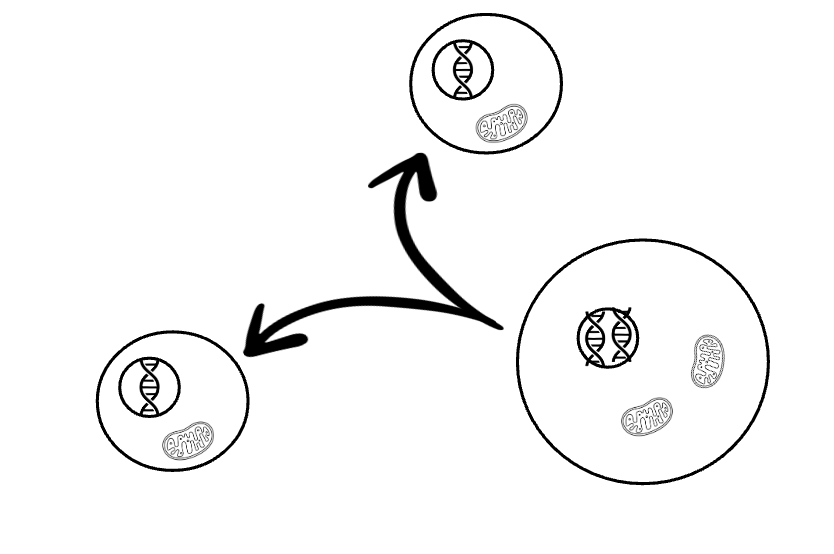
Once DNA has been separated equally, the cell finally splits, and two identical daughter cells form. They are the same size, shape, and contain the exact same information as the original parent cell. They are like clones of each other!

Nødvendig
1
Spørgsmål 23
23.

Mitosis is the longest phase of the cell cycle.

Nødvendig
1
Spørgsmål 25
25.

Label the diagram of the cell cycle.

Andre svarmuligheder:
M Phase
G1
G2
S
Parent Cell
Daughter Cells
Spørgsmål 26
26.

Label the diagram of the cell cycle.

Andre svarmuligheder:
Cell grows for the second time.
2 daughter cells form.
DNA doubles
Cell grows. Organelles double.
Spørgsmål 27
27.

Why do cells need to reproduce?

Begin your sentence with the following sentence stem:

Cells need to reproduce because...

Spørgsmål 28
28.

Select ALL PARTS of Interphase.

Spørgsmål 29
29.

Select the part of the cell cycle when DNA is duplicated (copied).

Spørgsmål 30
30.

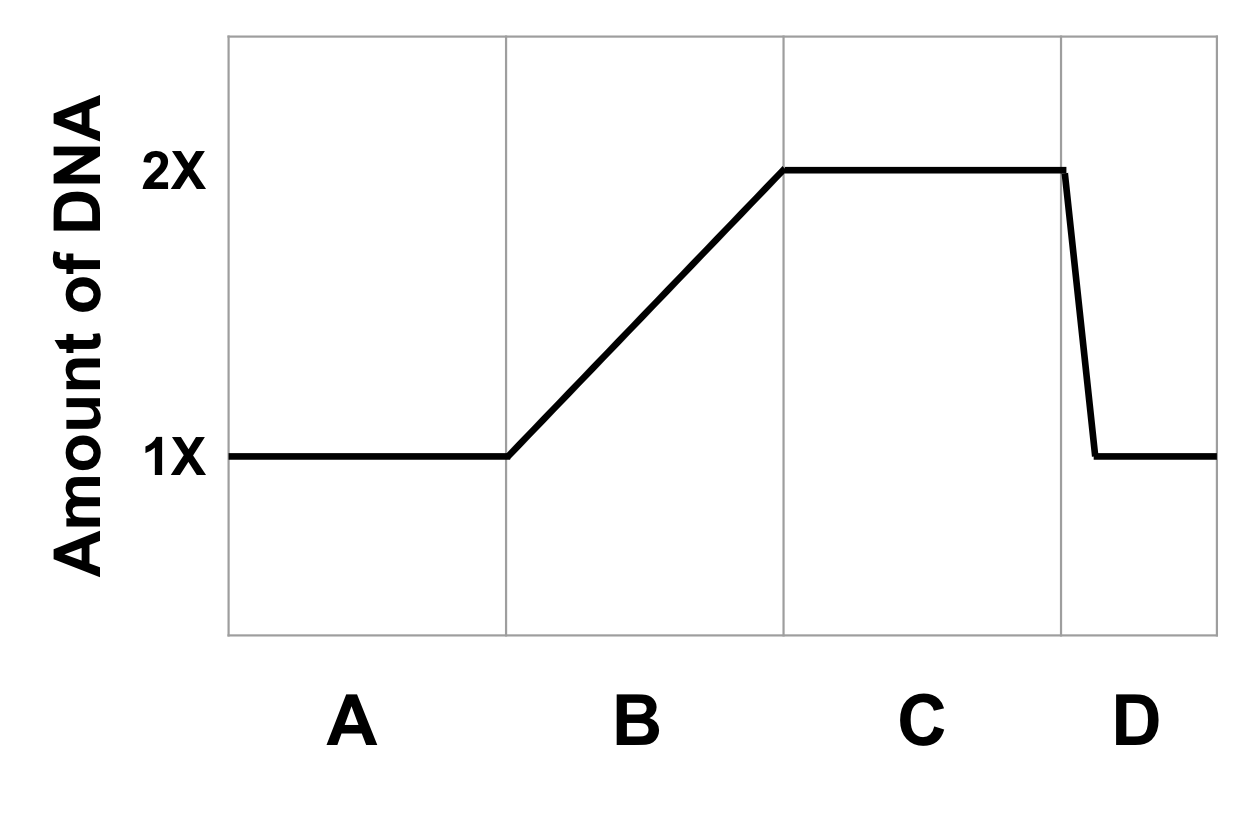
The graph below shows the amount of genetic material present during each phase of the cell cycle.

During S phase, the cell begins making copies of all of its genetic material. Which portion of the graph best represents S phase?

Spørgsmål 4
4.

How many cells is the human body made of?

Spørgsmål 6
6.

Why are cells important?

Select THREE correct answers.

Spørgsmål 8
8.

Which of these apply to bacteria?

Select FOUR correct answers.

Spørgsmål 9
9.

Which of these apply to plants and animals?

Select FOUR correct answers.

Spørgsmål 10
10.

Can cells reproduce?

Spørgsmål 11
11.

How do bacteria reproduce?

Spørgsmål 12
12.

How do plant and animal cells reproduce?

Spørgsmål 13
13.

Mitosis produces...

Spørgsmål 15
15.

Why do eukaryotes go through mitosis?

Select THREE correct answers.

Spørgsmål 16
16.

The two main phases of the Cell Cycle are Interphase and M phase.

Spørgsmål 17
17.

What is Interphase?

Select TWO correct answers.

Spørgsmål 18
18.

What is M Phase (Mitosis)?

Select TWO correct answers.

Spørgsmål 19
19.

What is Cytokinesis?

Spørgsmål 20
20.

The THREE stages of Interphase are...

Spørgsmål 22
22.

What does the cell check for at the G2 checkpoint?

Select THREE correct answers.

Spørgsmål 24
24.

Which of the following happens at the end of M Phase?