Copy of Cell Membrane Str Reading (5/28/2026)
Phospholipid Bilayer
All cells have a cell membrane. This membrane surrounds the cell. So what is its role?
Can molecules enter and leave the cell? Yes. Can anything or everything enter or leave? No. So, what determines what can go in or out? Is it the nucleus? The DNA? Or the cell membrane?
The Cell Membrane
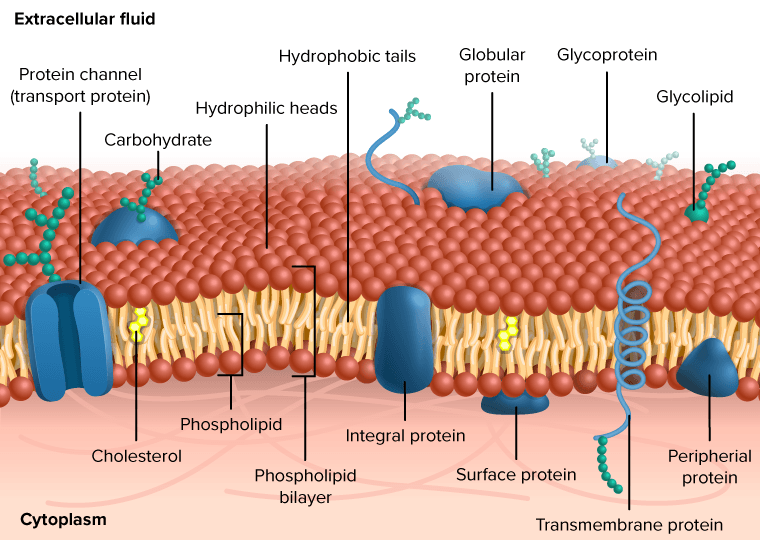
The cell membrane (also known as the plasma membrane) forms a barrier between the cytoplasm inside the cell and the environment outside the cell. It protects and supports the cell and also controls everything that enters and leaves the cell. It allows only certain substances to pass through, while keeping others in or out. The ability to allow only certain molecules in or out of the cell is referred to as selective permeability or semipermeability. To understand how the cell membrane controls what crosses into or out of the cell, you need to know its composition.
A Phospholipid Bilayer
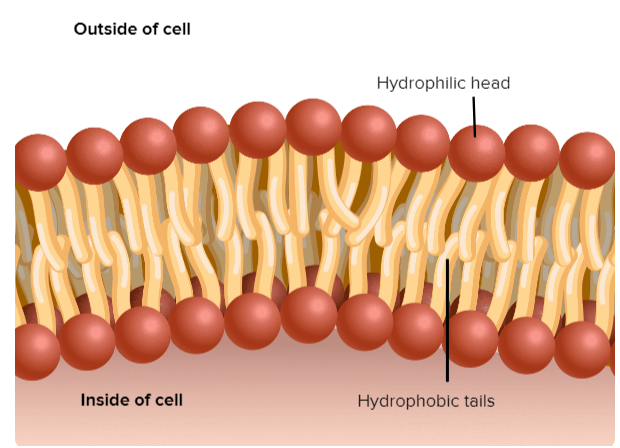
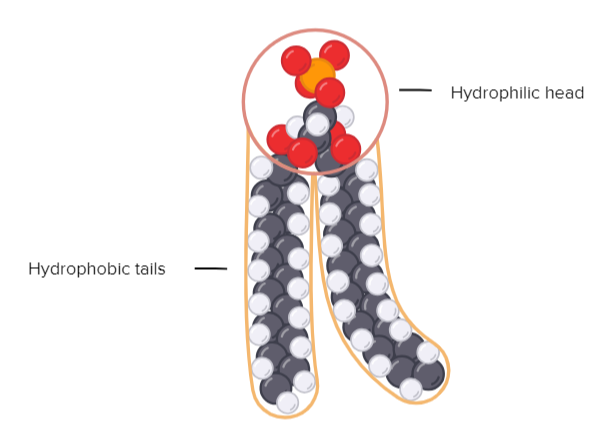
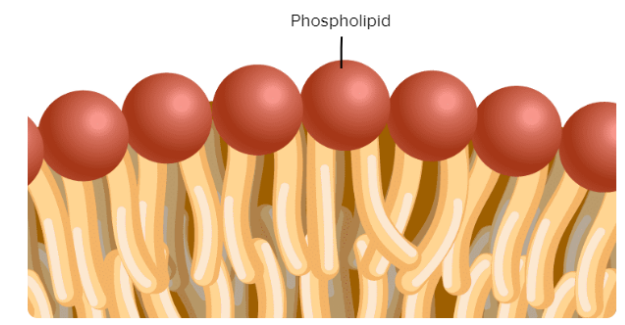
The cell membrane is composed mainly of phospholipids, which consist of fatty acids and alcohol. The phospholipids in the cell membrane are arranged in two layers, called a phospholipid bilayer. Each phospholipid molecule has a head and two tails. The head "loves" water (hydrophilic) and the tails "hate" water (hydrophobic). The water-hating tails are on the interior of the membrane, whereas the water-loving heads point outwards, toward either the cytoplasm or the fluid that surrounds the cell.
Molecules that are hydrophobic can easily pass through the cell membrane, if they are small enough, because they are water-hating like the interior of the membrane. Small lipids and steroids are hydrophobic and can readily cross the membrane. Molecules that are hydrophilic, on the other hand, cannot pass through the cell membrane—at least not without help—because they are water-loving like the exterior of the membrane, and are therefore excluded from the interior of the membrane. Hydrophilic molecules such as glucose and ions like Na+ and K+ need the help of special proteins to cross the membrane.
Review the images below and read the brief description of each above each.
The first image shows a single phospholipid displaying the hydrophilic head and the hydrophobic tails.
The second image shows the phospholipid's place within one layer of the lipid bilayer.
The third image displays the lipid bilayer, how the phospholipids are organized in the lipid bilayer, and the positioning of the hydrophilic heads and the hydrophobic tails of each phospholipid.