Copy of Pre-Lab: Cell Respiration Lab (5/28/2026)
star
star
star
star
star
Last updated 3 months ago
0 Asɛmmisa
The virtual lab that you will be using is a computational model of the basic processes of cellular respiration. The model starts with a single glucose molecule.
The purpose of the model is to understand how glucose is metabolized, and how the energy stored in its chemical bonds is transferred.
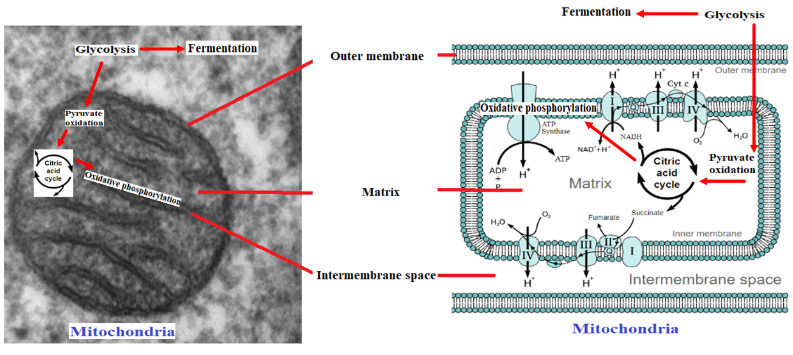
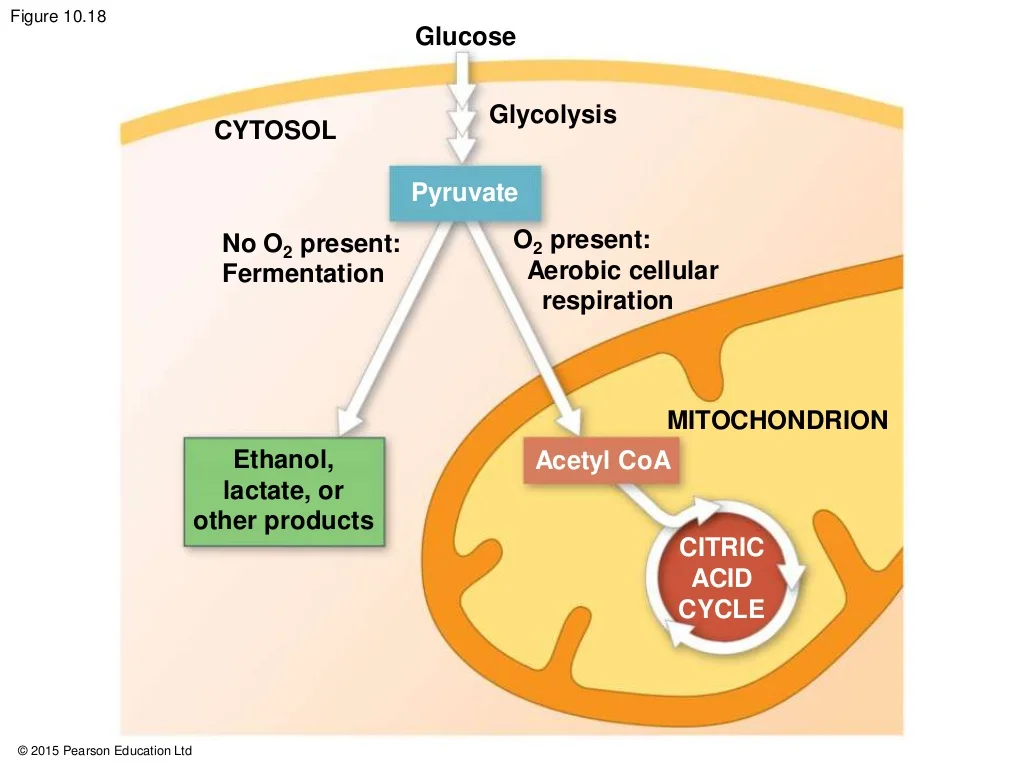
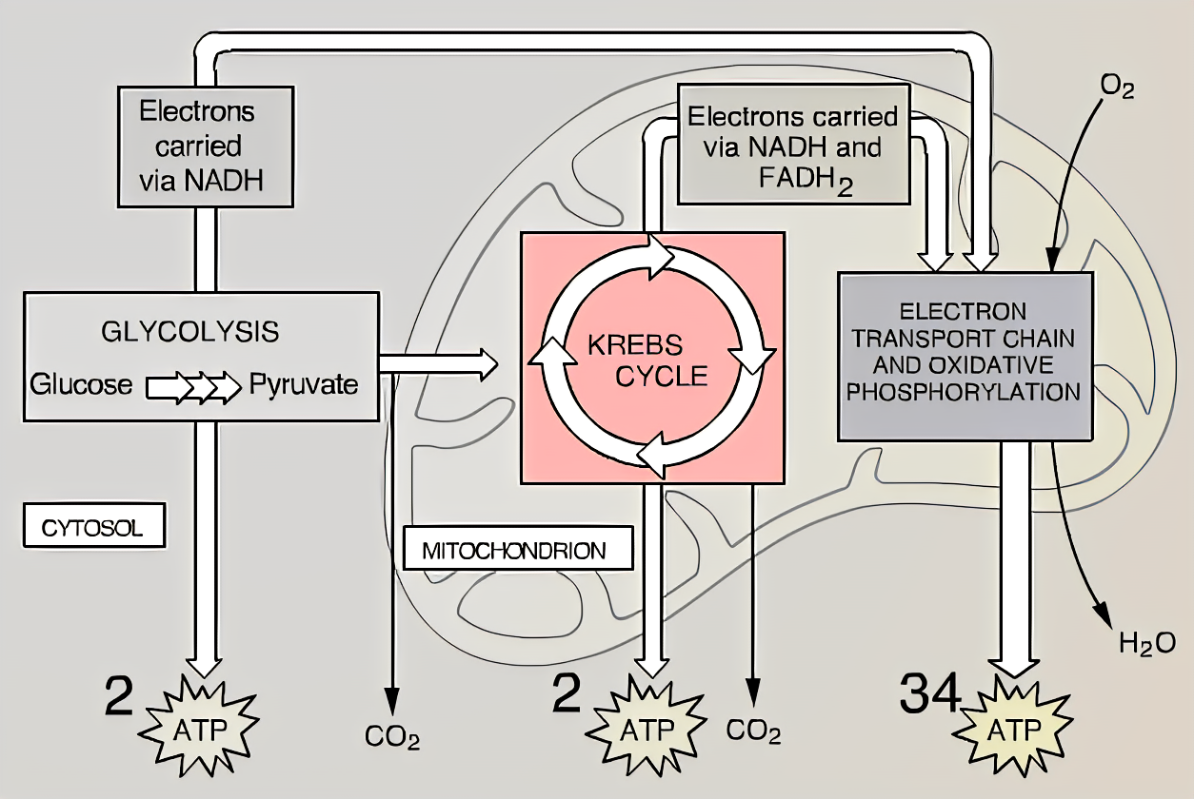
Glycolysis and fermentation occur in the cytosol of a eukaryotic cell.
Within the matrix of the mitochondria is where Krebs cycle (pyruvate oxidation and the citric acid cycle) takes place.
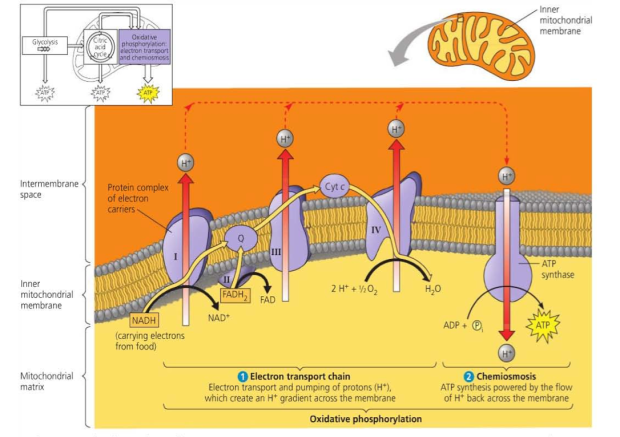
The Electron Transport Chain (Oxidative phosphorylation), the ETC, occurs along the inner mitochondrial membrane, pumping hydrogen ions out using the coenzymes NADH and FADH. Then, the hydrogen ions diffuse down their electrochemical gradient into the inner matrix to synthesize ATP.
During glycolysis enzymes split glucose into 2 molecules of pyruvate (pyruvic acid). There is a net production of 2 ATP and 2 NADH molecules during glycolysis. ATP is the central purpose of cellular respiration. NADH is an electron carrier. During glycolysis, and throughout cellular respiration, when NAD+ is converted to NADH the high energy electrons are stored in the chemical bonds. During the last stage of cellular respiration, oxidative phosphorylation (ETC and chemiosmosis), NADH is converted to NAD+ to donate high energy electrons to help synthesize more ATP. If no oxygen is present (anaerobic conditions), after glycolysis, fermentations, either lactic acid or alcohol, will occur in order to form enough ATP molecules to keep the cell alive.
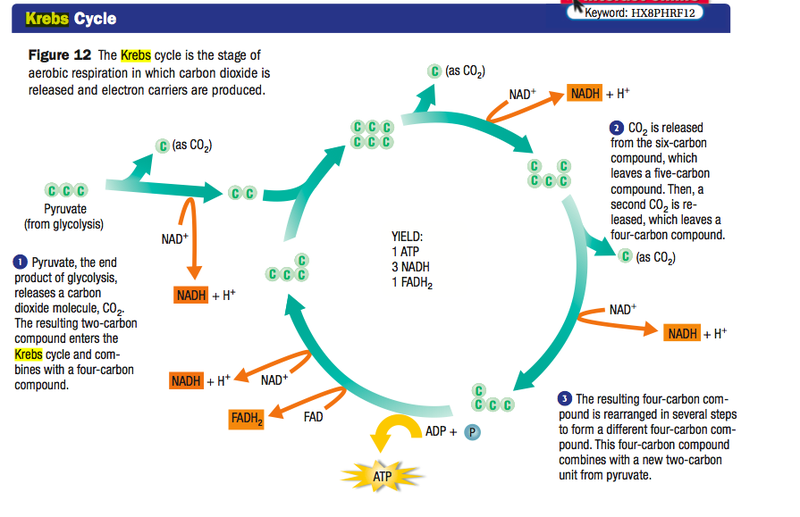
During the Citric Acid (Kreb's) Cycle more high energy electrons are stripped from the products of glucose metabolism to make more high energy electron carriers: NADH and FADH. During the Citric Acid (Kreb's) Cycle, only 2 ATP are produced per glucose molecule. Nothing is left of the original glucose molecule at the end of the Citric Acid (Kreb's) Cycle except for the 6 carbon dioxide molecules and the high energy electrons that are then transferred to NADH and FADH.
Most of the original free energy stored in glucose is utilized by enzymes along the inner membrane of the mitochondria. These enzymes strip the high energy electrons from NADH and FADH. Those electrons are used to pump hydrogen ions (protons) into the intermembrane space of the mitochondria through a cotransport protein. The electrochemical gradient created by the pumping of H+ is used by the transmembrane protein ATP synthase. As H+ diffuse through ATP synthase, the free energy from diffusion is used to phosphorylate ADP to ATP. Because the power of phosphorylating ADP to make ATP is coming from the oxidation of NADH and FADH, this process is called Oxidative Phosphorylation (ETC and chemiosmosis).
Oxygen is an electron acceptor during oxidative phosphorylation (ETC and chemiosmosis). Without oxygen accepting the electrons the electrons will no longer pass along the inner mitochondrial membrane, and ATP production stops.