Replication Fork
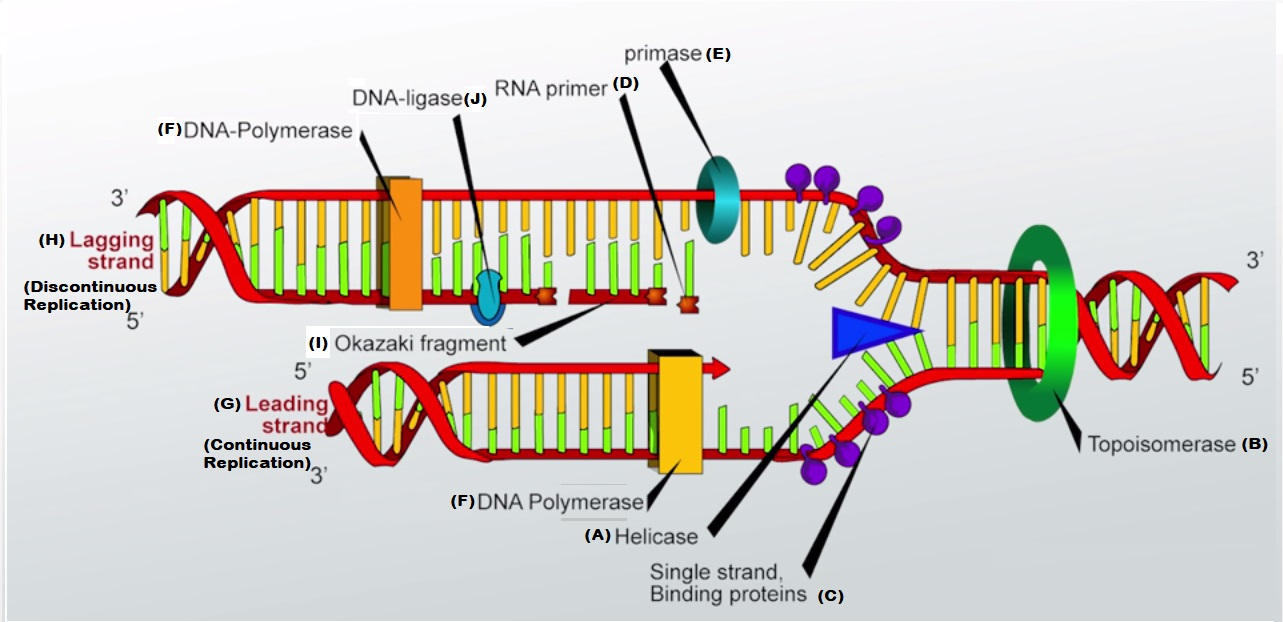
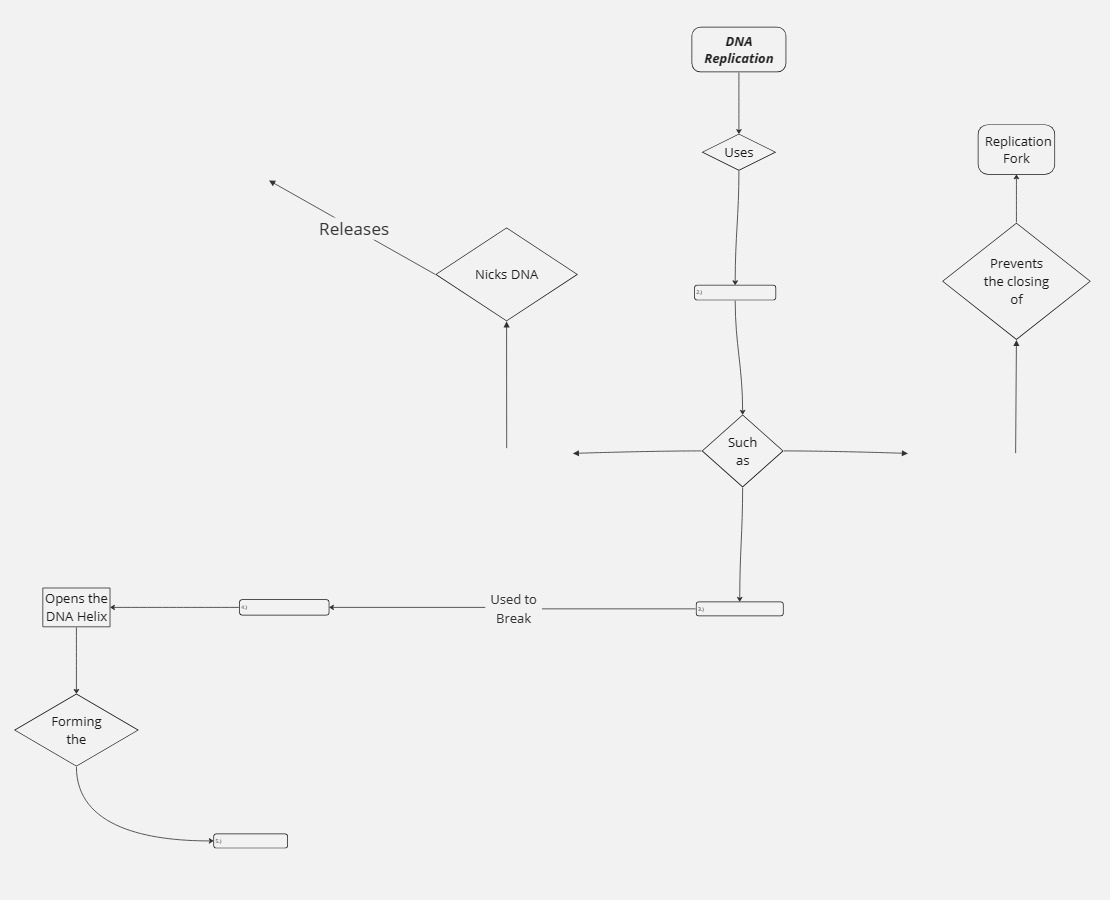
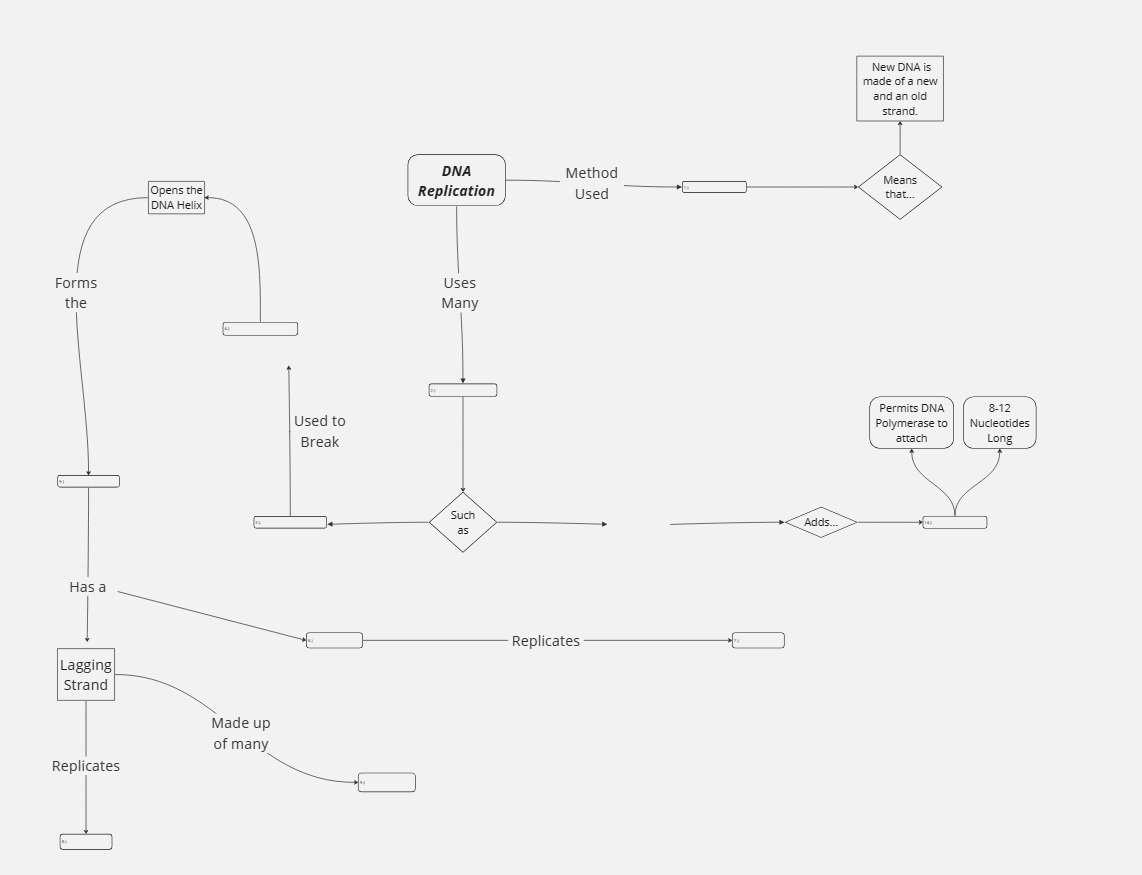
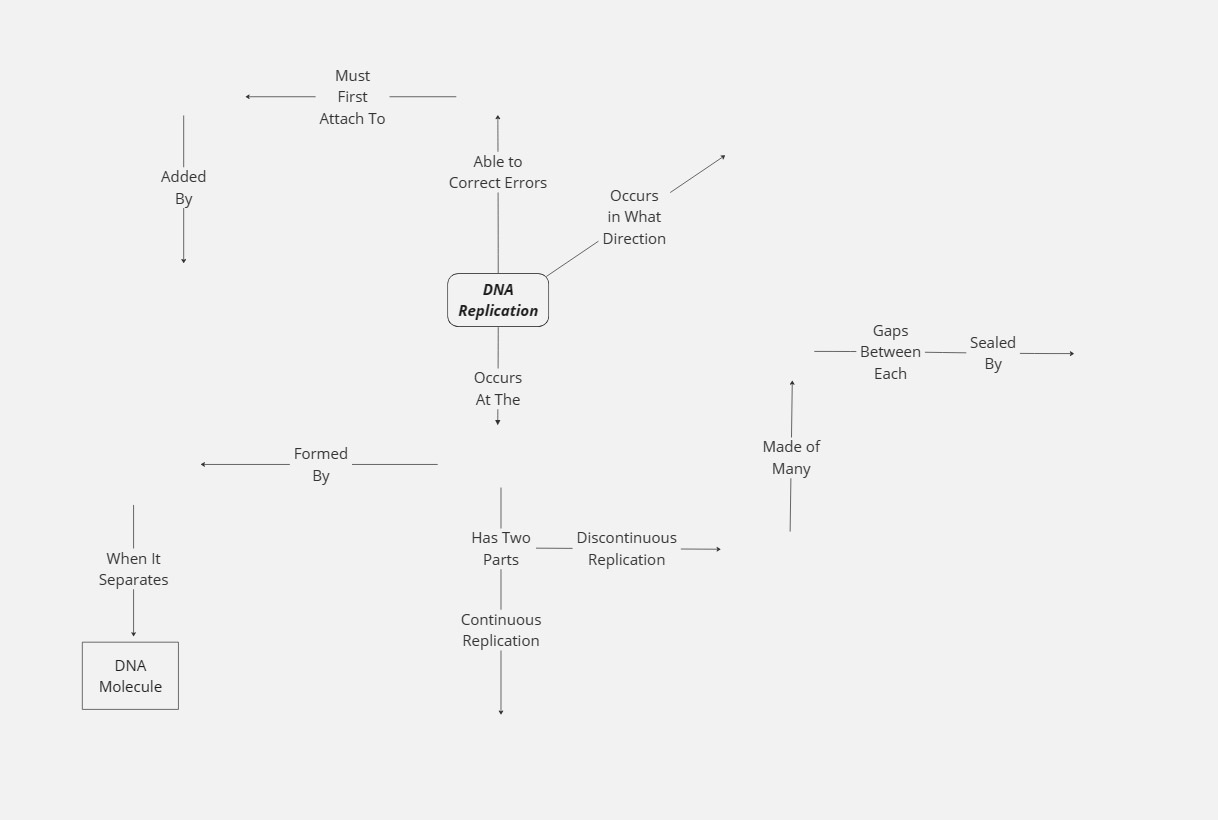
DNA replication uses many enzymes and proteins to make an exact copy of the parent strand of DNA. The first enzyme is called helicase which breaks hydrogen bonds holding the two strands of DNA together. Once the hydrogen bonds are broken, the double-stranded DNA molecule unwinds and opens up, which will form the replication fork.
When helicase unwinds the DNA helix, the helix just outside of the fork gets wound more tightly, leading to tension on the DNA molecule. Topoisomerase will “nick” the DNA strands to release this tension. Another potential problem is the replication fork closing, preventing DNA replication from occurring. Therefore, single-stranded binding (ssb) proteins hold the replication fork open, permitting replication to occur.
Several RNA primers must be synthesized for each template strand. The enzyme primase accomplishes this. This is important because DNA polymerase must attach to an RNA primer to begin adding new DNA nucleotides. These RNA primers are usually only 8-12 nucleotides long; DNA will later replace them.
The leading strand can be replicated continuously (continuous replication), meaning it does not pause but continues until the new strand is synthesized on the leading strand. DNA polymerase reads the DNA code of the template DNA. It makes a new DNA strand by adding complementary base pairs: adenine pairs with thymine via two hydrogen bonds, and cytosine pairs with guanine via three hydrogen bonds.
The other half of the replication fork is known as the lagging strand. This section replicates differently because its synthesis does not lead into the replication fork but away from it. Because DNA polymerase must pause multiple times on the lagging strand, as it waits for more template DNA to become available as helicase continues to open up the original DNA molecule, the lagging strand is replicated in multiple small fragments, called Okazaki fragments. This is referred to as discontinuous replication since it involves multiple pauses.
Eventually, DNA polymerase replaces all of the RNA primers with DNA, and then DNA ligase seals the gaps between the nucleotides on each side of neighboring Okazaki fragments. This completes DNA replication; the result is two DNA molecules, each containing one strand from the original DNA and one new strand (semiconservative replication). After replication has ended, DNA polymerase will scan each new DNA molecule, proofreading its work and correcting any base pairing mistakes it may have made.
New copies of DNA are made via semi-conservative replication; meaning that each new DNA molecule is made up of two strands. One strand is from the original DNA molecule (parent strand) and the other strand is a new strand (daughter strand) that uses the original strand as the template.