Copy of Electron Config: Longhand and Noble Gas (5/28/2026)
star
star
star
star
star
Last updated 3 months ago
4 Nsɛmmisa
Review of Electron Configurations
Questions
5
5
5
10
Brief Instructions:
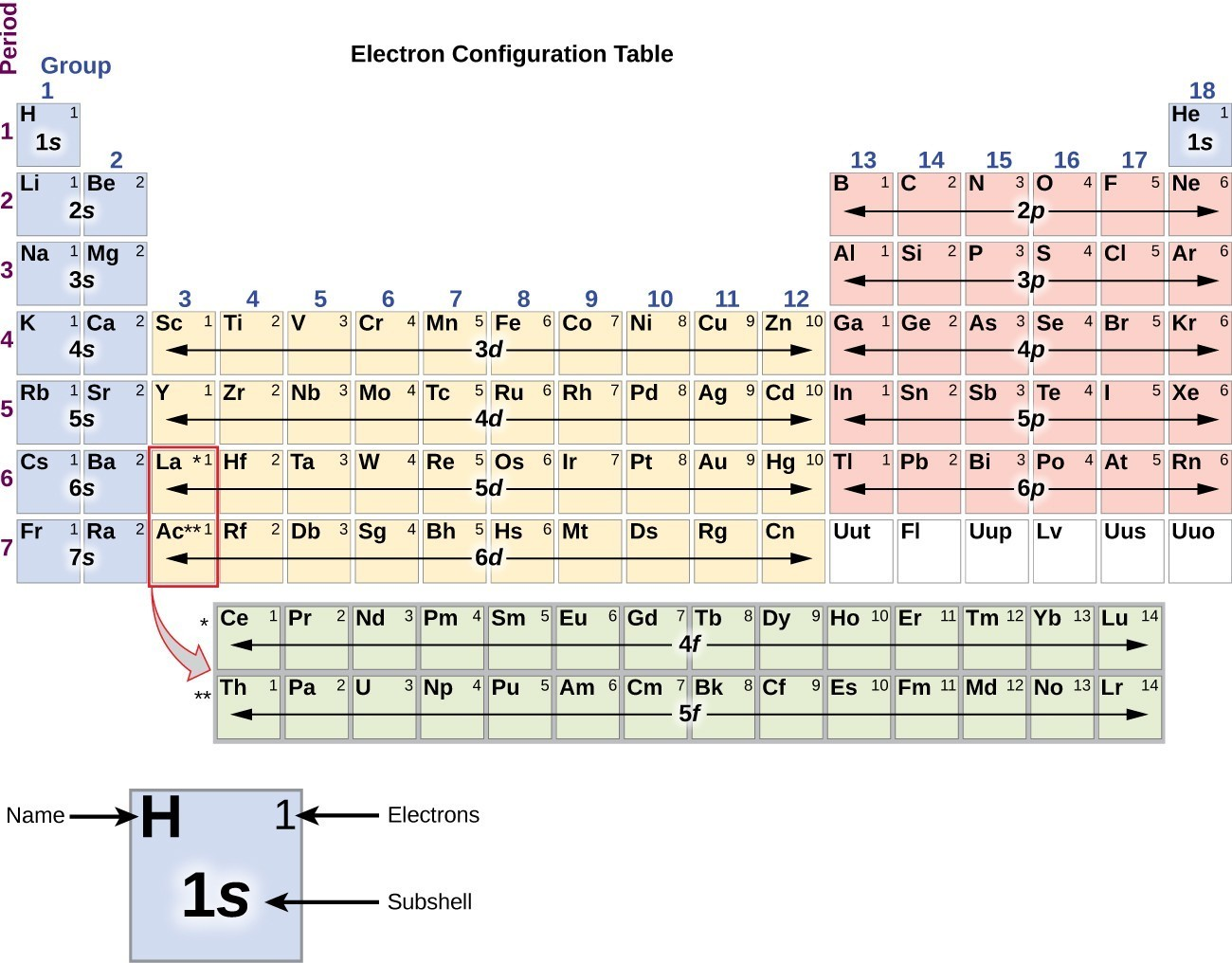
An electron configuration is a method of indicating the arrangement of electrons around a nucleus. A typical electron configuration consists of numbers, letters, and superscripts with the following format:
The coefficient is the first number that indicates the energy level.
The lowercase letter indicates the type of orbital (s, p, d, or f).
A superscript (the number to the right of each orbital) indicates the number of electrons in the orbital.
Example: 1s2 means two electrons are in the ‘s’ orbital of the first energy level. The element is helium (He).
To write a longhand electron configuration:
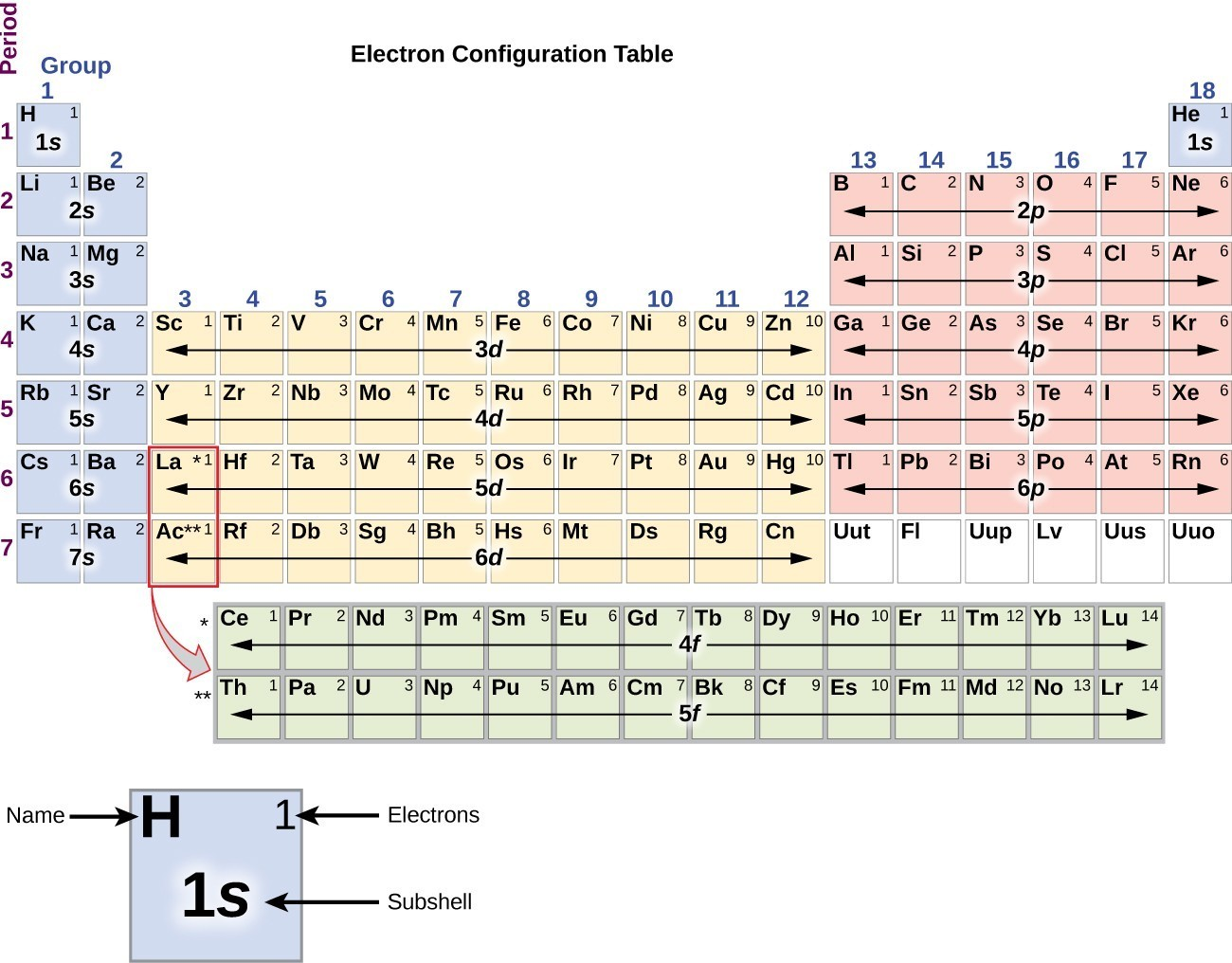
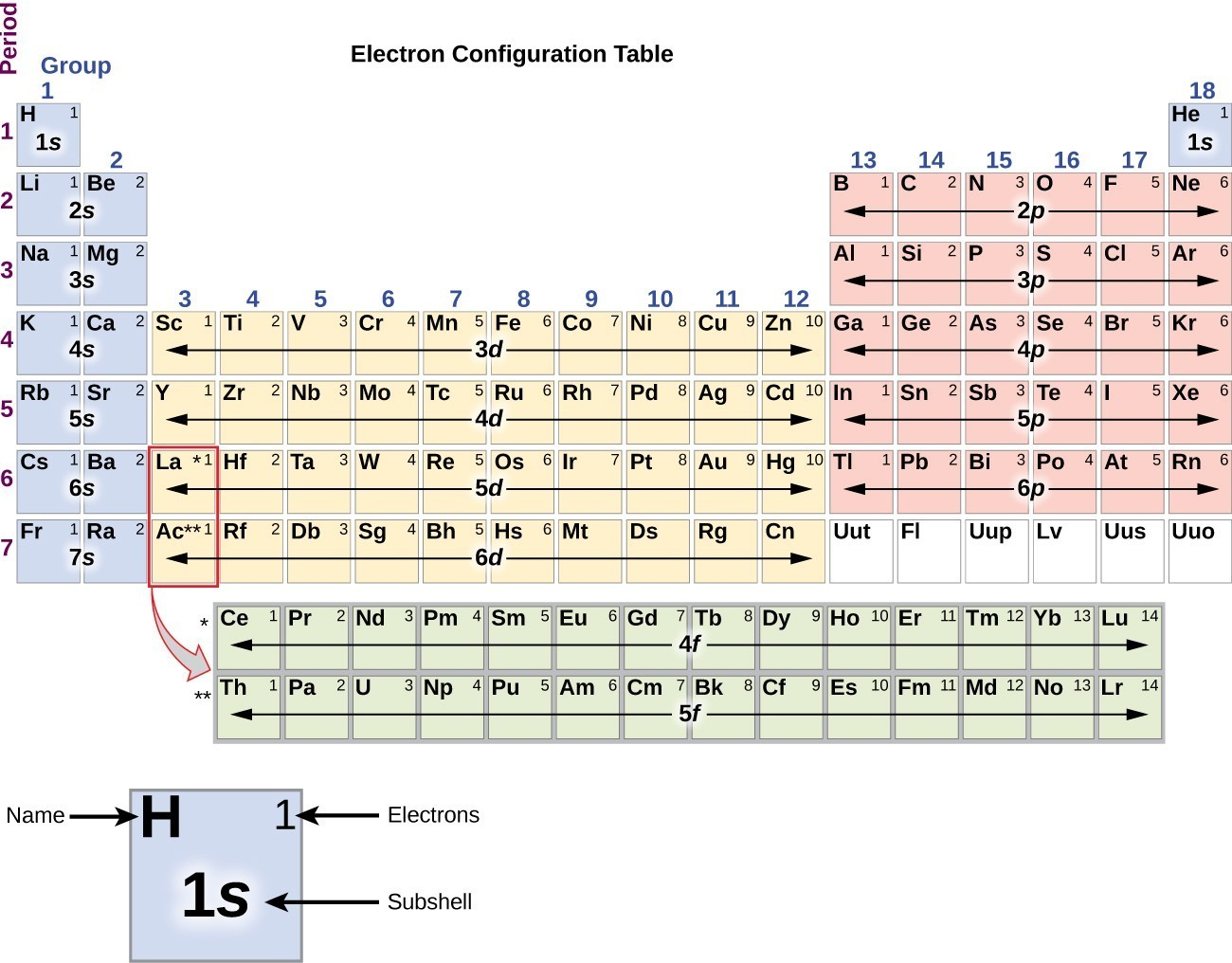
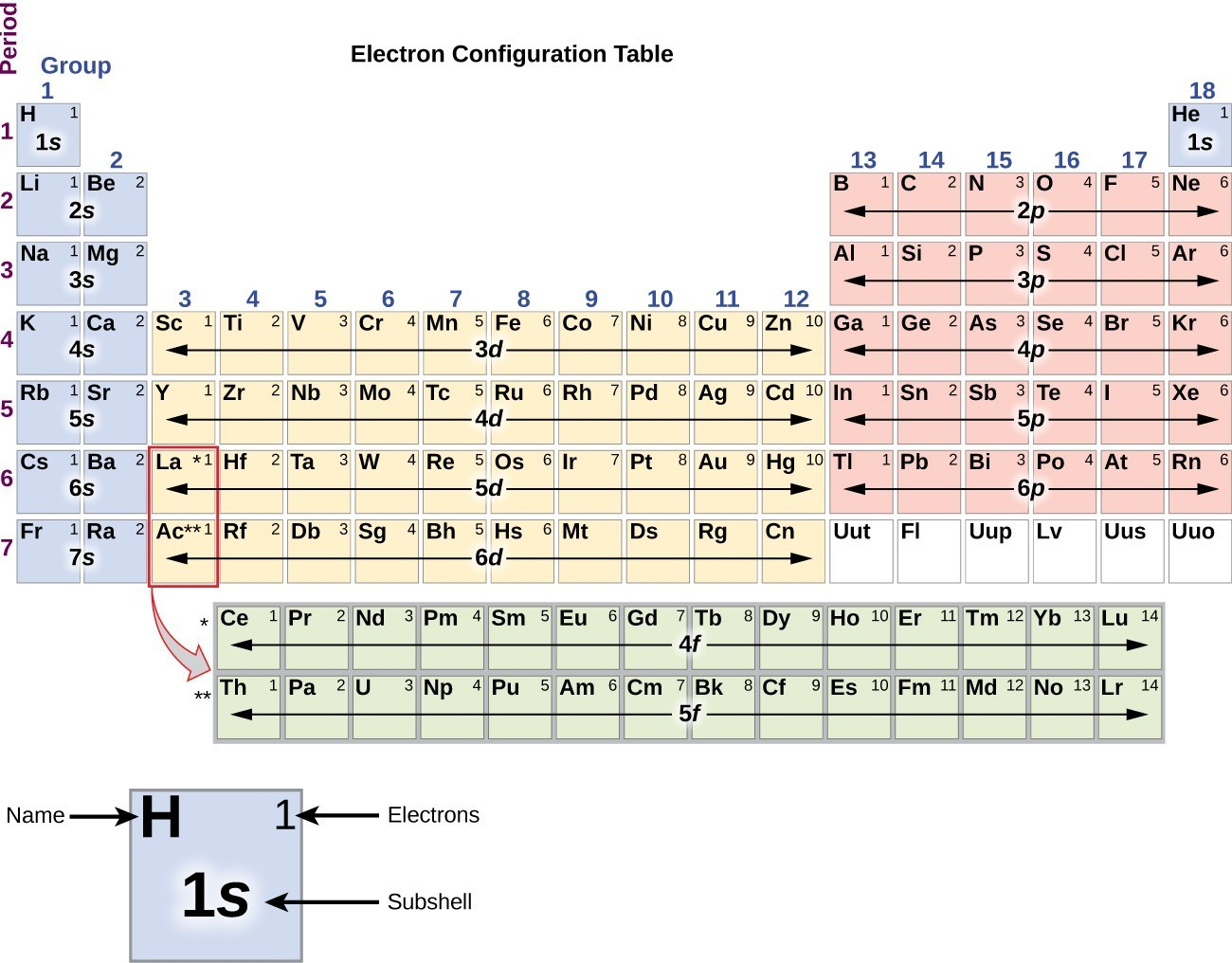
Begin on the upper-left-most position of the periodic table (1st energy level, s orbital) and move across and down the table.
Use the Aufbau principle to fill in electrons in each orbital. The Aufbau process requires that electrons fill the lowest energy orbitals first. In other words, atoms are built from the ground upwards.
The sum of the superscripts should equal the total number of electrons.
Example: Mg 1s2 2s2 2p6 3s2
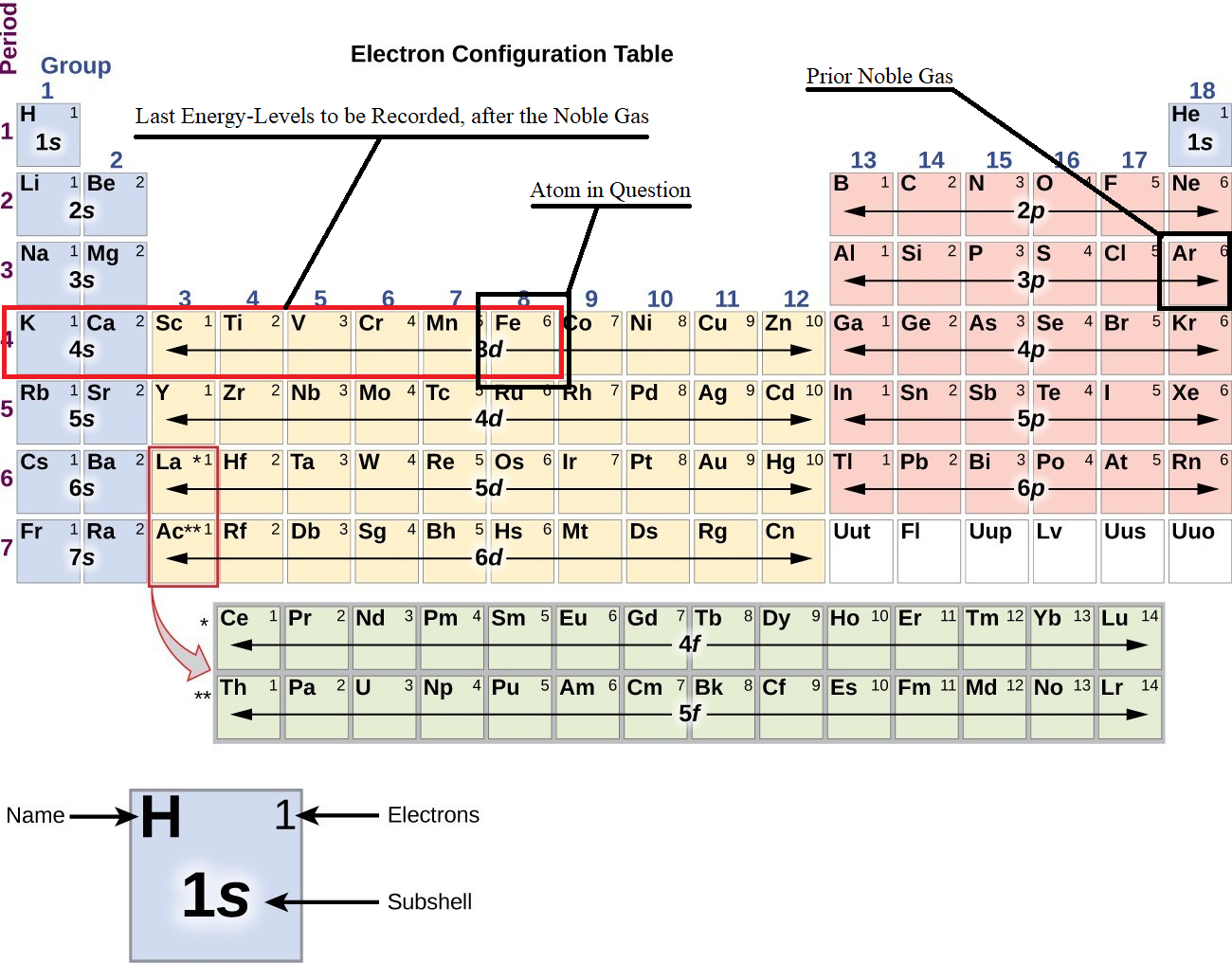
A "shorthand" version of electron configurations. It uses the group 18 (noble gases) elements as "place markers" followed by the last energy level for the atom in question.
Noble Gases - group 18 elements (the far-right-most column) - He, Ne, Ar, Kr, Xe, and Rn.
Brief Instructions:
Locate the atom on the periodic table.
Identify the prior noble gas (the one that is just prior the atom in question; up one row and to the far-right).
Record that noble gas in brackets - example [He].
Record the electron configuration in the atom's last energy level or the row that it is in on the periodic table (just after the noble gas).
Example - Iron (Fe)
Longhand Configuration for Iron (Fe): 1s2 2s2 2p6 3s2 3p6 4s2 3d6
Noble Gas Configuration for Iron (Fe): [Ar] 4s2 3d6
Longhand Electron Configurations:
a.) Sodium (Na)
b.) Iron (Fe):
c.) Bromine (Br):
d.) Barium (Ba):
e.) Neptunium (Np):
Noble Gas Configuration:
a.) Cobalt (Co):
b.) Silver (Ag):
c.) Tellurium (Te):
d.) Radium (Ra):
e.) Holmium (Ho):
Identify which elements are represented by each electron configuration (identify them by their abbreviation):
a.) 1s2 2s2 2p6 3s2 3p4
b.) 1s2 2s2 2p6 3s2 3p4 4s2 3d10 4p6 5s1
c.) [Kr] 5s2 4d10 5p3
d.) [Xe] 6s2 4f14 5d6
e.) [Rn] 7s2 5f11
Determine which electron configurations are correct.
If they are incorrect, use the second blank to fill in the corrected configuration.
If they are correct, type in, "not needed" in the second blank.
a.) 1s2 2s2 2p6 3s2 3p6 4s2 4d10 4p5
Correct?
Corrected Configuration:
b.) 1s2 2s2 2p6 3s3 3d5
Correct?
Corrected Configuration:
c.) [Ra] 7s2 5f8
Correct?
Corrected Configuration:
d.) [Kr] 5s2 4d10 5p5
Correct?
Corrected Configuration:
e.) [Xe] 5s2 4d10 5p6
Correct?
Corrected Configuration: