Copy of Covalent Bonding 1 (5/28/2026)
star
star
star
star
star
Last updated 3 months ago
15 Nsɛmmisa
Hyɛ no nsow a efi ɔkyerɛwfo no hɔ:
1
1
1
1
1
1
1
1
1
1
1
1
1
5
5
C.3.3 Draw structural formulas for simple molecules and determine their molecular shape.
Learning Goals:
I can draw structural formulas for simple molecules.
I can determine the molecular shape of simple molecules from a structural formula.
C.3.3 Draw structural formulas for simple molecules and determine their molecular shape.
Learning Goals:
I can draw structural formulas for simple molecules.
I can determine the molecular shape of simple molecules from a structural formula.
Result from the sharing of electrons between atoms.
Electrons are shared to fill the valence energy level of the atoms involved (rule of octet).
Usually occurs between nonmetals.
Electrons are always shared in pairs.
A single pair of shared electrons forms a single covalent bond.
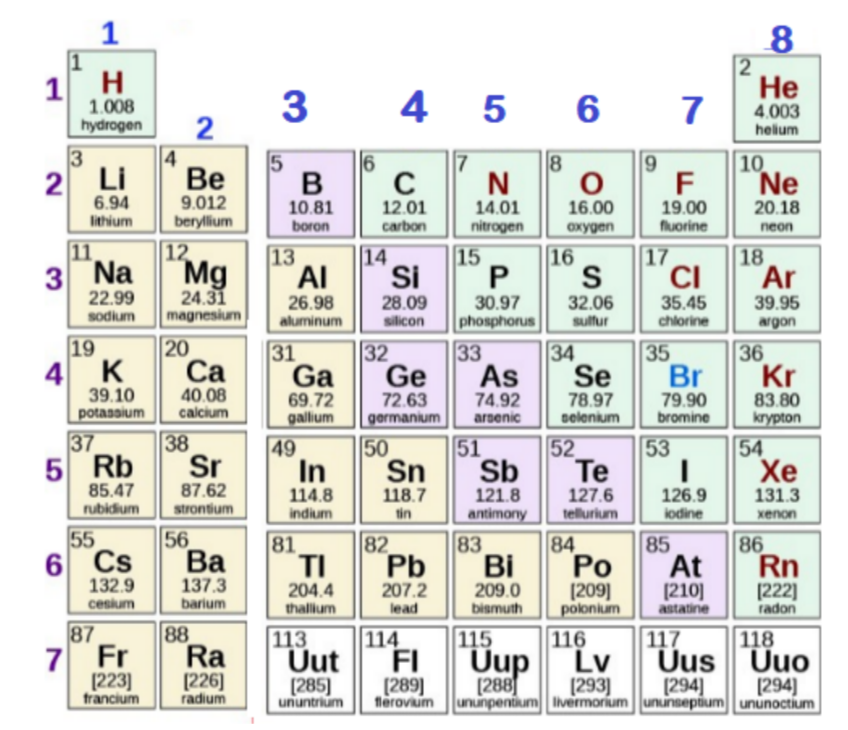
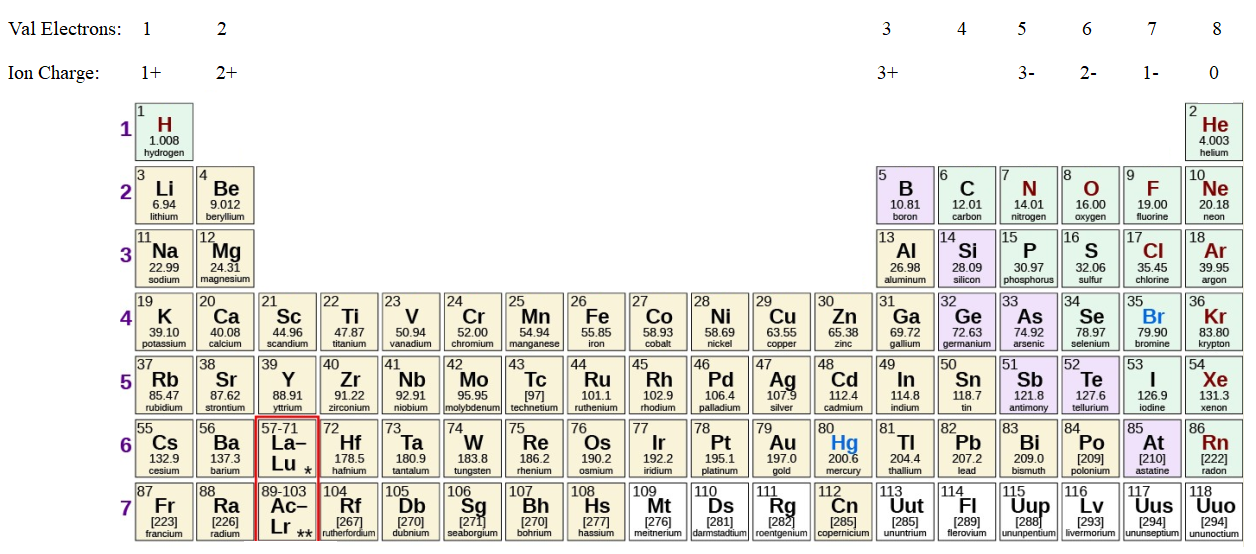
Draw a Lewis dot diagram for each element listed in the compound, as well as showing the bonding between the atoms.
Draw a Lewis dot diagram for each element listed in the compound, as well as showing the bonding between the atoms.
Draw a Lewis dot diagram for each element listed in the compound, as well as showing the bonding between the atoms.
Draw a Lewis dot diagram for each element listed in the compound, as well as showing the bonding between the atoms.
Draw a Lewis dot diagram for each element listed in the compound, as well as showing the bonding between the atoms.
Draw a Lewis dot diagram for each element listed in the compound, as well as showing the bonding between the atoms.
Draw a Lewis dot diagram for each element listed in the compound, as well as showing the bonding between the atoms.
Draw a Lewis dot diagram for each element listed in the compound, as well as showing the bonding between the atoms.
Draw a Lewis dot diagram for each element listed in the compound, as well as showing the bonding between the atoms.
Draw a Lewis dot diagram for each element listed in the compound, as well as showing the bonding between the atoms.
Draw a Lewis dot diagram for each element listed in the compound, as well as showing the bonding between the atoms.
Draw a Lewis dot diagram for each element listed in the compound, as well as showing the bonding between the atoms.
Draw a Lewis dot diagram for each element listed in the compound, as well as showing the bonding between the atoms.
This means the name of the first element is what it is in the periodic table, while for the second element, we change the ending to -ide.
A reminder that a molecule is a group of two or more atoms held together by covalent bonds. Covalent bonds are usually formed between two or more nonmetals. For example, Cl2, CH4, NH3, CO2.
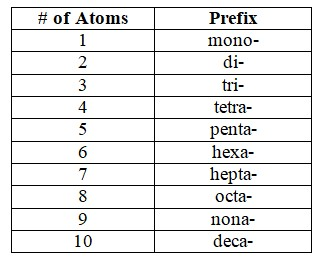
Prefixes are used to denote the number of atoms in the molecule (see table to the right). The prefix "mono" (which refers to one) is never used on the first atom in a compound. Also, atoms that contain hydrogen typically do not have prefixes but are named using common nomenclature.
Examples:
SF6 - sulfur hexafluoride
NCl3 - nitrogen trichloride
CO2 - carbon dioxide
N2O3 - dinitrogen trioxide
CH4 - methane
C2H6 - ethane
C3H8 - propane
Name the following covalent compounds:
a. K2O
b. SO3
c. H2O
d. BF3
e. C2H6
This means the name of the first element is what it is in the periodic table, while for the second element, we change the ending to -ide.
A reminder that a molecule is a group of two or more atoms held together by covalent bonds. Covalent bonds are usually formed between two or more nonmetals. For example, Cl2, CH4, NH3, CO2.
Prefixes are used to denote the number of atoms in the molecule (see table to the right). The prefix "mono" (which refers to one) is never used on the first atom in a compound. Also, atoms that contain hydrogen typically do not have prefixes but are named using common nomenclature.
Examples:
SF6 - sulfur hexafluoride
NCl3 - nitrogen trichloride
CO2 - carbon dioxide
N2O3 - dinitrogen trioxide
CH4 - methane
C2H6 - ethane
C3H8 - propane
Use the name of each covalent compound to determine the formula of each.
a. Iodine heptafluoride
b. Dinitrogen tetraoxide
c. Nitrogen monoxide
d. tetraphosphorous decoxide
e. tetraphosphorous nonasulfide