Přejít k hlavnímu obsahu
Přihlásit se
Sign up for FREE
arrow_back
Knihovna

Copy of Isotopes and Periodic Table Introduction (5/28/2026)

star
star
star
star
star
Poslední aktualizace about 1 month ago
16 Dotazy
1
1
1
4
1
2
2
2
2
2
2
2
2
2
2
2

Isotopes:

  • Recall that there are two subatomic particles that determine the mass of an atom (atomic mass, mass number, or atomic weight) - protons and neutrons.

  • Atoms typically have the same number of protons and neutrons within their nucleus; however, this is not always the case.

  • Isotopes are atoms of the same element that have different numbers of neutrons; the number of protons will not change.

Determining the Number of Subatomic Particles in an Atom:
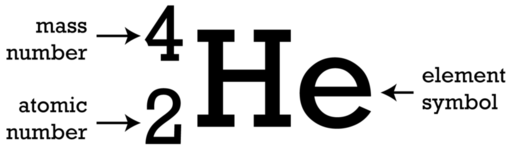
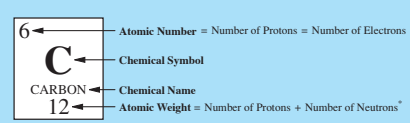
  • Atomic number = # of protons

  • Mass number = protons + neutrons

  • In a neutral atom - # of protons = # of electrons

Recall that atoms can also be represented by their name followed by their mass number:

  • Helium - 4

Determining the Identity of an Element:

  • You established that atoms are identified by the number of protons or the atomic number.

  • If the number of protons changes then the identity of the atom and the element also will change.

  • Changing the number of neutrons or electrons does not change the name of the atom/element.

Determining charge:

  • Subtract the number of protons and the number of electrons (charge = #p+ - #e- ).

  • Neutral atom = charge of 0

  • Positive charge = number of protons that exceed the number of electrons.

  • Negative charge = number of electrons that exceed the number of protons.

Otázka 1
1.

Determine the relationship between the two atoms displayed, above.

Otázka 2
2.

Determine the relationship between the two atoms displayed, above.

Otázka 3
3.

An atom with 13 protons and 13 neutrons; an atom with 14 protons and 13 neutrons.

Determine the relationship between the two atoms displayed, above.

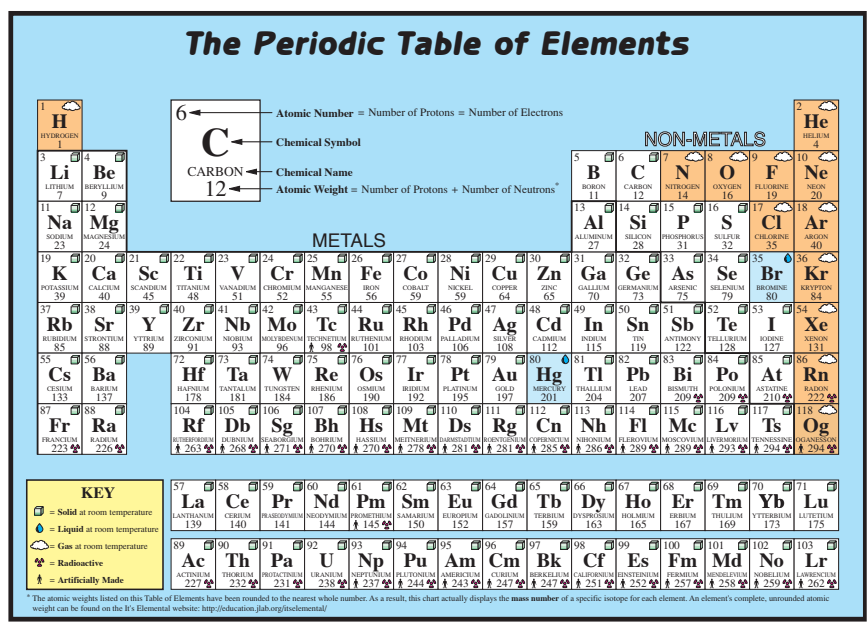
Periodic Table of Elements:

  • Atomic number is always a whole number.

  • Atomic mass is usually displayed as an average of all of the possible isotopes of that element type.

  • Example - the actual atomic mass of Carbon is 12.011 amu

  • Some periodic tables round the value of the atomic mass, most do not.

Otázka 4
4.

Use the periodic table, above, to answer the following questions.

a. What is the atomic number of chlorine (Cl)

b. What is the atomic number of tungsten (W)

c. How many protons are there in any Cl atom

d. How many protons are there in any iodine (I) atom

Otázka 5
5.

How could you use a periodic table to determine the number of protons?

Otázka 6
6.

How could you use the periodic table to determine the number of neutrons in an atom?

Otázka 7
7.

Can you tell from the periodic table the exact number of neutrons that are in an atom? Explain.

Otázka 8
8.

What is the same in an atom and an isotope of the same element? What is different?

Otázka 9
9.

Atomic symbol - 2H

Name

Atomic number

Atomic mass - round to the nearest whole number.

Number of neutrons

Otázka 10
10.

Atomic symbol - 22Na

Name

Atomic number

Atomic mass - round to the nearest whole number.

Number of neutrons

Otázka 11
11.

Atomic symbol - 24Mg

Name

Atomic number

Atomic mass - round to the nearest whole number.

Number of neutrons

Otázka 12
12.

Atomic symbol - 107Ag

Name

Atomic number

Atomic mass - round to the nearest whole number.

Number of neutrons

Otázka 13
13.

Atomic symbol - 19F

Name

Atomic number

Atomic mass - round to the nearest whole number.

Number of neutrons

Otázka 14
14.

Atomic symbol - 12C

Name

Atomic number

Atomic mass - round to the nearest whole number.

Number of neutrons

Otázka 15
15.

Atomic symbol - 13C

Name

Atomic number

Atomic mass - round to the nearest whole number.

Number of neutrons

Otázka 16
16.

Atomic symbol - 137Ba

Name

Atomic number

Atomic mass - round to the nearest whole number.

Number of neutrons