Copy of Gas Behavior - POGIL (5/28/2026)
star
star
star
star
star
Last updated 3 months ago
11 Nsɛmmisa
1
1
1
1
1
1
1
1
1
1
1
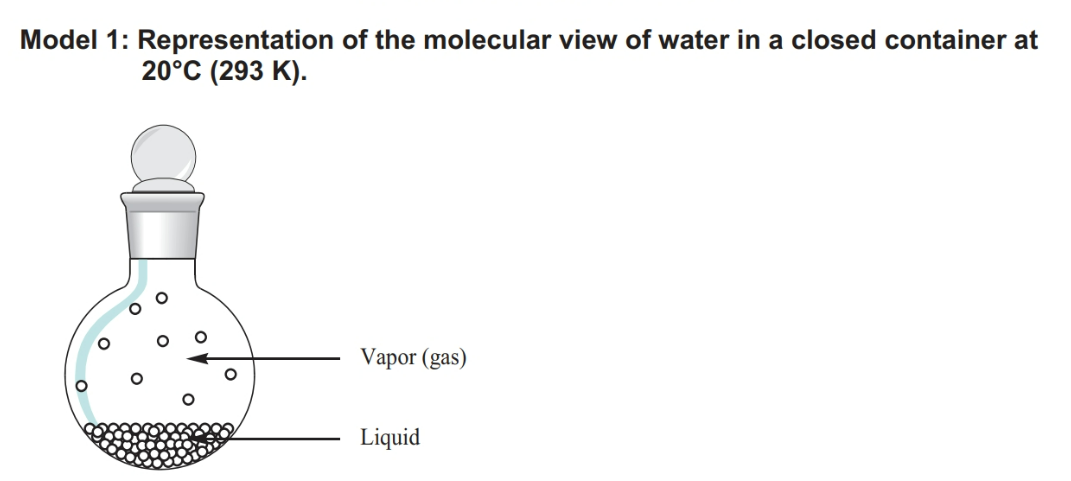
Consider what is happening in Model 1.
Create a short list of the main differences between a gas and a liquid at the same temperature (only use your observations and thoughts of Model 1).
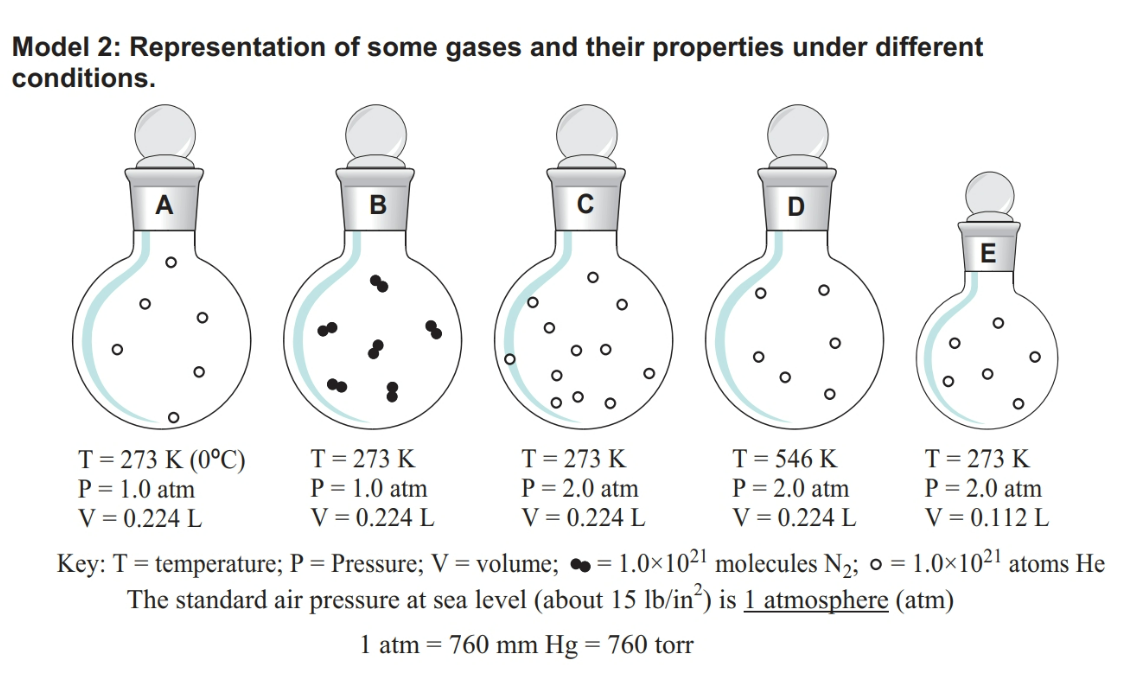
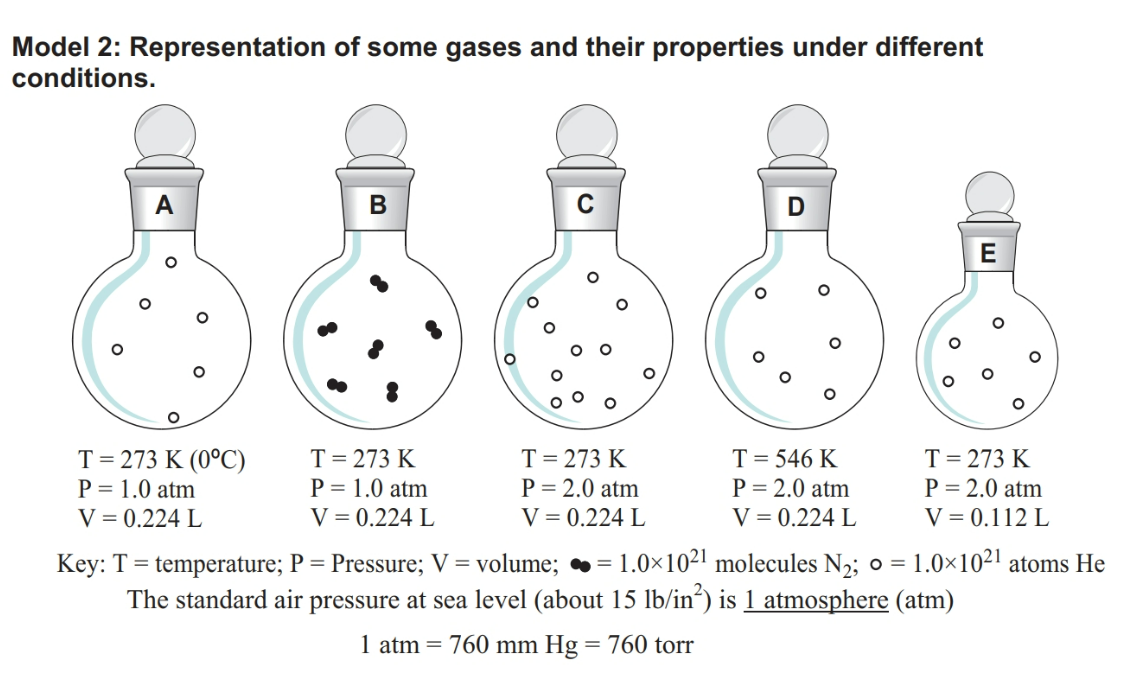
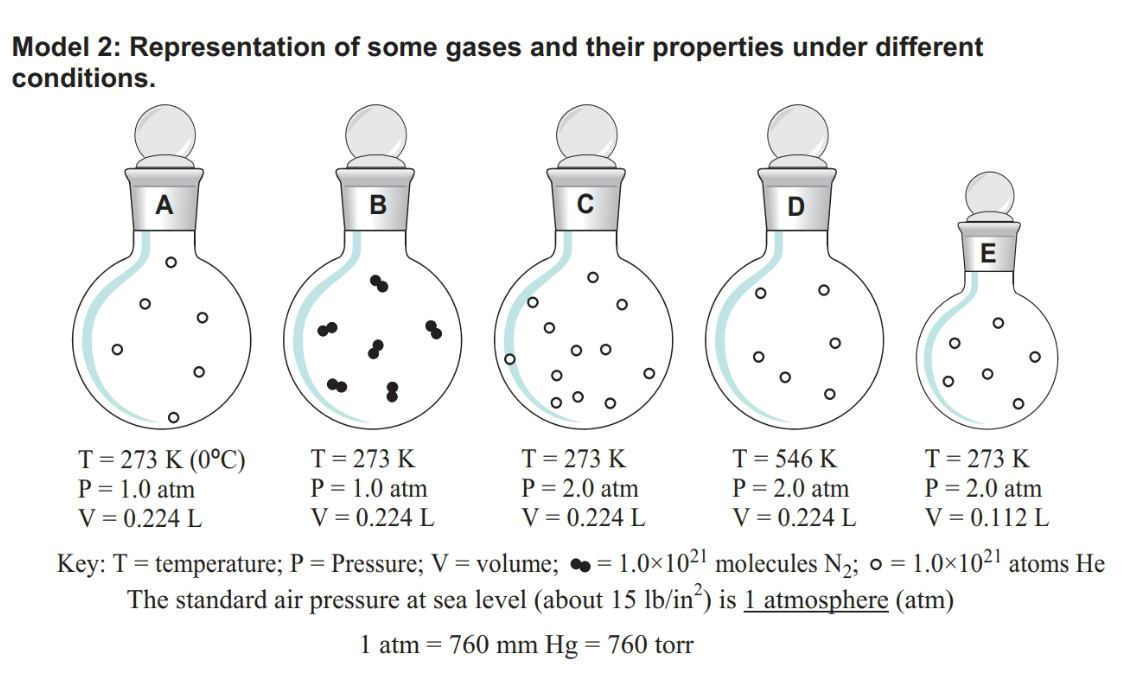
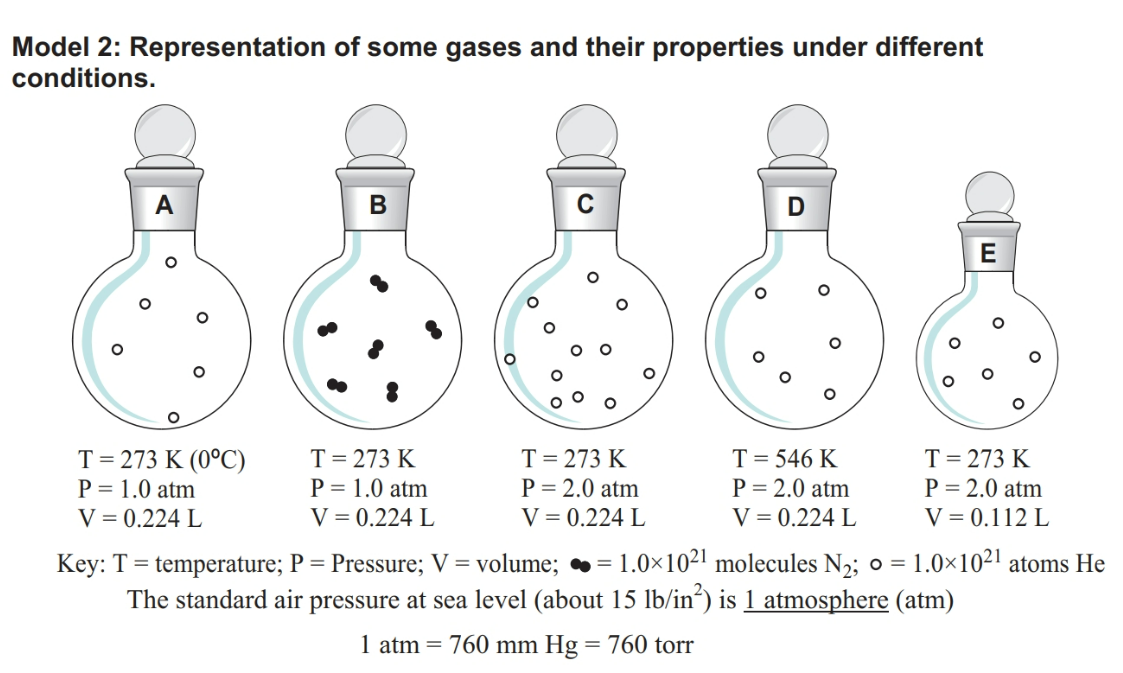
Compare containers A and B and the information below each container in Model 2.
How does the pressure (P) change when the identity of the gas in the container is changed at constant volume?
Compare containers A and C in Model 2. How does the pressure of a gas change when the number of atoms in the container is doubled at constant volume?
The number of atoms and the number of moles are proportional. How does the pressure of a gas change when the number of moles of gas in the container is doubled at constant volume?
Considering Model 2, how does the pressure of a gas change when the temperature is doubled at constant volume (containers A and D)?
Considering Model 2, how does the pressure of a gas change when the volume of the container is doubled at constant temperature (containers A and E)?
The symbol above means “is proportional to."
The symbol “n” means “number of moles of gas.”
Based on your answer to 4, identify the correct expression.
Based upon your answer to #5, identify the correct expression.
Based on your answer to #6, identify the correct expression.
How many atoms of He are there in container A in model 2?
Using the number of atoms in container A in Model 2, calculate the number of moles (n). Recall that Avogadro’s number is 6.022×10²³.
