Copy of Intro to Cardiovascular System (5/28/2026)
star
star
star
star
star
Last updated 3 months ago
0 Asɛmmisa
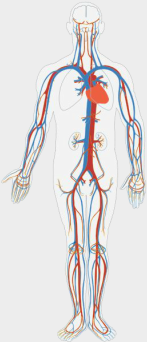
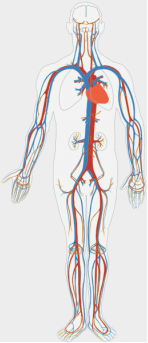
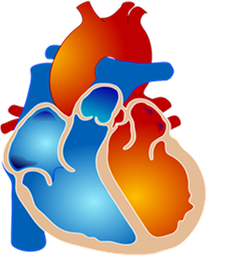
The cardiovascular system is the primary circulatory system of the human body. It comprises:
a heart
blood
blood vessels
The cardiovascular system is the primary circulatory system of the human body. It comprises:
a heart
blood
blood vessels
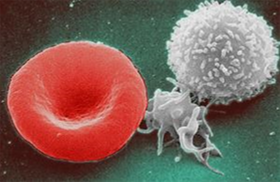
One function of the cardiovascular system is transport. Some substances carried by the cardiovascular system are dissolved or suspended in the fluid portion of the blood. Others are bound up in special cellular elements called red blood cells (RBCs).
Erythrocytes (RBC) and Leukocytes (WBC)
The cardiovascular system also provides protection against foreign substances. This function involves active attack by white blood cells as well as more subtle processes of the immune system.
Blood vessels are the conduits of the cardiovascular system. They make up a closed system, since there is no place in the system where whole blood can leave.
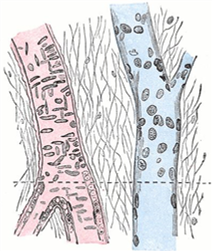
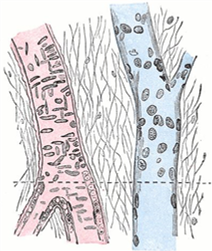
Arteries and Veins
Arteries generally carry blood from the chambers of the heart to the tissue of the body.
Veins carry blood from the tissues to the chambers of the heart. (Coronary arteries carry blood from the chambers of the heart inside to the walls of the heart outside.)
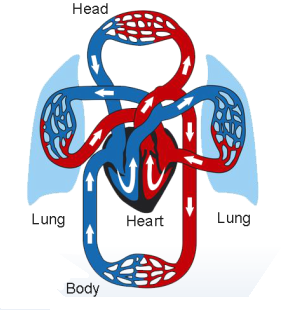
The Circulatory System
Blood circulation is also a two cycle system. It involves both the pulmonary cycle and the systemic cycle. Blood circulates through two circuits.
In the pulmonary cycle, blood circulates from the heart to the lungs and back to the heart. In the systemic cycle, blood circulates from the heart to the rest of the body and back to the heart.
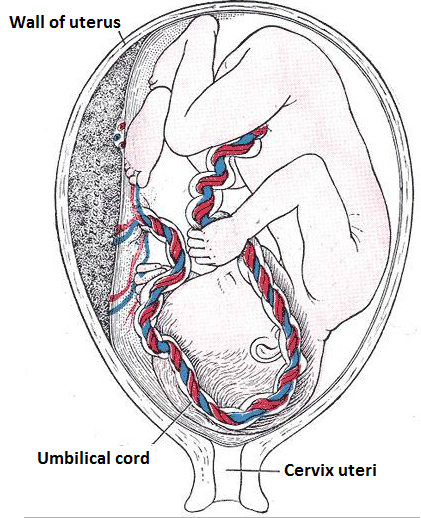
Since the fetus is located within the uterus, its lungs do not take in air. Therefore, the pulmonary cycle does not function in the fetus. Essentially, fetal blood flows to and from the placenta. There are certain bypasses in the heart to avoid the pulmonary cycle. At the time of birth, the fetal circulation is changed to the normal pattern.
In simple organisms such as unicellular and one or two layer organisms, materials can be transferred among cells by simple processes of diffusion. However, in large organisms, a system is needed for the distribution and collection of materials.
This is because diffusion does not occur fast enough to carry the large volumes of materials necessary through the greater distances required. Circulatory systems, for example the cardiovascular system, are used by the human body to carry substances.
Oxygen is obtained by the blood through the process of external respiration in the lungs. Oxygen is then transported to the individual body cells, where it is used in metabolic oxidation. This provides energy for production of ATP (adenosine triphosphate), which is necessary for carrying on the life processes of the body.
Some of the substances distributed to the body cells are products of the digestive system. These materials meet individual cell requirements for energy, growth, repair, synthesis of new materials, and storage for later use.
Some substances are collected from the body cells for elimination. These include carbon dioxide, nitrogenous wastes, and other potentially harmful substances that are carried to organs like the lungs, liver, or kidneys for elimination from the body.
Hormones are the products of endocrine glands. Hormones and other control substances are distributed throughout the body by circulatory systems. The tissues or organs affected by these substances are usually called target organs. In turn, substances released by the target organs often affect the original endocrine gland. This results in a feedback system.
Any circulatory system has three general components as follows:
Vehicle
Conduits
Motive forces
Vehicle:
The vehicle is a fluid (flowing) medium. The materials being carried are dissolved or suspended in this fluid. Examples of this include blood, lymph, or cerebrospinal fluid.
Conduits:
Conduits are like pipes. They contain the fluids in which materials are transported to and from the various parts of the body. The blood vessels or lymph vessels are examples of these.
Motive Parts:
Motive forces act upon the vehicle to make it flow through the conduits. In the cardiovascular system these are provided by the heart.