Exploring the Electromagnetic Spectrum: Waves of Energy in Our World
What Is the Electromagnetic Spectrum?
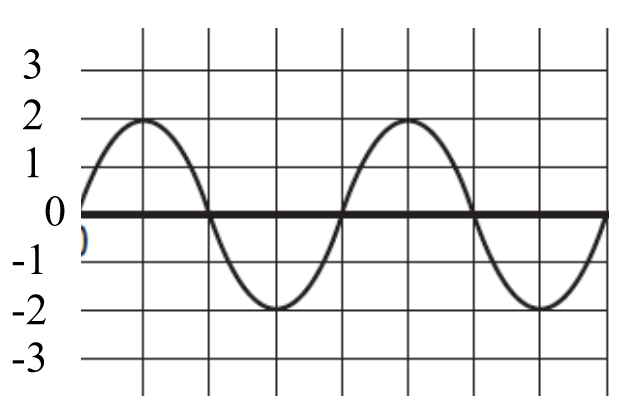
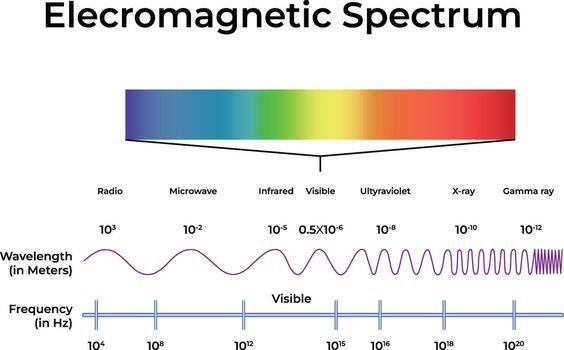
The electromagnetic spectrum is the complete range of electromagnetic radiation—all the different types of energy waves produced by vibrating electric and magnetic fields. These waves travel at the speed of light (about 300,000 km/s in empty space) and differ mainly in their wavelength (distance between wave peaks) and frequency (how many waves pass a point per second). Longer wavelengths have lower frequencies and less energy, while shorter wavelengths pack higher frequencies and more energy.
Electromagnetic radiation represents all these forms, from safe radio broadcasts to powerful gamma rays. Unlike sound waves, EM waves don't need air or water to travel—they can cross the vacuum of space!
Light: A Type of Electromagnetic Wave
Visible light is the narrow band of EM radiation our eyes can detect, but it's just one piece of the puzzle. Light is classified as electromagnetic radiation because electrical and magnetic fields vibrate in a light wave. These perpendicular fields create the wave's push-pull motion.
An example of this light is visible light, which comes in colors from red (longer wavelength) to violet (shorter). But there's more: infrared waves (radiant energy we feel as heat) sit just beyond red light.
Feeling the Invisible: Infrared Radiation
You can't see infrared radiation, also known as radiant energy, but you can feel it! Your eyes but can be felt by your skin—think of the warmth from a campfire or sunlight on a cold day. Infrared waves have wavelengths longer than visible light but shorter than microwaves, making them perfect for heat detection in night-vision goggles or TV remotes.
Microwaves and Radio Waves: Communication Champs
Microwaves are one type of electromagnetic radiation with wavelengths around centimeters. They can be used to communicate with satellites (like GPS or weather radar) and, famously, heat your food.
Radio waves, with even longer wavelengths (meters to kilometers), power AM/FM radios, cell phones, and TV signals. Compared to all other types of electromagnetic radiation, radio waves have the lowest frequency, which is why they're safe and travel far.
The High-Energy End: UV, X-Rays, and Gamma Rays
As wavelengths shorten, energy skyrockets:
Ultraviolet rays (UV rays): Shorter than violet light. An overexposure to ultraviolet rays can result in sunburns and skin cancer. They're why we slather on sunscreen!
X rays: Penetrate soft tissue to image bones. High wavelength? No—super short!
Gamma rays: Highest energy of all electromagnetic radiation. Because gamma rays have the highest energy of all electromagnetic radiation, they are the most damaging to human tissue—used to kill cancer cells but dangerous in high doses.
Everyday Examples and Safety Tips
Why does an empty plate not heat up in the microwave? Microwaves excite water molecules to create friction (heat). An empty glass or ceramic plate lacks water, so the waves pass right through without absorption—no heat!
Why should you use sunscreen and a hat when you are out in the Sun? The Sun blasts UV rays, which damage skin DNA, causing burns, premature aging, and cancer. Sunscreen absorbs/reflects UV; hats block it overhead.
Beyond the Basics: Wave Math and Real-World Tech
EM waves follow c = f × λ (c = speed of light, f = frequency, λ = wavelength). Example: FM radio (~100 MHz frequency) has ~3m wavelengths.
Ionizing vs. Non-Ionizing: High-energy waves (UV+) knock electrons off atoms (ionizing = DNA damage). Low-energy (radio, microwaves) just vibrate molecules (non-ionizing = safer).
Here's how specific EM waves are applied in technology and medicine:
X-ray: Examining the inside of a weld in a steel oil pipe (reveals hidden flaws).
Microwave: Cell phone (wireless communication signals).
Gamma rays: Used by a physician who studies and treats cancer (precise tumor destruction).
Radio waves: TV broadcast signals (long-distance transmission).
Infrared waves: Lamp used to warm a baby chick (gentle heat therapy).
Ultraviolet waves: In a hospital to keep surgical equipment sterile (kills microbes).
Radar (microwaves): Measuring the speed of a passing car (Doppler shift detection).
Cool Applications Expanded:
Radio: Wireless internet, aviation navigation.
IR: Thermometers, military night vision.
Microwaves: Speed radars, satellite TV.
UV: Water purification, fluorescent black lights.
X-rays: Dentistry, airport baggage scanners.
Gamma: Food irradiation (extends shelf life by killing bacteria).
Spectrum Visualization:
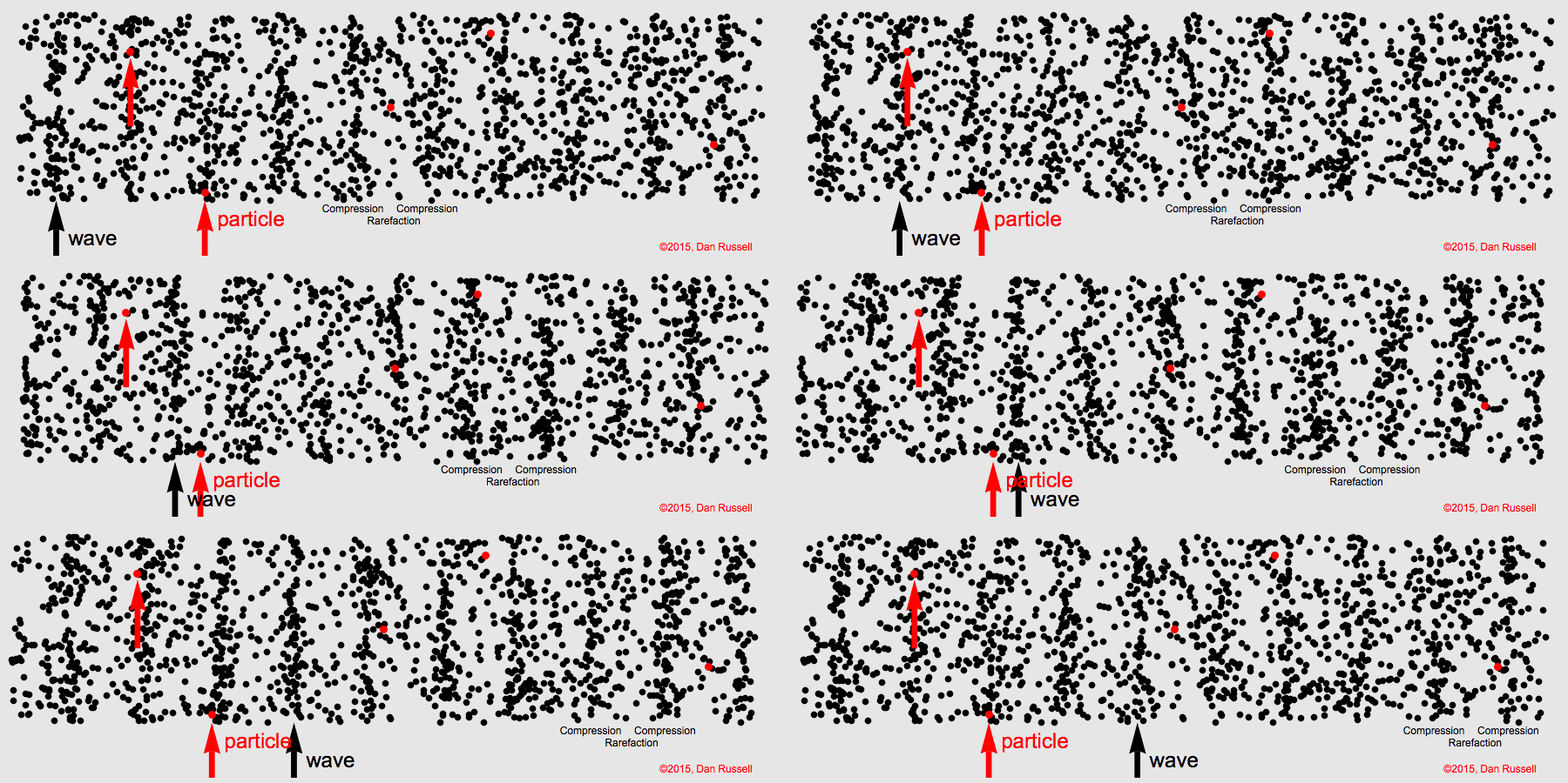
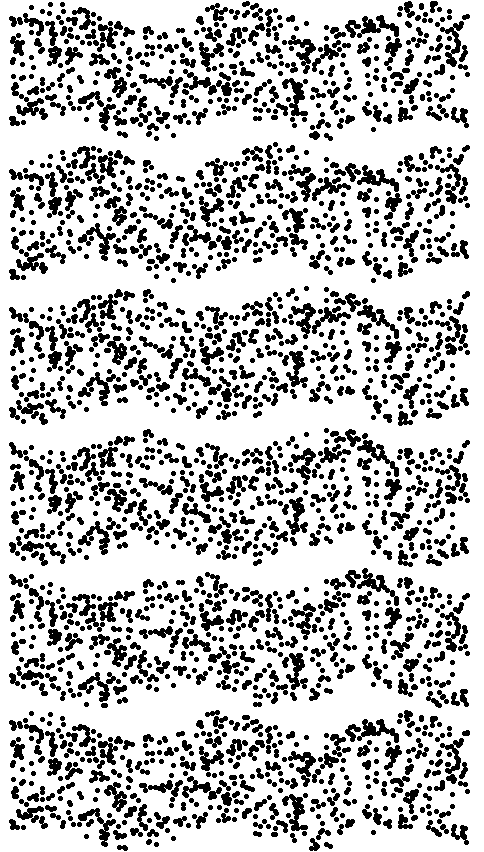
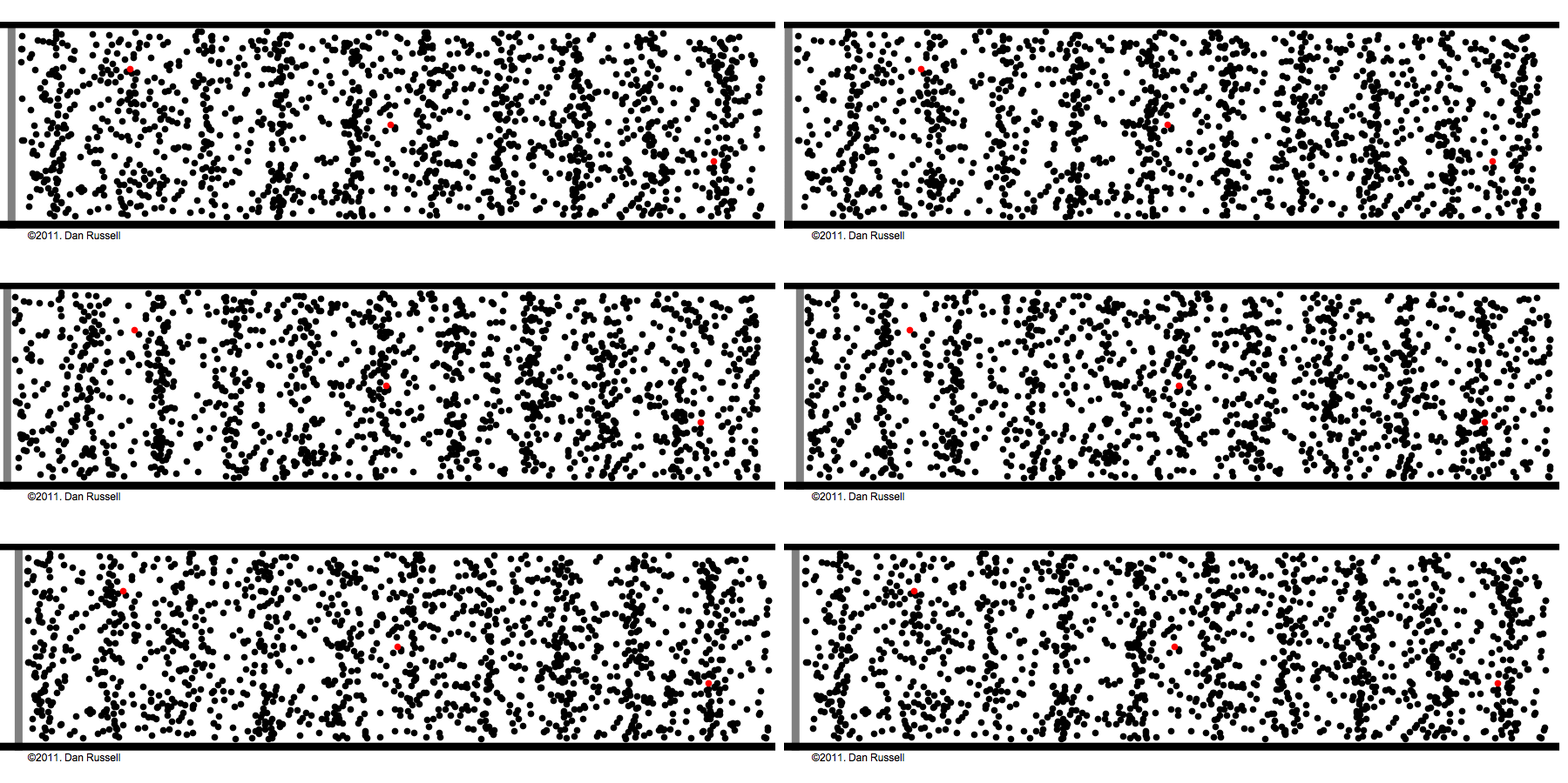 The second animation below shows the difference between the oscillatory (back-and-forth) motion of individual particles and the propagation (movement) of the wave through the medium. The animation also identifies the regions of compression and rarefaction.