Copy of 6.) Cell Transport - Models (5/28/2026)
star
star
star
star
star
Last updated 3 months ago
22 Nsɛmmisa
2
1
6
2
3
2
1
1
1
1
2
1
3
1
1
1
1
1
1
3
3
1
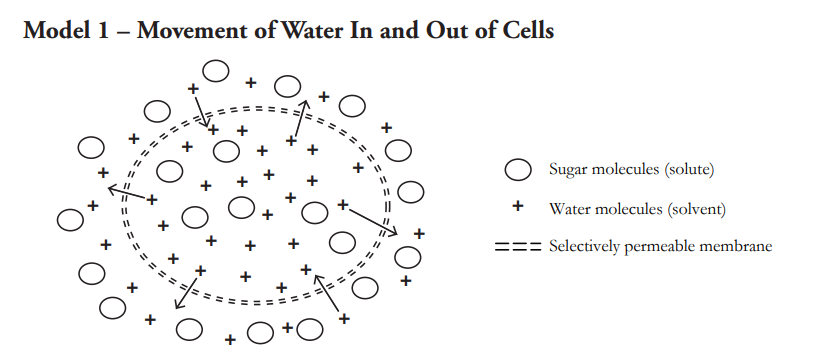
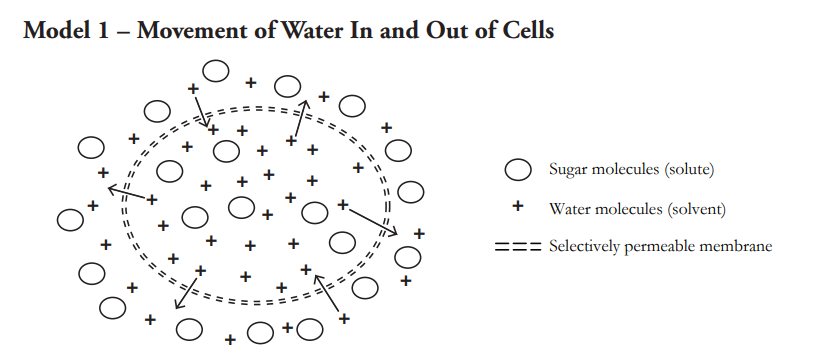
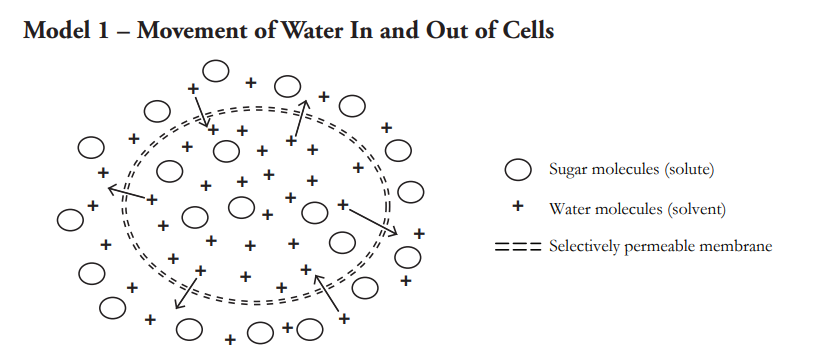
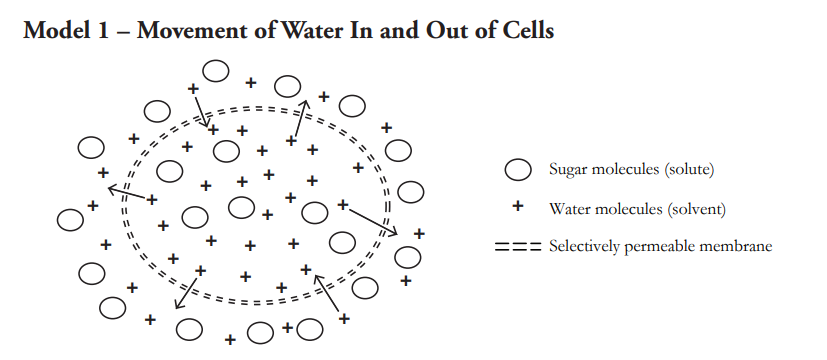
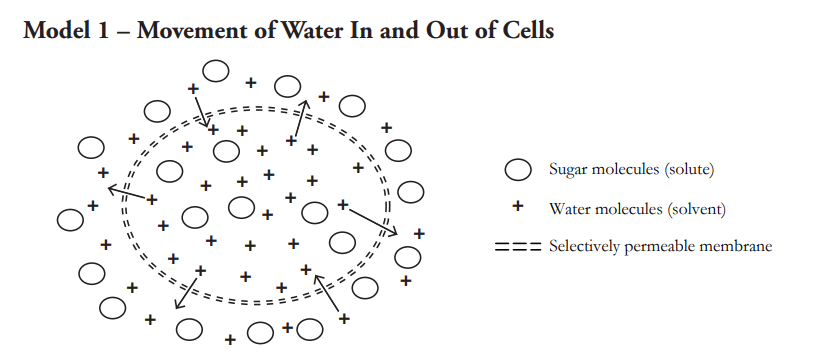
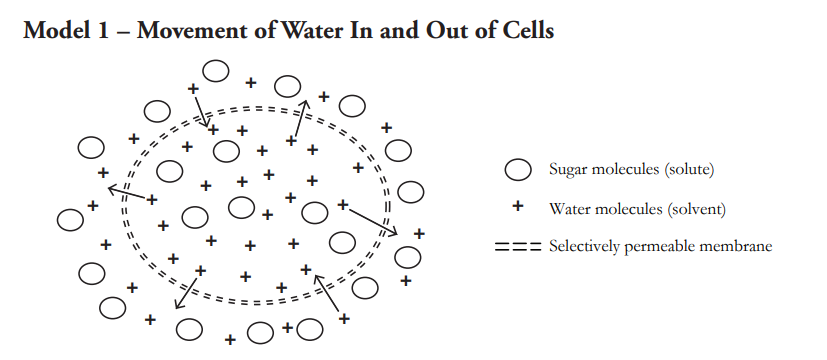
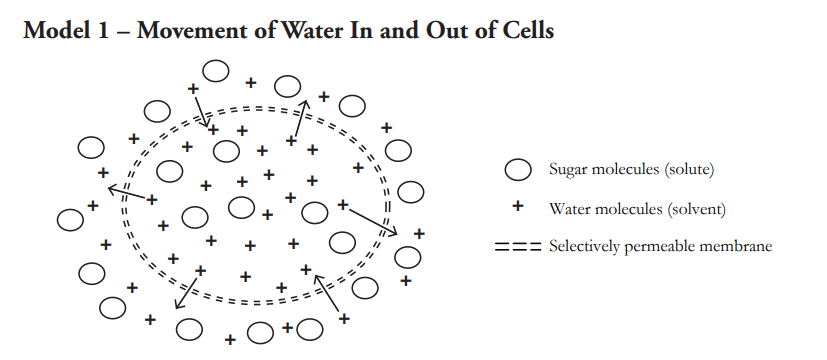
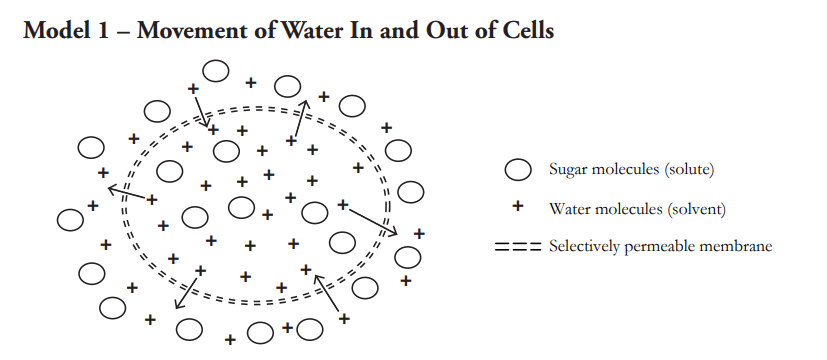
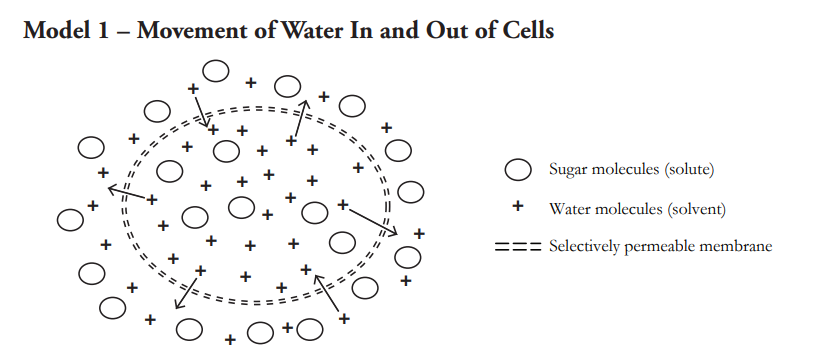
A solution consists of a solute and a solvent mixed together; identify each in model 1.
Solute
Solvent
Consider the size of the sugar and water molecules in Model 1. Which molecules in the diagram in Model 1 are able to move through the selectively permeable membrane?
Determine the number of sugar and water molecules inside and outside of the cell. Use those numbers to determine the ratio for each.
Inside the Cell:
# Sugar Molecules:
# Water Molecules:
Ratio of water to sugar:
Outside the Cell:
# Sugar Molecules:
# Water Molecules:
Ratio of water to sugar:
Which solution in Model 1 is more concentrated—the solution inside the cell or outside of the cell?
Explain your answer in terms of the ratio of solute to solvent particles.
Consider the arrows indicating movement of water across the membrane.
a. In which direction are water molecules moving—into, out, or both of the cell?
b. Are more water molecules moving into or out of the cell?
c. Is the net direction of water movement into or out of the cell?
Select the correct word below to indicate the change in the concentration of the sugar solution on each side of the membrane as water molecules move.
a. The solution inside the cell will becomeconcentrated with the net movement of water.
b. The solution outside the cell will become concentrated with the net movement of water.
Applying what you already know about the movement of molecules, what will eventually happen to the concentration on both sides of the membrane?
I must regrade this.
The definition of diffusion is the movement of molecules across a membrane from an area of high concentration to an area of low concentration. According to this definition, is the cell in Model 1 undergoing diffusion? Explain.
I must regrade this.
In the cell diagram in Model 1, where is the higher concentration of water—inside or outside of the cell?
Is the cell in Model 1 undergoing diffusion of the sugar molecules if you consider the concentration of water on either side of the selectively permeable membrane? Explain.
I must regrade this.
Osmosis is the movement of water from high water concentration to low water concentration across a semi-permeable membrane.
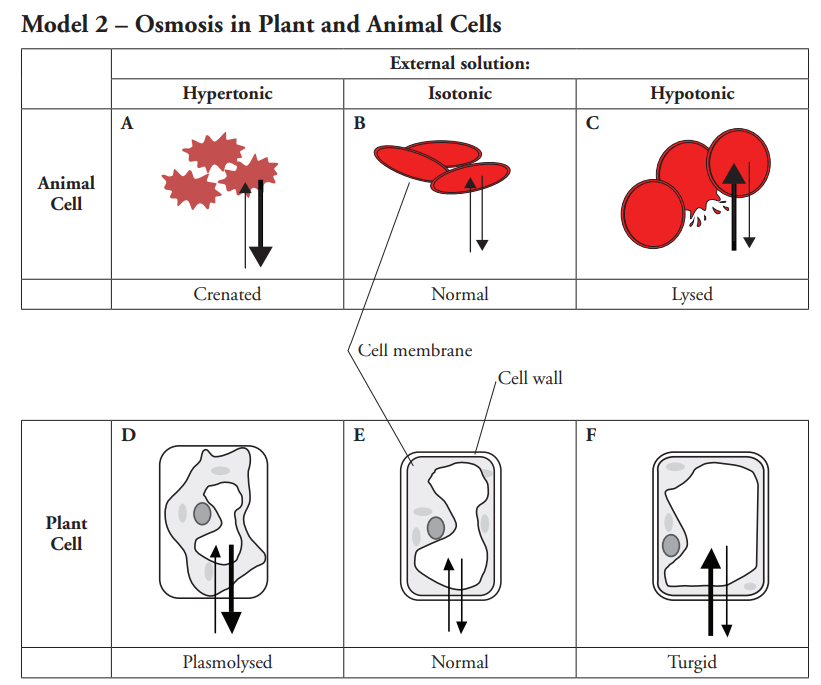
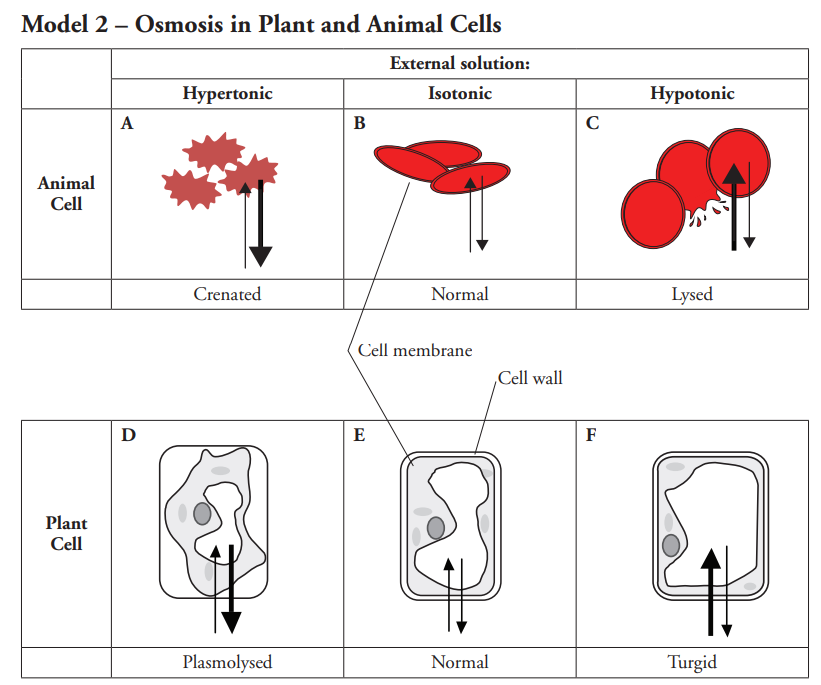
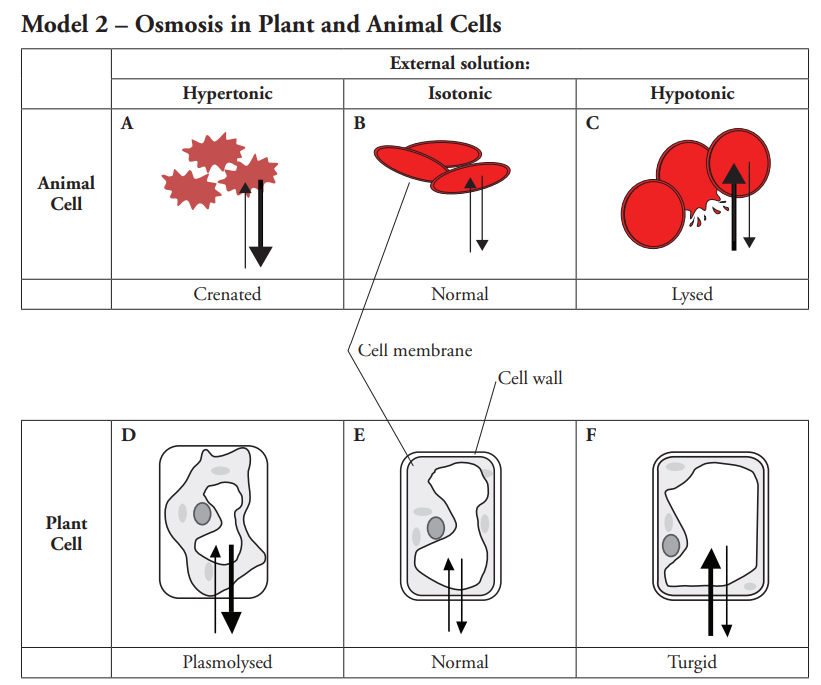
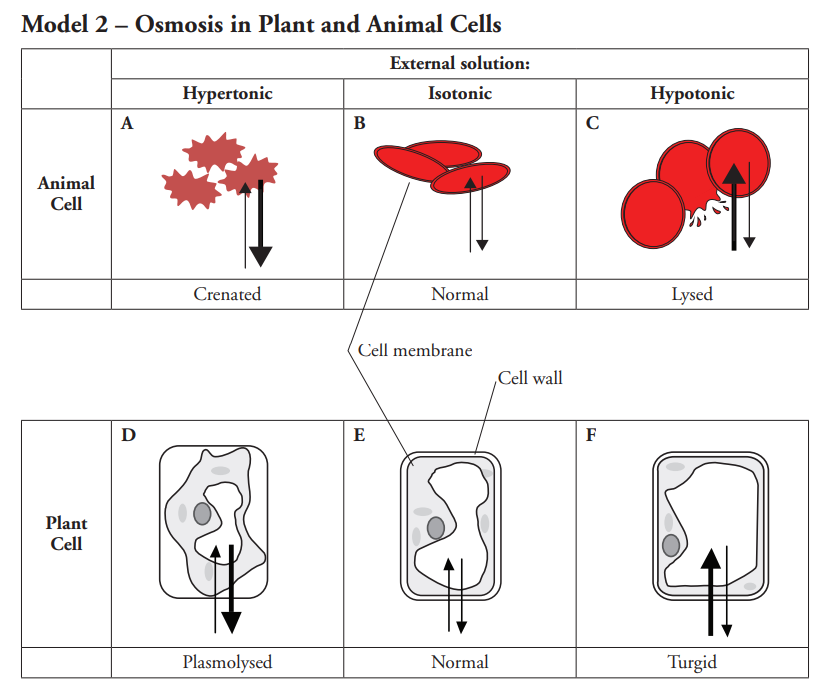
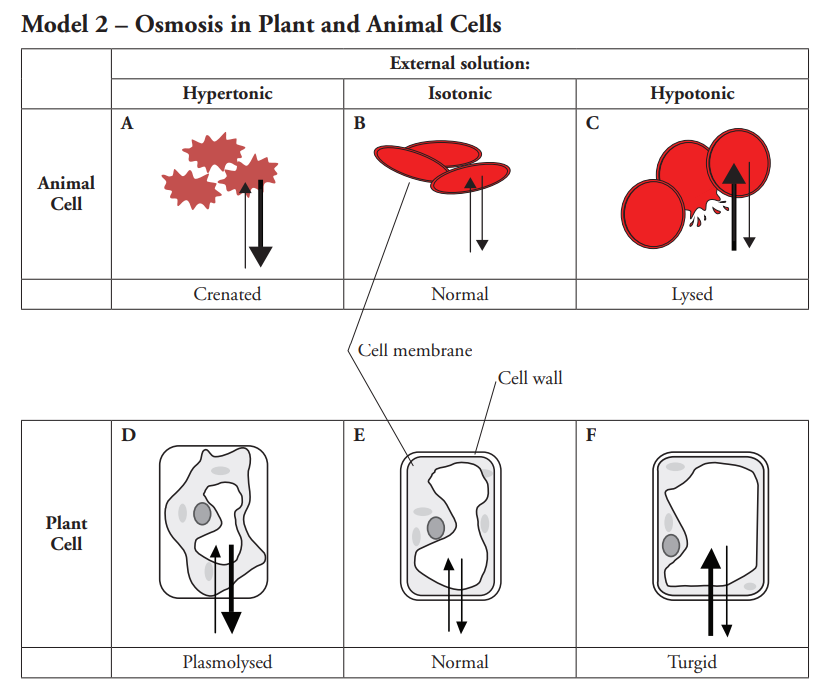
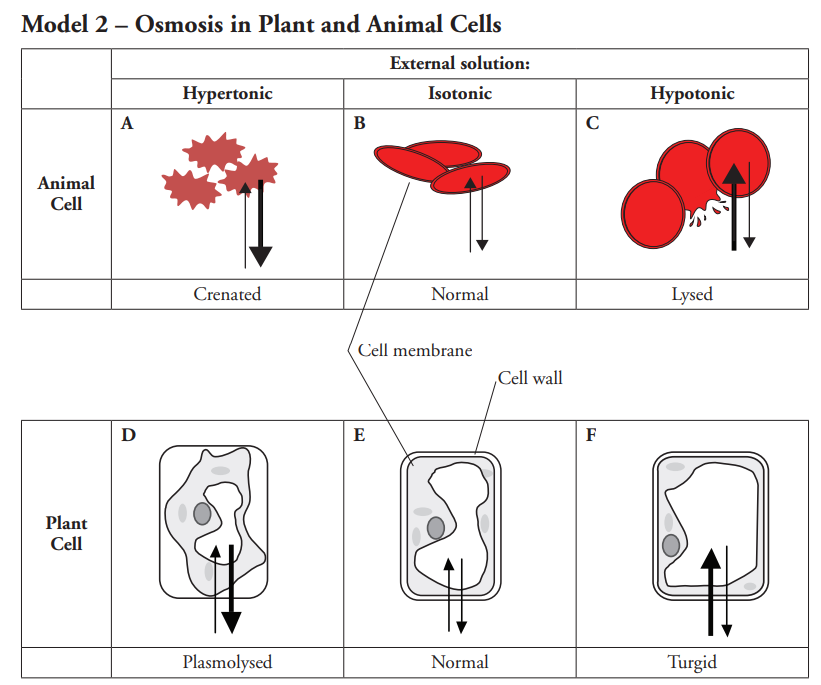
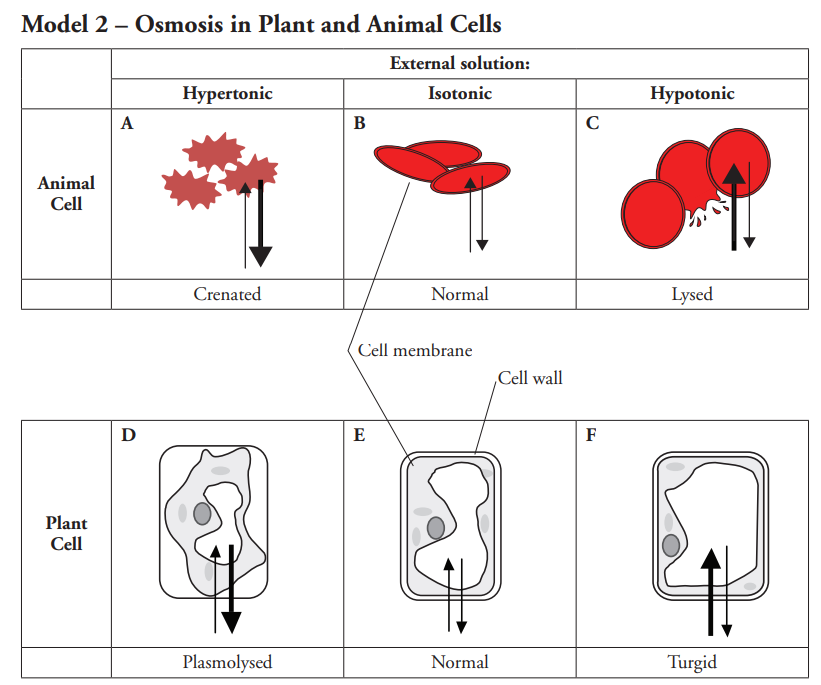
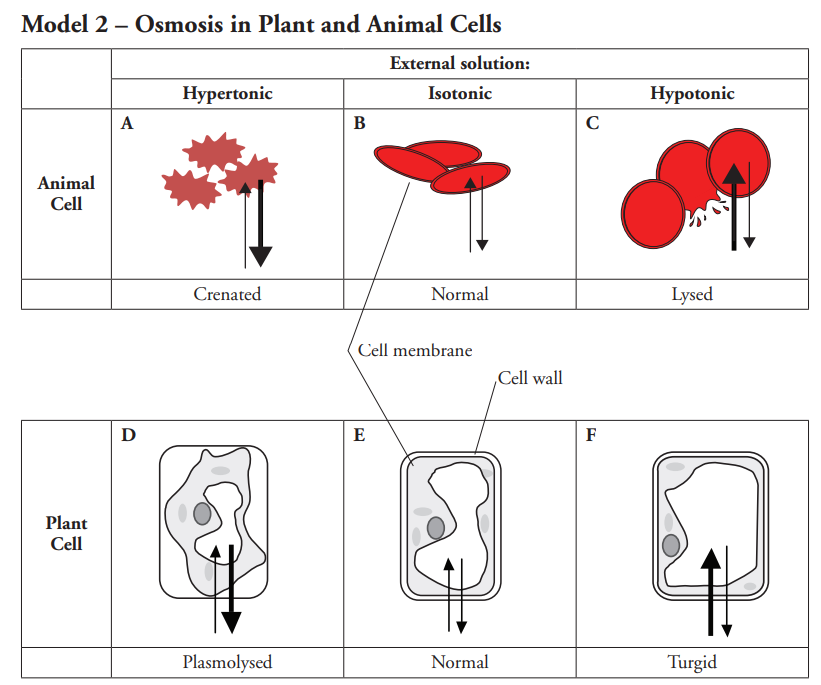
Which cells in Model 2 have a selectively permeable membrane and a permeable but rigid cell wall?
Plant Cells
Animal Cells
selectively permeable membrane
permeable but rigid cell wall
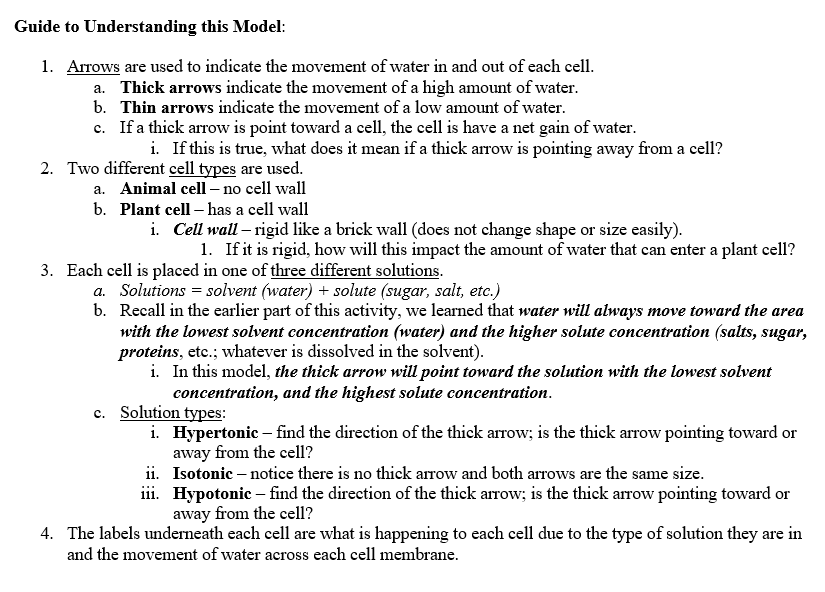
The arrows in Model 2 show movement of water into and out of the cells. What does the thickness of the arrow indicate?
I must regrade this.
For each question use diagrams A–F in Model 2. Which cells show: a net increase in water; a net decrease in water; and no net change in water?
A
B
C
D
E
F
net increase in water
net decrease in water
no net change in water
Consider the definition for osmosis and the net movement of water from a dilute solution (high concentration of water) to a concentrated solution (low concentration of water).
Describe the concentration of the solution surrounding cells A and D (extracellular), relative to the concentration of the solution inside cells A and D (intracellular). In other words, where is the hypertonic solution?
I must regrade this.
Describe the concentration of the extracellular solution of cells C and F, relative to the intracellular solution of cells C and F. In other words, where is the hypertonic solution?
I must regrade this.
Describe the concentration of the extracellular solution of cells B and E, relative to the concentration of the intracellular solution of cells B and E.
I must regrade this.
Using the diagrams in Model 2 and the answers to the previous questions (14-16), develop definitions for hypertonic extracellular solution.
I recommend that you look this up and provide a short and to the point definition. But, if you look it up, you must tell me that you did so in your answer (hint - I will know anyway, but I want you to be honest).
I must regrade this.
Using the diagrams in Model 2 and the answers to the previous questions (14-16), develop a definition for "hypotonic extracellular solution".
I recommend that you look this up and provide a short and to the point definition. But, if you look it up, you must tell me that you did so in your answer (hint - I will know anyway, but I want you to be honest).
I must regrade this.
Stop Here - I am not grading anything past this point.
Using the diagrams in Model 2 and the answers to the previous questions (14-16), develop definitions for isotonic extracellular solution.
I recommend that you look this up and provide a short and to the point definition. But, if you look it up, you must tell me that you did so in your answer (hint - I will know anyway, but I want you to be honest).
I must regrade this.
a.) Briefly describe what happened to the plant cell in the hypertonic solution.
b.) What word is used in the model to summarize the changes to the plant cell?
c.) What word would be used if the cell were an animal cell?
a.) Briefly describe what happened to the plant cell in the hypotonic solution.
b.) What word summarizes these changes to the plant cell?
c.) What word would be used it were an animal cell?
When animal cells are in a hypotonic solution they can undergo lysis. However, plant cells do not, they only become turgid.
What structure in the plant cell prevents lysis from occurring when they are placed in a hypotonic solution?