2
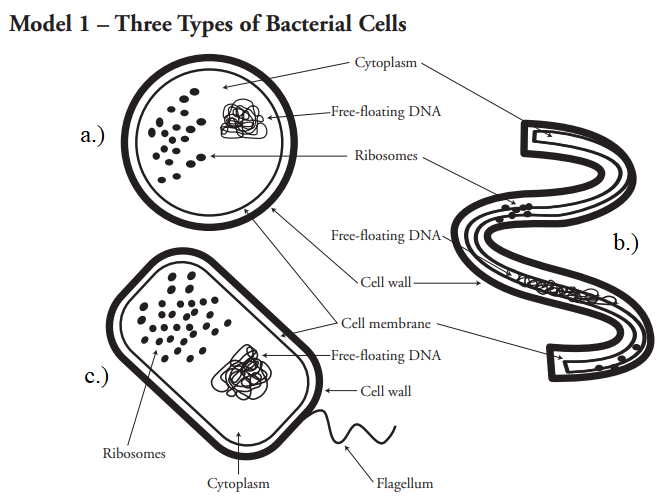
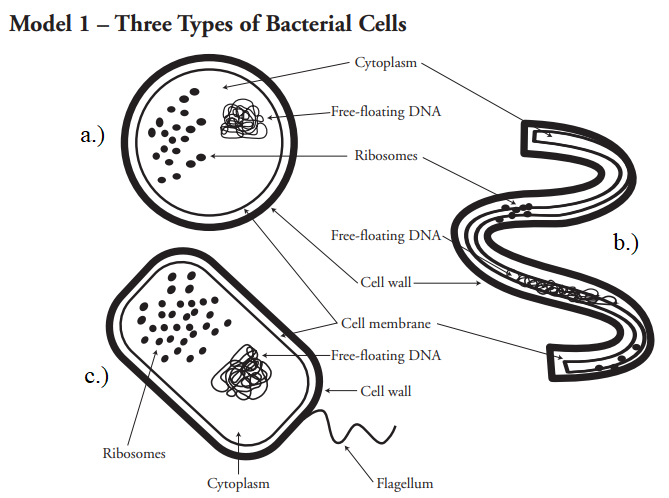
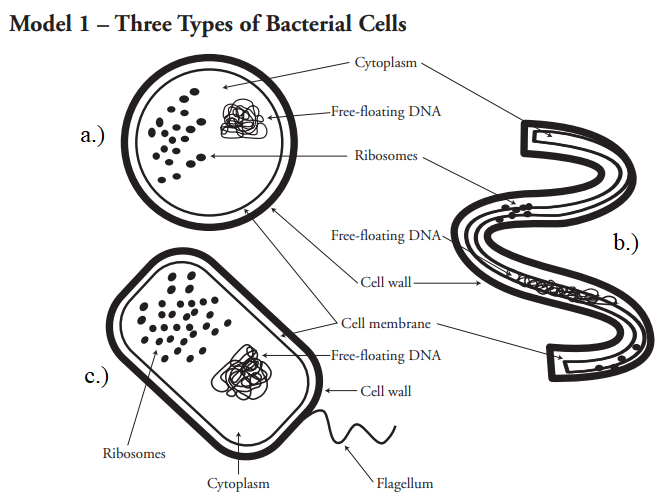
The three bacterial shapes in Model 1 are bacillus (rod), coccus (sphere), and spirillum.
Correctly identify each cell (a, b, and c) with these descriptions.
a.)
b.)
c.)
The three bacterial shapes in Model 1 are bacillus (rod), coccus (sphere), and spirillum.
Correctly identify each cell (a, b, and c) with these descriptions.
a.)
b.)
c.)
What is represented by the small dots found in each of the bacteria cells?
What is the name of the outermost layer that forms a boundary around the outside of each cell?
How is the DNA described?
Is it found within a nucleus?
In what substance are all of the internal structures suspended in?
One of the bacteria in Model 1 has a tail-like structure.
a.) What is it called?
b.) What is the likely purpose of this structure?
c.) If a cell is missing the structure, what may be inferred about the cell?
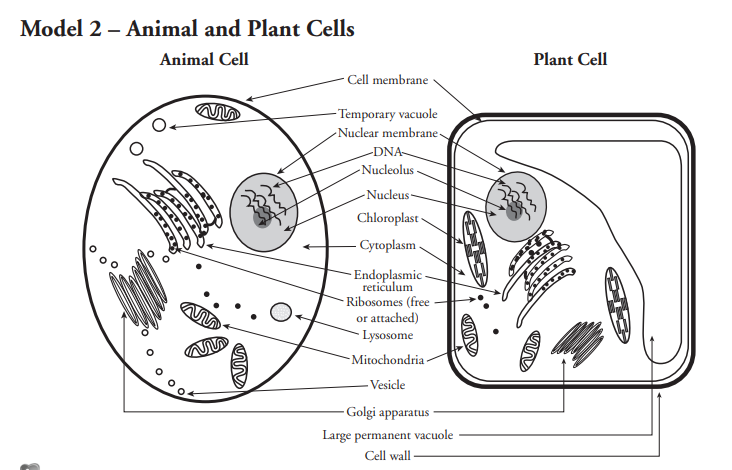
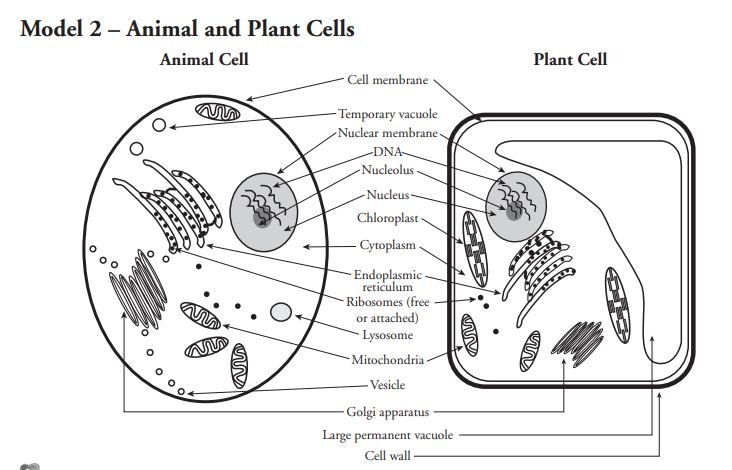
Examine the model and provide three structural differences between the animal and plant cell (other than shape).
a.)
b.)
c.)
Where is DNA located in the cells of Model 2?
Do both cells in this model have this structure?
List the structure(s) that form the boundary between the inside and the outside of each cell in model 2. If a blank does not need to be used, type "not used."
Animal Cell:
Plant Cell:
What outermost boundary does a plant cell have that is absent in an animal cell?
Compare the cells in Model 1 with those in Model 2. Which group of cells are more complex?
a.) Use the models above to identify which ones would be eukaryotic and prokaryotic.
Model 1:
Model 2:
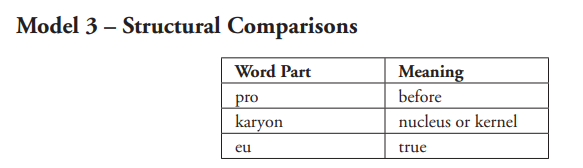
b.) What are the two primary differences between eukaryotic and prokaryotic cells? Prokaryotes do not have a
Bacterial Cell | Animal Cell | Plant Cell | |
|---|---|---|---|
Cell Membrane | |||
Ribosome | |||
Cytoplasm | |||
Mitochondria | |||
Nucleolus | |||
Nucleus | |||
DNA | |||
Cell Wall | |||
Prokaryotic | |||
Eukaryotic |
Based upon this activity and only this activity, write a brief definition for a prokaryotic cell.
Based upon this activity and only this activity, write a brief definition for a eukaryotic cell.
Use model 1 and 2 to help you complete this table.