Identify the three parts of ATP:
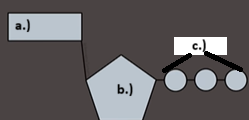
a.)
b.)
c.)
Glycolysis occurs _____.
The purpose of _____ is to produce NADH and FADH2.
The following processes will produce carbon dioxide: (Select all that apply.)
Which of the following processes will occur in the absence of oxygen?
The purpose of _____ is to produce ATP.
If you are complete with this and there is time in class, take this time to work on anything you have not turned in or are incomplete in Biology.
Check PowerSchool - anything with a blue or orange mark may be made-up.
All links are located on BB in the Photosynthesis-Cell Respiration folder.
Send me an email that contains the name(s) of anything you have updated.
ATP is considered a...
Identify the three parts of ATP:
a.)
b.)
c.)
ATP stands for "adenosine triphosphate".
What does the "tri" mean; ATP has...
Aerobic respiration
Anaerobic respiration
Much of the process of cellular respiration occurs in the
Equation of Aerobic Cellular Respiration (if the video lacks a number in front of one of these, put a "1" in the blank):
Many of the reactants of cellular respiration are the
The reactants of photosynthesis are similar to the
In
Other than carbon dioxide, the other outputs of Krebs Cycle are (quantities):
The ETC takes place in the
The ETC is a
Electrons that are passed along through electron carriers in the ETC are given off by
H+ travel through
Oxygen is used to accept
When we total the ATP produced in the three steps of cellular respiration, there is a range of
However, most of the ATP is formed in the