Log in
Sign up for FREE
arrow_back
Library

Copy of 7.) Cell Respiration - Three Models (5/28/2026)

star
star
star
star
star
Last updated about 3 hours ago
26 questions
Note from the author:
Model 1 - Glycolysis
2
2
1
1
3
Model 2 - Krebs Cycle
1
1
1
1
1
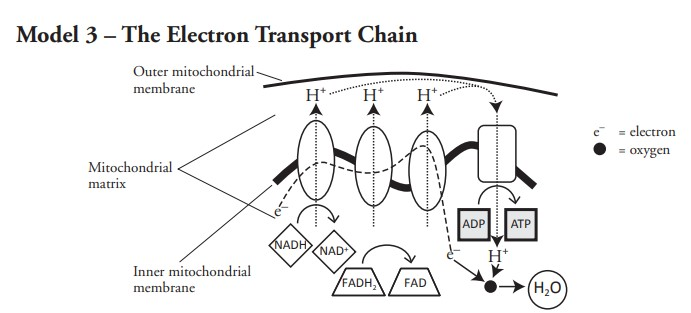
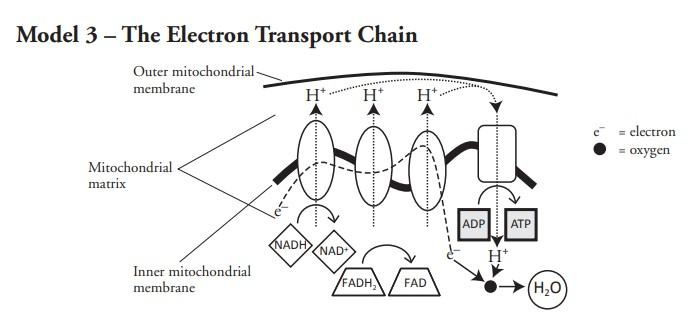
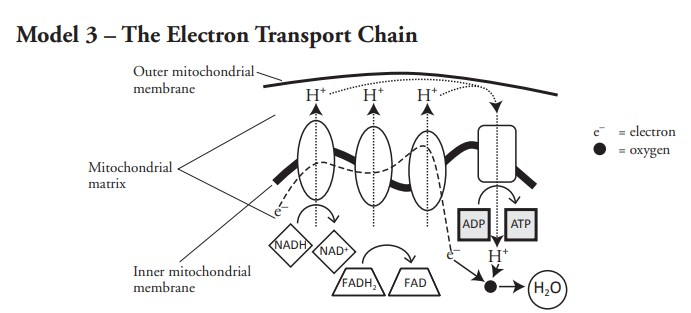
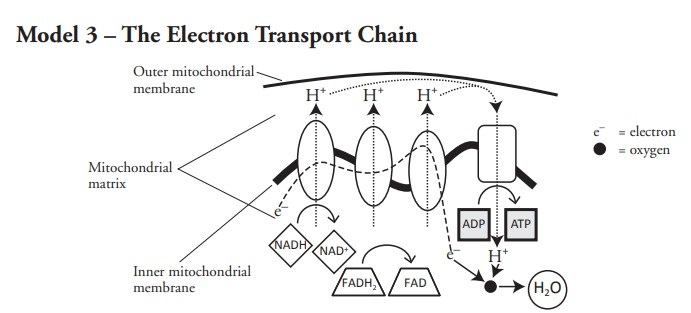
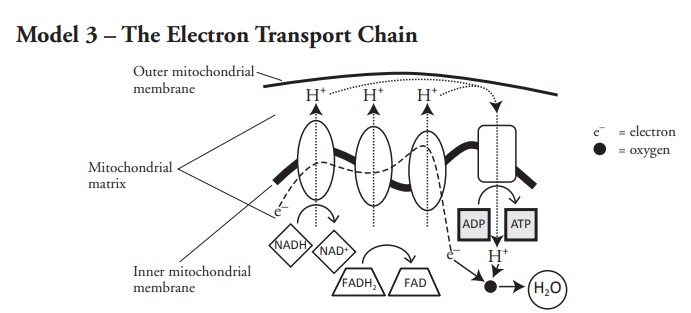
Model 3 - The Electron Transport Chain
1
1
1
2
1
Exit Ticket
Required
0
Required
0
If you need to finish this - review the class BB recordings from 02-04 Feb.

You will use the provided three models to help you answer the questions. Do not skip questions, as the build off of one another.

Fill in the blank questions will self-grade, short answers and extended response questions must be reviewed by me.

B.2.2 - Use a model to illustrate that cellular respiration is a chemical process whereby the bonds of food molecules and oxygen molecules are broken and the bonds in new compounds are formed resulting in a net transfer of energy.

Learning Goals:
  • I can use a model to illustrate how cellular respiration uses glucose obtained from food, and oxygen in a series of chemical reactions to produce ATP in a net transfer of energy.
If you need to finish this - review the class BB recordings from 02-04 Feb.

You will use the provided three models to help you answer the questions. Do not skip questions, as the build off of one another.

Fill in the blank questions will self-grade, short answers and extended response questions must be reviewed by me.

B.2.2 - Use a model to illustrate that cellular respiration is a chemical process whereby the bonds of food molecules and oxygen molecules are broken and the bonds in new compounds are formed resulting in a net transfer of energy.

Learning Goals:
  • I can use a model to illustrate how cellular respiration uses glucose obtained from food, and oxygen in a series of chemical reactions to produce ATP in a net transfer of energy.
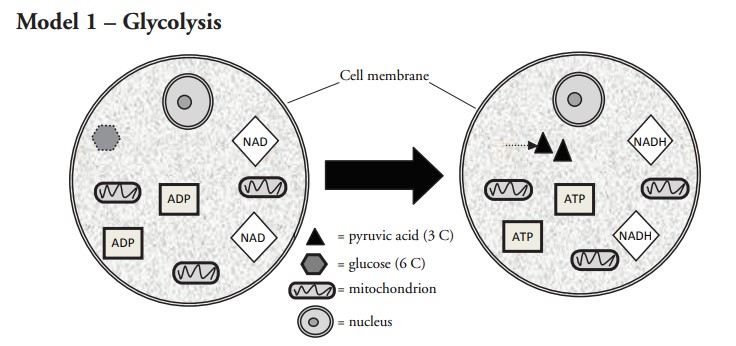
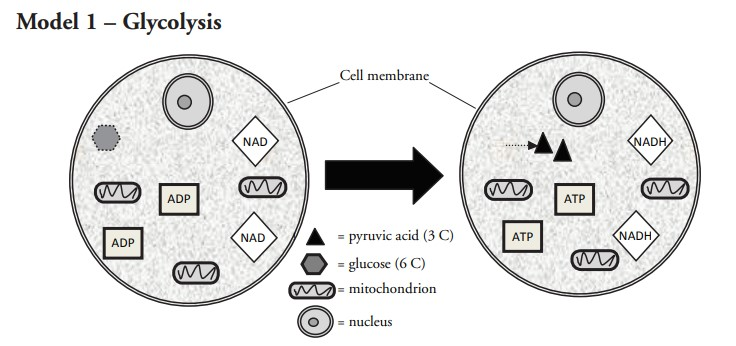
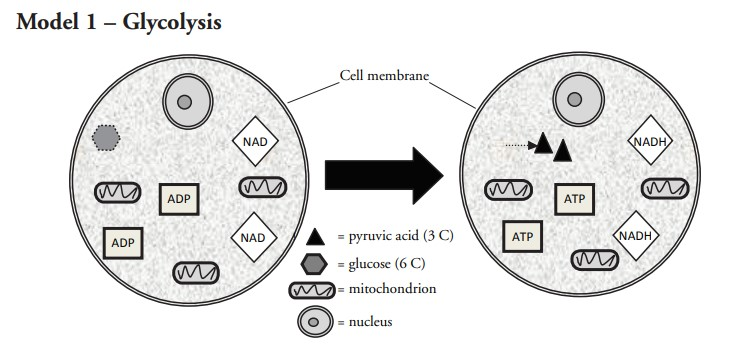
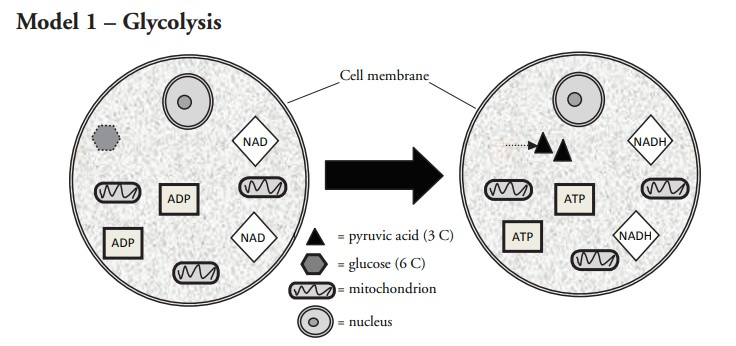
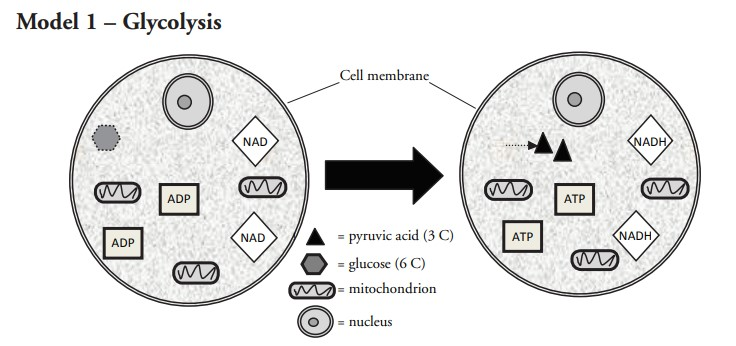
Living organisms display the property of metabolism, which is a general term to describe the processes carried out to acquire and use energy. We know that people need to eat, and in our foods are various kinds of nutrients that our cells use. One large group of nutrients in our foods is carbohydrates, which supply our cells with glucose (C6 H12O6 ).

So the question is: How does the food we chew and swallow fuel our cells?
Question 1
1.
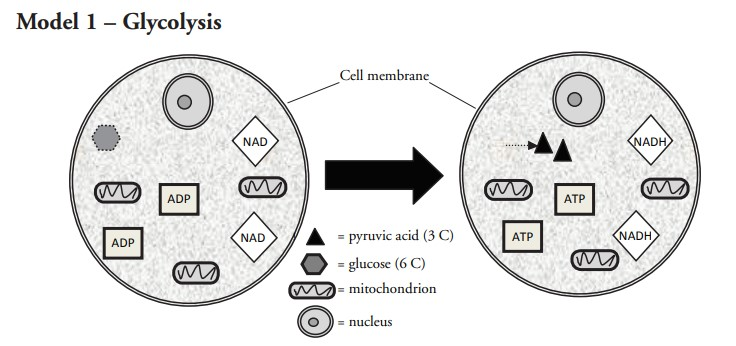
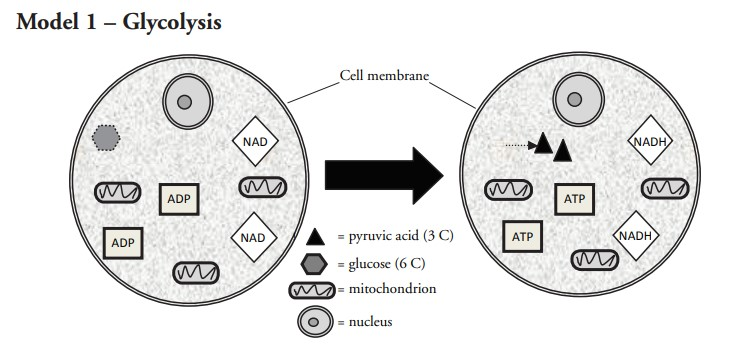
a. What is represented by the hexagon (six-sided shape)? _______
b. How many carbon atoms (C) are in one glucose molecule? _______
Question 2
2.

a. What is represented by the triangles? _______
b. How many carbon atoms (C) are in one molecule of pyruvic acid? _______
Question 3
3.

In the process of glycolysis, what happens to glucose after it crosses the cell membrane into the cytoplasm of the cell?_______

Read This!

Glycolysis occurs in the cytoplasm of cells and does not require the presence of oxygen. Therefore, the process is anaerobic. It is the first step used by cells to extract energy from glucose in the form of ATP. ATP can be directly used by cells as a form of energy.
Question 4
4.


Think about the number of carbon atoms in glucose and in pyruvic acid (see Model 1).

Explain why there is one molecule of glucose on the left side of the arrow and two molecules of pyruvic acid on the right side of the arrow in Model 1.

I must grade this.

Question 5
5.
a. How many ATP molecules are produced during glycolysis? _______
b. Hydrogen-carrying molecules are also produced during glycolysis.
What is the symbol of these hydrogen-carrying molecules? _______
c. Does glycolysis occur inside or outside the mitochondria? _______
Question 6
6.


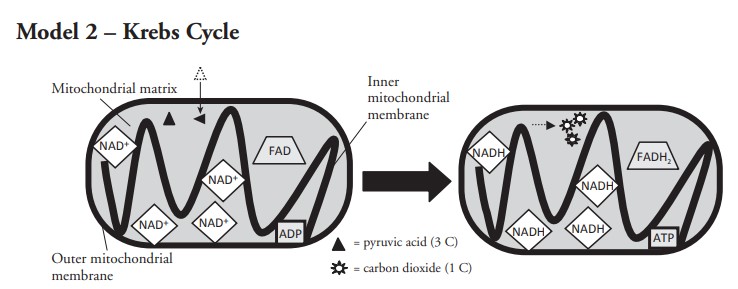
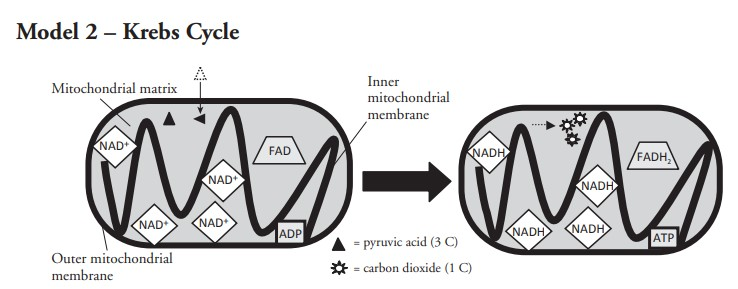
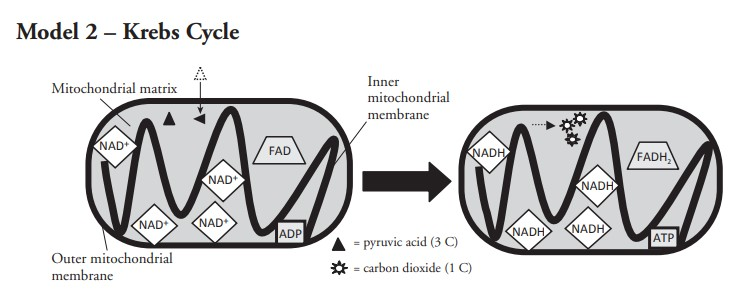
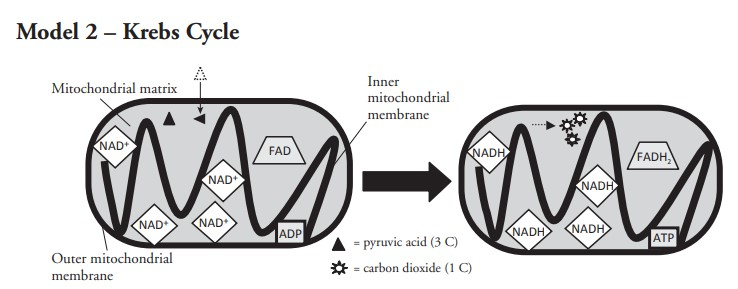
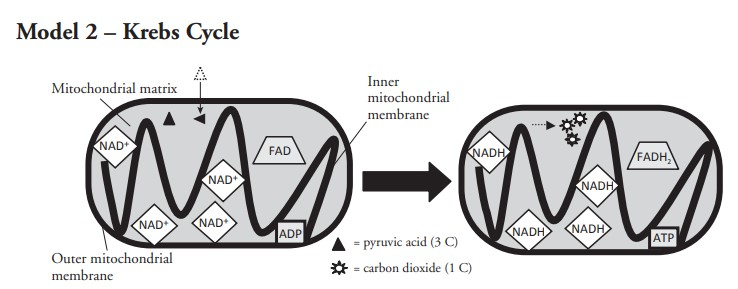
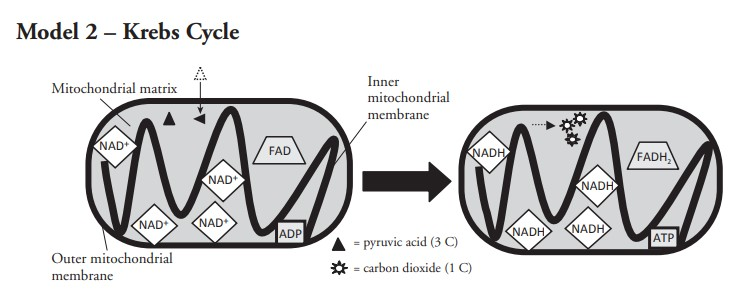
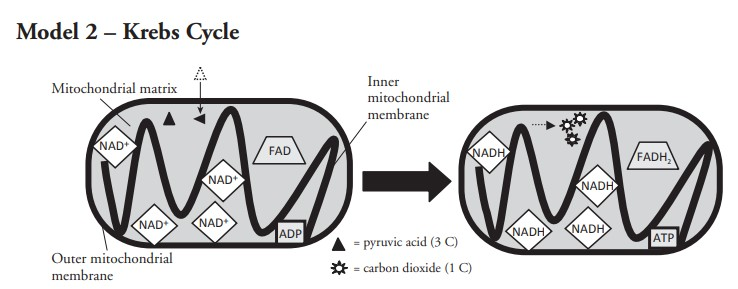
According to Model 2, what happens to pyruvic acid during the Krebs cycle?

Question 7
7.

According to Model 2, where does the change identified in the previous question occur? _______
Question 8
8.


Note the number of atoms of carbon in pyruvic acid and explain why three molecules of carbon dioxide are produced.

Question 9
9.


Considering that glycolysis produces two pyruvic acid molecules per glucose molecule, how many total CO2 molecules will be produced from the complete breakdown of each glucose molecule? Show a simple mathematical equation to support your answer.

Question 10
10.

Refer to Model 2
What two hydrogen-carrying molecules are formed during the Krebs cycle?
_______
_______
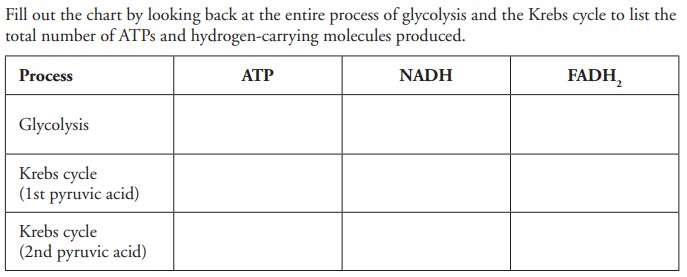
For 11-19, use Model 1-2 to fill out the table in the image below-left.


1
1
1
1
1
1
1
1
1
Question 20
20.

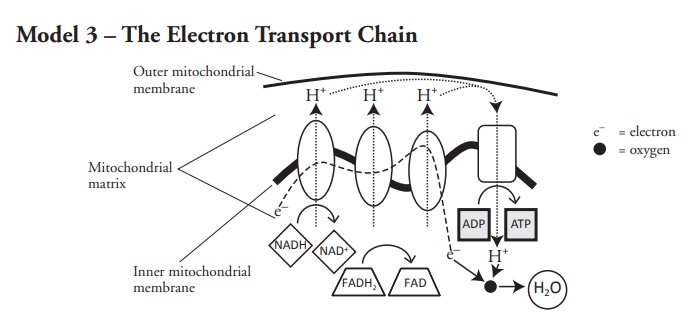
What cell structure is the site for the electron transport chain? _______
Question 21
21.

What substance do the carrier proteins transport across the inner mitochondrial membrane? _______

Read This!

NADH and FADH2 molecules release hydrogen ions that are transported across the inner mitochondrial membrane with the help of electrons. The result of these multiple processes is the production of large amounts of ATP by the enzyme ATP synthase, which the H+ will diffuse through.
Question 22
22.

What high energy molecules are formed by the electron transport chain?_______
Question 23
23.

a. What atom accepts the hydrogen ions at the end of the electron transport chain? _______
b. What molecule is formed as a product of that acceptance? _______
Question 24
24.


Explain why the events of the ETC constitute an aerobic process rather than anaerobic process, like glycolysis.

Question 25
25.

Provide a list of one - two ideas/concepts that you learned in this activity.

Question 26
26.

Stop here; we will continue to the next section on Monday. Do not go past this point.
Question 11
11.
_______
Question 12
12.
_______
Question 13
13.
_______
Question 14
14.
_______
Question 15
15.
_______
Question 16
16.
_______
Question 17
17.
_______
Question 18
18.
_______
Question 19
19.
_______
After having performed this activity, my confidence regarding my understanding of this concept has:
Dramatically increased
Moderately Increased
Somewhat increased
Somewhat decreased
Moderately decreased
Dramatically decreased