Log in
Sign up for FREE
arrow_back
Library

Copy of Punnett Squares; Monohybrid and Dihybrid Crosses Reading w/Ques (5/28/2026)

star
star
star
star
star
Last updated about 2 hours ago
13 questions
Required
1
Required
1
Required
1
Required
1
Required
1
Required
1
Required
1
Required
1
Required
1
Required
3
Question 1
1.
Note that two of the four offspring in the above cross have white flowers. Now you know that the offspring in the second row must have the pp genotype. One of their p alleles obviously comes from the white-flowered (pp) parent, because that’s the only allele this parent has. The other p allele must come from the purple-flowered parent. Therefore, the parent with purple flowers must have the genotype Pp.

Punnett Square for Two Characteristics

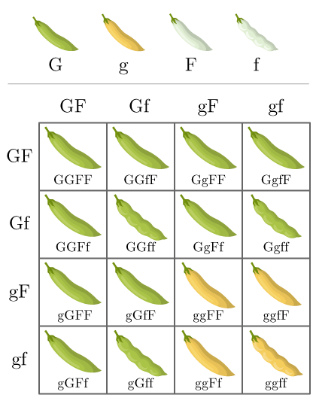
When you consider more than one characteristic at a time, using a Punnett square is more complicated. This is because many more combinations of alleles are possible. For example, with two genes each having two alleles, an individual has four alleles, and these four alleles can occur in 16 different combinations.

In the Punnett square for two characteristics (shown below), G represents the dominant allele for green pod color, and g represents the recessive allele for yellow pod color. F represents the dominant allele for full pod form, and f represents the recessive allele for constricted pod form. In this cross, known as a dihybrid cross, both parents are heterozygous for pod color (Gg) and pod form (Ff). Test your understanding by answering the questions based on the given cross with the help of the Punnett square.
Required
1
Required
1
Required
1

Summary

  • A Punnett square is a chart that allows you to determine the expected percentages of different genotypes in the offspring of two parents.
  • A Punnett square allows the prediction of the percentages of phenotypes in the offspring of a cross from known genotypes.
  • A Punnett square can be used to determine a missing genotype based on the other genotypes involved in a cross.
Question 5
5.
What tool is used to determine the expected rations of genotypes in teh offspring of two individuals with known genotypes for a single gene? _______
Question 6
6.
Use a Punnett square of a Bb x Bb cross. B is the allele for brown eyes, and b is the allele for blue eyes. What color eyes do the parents have? _______
Question 7
7.
What type of cross uses a Punnett square that is 4x4 and includes 16 boxes? _______
Question 8
8.

Question 9
9.
In a Punnett square, the possible _______ of the offspring are represented by the letters in the boxes, with one allele coming from each parent.
Question 10
10.
The Punnett square for a _______ is 2 x 2 and has four boxes.
Question 11
11.
Long fur (F) is dominant to short fur (f). If a cross results in half long fur and half short fur offspring, the parental genotypes are Ff x _______.

Upper case and lower case letters matter.
Question 12
12.

Question 13
13.
The Punnett square for a monohybrid cross will have _______ boxes, while the Punnett square for a dihybrid cross will have _______ boxes.

Can the appearance of freckles be predicted?
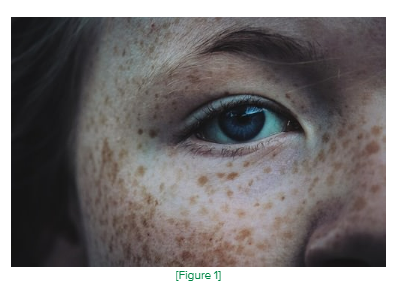


Yes! Freckles are pigmented patches that appear under the skin of some people, upon exposure to the sun. Having freckles is an inherited trait resulting from the presence of a dominant gene for that trait. Predicting the possible genotypes and phenotypes is often aided by a Punnett square.

Punnett Squares

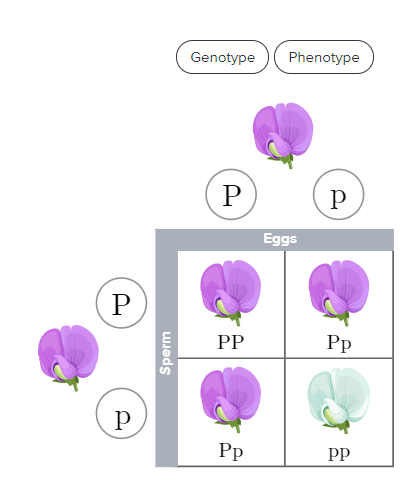
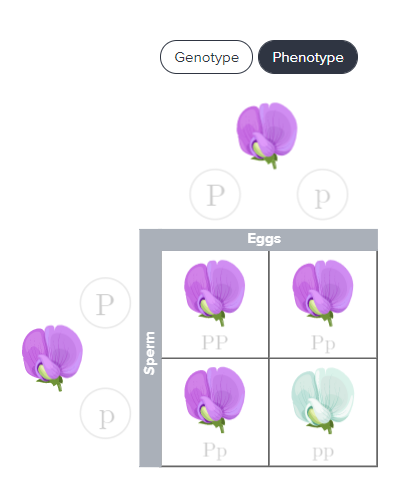
A Punnett square is a chart that allows you to easily determine the expected percentage of different genotypes in the offspring of two parents. An example of a Punnett square for pea plants is shown below. In this example, both parents are heterozygous for flower color (Pp). The gametes produced by the female parent are at the top of the chart, and the gametes produced by the male parent are along the side. The different possible combinations of alleles in their offspring are determined by filling in the cells of the Punnett square with the correct letters (alleles).

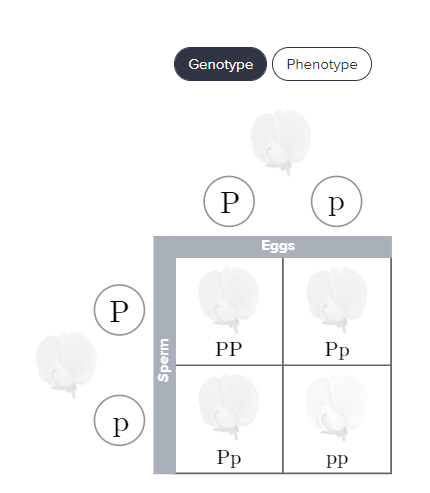
The three images below display the same cross. In the first Punnett square, both the genotype (combination of alleles) and phenotype (physical trait that is determined by the genotype) are shown. In the second Punnett square, the genotype of each are shown. The third Punnett square, the phenotype of each are shown.


Predicting Offspring Genotypes

In the cross shown above, you can see that one out of four offspring (25 percent) has the genotype PP, one out of four (25 percent) has the genotype pp, and two out of four (50 percent) have the genotype Pp. These percentages of genotypes are what you would expect in any cross between two heterozygous parents. Of course, when just four offspring are produced, the actual percentages of genotypes may vary by chance from the expected percentages. However, if you considered hundreds of such crosses and thousands of offspring, you would get very close to the expected results, just like tossing a coin.


Predicting Offspring Phenotypes

You can predict the percentages of phenotypes in the offspring of this cross from their genotypes. P is dominant to p, so offspring with either the PP or Pp genotype will have the purple-flower phenotype. Only offspring with the pp genotype will have the white-flower phenotype. Therefore, in this cross, you would expect three out of four (75 percent) of the offspring to have purple flowers and one out of four (25 percent) to have white flowers. These are the same percentages that Mendel got in his first experiment.


Determining Missing Genotypes

A Punnett square can also be used to determine a missing genotype based on the other genotypes involved in a cross. Suppose you have a parent plant with purple flowers and a parent plant with white flowers. Because the p allele is recessive, you know that the white-flowered parent must have the genotype pp. The purple-flowered parent, on the other hand, could have either the PP or the Pp genotype. The Punnett square below shows this cross. The numbers indicated with the yellow circles in the Punnett square, below, could be either P or p alleles. Can you identify the missing three alleles?
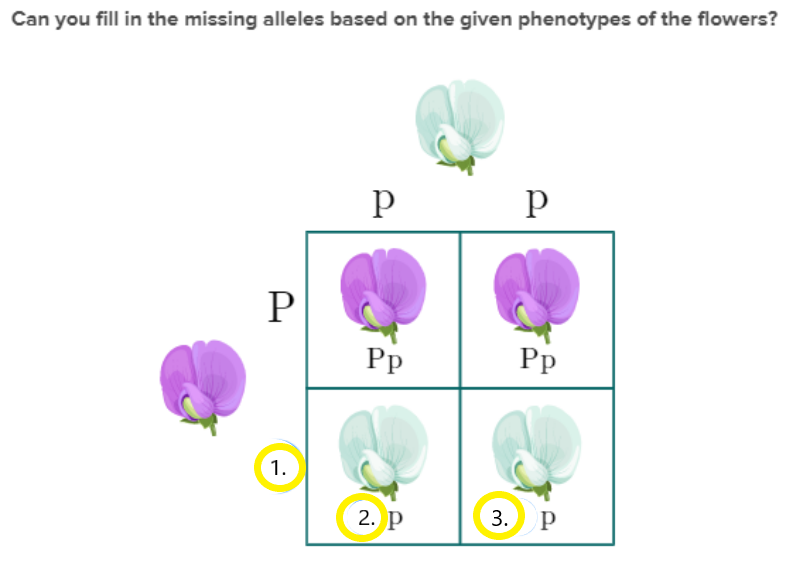
Click on the image to the left. Identify the missing allele (1) of the purple parent flower and the missing alleles (2 and 3) of the two white offspring.

*Upper case and lower case matters with this question.

1. _______
2. _______
3. _______
Question 2
2.
How many offspring in the cross are homozygous for green pod color? _______
Question 3
3.
What percent of the offspring will have the constricted pod phenotype? _______%
Question 4
4.
What percent of the offspring are heterozygous for green pod color? _______%
What are the genotypes of the gametes of an AaBb self-pollination?
AA, bb, aB, ab
AB, Ab, aB, ab
AB, AA, aB, ab
All of the above are correct
None of the above are correct
A Punnett square is used to predict the possible offspring from a cross.
True
False