Copy of Genetic Disorders (5/28/2026)
star
star
star
star
star
Last updated 3 months ago
15 Nsɛmmisa
1
1
1
1
1

1
1
1
1
1
1
1
1
1
1
According to the video, a
According to the video, humans inherit
According to the video, on a karyotype, all of the chromosomes are paired together in
According to the video, on a karyotype, the first twenty-two pairs of chromosomes are called
According to the video, sex chromosomes are called
It can be. Achondroplasia is the most common form of dwarfism in humans, which can also be observed in other animals such as horses. In humans, it is caused by a dominant mutation. The mutation can be passed from one generation to the next.
Many genetic disorders are caused by mutations in one or a few genes. Other genetic disorders are caused by abnormal numbers of chromosomes.
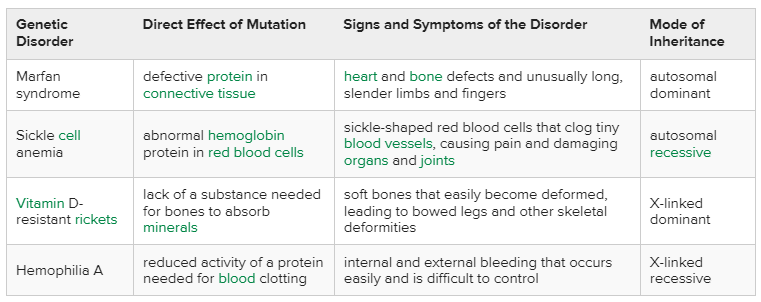
The Table below lists several genetic disorders caused by mutations in just one gene. Some of the disorders are caused by mutations in autosomal genes, others by mutations in X-linked genes. Which disorder would you expect to be more common in males than females?
Few genetic disorders are controlled by dominant alleles; meaning that most are recessive disorders. A mutant dominant allele is expressed in every individual who inherits even one copy of it. If it causes a serious disorder, affected people may die young and fail to reproduce. Therefore, the mutant dominant allele is likely to die out of the population.
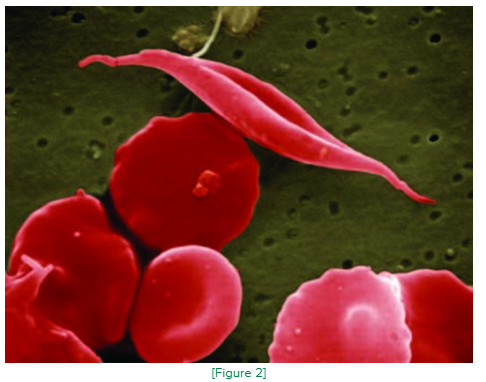
A mutant recessive allele, such as the allele that causes sickle cell anemia (see the Figure below), is not expressed in people who inherit just one copy of it. These people are called carriers. They do not have the disorder themselves, but they carry the mutant allele and can pass it to their offspring. Thus, the allele is likely to pass on to the next generation rather than die out.
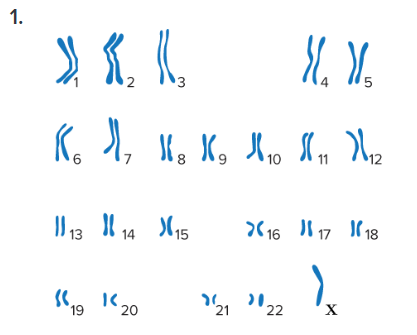
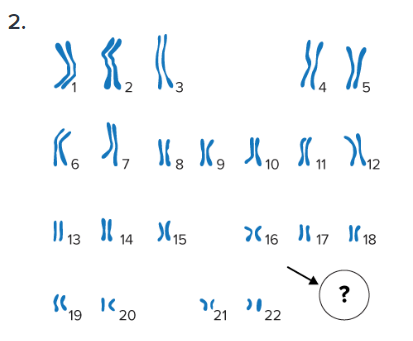
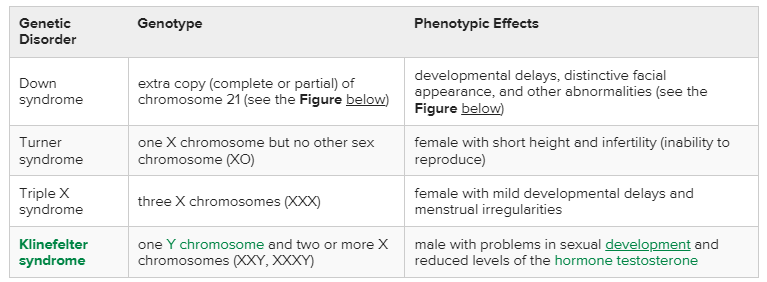
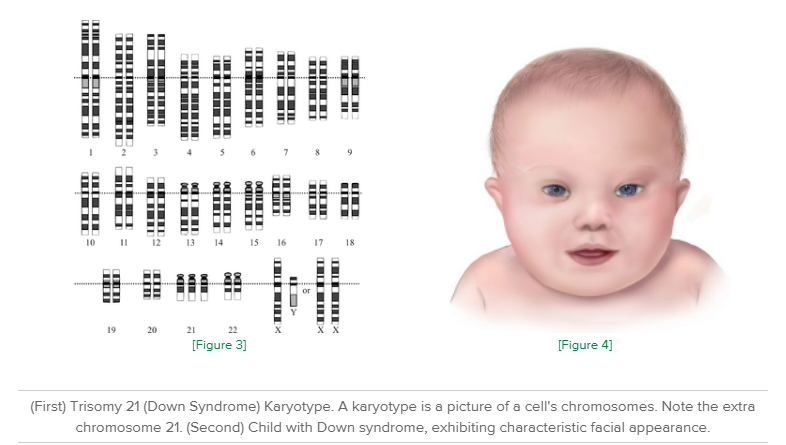
Mistakes may occur during meiosis that result in nondisjunction. This is the failure of replicated chromosomes to separate during meiosis. Some of the resulting gametes will be missing a chromosome, while others will have an extra copy of the chromosome. If such gametes are fertilized and form zygotes, they usually do not survive. If they do survive, the individuals are likely to have serious genetic disorders. The Table below lists several genetic disorders that are caused by abnormal numbers of chromosomes. Most chromosomal disorders involve the X chromosome. Look back at the X and Y chromosomes and you will see why. The X and Y chromosomes are very different in size, so nondisjunction of the sex chromosomes occurs relatively often.
What genetic disorder does the above karyotype represent?
Tip: use the table, just above, to assist you.
In the above karyotype, the sex chromosomes are not shown. What abnormal sex chromosome condition in the above karyotype would represent Klinefelter syndrome (select all that apply)?
Tip: use the table, just above, to assist you.
A male Hemophilia A patient has a male parent and a female sibling who do not have the Hemophilia A. What condition does the female parent have?
Tip: use the first table and the follow two paragraphs to assist you.
A genetic disorder that is caused by a mutation can be inherited. Therefore, people with a genetic disorder in their family may be concerned about having children with the disorder. Professionals known as genetic counselors can help them understand the risks of their children being affected. If they decide to have children, they may be advised to have prenatal (“before birth”) testing to see if the fetus has any genetic abnormalities. One method of prenatal testing is amniocentesis. In this procedure, a few fetal cells are extracted from the fluid surrounding the fetus, and the fetal chromosomes are examined.
The symptoms of genetic disorders can sometimes be treated, but cures for genetic disorders are still in the early stages of development. One potential cure that has already been used with some success is gene therapy. This involves inserting normal genes into cells with mutant genes.
If you could learn your risk of getting cancer or another genetic disease, would you? Though this is a personal decision, it is a possibility. A number of companies now make it easy to order medical genetic tests through the Web.
In
Genetic disorders that are caused by a mutant dominant allele are likely to
A
Generally, only the