Copy of 10.06.20 - Types of Muscle Fibers (5/28/2026)
star
star
star
star
star
Last updated 3 months ago
29 Nsɛmmisa
1
1
1
1
1

1
1
1
1
1

1
1
1
1
1
1
1
1
1
1
1
1
1
1
1
1
1
1
1
Objectives:
distinguish between slow twitch and fast twitch muscle fibers in skeletal muscle.
distinguish between aerobic resipration and anaerobic respiration in skeletal muscle.
determine how aerobic and anaerobic respiration relate to the different types of muscle fibers.
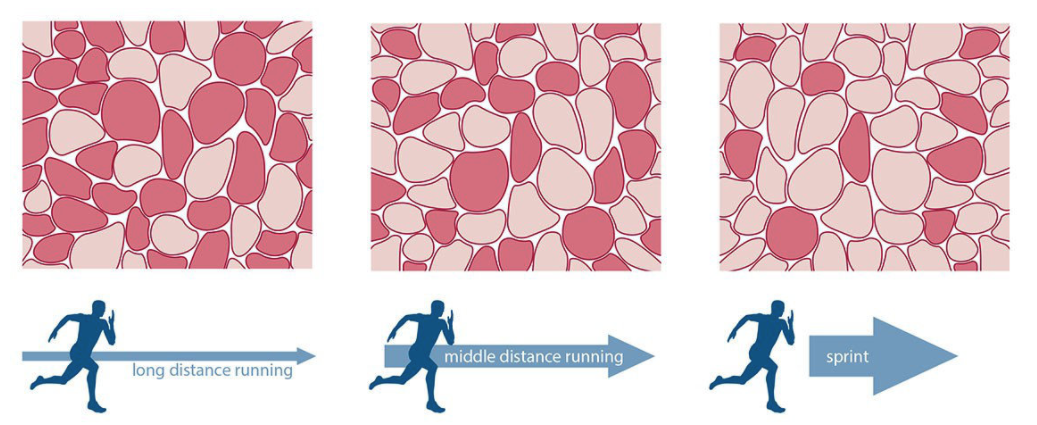
Why?
Which are you better at: Sprinting for a short distance or running for a long distance? Are you decent at both?
Within skeletal muscles are different types of muscle fibers (muscle cells), each with their own set of characteristics and specialties. In this activity, you'll learn the difference between aerobic and anaerobic respiration and why different types of muscle cells have different methods of using energy. You'll also investigate the effects of athletic training on muscle cells.
What do you think of when you hear the word 'aerobics?'
Make an educated guess: Can you gain muscle fibers by exercising more?
Make an educated guess: How do you think muscles grow in size?
Make an educated guess: Why might it be common to be REALLY sore after working out for the first time in a while?
Make an educated guess: What might happen to someone's heart rate and breathing rate after a period of exercise? Why?
Before we can talk about different types of muscle fibers, we need to talk about the different ways in which your body makes and uses ATP.
Watch the video below, then answer questions 6-7.
(Do not worry about the end of the video - I won't ask about plants!)
Which of the following most accurately describes why muscle cells contain more mitochondria than other cells in the body?
Categorize the following characteristics of anaerobic and aerobic respiration
Requires oxygen
Uses glucose
Produces lactic acid
Produces carbon dioxide and water
Does not require oxygen
Produces a large amount of energy (ATP)
Produces a small amount of energy (ATP)
Aerobic Respiration
Anaerobic Respiration
Examine the diagram and passage below from our textbook.
Sources of ATP

What is diagram (a) displaying?
What is diagram (b) displaying?
What is diagram (c) displaying?
Visit the following website. Read through it, then use it to answer questions 11-16.
What is another name for type I muscle fibers?
What is the function of type I muscle fibers?
What is another name for type II muscle fibers?
What is the function of type II muscle fibers?
There are two types of fast twitch muscle fibers: IIa and IIb
"Classic" fast twitch
Contracts with the most force
Use both anaerobic and aerobic respiration
Fatigues quickly
Intermediate fast twitch
Use anaerobic respiration only
Type IIa
Type IIb
Consider your understanding of aerobic and anaerobic respiration and the different muscle fiber types. Place the following muscle fiber types in order of most mitochondria --> least mitochondria.
Type I
Type IIa
Type IIb
Visit the following website. Read through it, then use it to answer questions 17-20.
Example: 100 m sprint
Can be sustained for short periods of time
Translates to "exercise without oxygen"
Example: cross country running
Example: open water swimming
Translates to "exercise with oxygen"
Example: lifting heavy weights
Can be sustained for long periods of time
Aerobic exercise
Anaerobic exercise
Draw two examples of aerobic exercises and two examples of anaerobic exercises NOT provided on the website or in the question above.
Compare and contrast the benefits of both aerobic and anaerobic exercise.
As one's heart rate and breathing rate increase during exercise, are they more likely to be doing aerobic or anaerobic exercise? Explain.
Watch the following video of the finish line at the 1997 Ironman World Championship:
Both of these athletes "hit the wall" or "bonk" at the end of the race. You may have heard this term before, or even experienced it for yourself:
Hit the Wall - In endurance sports such as cycling and running, hitting the wall or the bonk is a condition of sudden fatigue and loss of energy which is caused by the depletion of glycogen stores in the liver and muscles. Milder instances can be remedied by brief rest and the ingestion of food or drinks containing carbohydrates. (retrieved from Wikipedia)
In your own words, describe what is happening to the muscle fibers in athletes when they "hit the wall." Think about and include information from today's lesson!
Visit the page below about athletic training and different types of muscle fibers. After reading through the page, answer questions 22-25.
What is the primary factor in determining how many fast-twitch and slow-twitch fibers a person has?
What is the average distribution of muscle fibers in the average human?
Can muscle fibers be "changed" into different types of muscle fibers? Explain your answer.
Extension: Examine the picture from the website:
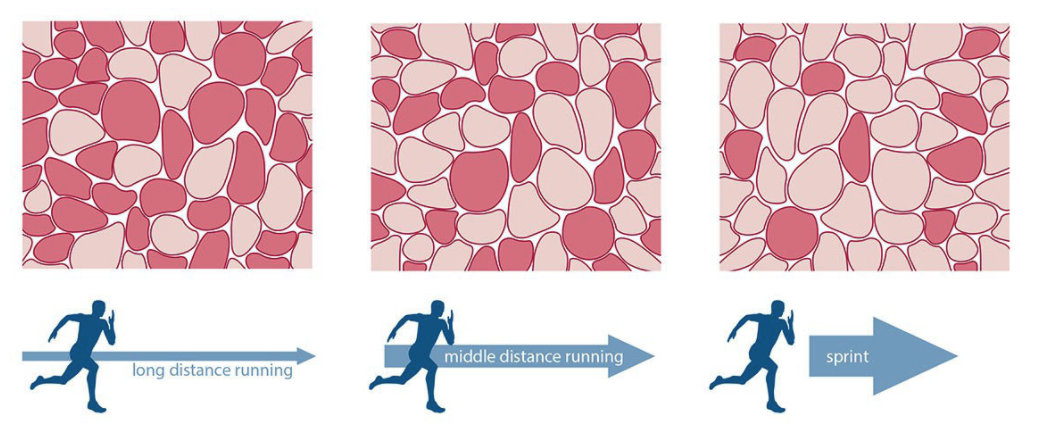
Which type of chicken meat do you like more: dark meat or light meat? (If you are a vegetarian - good for you! Seriously, its way better for the environment, and I applaud your efforts. Just bear with me and pick one :))
The light meat tends to come from the breast and wings of a chicken, while the dark mean tends to come from the legs of a chicken. Considering the picture above, explain WHY that part of the bird might have the types of muscle fibers that it does.
Revisiting your educated guesses from the beginning of the lesson.
Skim through / use the reading from your textbook to answer the following questions: Exercise and Muscle Performance
Can you gain muscle fibers by exercising more?
How do muscles grow in size?
Why might it be common to be REALLY sore after working out for the first time in a while? Be specific!
What might happen to someone's heart rate and breathing rate after a period of exercise? Why? Be specific!!!