Match the following pictures with their body movement.
Match the following pictures with their body movement.
Abduction
Hyperextension
Extension
Rotation or Flexion
Watch the video below about the different terms given for various movements of the body. As you watch, match the term with the proper description below. (Note that two of the terms below are not in the video. Match all of the ones in the video, then think about what the other two might mean!)
| Draggable item | arrow_right_alt | Corresponding Item |
|---|---|---|
Pronation | arrow_right_alt | Decreasing the angle of a joint |
Eversion | arrow_right_alt | Increasing the angle of a joint |
Rotation | arrow_right_alt | Decreasing the angle of the ankle joint |
Adduction | arrow_right_alt | Increasing the angle of the ankle joint |
Circumduction | arrow_right_alt | Rotating the sole of the foot laterally |
Dorsiflexion | arrow_right_alt | Rotating the sole of the foot medially |
Plantarflexion | arrow_right_alt | Moving a limb away from the midline of the body |
Supination | arrow_right_alt | Moving a limb towards the midline of the body |
Inversion | arrow_right_alt | Rotating the lower arm so the palm is facing down |
Flexion | arrow_right_alt | Rotating the lower arm so the palm is facing up |
Abduction | arrow_right_alt | Increasing the angle of a joint beyond its normal range of motion |
Hyperextension | arrow_right_alt | A combination of flexion, adduction, extension, and abduction that results in a cone-like tracing of a limb or digit |
Extension | arrow_right_alt | Twisting, circular movement |
Match the following pictures with their body movement.
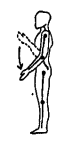
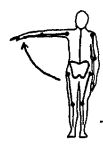
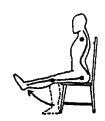
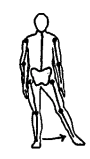
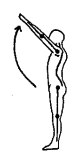
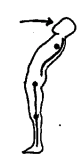
Abduction
Hyperextension
Extension
Rotation or Flexion
Match the following pictures with their body movement.
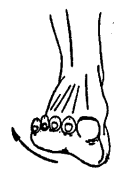
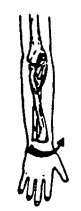
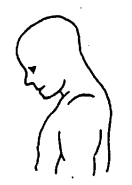
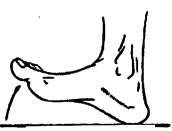
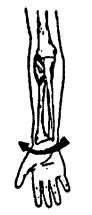
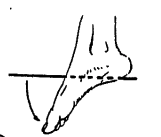
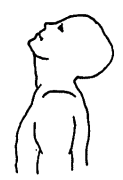
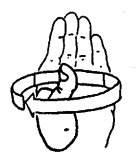
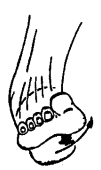
Supination
Hyperextension
Inversion
Pronation
Dorsiflexion
Plantarflexion
Eversion
Circumduction
Flexion
Match the following pictures with their body movement.

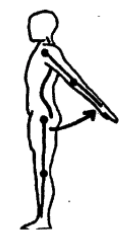
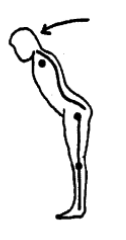
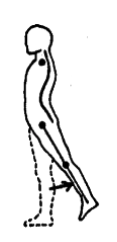
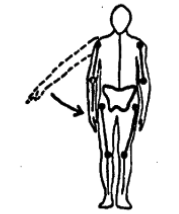
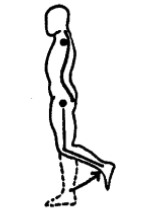
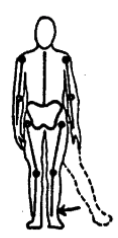

Flexion
Rotation
Adduction
Hyperextension
There are over 400 skeletal muscles present in the human body. While many names of the muscles are long and sound confusing, there is a "code" to muscle names that will come in very handy.
Before we look at diagrams, let's talk about this "code."
Look through (skim) the section from our textbook: Naming Skeletal Muscles. Then answer question 5.
Consider the bolded part of the following muscles. What do you think the muscles are named after?
| Draggable item | arrow_right_alt | Corresponding Item |
|---|---|---|
Adductor digiti minimi | arrow_right_alt | Shape |
Trapezius | arrow_right_alt | Size |
Sternocleidomastoid | arrow_right_alt | Location |
Gluteus maximus | arrow_right_alt | Where it attaches to skeleton |
Frontalis | arrow_right_alt | Number of origins |
Biceps brachii | arrow_right_alt | Action |
Muscles of the Head and Neck
Match the following muscles with the correct term. You may reference the textbook for help.
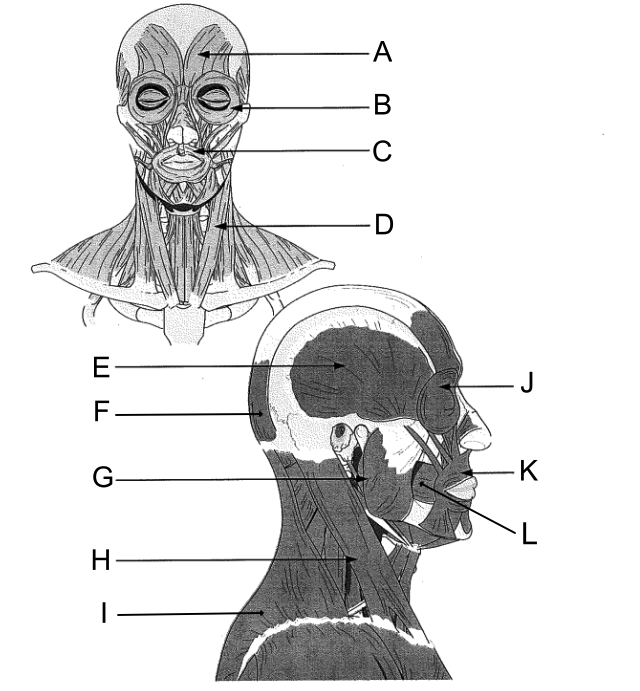
Masseter
Temporalis
Orbicularis oculi
Orbicularis oris
Trapezius
Frontalis
Occipitalis
Sternocleidomastoid
Buccinator
A
B, J
C, K
E
G
D, H
F
I
L
Pick ONE muscle from the head and neck diagrams.
1. Write the name of the muscle
2. What is this muscle named after? (refer back to #5 if you need!)
Muscles of the Upper Body (Anterior view)
Match the following muscles with the correct term. You may reference the textbook for help.
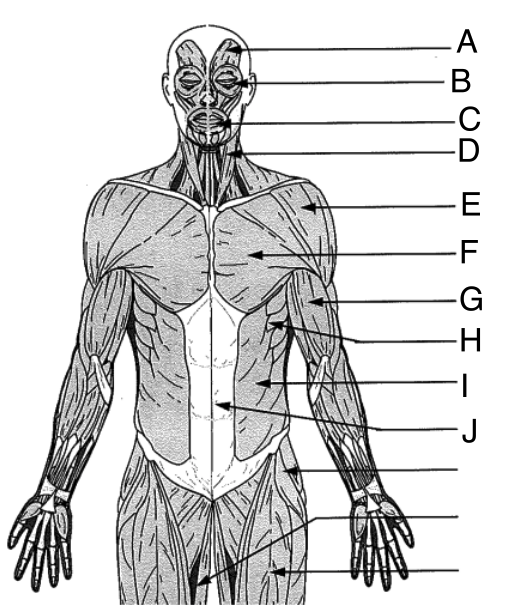
| Draggable item | arrow_right_alt | Corresponding Item |
|---|---|---|
sternocleidomastoid | arrow_right_alt | A |
pectoralis major | arrow_right_alt | B |
serratus anterior | arrow_right_alt | C |
biceps brachii | arrow_right_alt | D |
orbicularis oris | arrow_right_alt | E |
rectus abdominis | arrow_right_alt | F |
external oblique | arrow_right_alt | G |
orbicularis oculi | arrow_right_alt | H |
deltoid | arrow_right_alt | I |
frontalis | arrow_right_alt | J |
Pick ONE muscle from the upper body (anterior view).
1. Write the name of the muscle
2. What is this muscle named after? (refer back to #5 if you need!)
Muscles of the Lower body (Anterior view)
Match the following muscles with the correct term. You may reference the textbook for help.
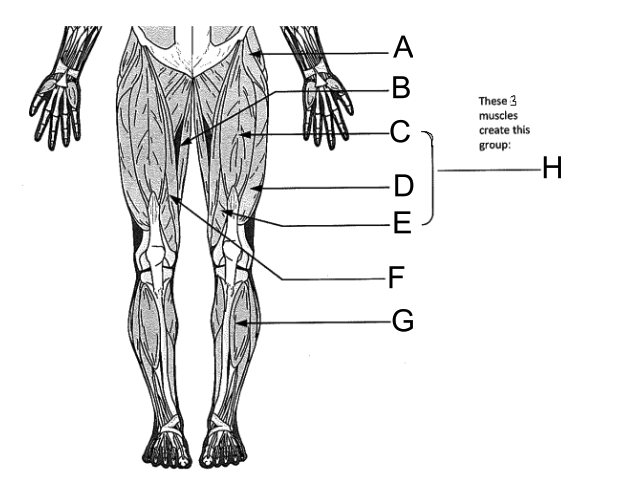
(Note that there is one more muscle that makes up the muscle group, but it is not visible in this diagram)
| Draggable item | arrow_right_alt | Corresponding Item |
|---|---|---|
vastus medialis | arrow_right_alt | A |
sartorius | arrow_right_alt | B |
tibialis anterior | arrow_right_alt | C |
quadriceps femoris | arrow_right_alt | D |
rectus femoris | arrow_right_alt | E |
vastus lateralis | arrow_right_alt | F |
gracilis | arrow_right_alt | G |
tensor fascia latae | arrow_right_alt | H |
Pick ONE muscle from the lower body (anterior view).
1. Write the name of the muscle
2. What is this muscle named after? (refer back to #5 if you need!)
Muscles of the Body (Posterior view)
Match the following muscles with the correct term. You may reference the textbook for help.
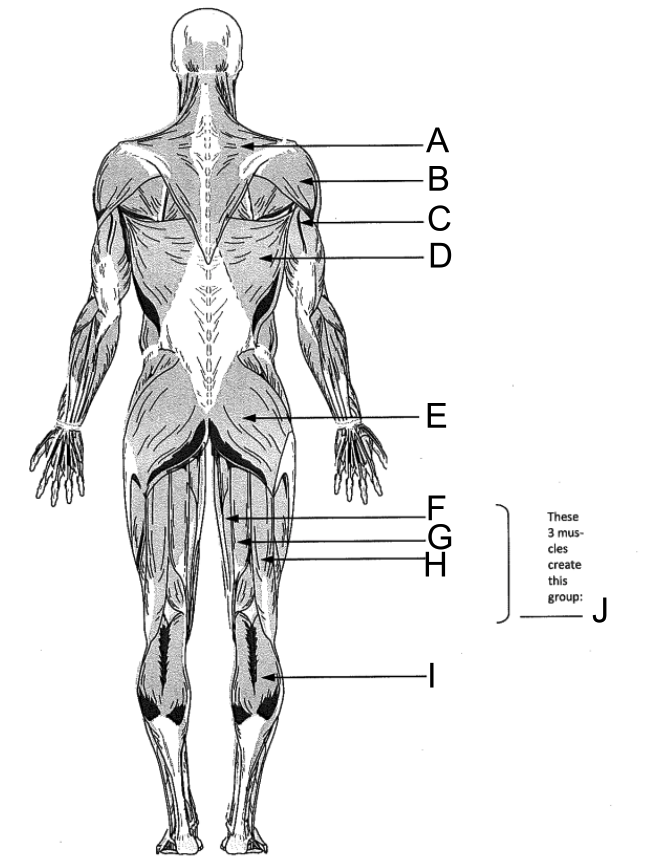
| Draggable item | arrow_right_alt | Corresponding Item |
|---|---|---|
semitendinosus | arrow_right_alt | A |
latissimus dorsi | arrow_right_alt | B |
biceps femoris | arrow_right_alt | C |
trapezius | arrow_right_alt | D |
hamstrings | arrow_right_alt | E |
triceps brachii | arrow_right_alt | F |
gluteus maximus | arrow_right_alt | G |
deltoid | arrow_right_alt | H |
semimembranosus | arrow_right_alt | I |
gastrocnemius | arrow_right_alt | J |
Pick ONE muscle from the posterior view of the body.
1. Write the name of the muscle
2. What is this muscle named after? (refer back to #5 if you need!)
Read the following excerpt from the textbook, then answer questions 14-15.
To pull on a bone, that is, to change the angle at its synovial joint, which essentially moves the skeleton, a skeletal muscle must also be attached to a fixed part of the skeleton. The moveable end of the muscle that attaches to the bone being pulled is called the muscle’s insertion, and the end of the muscle attached to a fixed (stabilized) bone is called the origin. During forearm flexion—bending the elbow—the brachioradialis assists the brachialis.
Although a number of muscles may be involved in an action, the principal muscle involved is called the prime mover, or agonist. To lift a cup, a muscle called the biceps brachii is actually the prime mover; however, because it can be assisted by the brachialis, the brachialis is called a synergist in this action (Figure 11.2). A synergist can also be a fixator that stabilizes the bone that is the attachment for the prime mover’s origin.
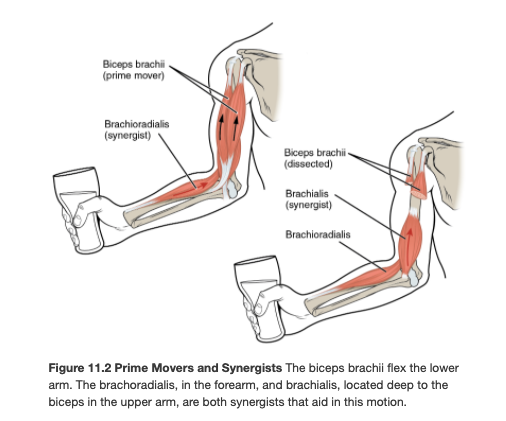
A muscle with the opposite action of the prime mover is called an antagonist. Antagonists play two important roles in muscle function: (1) they maintain body or limb position, such as holding the arm out or standing erect; and (2) they control rapid movement, as in shadow boxing without landing a punch or the ability to check the motion of a limb. The antagonist of the biceps brachii is the triceps brachii, as it performs the opposite action (extension of the lower arm.)
For example, to extend the knee, a group of four muscles called the quadriceps femoris in the anterior compartment of the thigh are activated (and would be called the agonists of knee extension). However, to flex the knee joint, an opposite or antagonistic set of muscles called the hamstrings is activated.
As you can see, these terms would also be reversed for the opposing action. If you consider the first action as the knee bending, the hamstrings would be called the agonists and the quadriceps femoris would then be called the antagonists.
The example of agonist and antagonist in the reading and picture above is about the flexion of the lower arm at the elbow.
Which of the following correctly identifies the agonist and antagonist for the extension of the lower arm at the elbow? (You may need to look back at your diagrams from earlier!)
Compare and contrast the origin and insertion of a muscle.
The sternocleidomastoid muscle is named after its origin and insertion. It originates at the sternum (sterno-) and clavicle (-cleido-) and inserts at the mastoid process (-mastoid). Examine the picture below of the right sternocleidomastoid muscle.
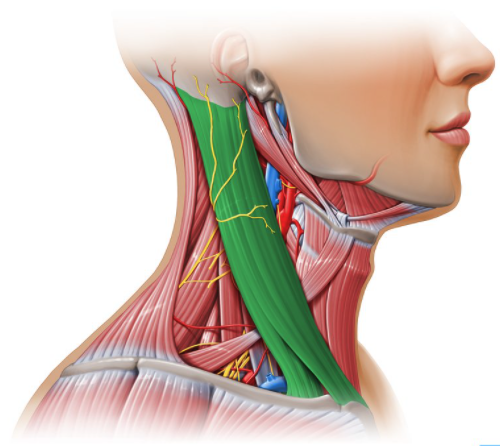
Remembering that the origin of a muscle is the bone that remains stationary (it does not move!) and that the insertion is the bone that is pulled on when the muscle contracts (the bone that moves), answer questions 16-18.
What happens when the right sternocleidomastoid muscle contracts?
What happens when the left sternocleidomastoid muscle contracts?
What happens when both sternocleidomastoid muscles contract?
Questions 16-18 describe the ________ of the sternocleidomastoid muscle.