Log in
Sign up for FREE
arrow_back
Library

Copy of Ions - Models (5/28/2026)

star
star
star
star
star
Last updated about 3 hours ago
8 questions
7
2
3
11
1
1
1
3

Read This


You have learned that not all atoms of an element are the same. Variation in the number of neutrons results in different isotopes of the element. In this activity we will explore another variation that can take place—the loss and gain of electrons. The exchange of electrons between atoms is a very common way for chemical change to take place. We will see it many times throughout the year.
Question 1
1.
Question 2
2.
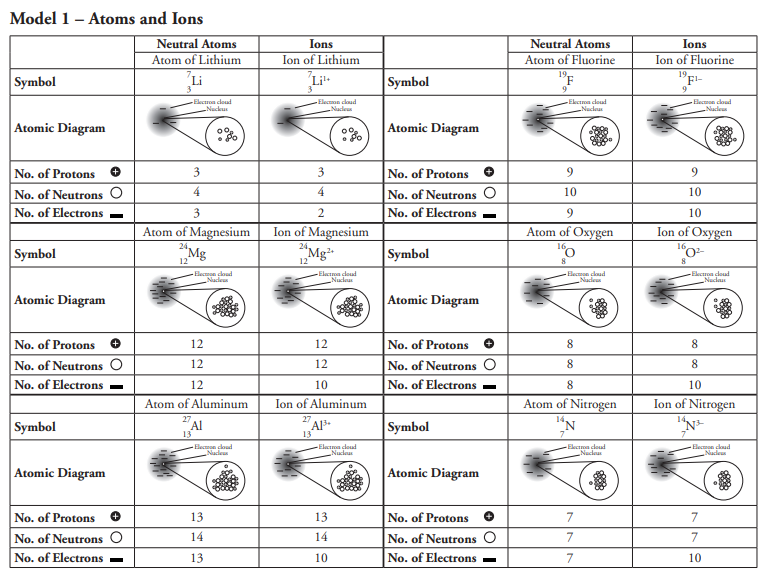
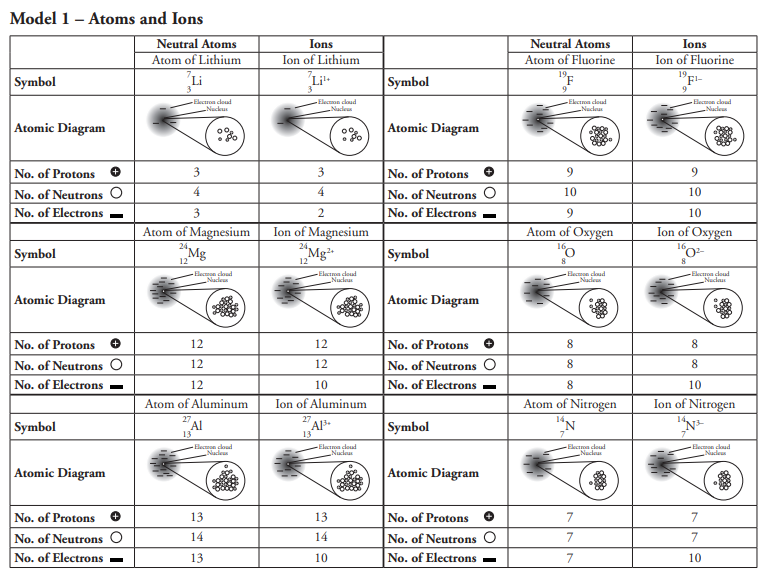
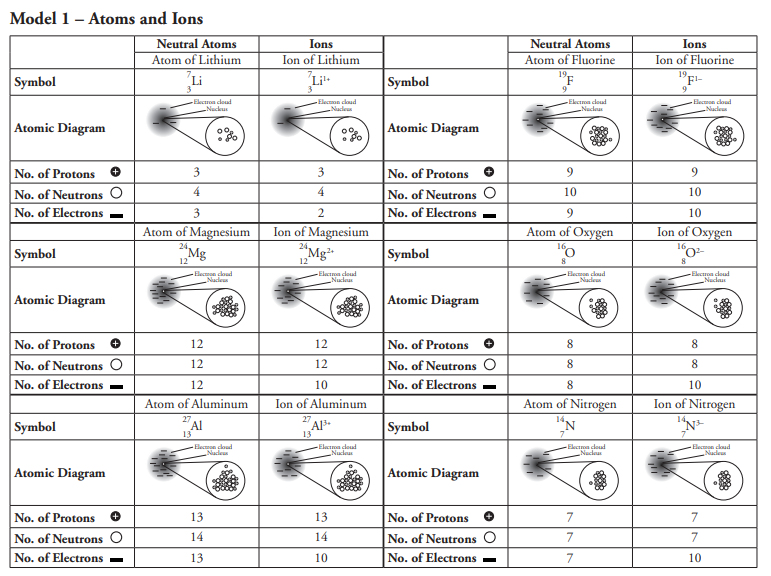
Examine the isotope symbols in Model 1:
a.) Where is the ion charge located on the isotope symbol? _______
b.) Is a charge indicated on the neutral atoms? _______
Question 3
3.
a.) Which subatomic particle carries a positive charge? _______
b.) Which subatomic particle carries a negative charge? _______
c.) Propose a mathematical equation to calculate the charge of an ion from the number of protons and electrons in an ion. This can be confirmed by looking at the ion examples in Model 1. _______

Read This

Chemists refer to positively charged ions as cations and to negatively charged ions as anions.
Question 4
4.
Question 5
5.

Could a +3 ion of aluminum be made by adding three protons to an aluminum atom? Explain.

Question 6
6.

Regarding ions, someone states, “When you add an electron, you get a positive charge because adding is positive in math.” Explain why they are wrong and explain how ions are formed.

Question 7
7.


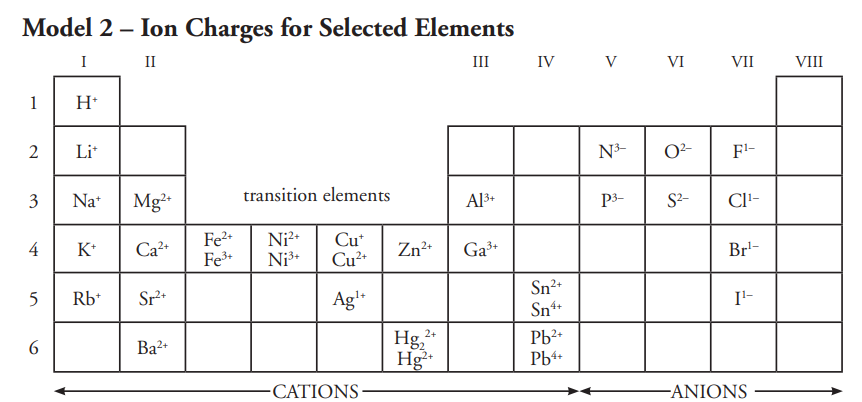
Click, "Show your Work," Use the scribble tool to draw a stair-step line in Model 2 to separate the metals and nonmetals.

Question 8
8.
a.) In general, do nonmetals form anions or cations? _______
b.) In general, do metals form anions or cations? _______
c.) What is the one non-metal that violates this pattern? _______
A.) Use Model 1 to complete the following:

Lithium:
a.) Metal or nonmetal _______
b.) Is the number of protons the same in the atom and the ion? _______
c.) Is the number of neutrons the same in the atom and the ion? _______
d.) Is the number of electrons the same in the atom and the ion? _______
Ion Charge: 1+

Magnesium:
a.) Metal or nonmetal _______
b.) Is the number of protons the same in the atom and the ion? _______
c.) Is the number of neutrons the same in the atom and the ion? _______
d.) Is the number of electrons the same in the atom and the ion? _______
Ion Charge: 2+

Aluminum:
a.) Metal or nonmetal _______
b.) Is the number of protons the same in the atom and the ion? _______
c.) Is the number of neutrons the same in the atom and the ion? _______
d.) Is the number of electrons the same in the atom and the ion? _______
Ion Charge: 3+

Fluorine:
a.) Metal or nonmetal _______
b.) Is the number of protons the same in the atom and the ion? _______
c.) Is the number of neutrons the same in the atom and the ion? _______
d.) Is the number of electrons the same in the atom and the ion? _______
Ion Charge: 1-

Oxygen:
a.) Metal or nonmetal _______
b.) Is the number of protons the same in the atom and the ion? _______
c.) Is the number of neutrons the same in the atom and the ion? _______
d.) Is the number of electrons the same in the atom and the ion? _______
Ion Charge: 2-

Nitrogen:
a.) Metal or nonmetal _______
b.) Is the number of protons the same in the atom and the ion? _______
c.) Is the number of neutrons the same in the atom and the ion? _______
d.) Is the number of electrons the same in the atom and the ion? _______
Ion Charge: 3-

B.) Based upon the above information, what distinguishes a neutral atom from an ion? _______
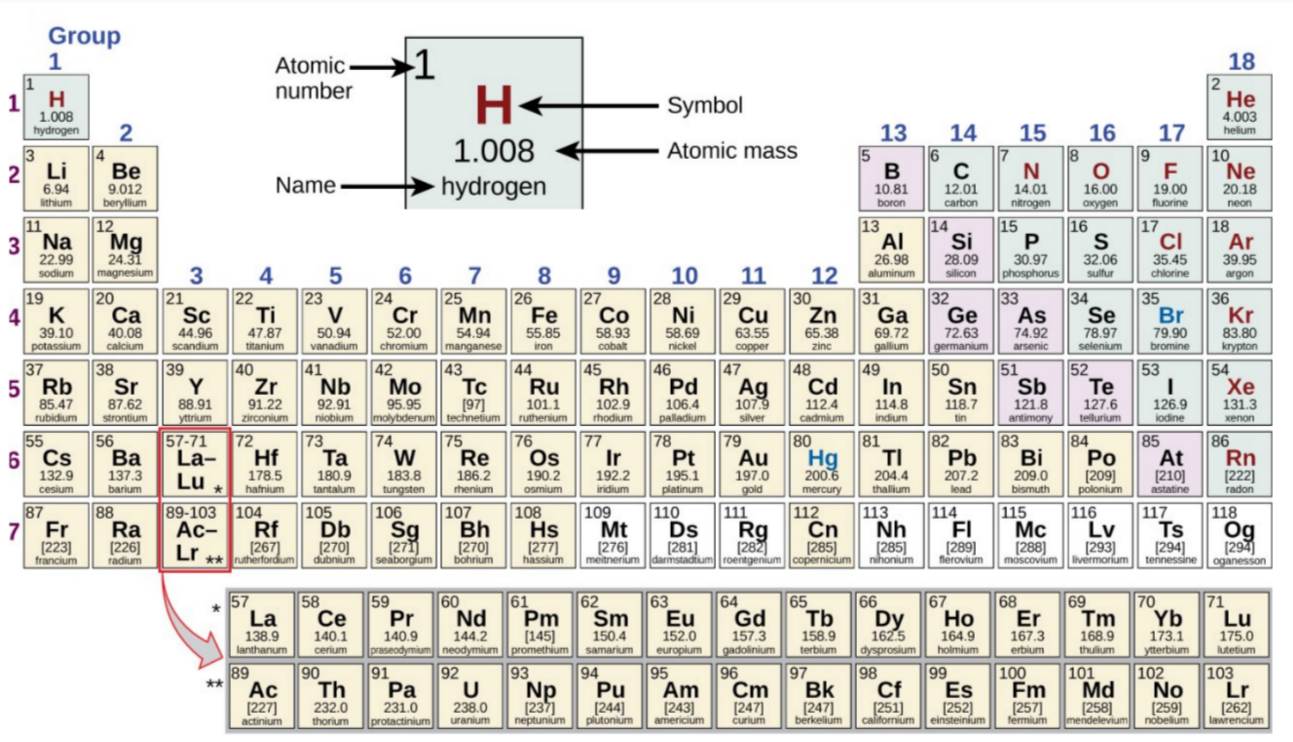
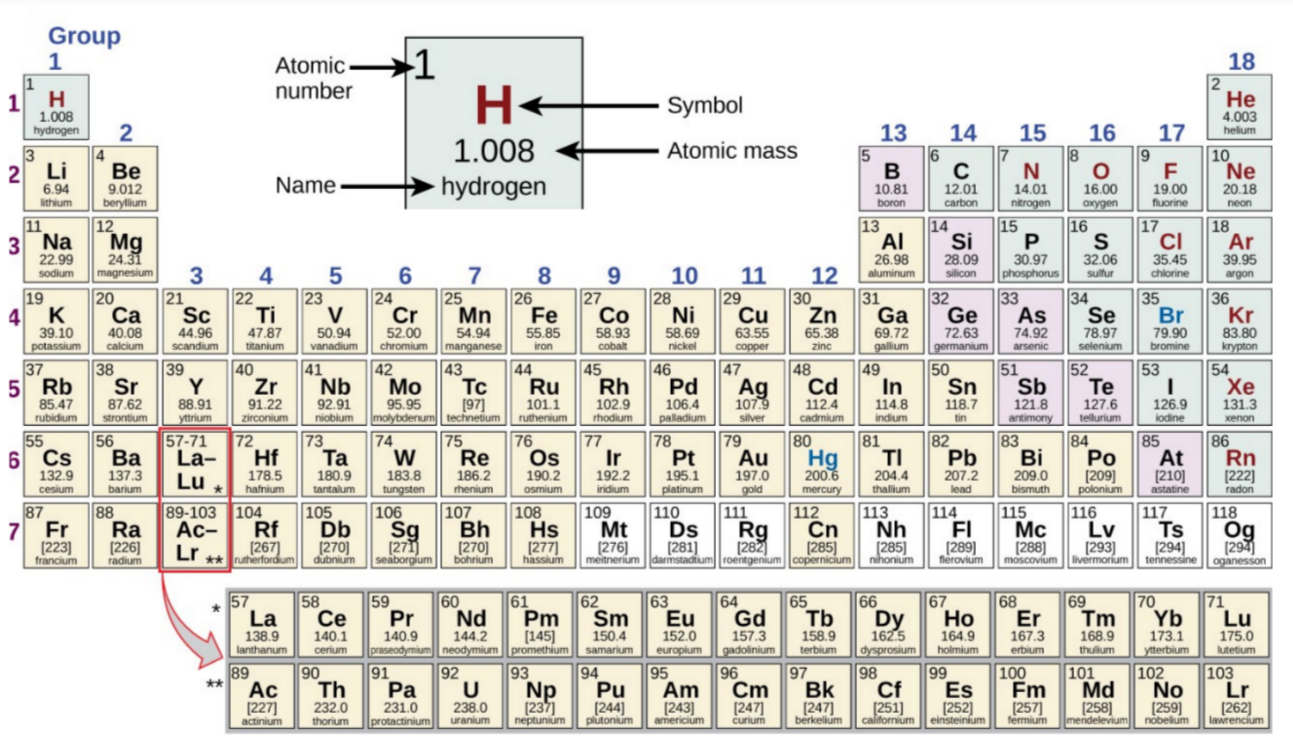
Use the Periodic Table to complete the following:

Element 1:

Atomic Number _______
Mass Number _______
Number of Protons _______
Number of Electrons _______
Number of Neutrons _______
Cation or Anion _______

Element 2:

Atomic Number _______
Mass Number _______
Number of Protons _______
Number of Electrons _______
Number of Neutrons _______
Cation or Anion _______

Element 3:

Atomic Number _______
Mass Number: 70
Number of Protons: 31
Number of Electrons: 28
Number of Neutrons _______
Cation or Anion _______
Element Symbol _______
Ion Charge _______

Element 4:

Atomic Number: 35
Mass Number _______
Number of Protons _______
Number of Electrons: 36
Number of Neutrons: 45
Cation or Anion _______
Element Symbol _______
Ion Charge _______