Copy of Cardia Cycle - Part 1 (5/28/2026)
star
star
star
star
star
Last updated 3 months ago
10 Nsɛmmisa
1
1
1
1
1
1
1
1
1
1
Use a web search to help you define: diastole
Use a web search to help you define: systole
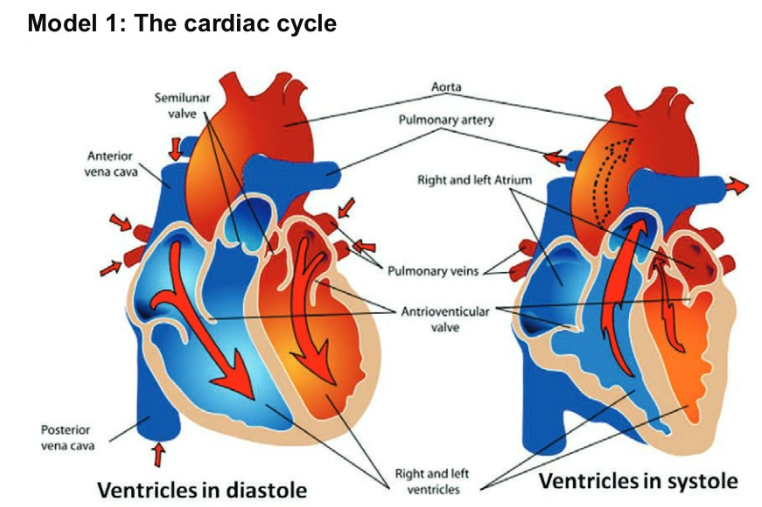
Compare the two images in model 1. Are the ventricles larger during systole or diastole?
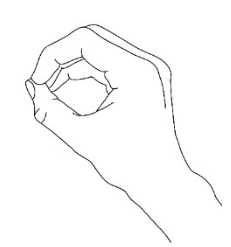
Make the above shape with your hand, then clench your fist. Image your hand is a chamber of the heart.
Which would be most similar to diastole, the open shape or clenched fist?
Which would be most similar to systole?
List the four types of tissues found in the human body. If you cannot remember them, use an internet search (but if you do this, please tell me).
The heart is composed of three layers, the endocardium or inner layer (epithelial and connective tissue), the myocardium or the middle layer (largest layer), and the outer epicardium.
Look at the prefix "myo-" and determine which of the four types of tissues you listed in question 5 comprises the myocardium.
Perform a web search and provide a simple definition for: Cardiac Depolarization.
Perform a web search to answer the following question.
What is the role of ions in cardiac depolarization?
Cardiac muscle cells (myocytes) are connected to one another by gap junctions. These gap junctions allow ions to diffuse from one cell into all the adjacent cells.
If a cardiac myocyte is depolarizes, does it affect the cells around it? How so?
Try to use the previous two questions to think your way through this question. If you are unable to do so, you may use a web search to provide a simple answer to this; but, you must tell me you did so.
Based on your answer to #9, what do think would happen in a single myocyte in the atria depolarizes?