Notas en Español - https://docs.google.com/document/d/1CnvEMAWLNDMn8WgqYLI2t6VyDSZM_-2vcJfVGjWdMr0/edit?usp=sharing
Notas en Español - https://docs.google.com/document/d/1CnvEMAWLNDMn8WgqYLI2t6VyDSZM_-2vcJfVGjWdMr0/edit?usp=sharing
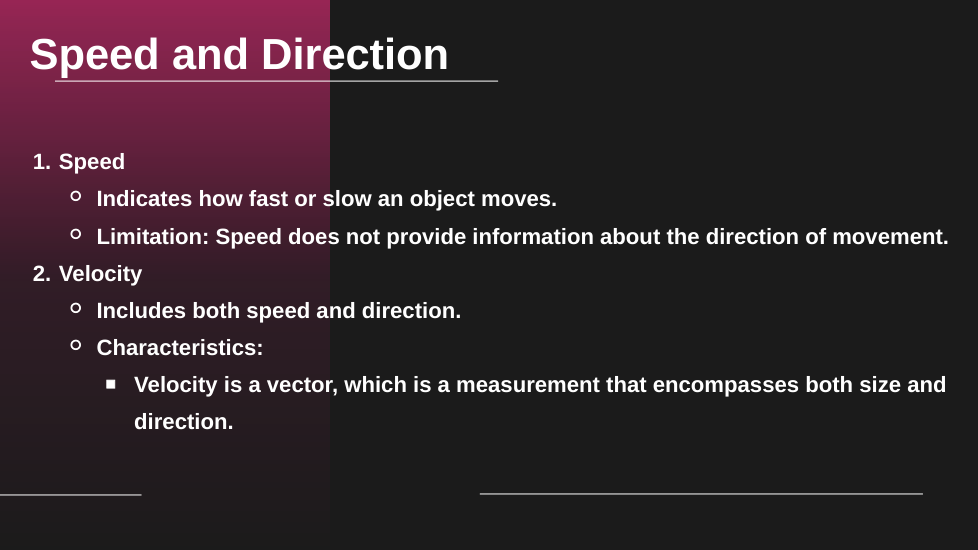
What is the primary difference between speed and velocity?
¿Cuál es la diferencia principal entre velocidad y rapidez?
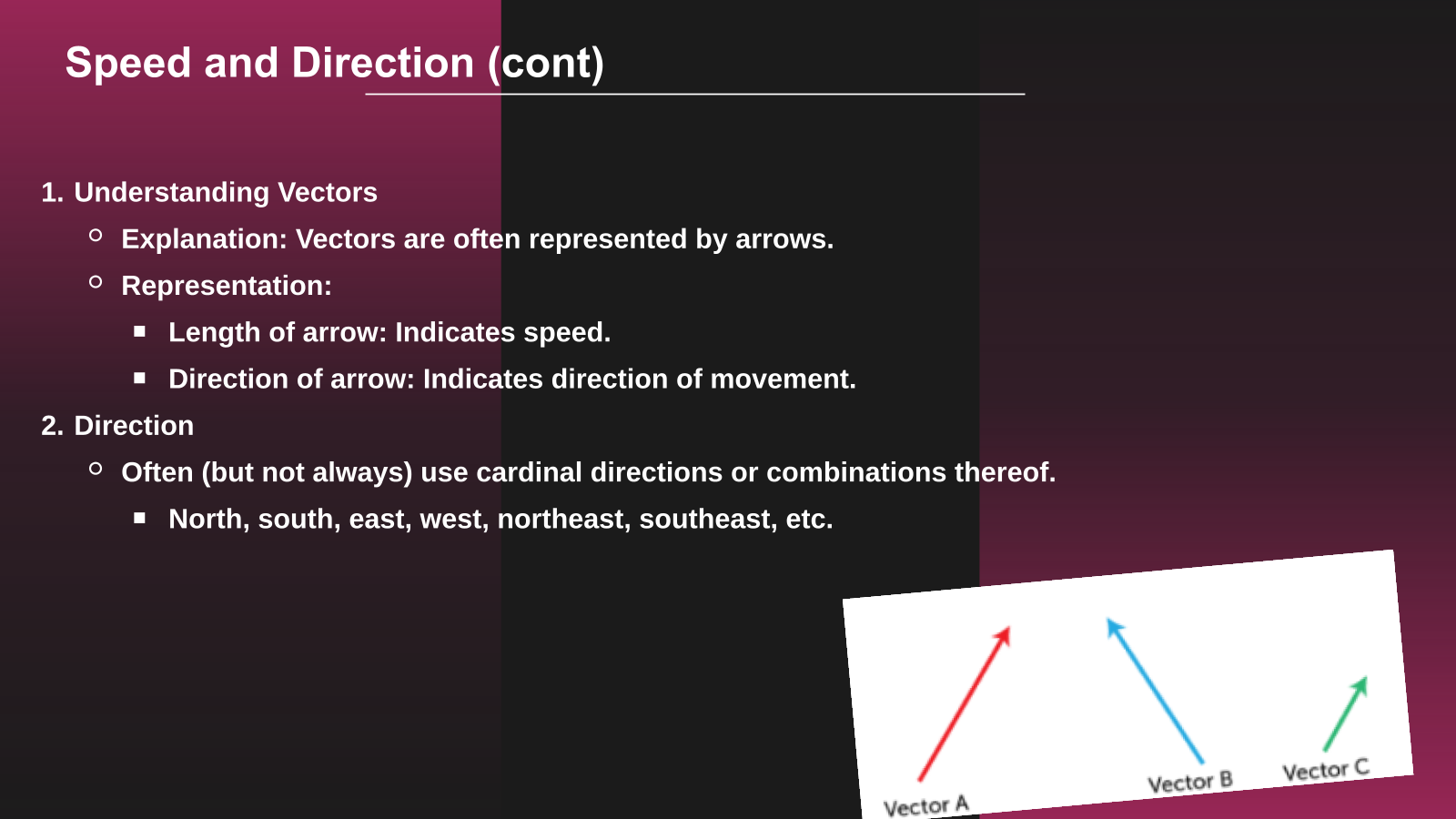
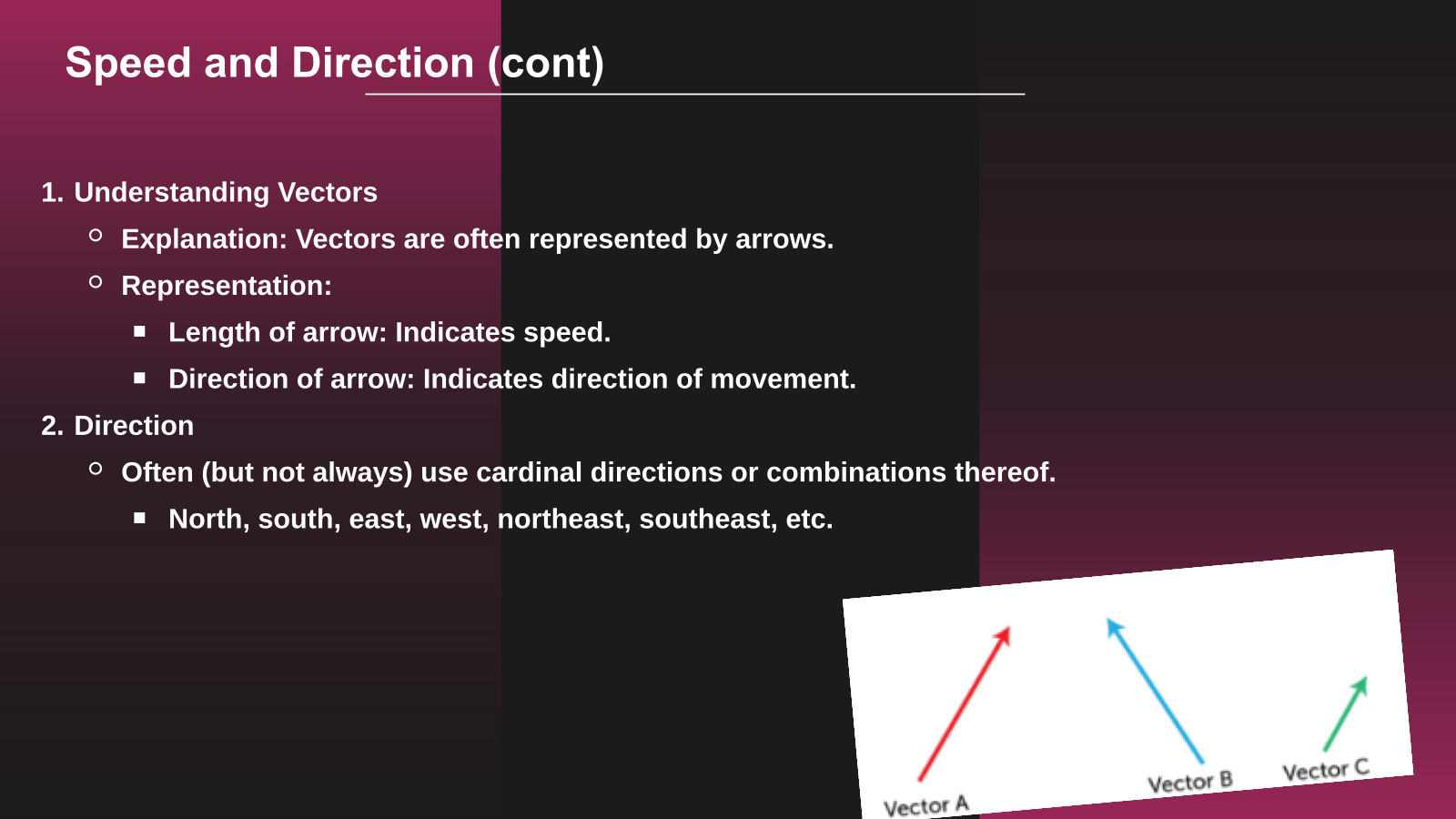
a. The length of an arrow indicates
a. La longitud de una flecha indica
d. The angle of the arrow indicates
d. El ángulo de la flecha indica
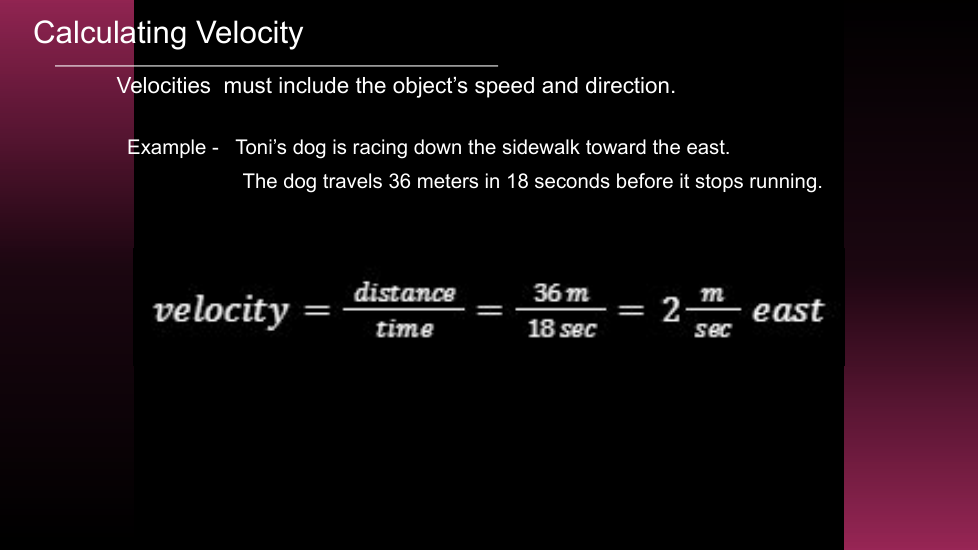
If someone is traveling to the north for 65 meters in 45 seconds, what is their velocity?
Si alguien viaja hacia el norte durante 65 metros en 45 segundos, ¿cuál es su velocidad?
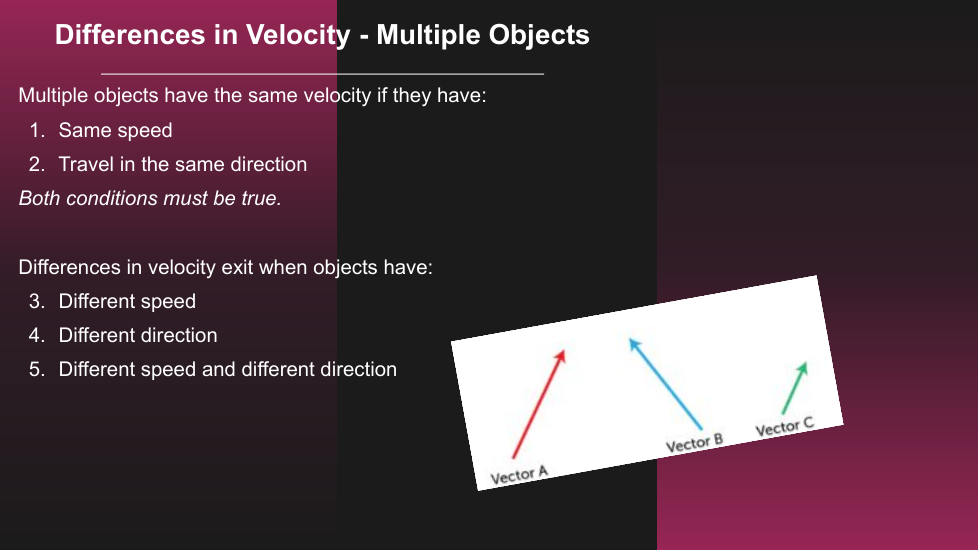
Which of the following would have the same velocity?
¿Cuál de los siguientes tendría la misma velocidad?
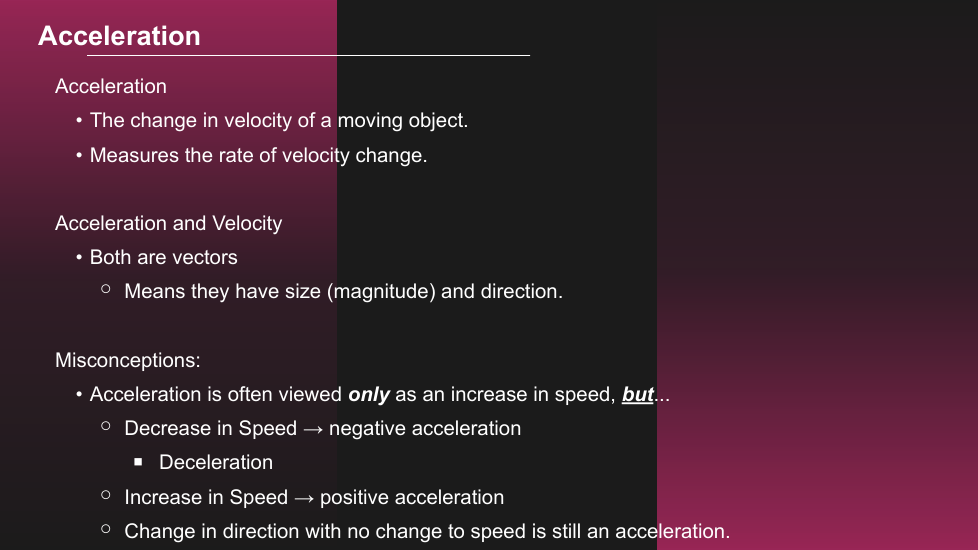
What type of acceleration would the following be?
¿Qué tipo de aceleración sería la siguiente?
a.
b.
c.
d.
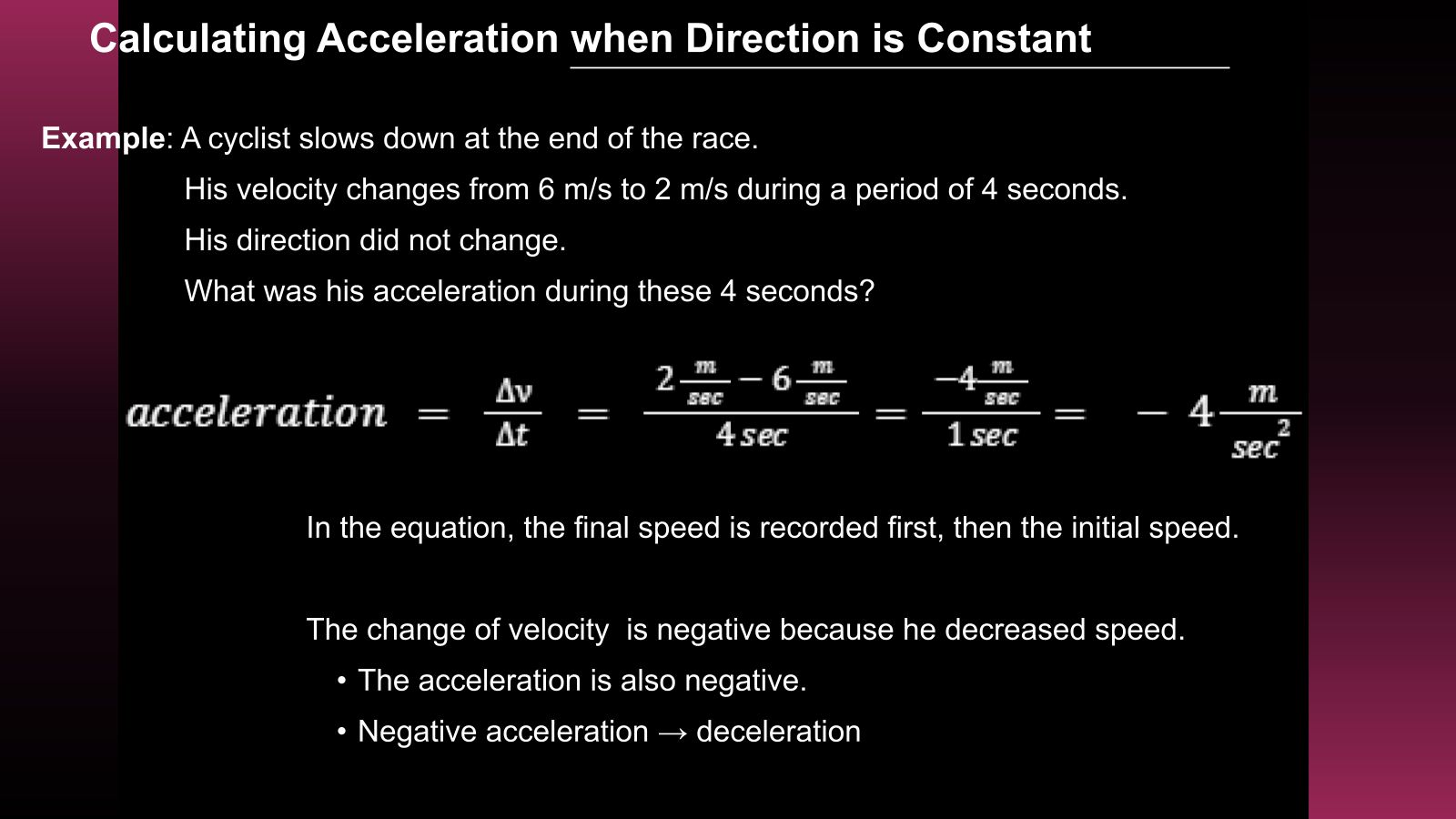
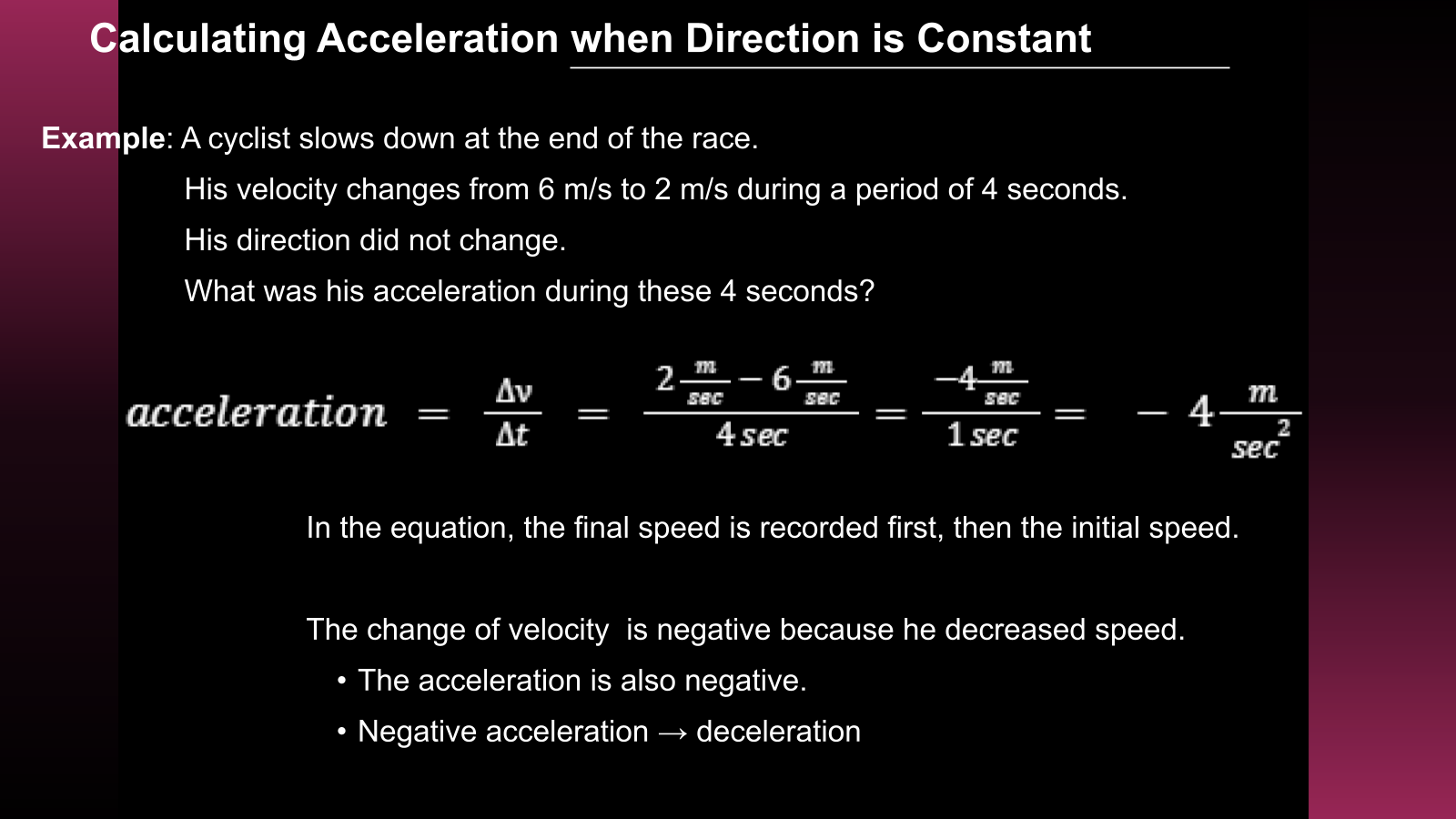
A car accelerates from a stationary position to a speed of 20 m/s in 5 seconds. What is the acceleration of the car?
Un coche acelera desde una posición estacionaria hasta una velocidad de 20 m/s en 5 segundos. ¿Cuál es la aceleración del coche?
a.) A vehicle travels 2400 m to the west. What is its velocity if it takes 300 seconds?
a.) Un vehículo viaja 2400 m hacia el oeste. ¿Cuál es su velocidad si toma 300 segundos?
b.) Two cars are traveling south at different distances and times. Car A travels 140 m to the south in 10.0 seconds, while Car B travels 210 m to the south in 15.0 seconds. Calculate the velocity of Car A and the velocity of Car B. Are the velocities of Car A and Car B the same?
b.) Dos coches viajan hacia el sur a diferentes distancias y tiempos. El Coche A viaja 140 m hacia el sur en 10.0 segundos, mientras que el Coche B viaja 210 m hacia el sur en 15.0 segundos. Calcula la velocidad del Coche A y la velocidad del Coche B. ¿Son las velocidades del Coche A y el Coche B las mismas?
Velocities/Velocidades:
Car (Coche) A
Car (Coche) B
Are their velocities the same? (¿Son sus velocidades las mismas?)
c.) Three different soccer balls are kicked in the same direction. The soccer ball A travels 30 m to the east in 5 seconds. The soccer ball B travels 40 m to the east in 10 seconds. The soccer ball C travels 50 m to the east in 8 seconds. Calculate the velocity of each soccer ball. Are the velocities of the three soccer balls the same; if not, rank them from highest to lowest velocity.
c.) Tres pelotas de fútbol diferentes son pateadas en la misma dirección. La pelota de fútbol A viaja 30 m hacia el este en 5 segundos. La pelota de fútbol B viaja 40 m hacia el este en 10 segundos. La pelota de fútbol C viaja 50 m hacia el este en 8 segundos. Calcula la velocidad de cada pelota de fútbol. ¿Son las velocidades de las tres pelotas de fútbol las mismas; si no, clasifícalas de mayor a menor velocidad?
Velocities/Velocidades:
Ball (Pelota) A
Ball (Pelota) B
Ball (Pelota) C
Are their velocities the same (if not, rank them from highest to lowest)
¿Son sus velocidades las mismas (si no, clasifícalas de mayor a menor)?
a.) A roller coaster car rapidly picks up velocity as it rolls down a slope.
Starts at 5 m/sec, ends at 25 m/sec after 3 seconds. What is its acceleration?
a.) Un carro de montaña rusa aumenta rápidamente su velocidad al bajar por una pendiente. Comienza a 5 m/s y termina a 25 m/s después de 3 segundos. ¿Cuál es su aceleración?
b.) A cyclist accelerates from 1 m/s to 9 m/sec in 4 seconds. What is his acceleration? Is this acceleration higher than that of a car which accelerates from 0 to 32 m/sec in 9 seconds?
b.) Un ciclista acelera de 1 m/s a 9 m/s en 4 segundos. ¿Cuál es su aceleración? ¿Es esta aceleración más alta que la de un coche que acelera de 0 a 32 m/s en 9 segundos?
Acceleration:
Cyclist (Ciclista)
Car (Coche)
Which has the highest acceleration? (¿Cuál tiene la mayor aceleración?)
c.) If a Ferrari, with an initial velocity of 12 m/sec, accelerates to a final velocity of 120 m/sec in 2 seconds, what is its acceleration?
c.) Si un Ferrari, con una velocidad inicial de 12 m/s, acelera a una velocidad final de 120 m/s en 2 segundos, ¿cuál es su aceleración?
d.) A parachute on a racing dragster opens and changes the velocity of the car from 90 m/sec to 50 m/sec in 5 seconds. What is the acceleration of the dragster? What kind of acceleration would this be?
d.) Un paracaídas en un dragster de carreras se abre y cambia la velocidad del coche de 90 m/s a 50 m/s en 5 segundos. ¿Cuál es la aceleración del dragster? ¿Qué tipo de aceleración sería?
Acceleration (Aceleración)
Type of Acceleration (Tipo de Aceleración)
e.) A motorcycle is traveling at an initial velocity of 30 m/sec and comes to a stop in 5 seconds. What is its acceleration? What kind of acceleration would this be?
e.) Una motocicleta viaja a una velocidad inicial de 30 m/s y se detiene en 5 segundos. ¿Cuál es su aceleración? ¿Qué tipo de aceleración sería?
Acceleration (Aceleración)
Type of Acceleration (Tipo de Aceleración)
f.) A skier's final velocity is 21 m/sec after accelerating for 3 seconds. If his initial velocity was 11 m/sec, what is his acceleration? What kind of acceleration would this be?
f.) La velocidad final de un esquiador es de 21 m/s después de acelerar durante 3 segundos. Si su velocidad inicial era de 11 m/s, ¿cuál es su aceleración? ¿Qué tipo de aceleración sería?
Acceleration (Aceleración)
Type of Acceleration (Tipo de Aceleración)
Two objects are moving the same distance but in different directions. Object A travels 50 m to the east in 10 seconds, while Object B travels 50 m to the west in 10 seconds.
Question: Do you need to calculate the velocity of each object to determine if their velocities are the same or different?
If your answer is "Yes," please calculate the velocities. If your answer is "No," explain why.
Dos objetos se mueven la misma distancia pero en diferentes direcciones. El objeto A viaja 50 m hacia el este en 10 segundos, mientras que el objeto B viaja 50 m hacia el oeste en 10 segundos.
Pregunta: ¿Necesitas calcular la velocidad de cada objeto para determinar si sus velocidades son las mismas o diferentes?
Si tu respuesta es "Sí," por favor calcula las velocidades. Si tu respuesta es "No," explica por qué.