Learning Goals:
I can predict the final speed and direction of movement of both objects when a moving object collides with a non-moving object of the same mass.
I can estimate the final speed and direction of movement of an object when a moving object collides with a non-moving object of higher mass.
I can estimate the speed and direction of movement of an object when a moving object collides with a non-moving object of lower mass.
Learning Goals:
I can predict the final speed and direction of movement of both objects when a moving object collides with a non-moving object of the same mass.
I can estimate the final speed and direction of movement of an object when a moving object collides with a non-moving object of higher mass.
I can estimate the speed and direction of movement of an object when a moving object collides with a non-moving object of lower mass.
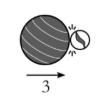
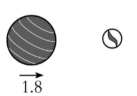
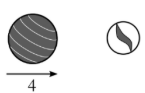
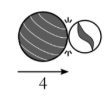
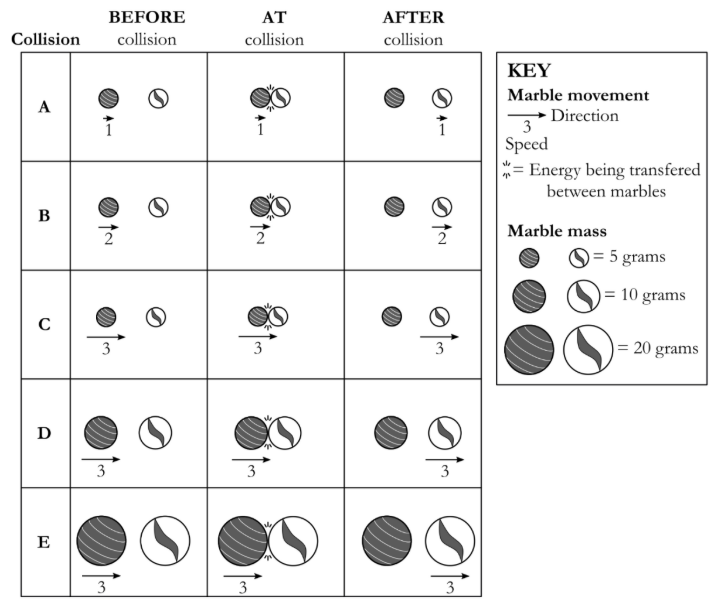
Refer to Model 1 and describe the differences between these three objects.
Refiérase al Modelo 1 y describa las diferencias entre estos tres objetos.

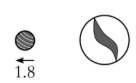
Refer to Model 1 and describe what the below symbol means, be sure to include the speed and direction.
Refiérase al Modelo 1 y describa lo que significa el símbolo a continuación, asegurándose de incluir la velocidad y la dirección.

Refer to Model 1 and organize each statement as being "True" or "Untrue".
Refiérase al Modelo 1 y organice cada afirmación como "Verdadera" o "Falsa".
There is no information about the mass of the objects in Model 1.
No hay información sobre la masa de los objetos en el Modelo 1.
Each collision includes two objects of equal mass.
Cada colisión incluye dos objetos de masa igual.
Each collision includes two objects of different masses.
Cada colisión incluye dos objetos de masas diferentes.
Each object in Model 1 have the same mass.
Cada objeto en el Modelo 1 tiene la misma masa.
True/Verdadera
Untrue/Falsa
What happens to the moving marble’s energy at the time of collision?
¿Qué sucede con la energía de la canica en movimiento en el momento de la colisión?
Where does the marble that is not moving get the energy it needs to begin moving?
¿De dónde obtiene la canica que no se está moviendo la energía que necesita para comenzar a moverse?
Refer to Model 1 and identify if each statement is "true" or "untrue".
Refiérase al Modelo 1 e identifique si cada afirmación es "verdadera" o "falsa".
True/verdadera | Untrue/falsa | |
|---|---|---|
In systems of two marbles of equal mass, the moving marble changes to a speed of 0 (completely stops) after it collides with the marble that is not moving. / En sistemas de dos canicas de masa igual, la canica en movimiento cambia a una velocidad de 0 (se detiene por completo) después de chocar con la canica que no se está moviendo. | ||
In systems of two marbles of equal mass, the moving marble seems to “give” its movement to the marble that is not moving. / En sistemas de dos canicas de masa igual, la canica en movimiento parece "dar" su movimiento a la canica que no se está moviendo. |
Refer to Model 3, examine the before and after information about each collision.
Refiérase al Modelo 3, examine la información antes y después de cada colisión.
How many marbles are moving before each collision?
¿Cuántas canicas están en movimiento antes de cada colisión?
How many marbles are moving after each collision?
¿Cuántas canicas están en movimiento después de cada colisión?
Is all the movement in the same direction after each collision?
¿Todo el movimiento va en la misma dirección después de cada colisión?
Refer to Model 1 and describe how the length of an arrow relates to the speed of each object located above an arrow.
Refiérase al Modelo 1 y describa cómo la longitud de una flecha se relaciona con la velocidad de cada objeto ubicado sobre una flecha.
Refer to Model 1 and identify the pattern between the location, number, direction, and length of the arrows before and after each collision.
Refiérase al Modelo 1 e identifique el patrón entre la ubicación, número, dirección y longitud de las flechas antes y después de cada colisión.
Same/Igual | Different/Diferente | Cannot Determine/No se puede determinar | |
|---|---|---|---|
Location of the arrows/Ubicación de las flechas. | |||
Number of arrows/Número de flechas. | |||
Direction of the arrows/Dirección de las flechas. | |||
Length of the arrows/Longitud de las flechas. |
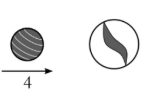
Model 1 - Collisions between objects with the same mass
Modelo 1 - Colisiones entre objetos con la misma masa.

In systems of two marbles of equal mass, the moving marble changes to a slower speed and continues
moving in the same direction after it collides with the marble that is not moving. / En sistemas de dos canicas de masa igual, la canica en movimiento cambia a una velocidad más lenta y continúa moviéndose en la misma dirección después de chocar con la canica que no se está moviendo.
Refer to Model 2 and indicate which statements are "true" or "untrue".
Refiérase al Modelo 2 e indique cuáles afirmaciones son "verdaderas" o "falsas".
True/Verdadera | Untrue/Falsa | |
|---|---|---|
All objects in Model 2 are of the same mass. / Todos los objetos en el Modelo 2 tienen la misma masa. | ||
Each collision is between two objects of equal mass. / Cada colisión es entre dos objetos de masa igual. | ||
Each collision is between two objects of different masses. / Cada colisión es entre dos objetos de masas diferentes. | ||
Model 2 does not describe the mass of the objects. / El Modelo 2 no describe la masa de los objetos. |
Refer to Model 2 looking carefully at the before and after information regarding each collision in Model 2.
Refiérase al Modelo 2, observando cuidadosamente la información antes y después de cada colisión en el Modelo 2.
How many marbles are moving before each collision?
¿Cuántas canicas están en movimiento antes de cada colisión?
How many marbles are moving after each collision?
¿Cuántas canicas están en movimiento después de cada colisión?
Is all the movement in the same direction after each collision?
¿Todo el movimiento va en la misma dirección después de cada colisión?
Refer to 4b (above question) - is this the same behavior as shown in Model 1? Explain.
Both Models are in the hint.
Refiérase a 4b (la pregunta anterior) - ¿es este el mismo comportamiento que se muestra en el Modelo 1? Explique.
Ambos modelos están en la pista.
Refer to Model 2. What pattern do you see between the location, number, direction, and length of each arrow before and after each collision?
Multiple answers are possible for each row.
Refiérase al Modelo 2. ¿Qué patrón observa entre la ubicación, el número, la dirección y la longitud de cada flecha antes y después de cada colisión?
Se pueden dar múltiples respuestas para cada fila.
Same/ Misma | Different / Diferente | Cannot be Determined / No se puede determinar. | |
|---|---|---|---|
Location of the arrow / Ubicación de la flecha | |||
Number of arrows / Número de flechas | |||
Direction of the arrows / Dirección de las flechas | |||
Length of the arrows / Longitud de las flechas |
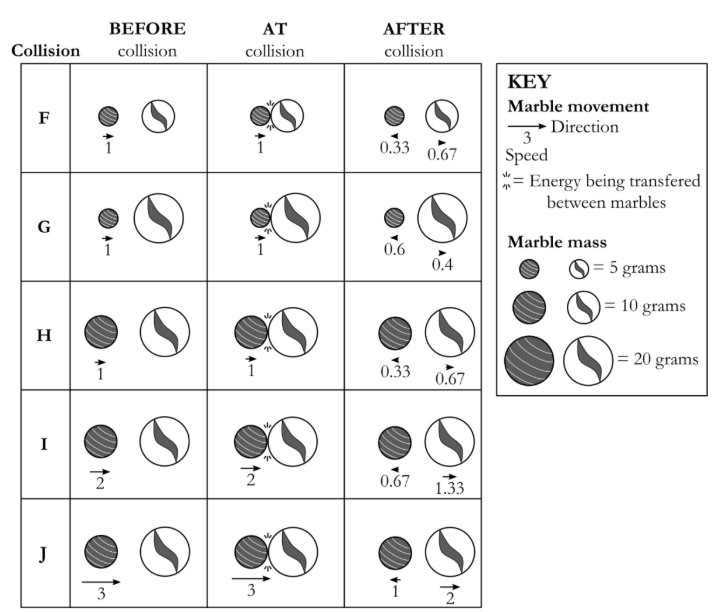
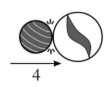
Model 2 - Moving objects colliding with objects of greater masses
Modelo 2 - Objetos en movimiento colisionando con objetos de mayor masa.

Refer to Model 2 and identify which statements are "true" or "untrue".
Refiérase al Modelo 2 e identifique cuáles afirmaciones son "verdaderas" o "falsas".
True | Untrue | |
|---|---|---|
All the marbles in Model 2 have the same mass. / Todas las canicas en el Modelo 2 tienen la misma masa. | ||
Before the collisions, all the moving marbles have a higher mass than the non-moving marbles. / Antes de las colisiones, todas las canicas en movimiento tienen una masa mayor que las canicas que no se están moviendo. | ||
Before the collisions, all the moving marbles have a lower mass than the non-moving marbles. / Antes de las colisiones, todas las canicas en movimiento tienen una masa menor que las canicas que no se están moviendo. | ||
Before some collisions, the moving marble has a higher mass. In other collisions, the moving marble has a lower mass. / Antes de algunas colisiones, la canica en movimiento tiene una masa mayor. En otras colisiones, la canica en movimiento tiene una masa menor. |
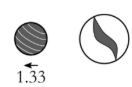
Refer to Model 2 and complete the below table - one row has been completed for you.
Refiérase al Modelo 2 y complete la tabla a continuación; una fila ha sido completada para usted.

Collision Colisión | Speed of the moving marble BEFORE the collision Velocidad de la canica en movimiento ANTES de la colision | Speed of the lower mass marble AFTER collision Velocidad de la canica de menor masa DESPUÉS de la colisión | Speed of the higher mass marble AFTER collision Velocidad de la canica de mayor masa DESPUÉS de la colisión | Combined speeds of both marbles AFTER collision Velocidades combinadas de ambas canicas DESPUÉS de la colisión |
|---|---|---|---|---|
F | 1 | 0.33 | 0.67 | 1.00 |
G | ||||
H | ||||
I | ||||
J |
Read the statement below.
After the collision, the speed of the higher mass marble is always greater than the
speed of the lower mass marble.
Is it true or false? Cite data from Model 2 to support your answer.
Lee la siguiente declaración.
Después de la colisión, la velocidad de la canica de mayor masa siempre es mayor que la velocidad de la canica de menor masa.
¿Es verdadero o falso? Cite datos del Modelo 2 para respaldar su respuesta.

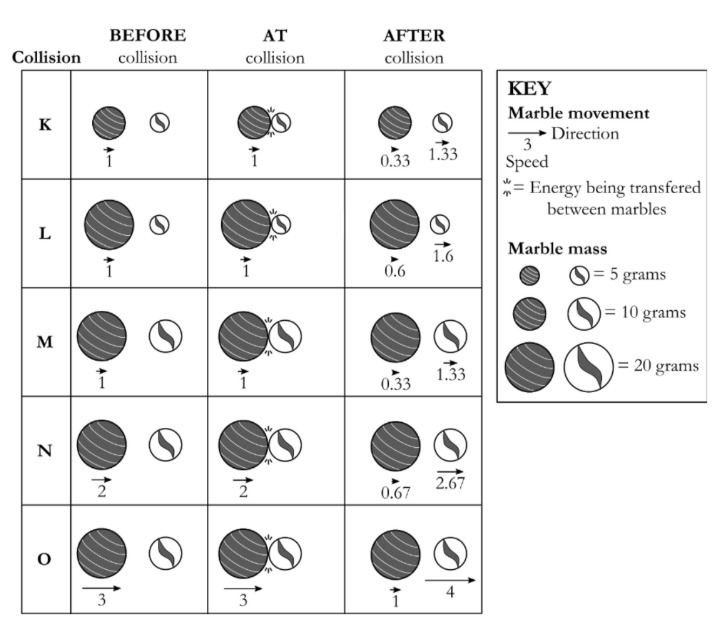
For each collision in Model 2, compare the speed of the moving marble BEFORE collision with the combined speeds of both marbles AFTER collision.
Describe the pattern you identified in all of the collisions.
Para cada colisión en el Modelo 2, compare la velocidad de la canica en movimiento ANTES de la colisión con las velocidades combinadas de ambas canicas DESPUÉS de la colisión.
Describa el patrón que identificó en todas las colisiones.
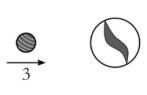
Use the patterns discovered in Model 2 to complete the table.
Utilice los patrones descubiertos en el Modelo 2 para completar la tabla.
Before Collision Antes de la colisión | At Collision En la colisión | After Collision (For the Marble to the right - indicate direction of arrow and speed) Después de la colisión (para la canica de la derecha - indique dirección de la flecha y velocidad) | Combined Speeds of Both Marbles After Collisions Velocidades combinadas de ambas canicas después de las colisiones |
|---|---|---|---|
|
|
Speed / Velocidad | |
|
|
Speed / Velocidad |
Refer to Model 3 and identify which statements are "true" or "untrue".
Refiérase al Modelo 3 e identifique cuáles afirmaciones son "verdaderas" o "falsas".
True | Untrue | |
|---|---|---|
All the marbles in Model 3 have the same mass. / Todas las canicas en el Modelo 3 tienen la misma masa. | ||
Each collision includes two marbles of different masses. / Cada colisión incluye dos canicas de masas diferentes. | ||
There is no information about mass in Model 3. / No hay información sobre la masa en el Modelo 3. | ||
Each collision includes two marbles of equal mass. / Cada colisión incluye dos canicas de masa igual. |
Compare your answers to 3b (uses Model 2) with those of 4b (just above).
Does the behavior described in 3b (Model 2) the same as in 4b (Model 3)? Explain.
Compare sus respuestas a 3b (usando el Modelo 2) con las de 4b (justo arriba).
¿Es el comportamiento descrito en 3b (Modelo 2) el mismo que en 4b (Modelo 3)? Explique.
Examine Model 3. What pattern do you see between the location,
number, direction, and length of the arrow(s) before and after each collision?
Same | Different | Cannot be Determined | |
|---|---|---|---|
Location of the arrow | |||
Number of arrows | |||
Direction of the arrows | |||
Length of the arrows |
Refer to Model 3 and identify which statements are "true" or "untrue".
True | Untrue | |
|---|---|---|
Before the collisions, all the moving marbles have a lower mass than the non-moving marbles. | ||
All the marbles in Model 3 have the same mass. | ||
Before the collisions, all the moving marbles have a higher mass than the non-moving marbles. | ||
Before some collisions, the moving marble has a higher mass. In other collisions, the moving marble has a lower mass. |
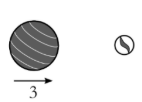
Refer to Model 3 and complete this data table with that information.
One row has been completed for you.
Last column - you are calculating the difference in final speeds.
Collision | Speed of the marble before the collision. | Speed of the higher mass marble after collision. | Speed of the lower mass marble after collision. | Difference between speeds of the marbles after collision. |
|---|---|---|---|---|
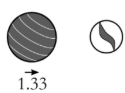
K | 1 | 0.33 | 1.33 | 1.00 |
L | ||||
M | ||||
N | ||||
O |
Read the statement below and compare it to Model 3.
After the collision, the speed of the higher mass marble is always greater than the
speed of the lower mass marble.
Is the statement true or false? Use data/information from Model 3 to support your claim.
Use the patterns discovered in Model 2 to complete the table.
Before Collision | At Collision | After Collision (For the Marble to the right - indicate direction of arrow and speed) | Differences between speeds of marbles after collision. |
|---|---|---|---|
|
|
Direction Speed | |
|
|
Speed |