Twa kɔ nsɛm atitiriw so
Log in
Sign up for FREE
arrow_back
Laabri

Copy of 5.) Waves Independent Work (week of 13 April 2026) (5/28/2026)

star
star
star
star
star
Last updated about 1 month ago
23 Nsɛmmisa
Hyɛ no nsow a efi ɔkyerɛwfo no hɔ:

Read This

The questions will not tell you while you are working if you are correct or not while you are working.

  • Your score will be revealed once you submit the formative.

  • You can reattempt this a second time

  • Your correct answers for attempt 1 will be transferred to attempt 2

  • You will only need to correct the questions that are blank in attempt 2.

Use the provided resources, an only the provided resources, to help you answer the questions.

Warning: The drive for perfection is a tantalizing temptation that pushes some people to cross lines into cheating. Just use the resources I've given you - I have constructed all questions based upon them.

  • I'm looking for evidence that you used resources other than those provided. If evidence exists, you will not receive any credit.

This is due at the end of the week (17 April) and will be locked three weeks after the due date (08 May).

Read This

The questions will not tell you while you are working if you are correct or not while you are working.

  • Your score will be revealed once you submit the formative.

  • You can reattempt this a second time

  • Your correct answers for attempt 1 will be transferred to attempt 2

  • You will only need to correct the questions that are blank in attempt 2.

Use the provided resources, an only the provided resources, to help you answer the questions.

Warning: The drive for perfection is a tantalizing temptation that pushes some people to cross lines into cheating. Just use the resources I've given you - I have constructed all questions based upon them.

  • I'm looking for evidence that you used resources other than those provided. If evidence exists, you will not receive any credit.

This is due at the end of the week (17 April) and will be locked three weeks after the due date (08 May).

Part 1 - Longitudinal and Transverse Waves
Part 2 - EM Spectrum

Longitudinal Waves

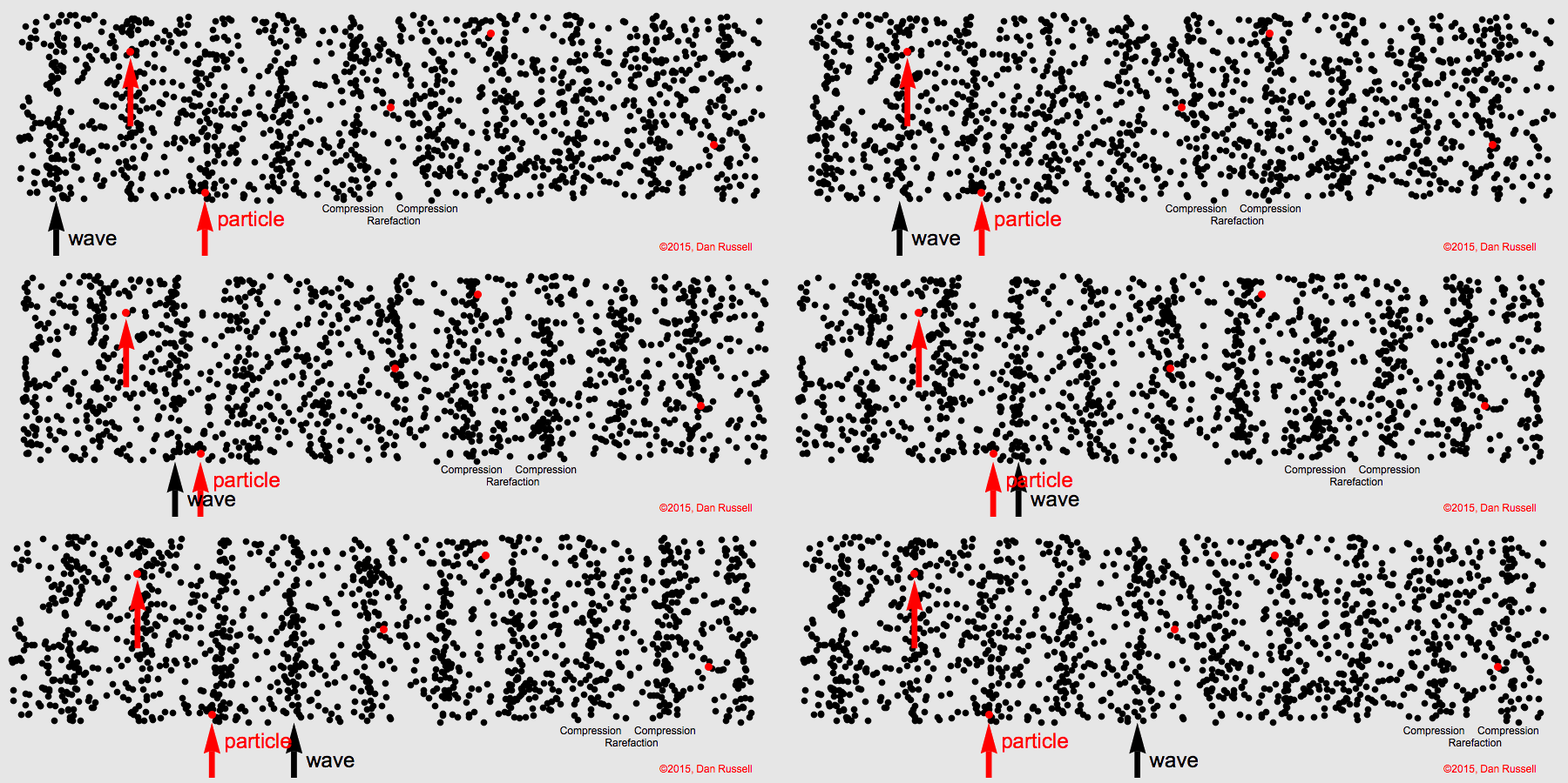
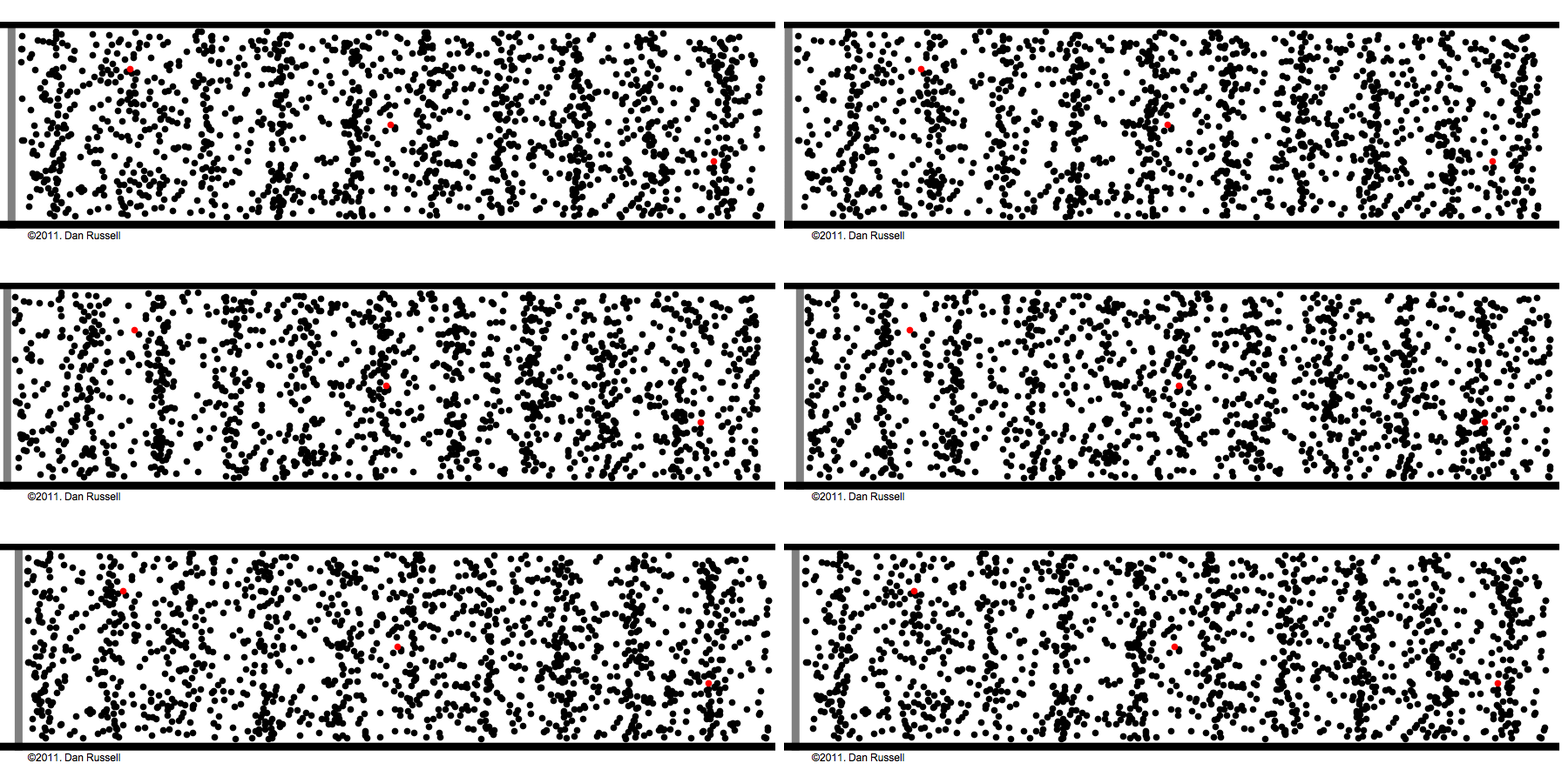
In a longitudinal wave the particle displacement and movement is parallel to the direction of wave propagation. The animation below shows a one-dimensional longitudinal plane wave propagating (moving) down a tube. The particles do not move down the tube with the wave; they simply oscillate back and forth about their individual equilibrium positions. Pick a single particle and watch its motion. The wave is seen as the motion of the compressed region (ie, it is a pressure wave), which moves from left to right.

The second animation below shows the difference between the oscillatory (back-and-forth) motion of individual particles and the propagation (movement) of the wave through the medium. The animation also identifies the regions of compression and rarefaction.


The P waves (Primary waves) in an earthquake are examples of Longitudinal waves. The P waves travel with the fastest velocity and are the first to arrive.

To see a animations of spherical longitudinal waves check out:

  • Sound Radiation from Simple Sources

  • Radiation from Cylindrical Sources

1
Asemmisa {{asɛmmisaAhyɛnsode}}
1a.

Look at the animations of longitudinal waves above.

What happens to the particles of matter (red dot) as the waves move through them?

Select all that apply.

1
1

Transverse Waves

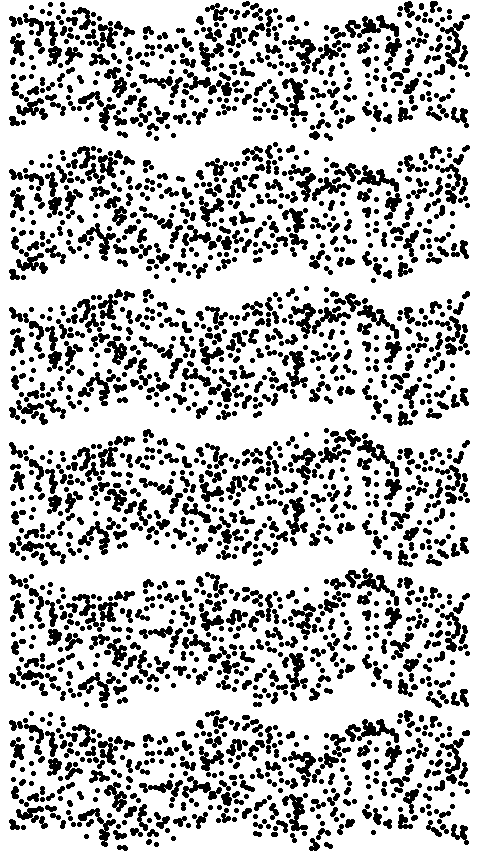
In a transverse wave the particle displacement (movement) is perpendicular to the direction of wave propagation. The animation below shows a one-dimensional transverse plane wave propagating from left to right. The particles do not move along with the wave; they simply oscillate (move) up and down about their individual equilibrium positions as the wave passes by. Pick a single particle and watch its motion.

The S waves (Secondary waves) in an earthquake are examples of Transverse waves. S waves propagate (move) with a velocity slower than P waves, arriving several seconds later.

1
Asemmisa {{asɛmmisaAhyɛnsode}}
2a.

Look at single particle (dot) in the animation of the transverse wave above.

What happens to the particles of matter as the waves move through them?

1
1

Water Waves

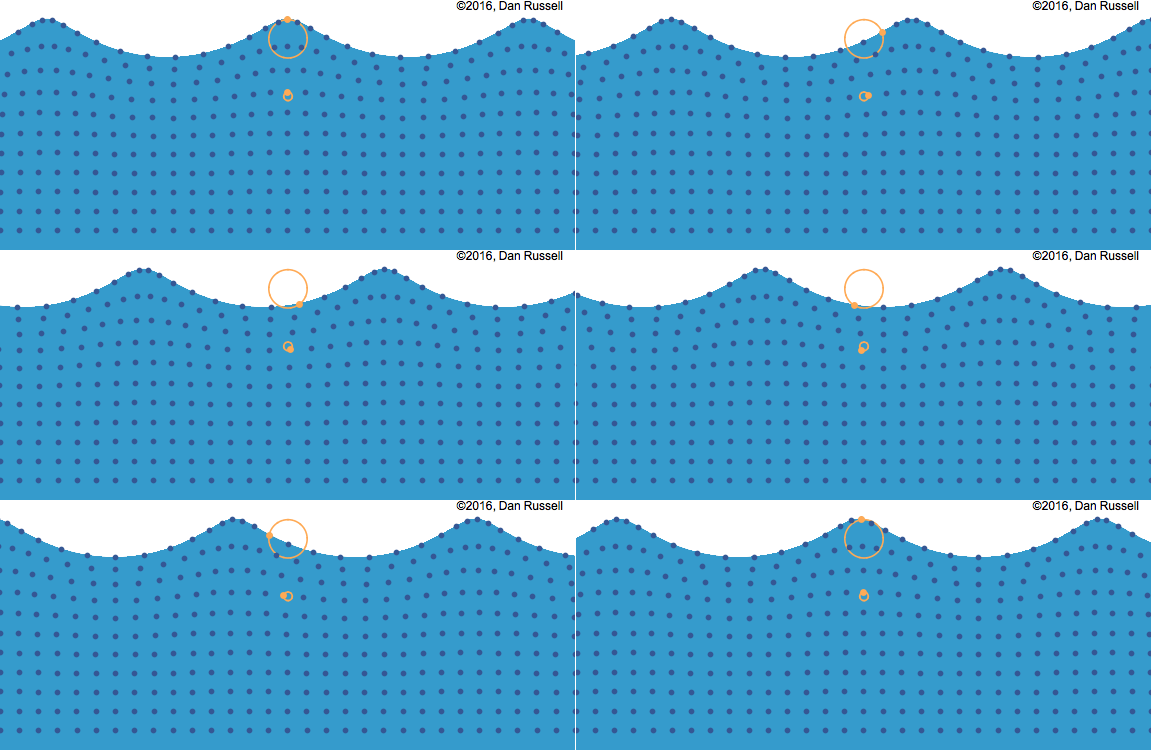
Water waves are an example of waves that involve a combination of both longitudinal and transverse motions. As a wave travels through the waver, the particles travel in clockwise circles. The radius of the circles decreases as the depth into the water increases. The animation at right shows a water wave travelling from left to right in a region where the depth of the water is greater than the wavelength of the waves. I have identified two particles in orange to show that each particle indeed travels in a clockwise circle as the wave passes.

1
Asemmisa {{asɛmmisaAhyɛnsode}}
3a.

Look at the animation of the water wave above.

If you were on a surf board in the ocean, how would you move in relation to the wave?

Select all that apply.

5
Asemmisa {{asɛmmisaAhyɛnsode}}
3b.

1
Asemmisa {{asɛmmisaAhyɛnsode}}
4a.

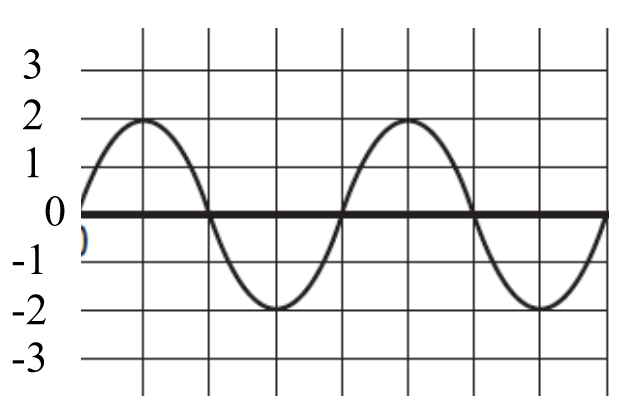
What is the wavelength (in m) of the wave above?

1

Electromagnetic Spectrum

In physical science, we often talk about waves like sound or water ripples, but there's a special family of waves that can travel through empty space: electromagnetic (EM) waves. These waves make up the electromagnetic spectrum, a continuous range of waves ordered by their properties. From radio signals powering your phone to gamma rays used in medicine, EM waves are everywhere and all behave like transverse waves.

What Makes EM Waves Special?

EM waves are created by vibrating electric and magnetic fields that are perpendicular to each other and to the direction the wave travels. Unlike sound waves, which need air or water to move, EM waves don't require a medium—they zip through vacuum at a constant speed of 3 × 10⁸ m/s (the speed of light, c).

The key wave properties that define EM waves are:

  • Wavelength (λ): The distance between two peaks of the wave (measured in meters).

  • Frequency (f): The number of wave cycles per second (measured in hertz, Hz).

  • Speed: Always c = f × λ in vacuum. Higher frequency means shorter wavelength, and vice versa.

This diagram shows the EM spectrum from longest wavelengths (lowest energy) on the left to shortest (highest energy) on the right. Visible light is just a tiny slice in the middle.

The EM Spectrum: From Radio to Gamma Rays

The spectrum arranges EM waves by decreasing wavelength (or increasing frequency and energy).

Electromagnetic Spectrum Visualization Illustration vector

Type

Wavelength Range

Frequency Range

Everyday Example

Radio

>1 mm

<300 GHz

AM/FM radio, Wi-Fi

Microwave

1 mm–1 m

300 GHz–300 MHz

Microwave ovens, radar

Infrared

700 nm–1 mm

430 THz–300 GHz

Heat lamps, remote controls

Visible

400–700 nm

750–430 THz

Colors we see (red to violet)

Ultraviolet

10–400 nm

30 PHz–750 THz

Sunburns, black lights

X-ray

0.01–10 nm

30 EHz–30 PHz

Medical X-rays

Gamma Ray

<0.01 nm

>30 EHz

Cancer treatment, nuclear reactions

As you move rightward, waves carry more energy (E = hf, where h is Planck's constant), making shorter waves more penetrating or dangerous.

3
Asemmisa {{asɛmmisaAhyɛnsode}}
5a.

a.) Which EM wave has the largest wavelength?

b.) Which EM wave has the smallest wavelength?

c.) Which EM wave has a frequency immediately lower than red visible light?

d.) Which type of EM wave has a fequency immediatly higher than violet visible light?

4
Asemmisa {{asɛmmisaAhyɛnsode}}
5b.

Order the waves of the EM spectrum from the lowest frequency to the highest frequency.

  1. infrared

  2. visible light

  3. microwave

  4. x-ray

  5. gamma

  6. ultraviolet

  7. radio

Exploring the Electromagnetic Spectrum: Waves of Energy in Our World

What Is the Electromagnetic Spectrum?

The electromagnetic spectrum is the complete range of electromagnetic radiation—all the different types of energy waves produced by vibrating electric and magnetic fields. These waves travel at the speed of light (about 300,000 km/s in empty space) and differ mainly in their wavelength (distance between wave peaks) and frequency (how many waves pass a point per second). Longer wavelengths have lower frequencies and less energy, while shorter wavelengths pack higher frequencies and more energy.

Electromagnetic radiation represents all these forms, from safe radio broadcasts to powerful gamma rays. Unlike sound waves, EM waves don't need air or water to travel—they can cross the vacuum of space!
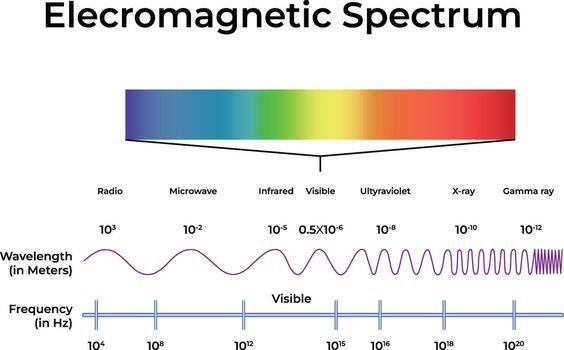
Electromagnetic Spectrum Visualization Illustration vector

Light: A Type of Electromagnetic Wave

Visible light is the narrow band of EM radiation our eyes can detect, but it's just one piece of the puzzle. Light is classified as electromagnetic radiation because electrical and magnetic fields vibrate in a light wave. These perpendicular fields create the wave's push-pull motion.

An example of this light is visible light, which comes in colors from red (longer wavelength) to violet (shorter). But there's more: infrared waves (radiant energy we feel as heat) sit just beyond red light.

Feeling the Invisible: Infrared Radiation

You can't see infrared radiation, also known as radiant energy, but you can feel it! Your eyes but can be felt by your skin—think of the warmth from a campfire or sunlight on a cold day. Infrared waves have wavelengths longer than visible light but shorter than microwaves, making them perfect for heat detection in night-vision goggles or TV remotes.

Microwaves and Radio Waves: Communication Champs

Microwaves are one type of electromagnetic radiation with wavelengths around centimeters. They can be used to communicate with satellites (like GPS or weather radar) and, famously, heat your food.

Radio waves, with even longer wavelengths (meters to kilometers), power AM/FM radios, cell phones, and TV signals. Compared to all other types of electromagnetic radiation, radio waves have the lowest frequency, which is why they're safe and travel far.

The High-Energy End: UV, X-Rays, and Gamma Rays

As wavelengths shorten, energy skyrockets:

  • Ultraviolet rays (UV rays): Shorter than violet light. An overexposure to ultraviolet rays can result in sunburns and skin cancer. They're why we slather on sunscreen!

  • X rays: Penetrate soft tissue to image bones. High wavelength? No—super short!

  • Gamma rays: Highest energy of all electromagnetic radiation. Because gamma rays have the highest energy of all electromagnetic radiation, they are the most damaging to human tissue—used to kill cancer cells but dangerous in high doses.

Everyday Examples and Safety Tips

  • Why does an empty plate not heat up in the microwave? Microwaves excite water molecules to create friction (heat). An empty glass or ceramic plate lacks water, so the waves pass right through without absorption—no heat!

  • Why should you use sunscreen and a hat when you are out in the Sun? The Sun blasts UV rays, which damage skin DNA, causing burns, premature aging, and cancer. Sunscreen absorbs/reflects UV; hats block it overhead.

Beyond the Basics: Wave Math and Real-World Tech

EM waves follow c = f × λ (c = speed of light, f = frequency, λ = wavelength). Example: FM radio (~100 MHz frequency) has ~3m wavelengths.

Ionizing vs. Non-Ionizing: High-energy waves (UV+) knock electrons off atoms (ionizing = DNA damage). Low-energy (radio, microwaves) just vibrate molecules (non-ionizing = safer).

Cool Applications:

  • Radio: Wireless internet.

  • IR: Thermometers, predator drones.

  • Microwaves: Speed radars.

  • UV: Water purification.

  • X-rays: Dentistry/security scans.

  • Gamma: Food irradiation (kills bacteria).

Spectrum Visualization:

  • Lowest frequency/energy: Radio → Microwaves → IR → Visible → UV → X-rays → Gamma (highest).

5
1
5
1
1
1
1
1
1
1
1
Asemmisa {{asɛmmisaAhyɛnsode}}
1b.

The P-waves move fastest and arrive first.

Asemmisa {{asɛmmisaAhyɛnsode}}
1c.

In a longitutinal wave, the particles move to the direction of the wave.

Asemmisa {{asɛmmisaAhyɛnsode}}
2b.

In a transverse wave the particles move to the direction of the wave.

Asemmisa {{asɛmmisaAhyɛnsode}}
2c.

The S-waves move fastest and arrive first.

a. Water waves demonstrate a mix of and particle motion.


b. As a water wave moves forward, water particles trace paths.


c. The size of the circular paths gets smaller with greater into the water.


d. In deep water (where depth exceeds wavelength), particles move in circles as the wave passes.

Asemmisa {{asɛmmisaAhyɛnsode}}
4b.

What is the amplitude (in m) of the wave above?

Asemmisa {{asɛmmisaAhyɛnsode}}
6a.

Use the reading (above) to help you answer the drag and drop questions, below. Some of the answers may be used more than once.

a.) The represents the different forms of electromagnetic radiation.

b.) Light is classified as because electrical and magnetic fields vibrate in a light wave.

c.) is energy that travels by radiation. An example of this light is.

d.) Heat radiation, also known as , cannot be seen by your eyes but can be felt by your skin.

e.) Microwaves are one type of .

f.) can be used to communicate with satellites.

g.) Because have the highest energy of all electromagnetic radiation, they are the most damaging to human tissue.

h.) Compared to all other types of electromagnetic radiation, radio waves have the lowest .

i.) An overexposure to may result to sunburns and some types of skin cancers.

Mmuae Afoforo a Wobɛpaw:

Ultraviolet rays

Gamma rays

Electromagnetic radiation

Visible light

Radio waves

Electromagnetic spectrum

Frequency

Wavelength

Radiant energy

X-rays

Microwaves

Infrared waves

Asemmisa {{asɛmmisaAhyɛnsode}}
6b.

Why does an empty plate not heat up in the microwave? Choose the best answer.

Exploring the Electromagnetic Spectrum: Waves of Energy in Our World

What Is the Electromagnetic Spectrum?

The electromagnetic spectrum is the complete range of electromagnetic radiation—all the different types of energy waves produced by vibrating electric and magnetic fields. These waves travel at the speed of light (about 300,000 km/s in empty space) and differ mainly in their wavelength (distance between wave peaks) and frequency (how many waves pass a point per second). Longer wavelengths have lower frequencies and less energy, while shorter wavelengths pack higher frequencies and more energy.

Electromagnetic radiation represents all these forms, from safe radio broadcasts to powerful gamma rays. Unlike sound waves, EM waves don't need air or water to travel—they can cross the vacuum of space!

Electromagnetic Spectrum Visualization Illustration vector

Light: A Type of Electromagnetic Wave

Visible light is the narrow band of EM radiation our eyes can detect, but it's just one piece of the puzzle. Light is classified as electromagnetic radiation because electrical and magnetic fields vibrate in a light wave. These perpendicular fields create the wave's push-pull motion.

An example of this light is visible light, which comes in colors from red (longer wavelength) to violet (shorter). But there's more: infrared waves (radiant energy we feel as heat) sit just beyond red light.

Feeling the Invisible: Infrared Radiation

You can't see infrared radiation, also known as radiant energy, but you can feel it! Your eyes but can be felt by your skin—think of the warmth from a campfire or sunlight on a cold day. Infrared waves have wavelengths longer than visible light but shorter than microwaves, making them perfect for heat detection in night-vision goggles or TV remotes.

Microwaves and Radio Waves: Communication Champs

Microwaves are one type of electromagnetic radiation with wavelengths around centimeters. They can be used to communicate with satellites (like GPS or weather radar) and, famously, heat your food.

Radio waves, with even longer wavelengths (meters to kilometers), power AM/FM radios, cell phones, and TV signals. Compared to all other types of electromagnetic radiation, radio waves have the lowest frequency, which is why they're safe and travel far.

The High-Energy End: UV, X-Rays, and Gamma Rays

As wavelengths shorten, energy skyrockets:

  • Ultraviolet rays (UV rays): Shorter than violet light. An overexposure to ultraviolet rays can result in sunburns and skin cancer. They're why we slather on sunscreen!

  • X rays: Penetrate soft tissue to image bones. High wavelength? No—super short!

  • Gamma rays: Highest energy of all electromagnetic radiation. Because gamma rays have the highest energy of all electromagnetic radiation, they are the most damaging to human tissue—used to kill cancer cells but dangerous in high doses.

Everyday Examples and Safety Tips

  • Why does an empty plate not heat up in the microwave? Microwaves excite water molecules to create friction (heat). An empty glass or ceramic plate lacks water, so the waves pass right through without absorption—no heat!

  • Why should you use sunscreen and a hat when you are out in the Sun? The Sun blasts UV rays, which damage skin DNA, causing burns, premature aging, and cancer. Sunscreen absorbs/reflects UV; hats block it overhead.

Beyond the Basics: Wave Math and Real-World Tech

EM waves follow c = f × λ (c = speed of light, f = frequency, λ = wavelength). Example: FM radio (~100 MHz frequency) has ~3m wavelengths.

Ionizing vs. Non-Ionizing: High-energy waves (UV+) knock electrons off atoms (ionizing = DNA damage). Low-energy (radio, microwaves) just vibrate molecules (non-ionizing = safer).

Here's how specific EM waves are applied in technology and medicine:

  • X-ray: Examining the inside of a weld in a steel oil pipe (reveals hidden flaws).

  • Microwave: Cell phone (wireless communication signals).

  • Gamma rays: Used by a physician who studies and treats cancer (precise tumor destruction).

  • Radio waves: TV broadcast signals (long-distance transmission).

  • Infrared waves: Lamp used to warm a baby chick (gentle heat therapy).

  • Ultraviolet waves: In a hospital to keep surgical equipment sterile (kills microbes).

  • Radar (microwaves): Measuring the speed of a passing car (Doppler shift detection).

Cool Applications Expanded:

  • Radio: Wireless internet, aviation navigation.

  • IR: Thermometers, military night vision.

  • Microwaves: Speed radars, satellite TV.

  • UV: Water purification, fluorescent black lights.

  • X-rays: Dentistry, airport baggage scanners.

  • Gamma: Food irradiation (extends shelf life by killing bacteria).

Spectrum Visualization:
  • Lowest frequency/energy: Radio → Microwaves → IR → Visible → UV → X-rays → Gamma (highest).

Asemmisa {{asɛmmisaAhyɛnsode}}
7a.

Match the kind of electromagnetic radiation to the likely use in technology.

Draggable itemarrow_right_altCorresponding Item

radar

arrow_right_alt

Examining the inside of a weld in a steel oil pipe

X-ray

arrow_right_alt

Cell phone

radio waves

arrow_right_alt

Used by a physician who studies and treats cancer

ultraviolet waves

arrow_right_alt

TV broadcast signals

gamma rays

arrow_right_alt

Lamp used to warm a baby chick

microwave

arrow_right_alt

In a hospital to keep surgical equipment sterile

infrared waves

arrow_right_alt

measuring the speed of a passing car.

Asemmisa {{asɛmmisaAhyɛnsode}}
7b.

Radiant energy spreads out rom its source in all directions.

Asemmisa {{asɛmmisaAhyɛnsode}}
7c.

Electromagnetic radiation includes only visible light waves.

Asemmisa {{asɛmmisaAhyɛnsode}}
7d.

Microwaves are a type of infrared wave.

Asemmisa {{asɛmmisaAhyɛnsode}}
7e.

X-rays have more energy than gamma rays.

Asemmisa {{asɛmmisaAhyɛnsode}}
7f.

Radio waves, microwaves and infrared waves all have longer wavelengths than visible light.

Asemmisa {{asɛmmisaAhyɛnsode}}
7g.

Both x-rays and gamma rays have higher frequencies than ultraviolet rays.

Asemmisa {{asɛmmisaAhyɛnsode}}
7h.

The sun radiates both visible light and invisible energy.

Asemmisa {{asɛmmisaAhyɛnsode}}
7i.

Communicating with satellites is an application of gamma rays.