Twa kɔ nsɛm atitiriw so
Log in
Sign up for FREE
arrow_back
Laabri

Copy of Cells Virtual Lab (5/28/2026)

star
star
star
star
star
Last updated about 1 month ago
29 Nsɛmmisa
Hyɛ no nsow a efi ɔkyerɛwfo no hɔ:
Part 1 - Elodea (Anacharis) Cells
Part 2 - Cork Cells
Part 3 - Onion Cells
Part 4 - Tomato Cells
Part 5 - Human Epithelial Cells
Part 6 - Frog Red Blood Cells vs. Human Red Blood Cells
1
1

Use your Cell Structure and Function Note-Taking Sheet (search your Google drive) as well as the extra diagrams shared by Mr. Poe (see the link below) to help you will this activity.

Note: the questions will not tell you if you are correct. After you submit it, I will tell you which ones are correct (please ask me), then go back and correct your errors. Once you score an 80% or higher, you are done.

Extra Diagrams - https://docs.google.com/document/d/1e66xoL8JUrXnrwTlriSTUkLh0jUSrK7iJg5Yz6RVIEY/edit?usp=sharing

Use your Cell Structure and Function Note-Taking Sheet (search your Google drive) as well as the extra diagrams shared by Mr. Poe (see the link below) to help you will this activity.

Note: the questions will not tell you if you are correct. After you submit it, I will tell you which ones are correct (please ask me), then go back and correct your errors. Once you score an 80% or higher, you are done.

Extra Diagrams - https://docs.google.com/document/d/1e66xoL8JUrXnrwTlriSTUkLh0jUSrK7iJg5Yz6RVIEY/edit?usp=sharing

Part 1 - Elodea (Anacharis) Cells

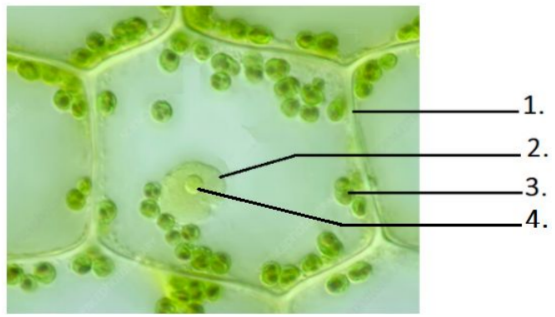
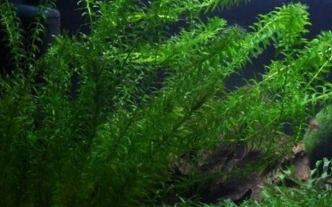
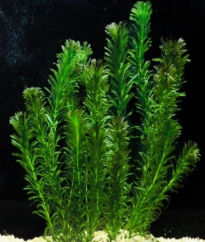
Elodea canadensis is sometimes called American/Canadian Waterweed. The Brazilian plant Egeria densa, (formerly referred to as, Elodea densa) is commonly used as an aquarium plant (although it is now illegal for sale in the state of Indiana as it has become an invasive plant in our lakes and ponds); it is also commonly used for demonstrating plant cellular structures — such as, chloroplasts — and for demonstrating oxygen production from photosynthesis.

Identify structures labeled 1-4 using the questions to the right.

1
1
1
1
Asemmisa {{asɛmmisaAhyɛnsode}}
4.

What is this structure?

Part 2: Cork Cells

In 1665, Robert Hooke used the first compound light microscope to view cork tissue. He identified empty box-like structures that he named, "cells," the first time that this term was used for this purpose. He viewed these cells by making an extremely thin slice of bottle cork and placing it under the objective of his microscope.
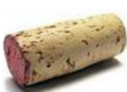
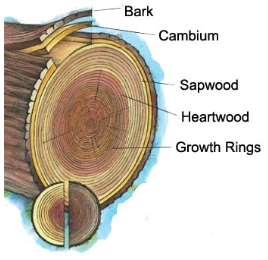
Cork that is used for bottles come primarily from the bark of the Cork Oak tree (Quercus suber) found in southwest Europe and northwest Africa. Use the image of cork cells at high magnification (100x) and the information above to help you answer the questions within this section.
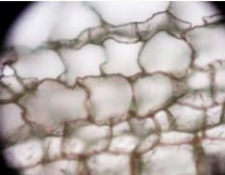
Secondary Cell Wall in Plants

The secondary cell wall plays a crucial role in the formation of wood in plants. Wood consists mainly of secondary cell walls, which are thicker and more rigid than primary cell walls. These additional layers are composed of cellulose, hemicellulose, and lignin, with lignin being a key component in xylem cell walls, particularly in trees.

Once cell growth ceases, the secondary cell wall is secreted between the plasma membrane and the primary cell wall. Although the secondary cell wall is incredibly sturdy, it can no longer undergo expansion. The material found in desks and tabletops consists of countless secondary cell walls. The cells that once inhabited these walls have died and broken down.

Mechanical Support

Secondary cell walls provide most of the plant’s mechanical support, enabling it to withstand gravity and maintain its structure. In contrast, primary walls are thinner and more flexible, allowing for cell expansion during growth. The rigidity and load-bearing capacity of secondary walls make them essential for the development of wood, which is a critical component of trees and other woody plants.

Wood Formation

In trees, the secondary cell walls of xylem tissues combine to form wood. The xylem vessels and fiber cells contain lignin, a complex network of phenolic compounds, which reinforces the cell walls and provides additional strength. This unique combination of cellulose, hemicellulose, and lignin gives wood its characteristic properties, including stiffness, strength, and resistance to decay.

Comparison to Primary Cell Walls

While primary cell walls are essential for cell growth and expansion, secondary cell walls are specialized for mechanical support and rigidity. In contrast to primary walls, which are thinner and more flexible, secondary walls are thicker and more rigid, allowing them to withstand the stresses and strains imposed by the plant’s environment.
1
1
Asemmisa {{asɛmmisaAhyɛnsode}}
6.

What cell structure do you observe in the microscopic image?

1
1
Asemmisa {{asɛmmisaAhyɛnsode}}
8.

Which layer of a tree does cork come from?

1

Part 3: Onion Bulb Epidermal Cells ("skin of the onion")

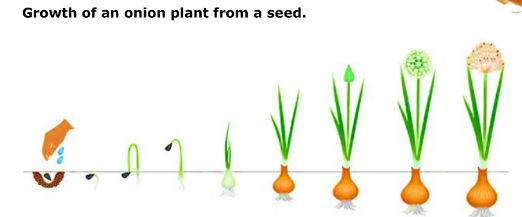
The onion, also known as the bulb onion or common onion, is a vegetable that is the most widely cultivated species of the genus Allium. It's closest relatives include the garlic, scallion, shallot, leek, and chive.

Onions contain sulphuric compounds that cause people to produce tears. They are high in antioxidants that may help to fight the symptoms of some diseases and they can help raise the levels of high-density lipoproteins (HDL) in the blood.

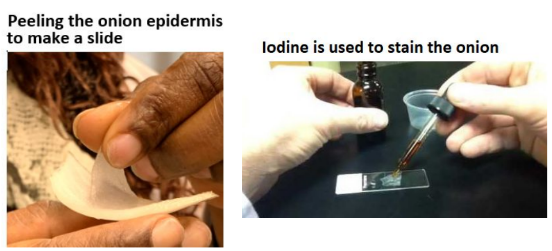
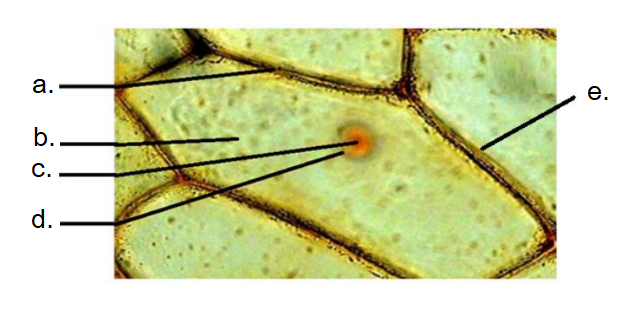
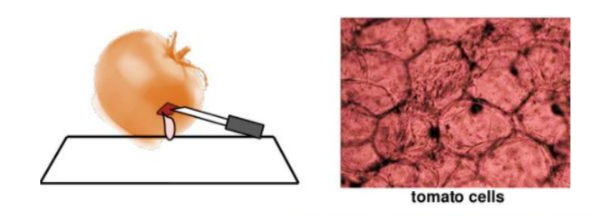
To view onion epidermal cells the following images below demonstrate the prep work involved.

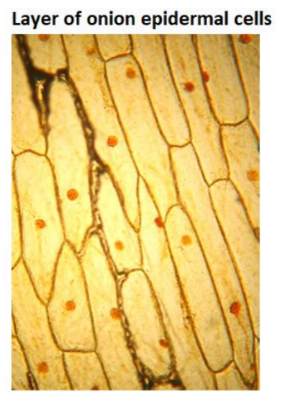
Identify the labeled structures in the cell below using the blanks to the right.

1
1
1
1
1
1
1

Tomato Pulp Cells

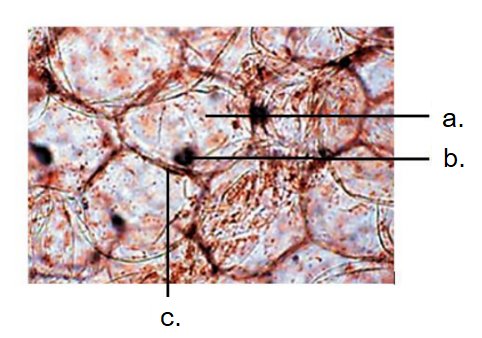
If a ripe tomato is cut open, the pulp can be allowed to drip onto a slide. After a cover slip is placed over the pulp, the tomato cells can be viewed with a microscope.

Identify the labeled structures in the cell below using the blanks to the right.

1
1
1
1
Asemmisa {{asɛmmisaAhyɛnsode}}
20.

Are the outermost layer of tomato pulp and onion epidermal cells similar?

Human Epithelial Cells

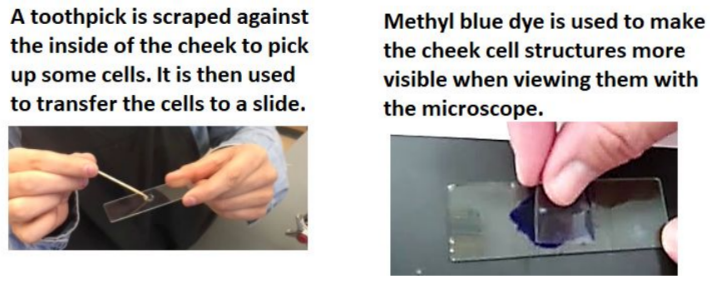
To view these cells, the slide is prepared in the following way:

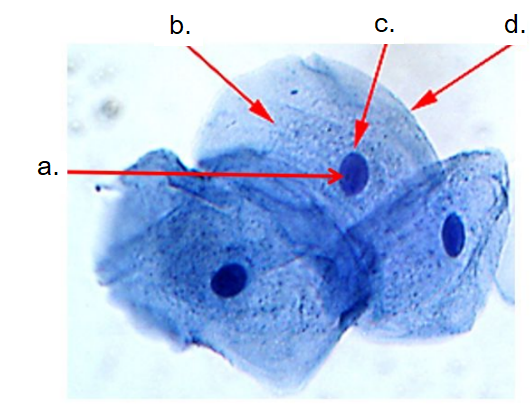
Identify the labeled structures in the cell below using the blanks to the right.

1
1
1
1
1
Asemmisa {{asɛmmisaAhyɛnsode}}
25.

Do human epithelial cells have a cell wall?

1

2
Asemmisa {{asɛmmisaAhyɛnsode}}
27.

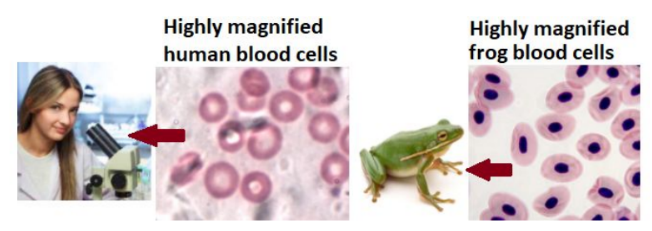
a. What structure is seen within frog red blood cells that is not seen in mature human red blood cells?

b. What is the outermost part of the frog and human blood cell?

Asemmisa {{asɛmmisaAhyɛnsode}}
28.

What image/footage did you you find to be the coolest/most interesting? You just need to describe something from the video - easy points here.

Asemmisa {{asɛmmisaAhyɛnsode}}
29.

What do you think was the grossest (or coolest) organism in this video and why? You just need to describe something from the video - easy points here.

Asemmisa {{asɛmmisaAhyɛnsode}}
1.

What is this structure?

Asemmisa {{asɛmmisaAhyɛnsode}}
2.

What is this structure?

Asemmisa {{asɛmmisaAhyɛnsode}}
3.

What is this structure?

Asemmisa {{asɛmmisaAhyɛnsode}}
5.

Which organelles are viewable inside of the cork cells?

Asemmisa {{asɛmmisaAhyɛnsode}}
7.

Did Robert Hooke view living cells?

Asemmisa {{asɛmmisaAhyɛnsode}}
9.

Which of the following best describes the relationship between the secondary cell wall and wood?

Asemmisa {{asɛmmisaAhyɛnsode}}
10.

Item a:

Asemmisa {{asɛmmisaAhyɛnsode}}
11.

Item b:

Asemmisa {{asɛmmisaAhyɛnsode}}
12.

Item c:

Asemmisa {{asɛmmisaAhyɛnsode}}
13.

Item d:

Asemmisa {{asɛmmisaAhyɛnsode}}
14.

Item e:

Asemmisa {{asɛmmisaAhyɛnsode}}
15.

Does an onion cell contain DNA?

Asemmisa {{asɛmmisaAhyɛnsode}}
16.

Notice that the onion root cells lack chloroplasts. Why is this?

Asemmisa {{asɛmmisaAhyɛnsode}}
17.

Item a:

Asemmisa {{asɛmmisaAhyɛnsode}}
18.

Item b:

Asemmisa {{asɛmmisaAhyɛnsode}}
19.

Item c:

Asemmisa {{asɛmmisaAhyɛnsode}}
21.

Item a:

Asemmisa {{asɛmmisaAhyɛnsode}}
22.

Item b:

Asemmisa {{asɛmmisaAhyɛnsode}}
23.

Item c:

Asemmisa {{asɛmmisaAhyɛnsode}}
24.

Item d:

Asemmisa {{asɛmmisaAhyɛnsode}}
26.

Do plants have a cell membrane?