Copy of Musculoskeletal System - Range of Motion (5/28/2026)
star
star
star
star
star
Last updated 3 months ago
11 Nsɛmmisa
4
1
1
1
1
1
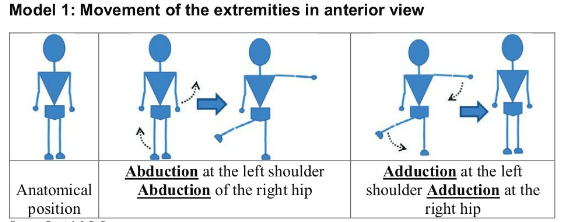
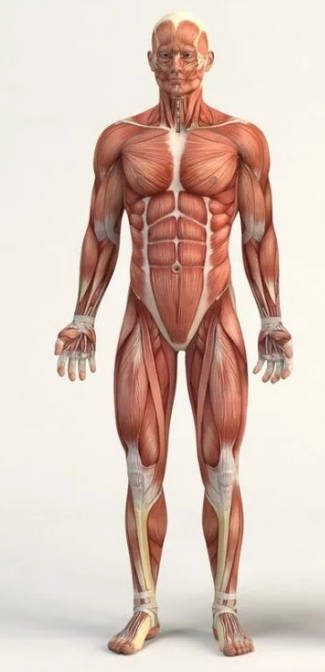
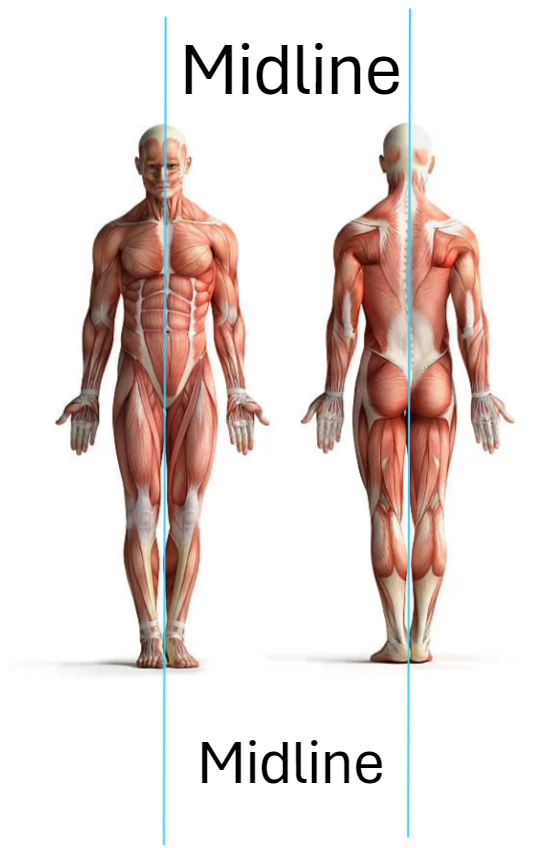
a. ) Based on the information in model 1, when the left upper extremity is abducted, is it moving toward or away from the body's midline?
b.) When the right hip is adducted, is it moving towards the midline of the body or away from it?
c.) Stand up and raise your left upper extremity to the side so that it is sticking straight out, parallel with the floor. Is that limb abducted or adducted?
d.) Which movement would you have to make in order to return your left upper extremity to its starting position?
e.) What exercise would you have performed if you stand straight, then simultaneously abduct all four extremities at the same time, then immediately adduct them back to their starting position?
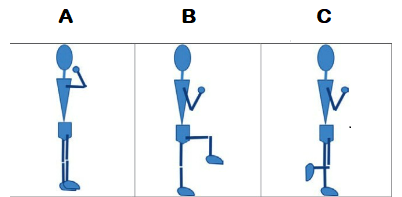
Select the joint on each image that is flexed; if no joints are flexed, do not select any. FYI - reading the descriptions of the joint mechanics below each might help you.
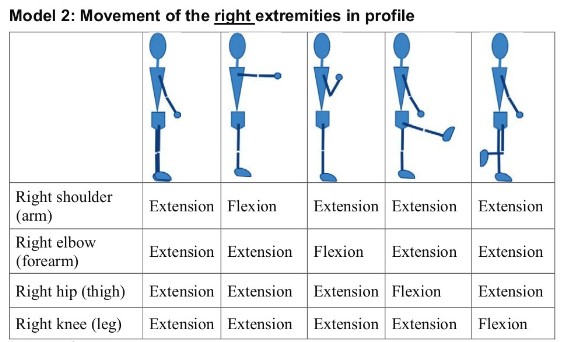
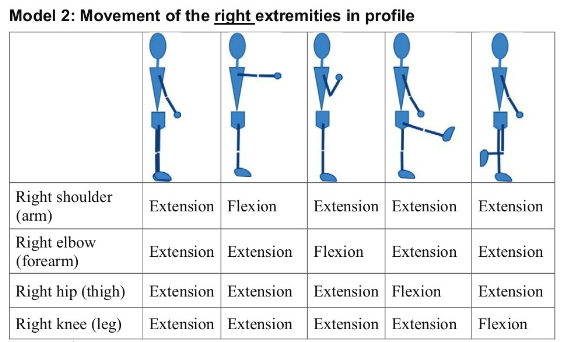
Use the same body mechanics terminology as in Model 2 (above) to help you determine the type of motion exhibited by each.
Right Shoulder (arm):
A.
B.
C.
Right Elbow (forearm):
A.
B.
C.
Right Hip (Thigh):
A.
B.
C.
Right Knee (Leg):
A.
B.
C.
Flexor digitorum muscle group
Adductor magnus muscle
Extensor indices muscle
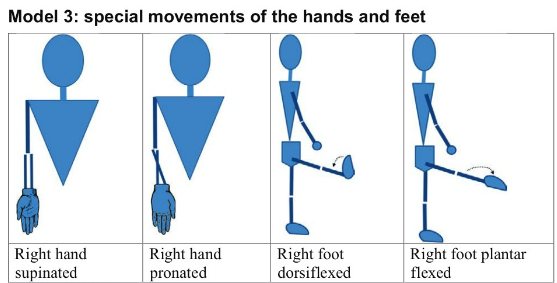
a.) When one is standing in an anatomical position, are the hands pronated or supinated?
b.) What hand motion would be commonly associated with looking at a wristwatch?
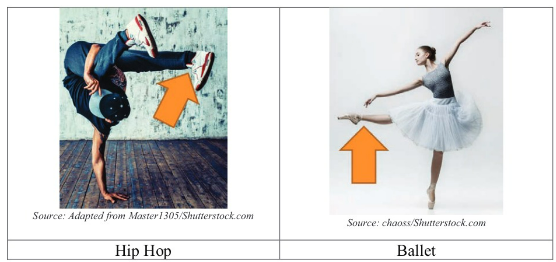
Notice the joints that have the yellow/orange arrow pointing at them. Which style of dance is associated with:
a.) Dorsiflexion
b.) Plantar Flexion
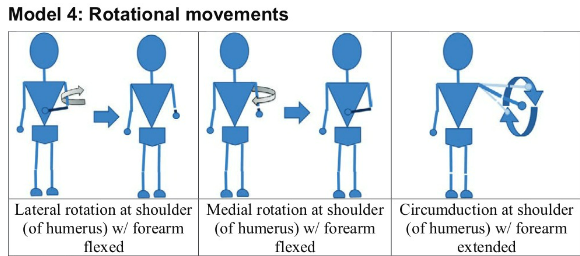
a.) According to the model, in which direction does medial rotation turn the extremity, towards or away from the midline?
b.) According to the model, in which direction does lateral rotation turn the extremity, towards or away from the midline?
Determine what medial and lateral rotation of the thigh (at the hip) would look like and briefly describe it using the word "midline" in your description (use the video, if needed).
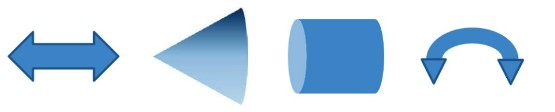
Select which of the following geometrical figures most closely resembles the path made by a joint undergoing circumduction?