Log in
Sign up for FREE
arrow_back
Library

Copy of Looking Inside Cells (5/28/2026)

star
star
star
star
star
Last updated about 2 hours ago
5 questions
Reading Questions and Organelle Identification
10
Exit Ticket
0
0
Use the reading to the left to help you answer the questions below - do not use any other source.
Question 1
1.
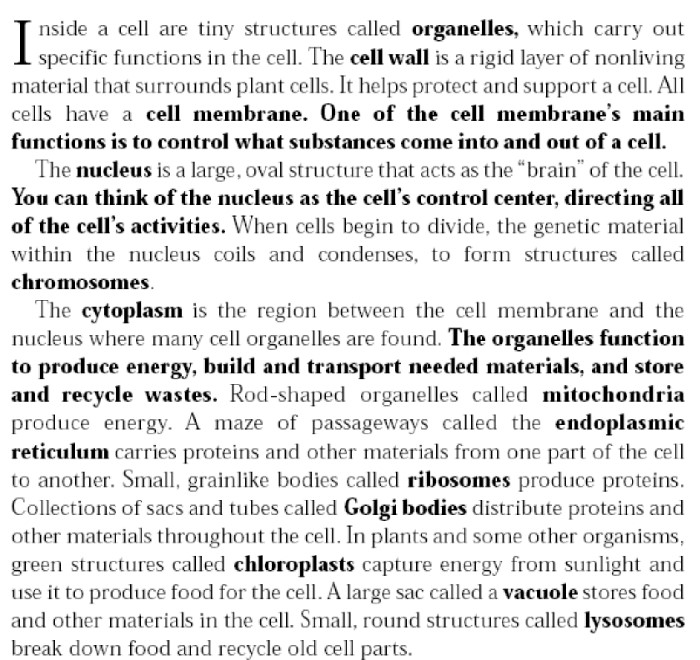
a.) _______ are tiny cellular structures that carry out specific functions within the cell.

b.) The rigid layer of nonliving material that surrounds plant cells is called the _______

c.) In cells without cell walls, the _______ forms the outside boundary that separates the cell from its environment.

d.) The region between the cell membrane and the nucleus is called the _______ .

e.) _______ produces the energy the cell needs to carry out its functions.

f.) _______ functions to produce proteins.

g.) _______ receive proteins and other newly formed materials and distribute them to other parts of the cell and to other cells.

h.) _______ capture energy from sunlight and use it to produce food for the cell.

i.) The storage area of a plant cell is called the _______ .

j.) _______ are small, round structures in cells that break down large particles into smaller ones.
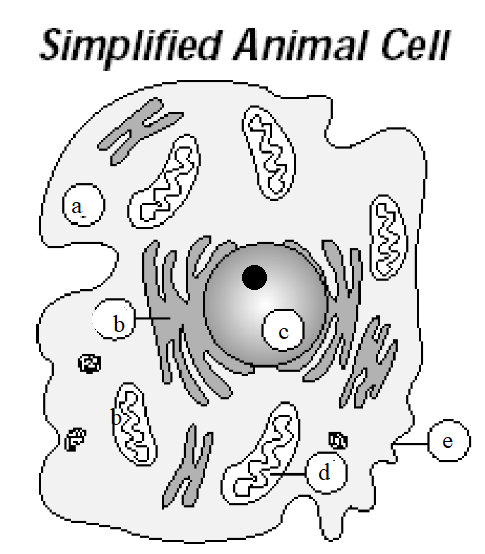
Use the animal cell model in your Cell Structure and Function Notes to help you with this section.
5
Use the reading to the left to help you answer the questions below - do not use any other source.
5
Question 3
3.
Question 4
4.

What part(s) of this concept is the most challenging for you?

Question 5
5.

Question 2
2.
Identify the labeled structures in the model to the left.

a.) _______
b.) _______
c.) _______
d.) _______
e.) _______
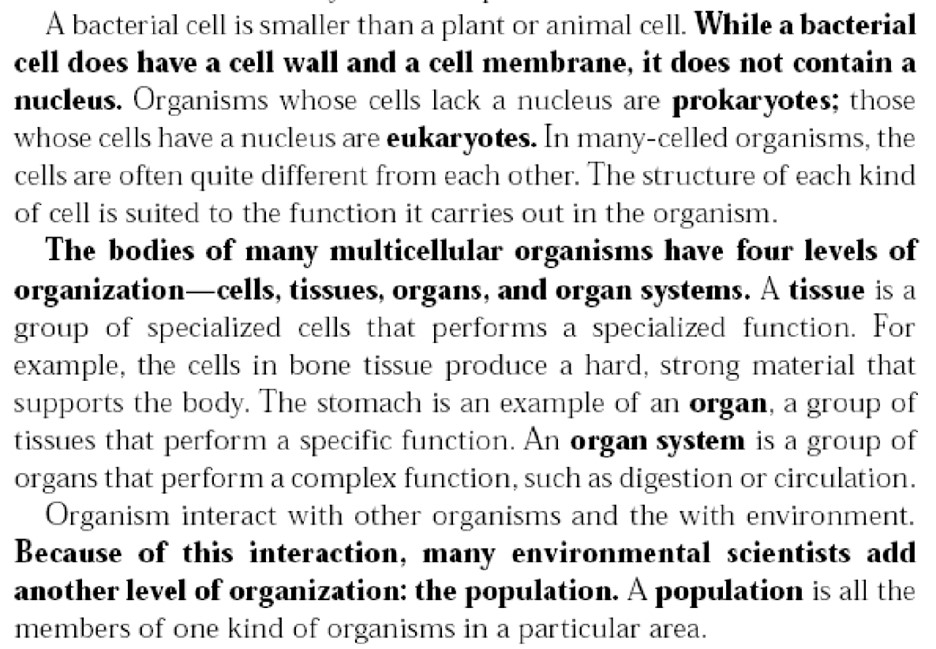
a.) Bacterial cells (prokaryotes) do not contain a _______ .

b.) Cells that do contain a nucleus are _______ .

c.) Regarding cells, their structure is directly related to the _______ that it performs.

d.) Within multicellular organisms, there are four levels of organization - organ systems, organs, tissue, and cells. Tissue is a made up of _______ that perform the same specialized function.

e.) A _______ is made up of different organs that contribute to the same task (e.g., digestion - stomach, small intestine, and large intestine).
After having completed this activity, how has your confidence regarding this concept changed?
Significantly Increased
Moderately Increased
Somewhat Increased
Not Changed
Somewhat Decreased
Moderately Decreased
Significantly Decreased