3
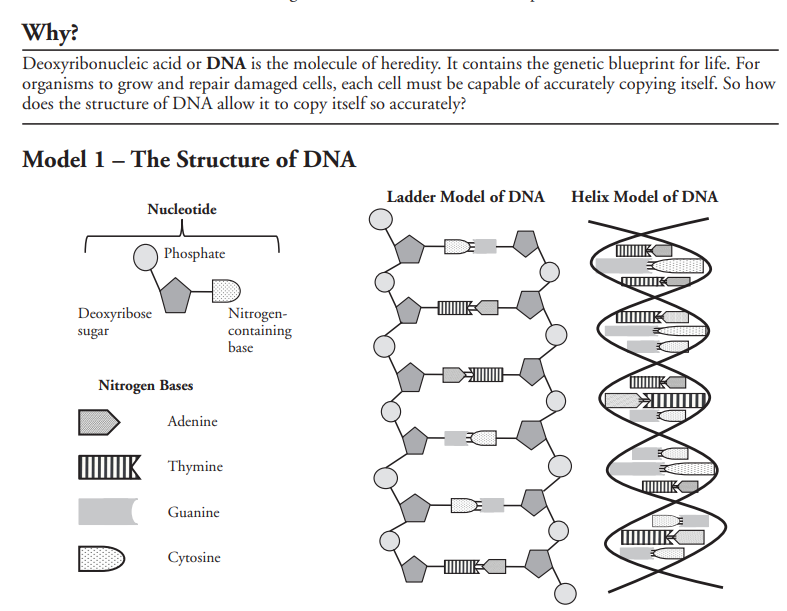
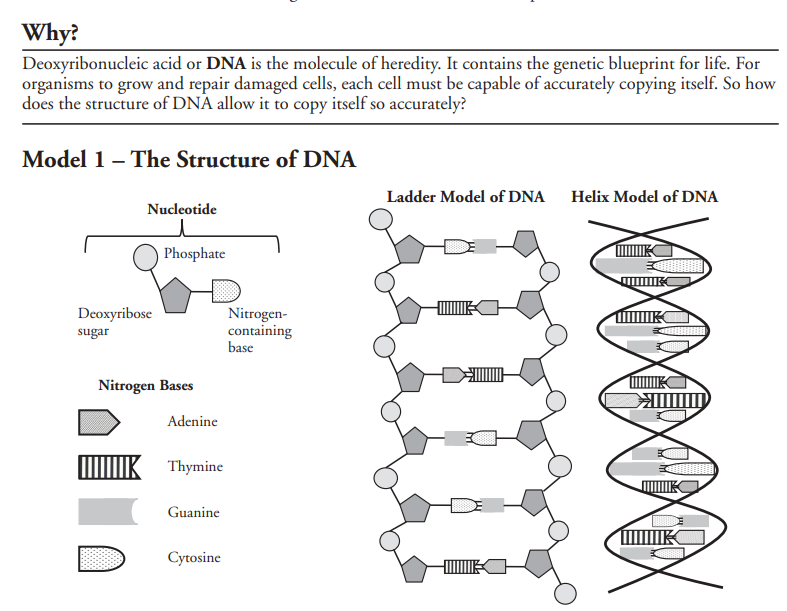
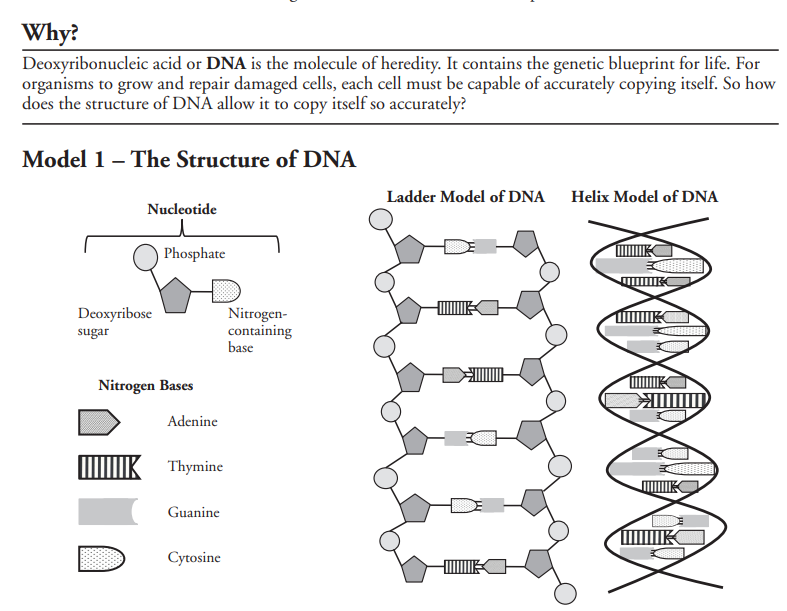
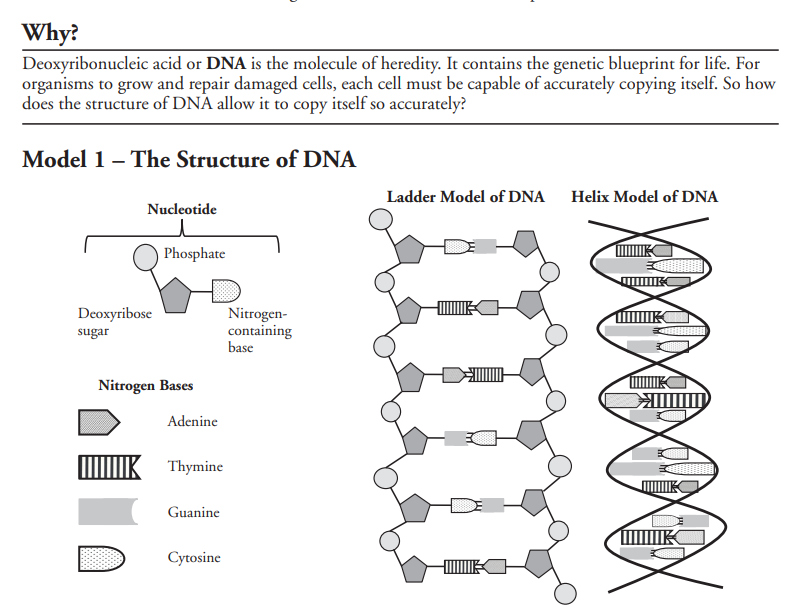
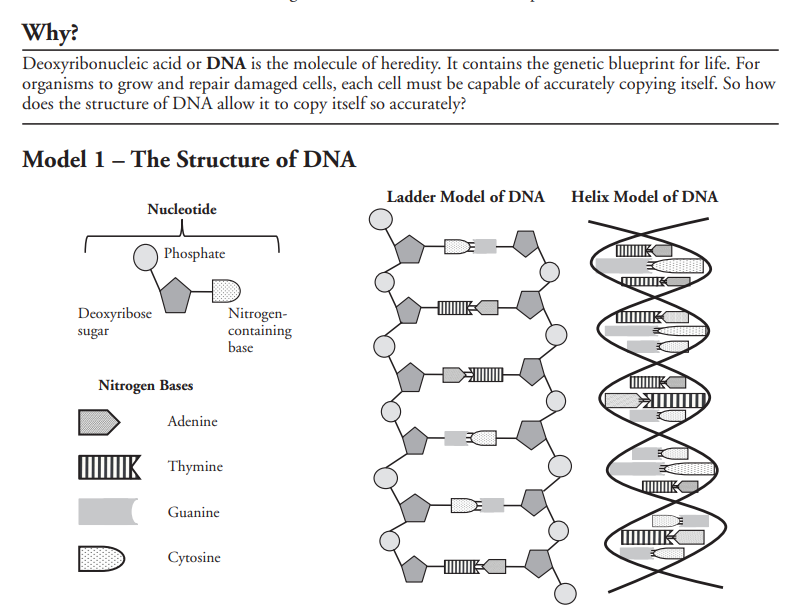
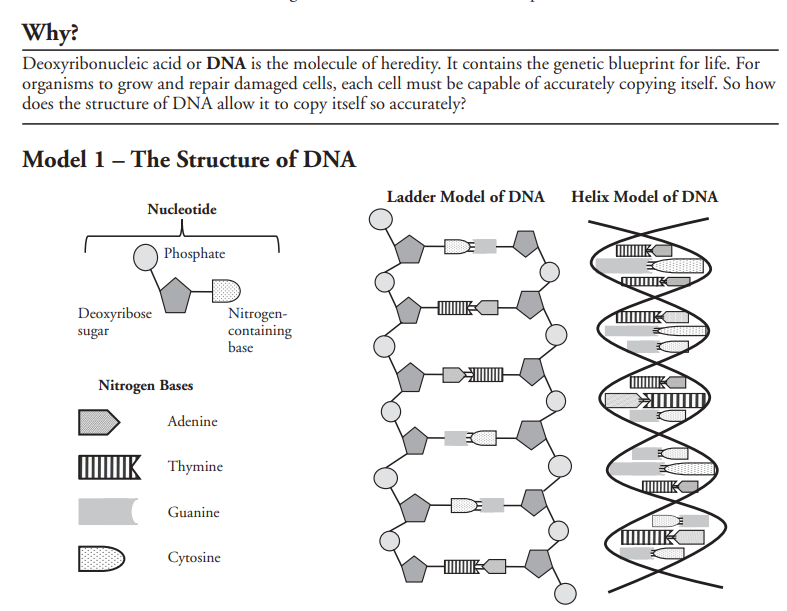
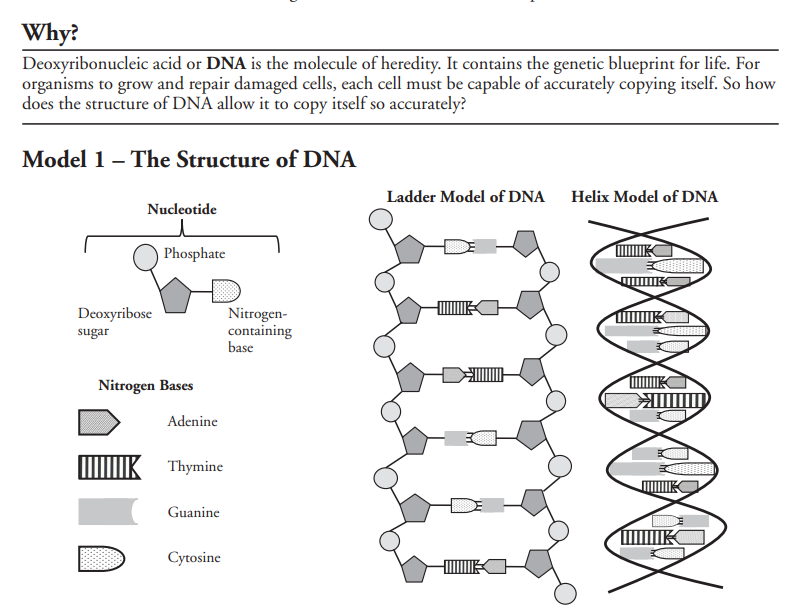
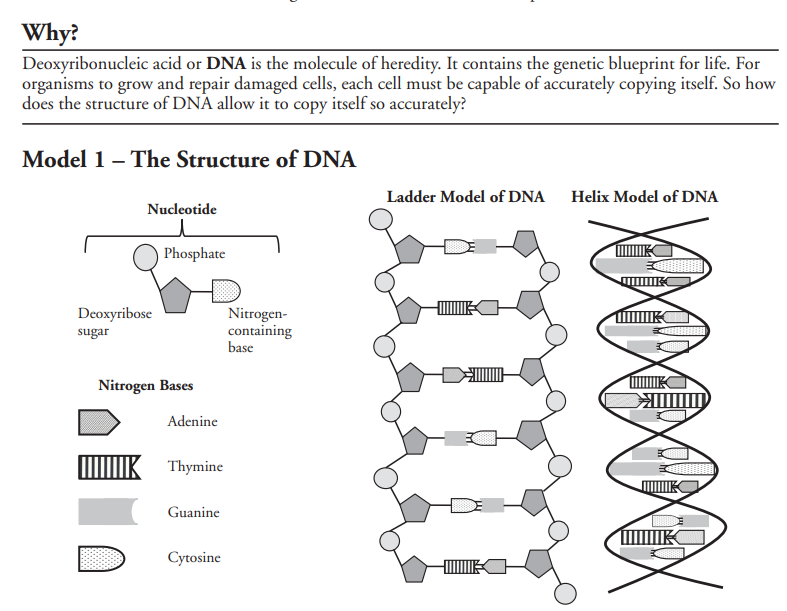
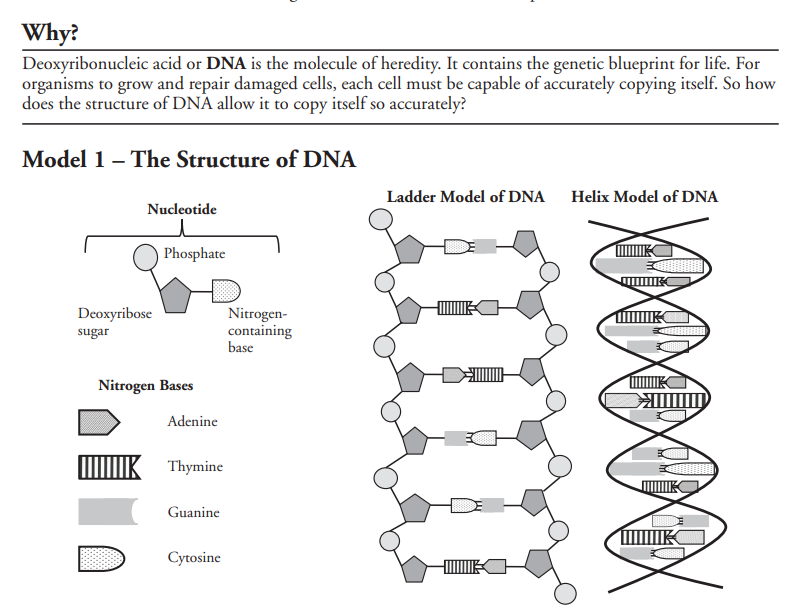
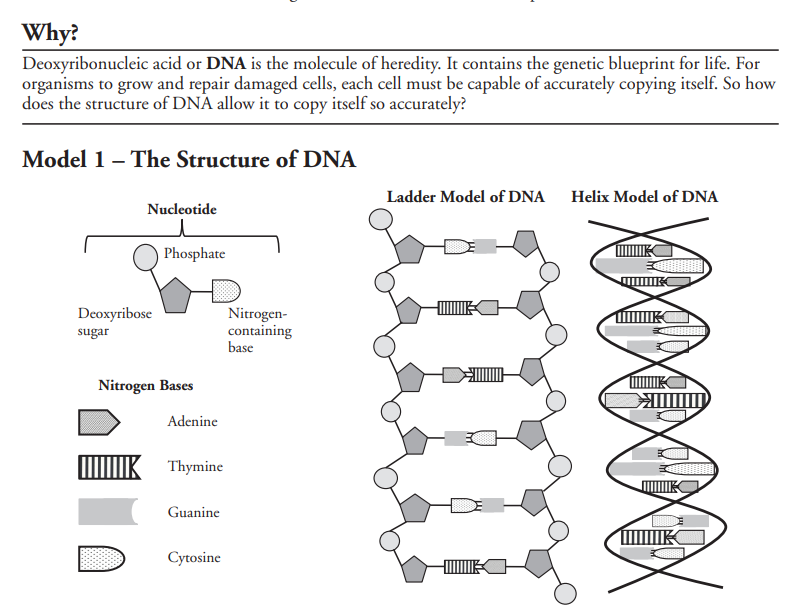
There are three parts of a nucleotide.
They are:
Learning Goals (I can...):
Describe the three components of a nucleotide.
Identify the four nitrogenous bases in DNA.
Describe the relationship of Chargaff's rules with complementary base pairing.
Provide a basic description of DNA replication.
Learning Goals (I can...):
Describe the three components of a nucleotide.
Identify the four nitrogenous bases in DNA.
Describe the relationship of Chargaff's rules with complementary base pairing.
Provide a basic description of DNA replication.
Reading Review:
What is the genetic material in the cell?
How did the reading describe the shape of DNA?
What are the four nitrogenous bases of DNA?
What does Chargaff's rules state?
There are three parts of a nucleotide.
They are:
The nucleotide contains a sugar (sugars end in "-ose"). What is it called?
Nitrogen is a component of one of the parts of a nucleotide; that part is...
The four nitrogen bases that may be contained in a nucleotide are:
DNA is frequently represented as a "ladder model." You can find this illustration in Model 1.
If this model were an actual ladder, which parts of the nucleotides form the rungs of the "ladder," where your hands and feet would be placed ?
Following the same ideas of question 5, what parts of the nucleotides make up the sides (backbone) of the “ladder”?
Examine the bottom and top of the Ladder Model of DNA in Model 1.
Do the sides of the DNA run:
Parallel (with each strand in the same direction); or...
Antiparallel (with each strand running in opposite directions)
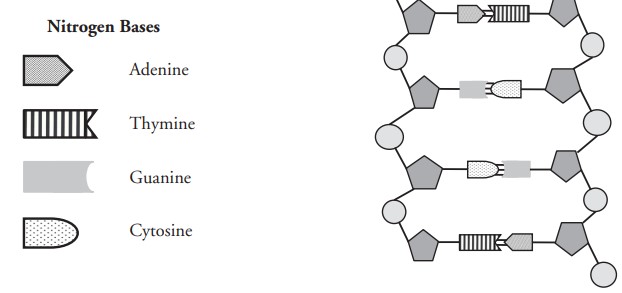
Identify the nitrogen base...
Just below #8
The base that is the answer to above is bonded to which other nitrogen base?
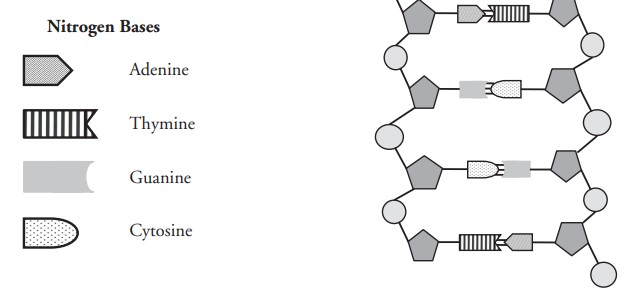
Identify the nitrogen base just below...
#9
The base that is the answer to above is bonded to which other nitrogen base?
Let’s restate the base-pairing rules using only abbreviations.
Fill in the blanks with the abbreviation of the base that each nitrogenous base will pair with.
A pairs with -
T pairs with -
G pairs with -
C pairs with -
Erwin Chargaff (1905–2002), an Austrian-American biochemist, studied the ratio of nucleotide bases in the DNA of various organisms. His findings, along with those of Rosalind Franklin and Maurice Wilkins, helped Watson and Crick formulate the complementary base-pairing rule while they raced to uncover the structure of DNA.
The complementary base-pairing rule states that adenine (A) pairs with thymine (T), and guanine (G) pairs with cytosine (C) across the two strands of DNA.
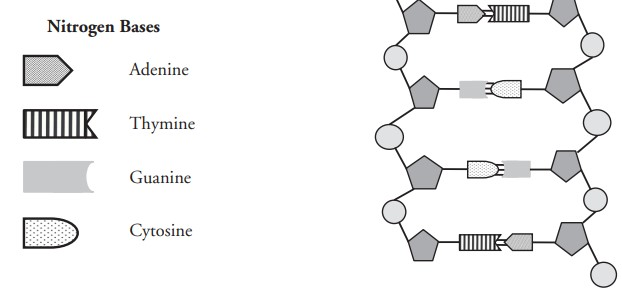
Fill in the complementary bases on the strand below based on the base-pairing rules.
A
T
C
C
A
G
The ladder model of DNA is a simplified version of the actual structure and shape of a DNA molecule. In reality, DNA strands form a double helix.
Refer to the Helix Model of DNA in Model 1 and describe its shape.
Erwin Chargaff (1905–2002), an Austrian-American biochemist, studied the ratio of nucleotide bases in the DNA of various organisms. His findings, along with those of Rosalind Franklin and Maurice Wilkins, helped Watson and Crick formulate the complementary base-pairing rule while they raced to uncover the structure of DNA.
The complementary base-pairing rule states that adenine (A) pairs with thymine (T), and guanine (G) pairs with cytosine (C) across the two strands of DNA.
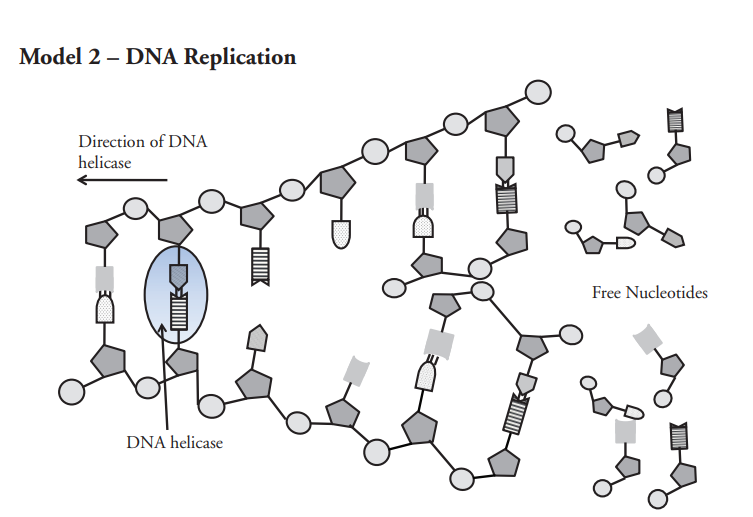
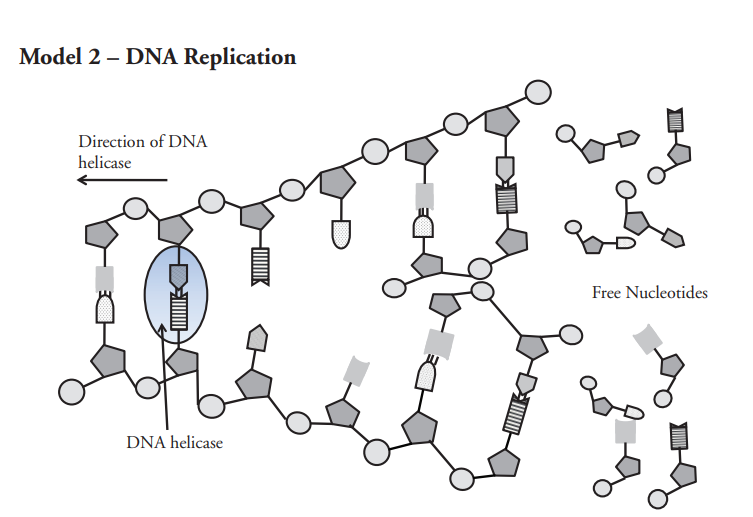
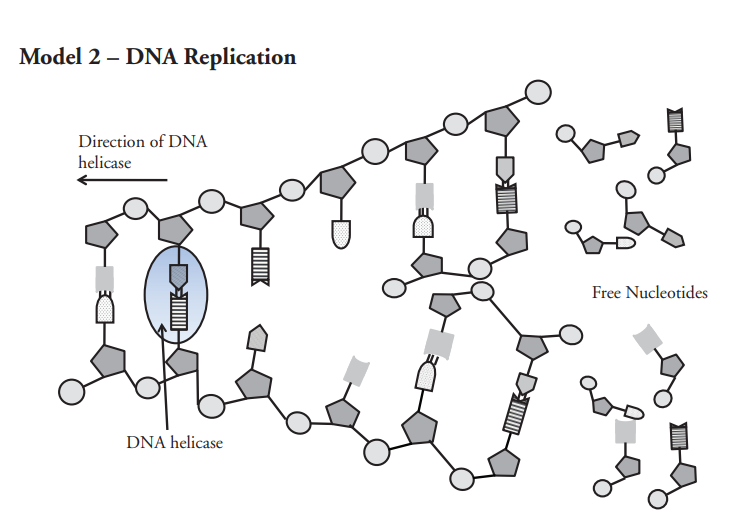
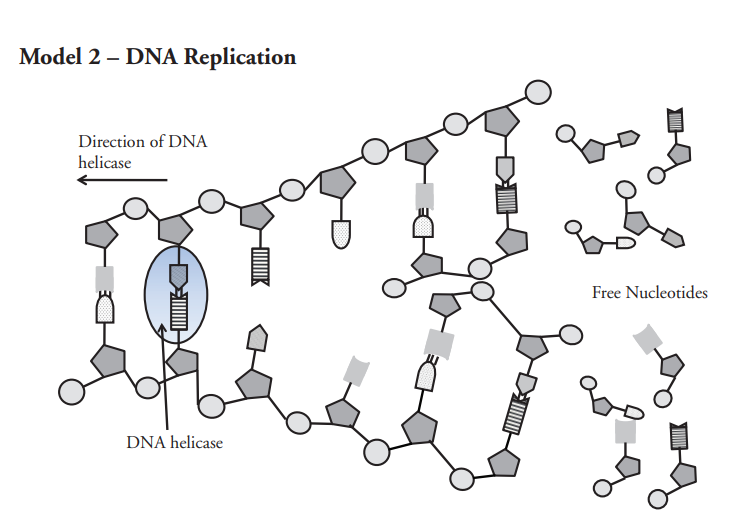
Use Model 2 to rearrange the steps below to accurately describe the process of DNA replication in a cell.
Free nucleotides are attracted to exposed bases on the loose strands of DNA.
Strands of DNA separate.
Hydrogen bonds between nucleotides form.
Hydrogen bonds between nucleotides break.
Read This!
Erwin Chargaff (1905–2002), an Austrian-American biochemist, investigated the ratio of nucleotide bases found in the DNA from a variety of organisms. From his research, as well as research by Rosalind Franklin and Maurice Wilkins, Watson and Crick developed the complementary base-pair rule during their race to discover the structure of DNA.
The complementary base-pair rule states that adenine and thymine form pairs across two strands, and guanine and cytosine form pairs across two strands.
Sugars usually end in -ose.
Enzymes usually end in -ase.
What type of molecule is DNA helicase?
Read This!
Erwin Chargaff (1905–2002), an Austrian-American biochemist, investigated the ratio of nucleotide bases found in the DNA from a variety of organisms. From his research, as well as research by Rosalind Franklin and Maurice Wilkins, Watson and Crick developed the complementary base-pair rule during their race to discover the structure of DNA.
The complementary base-pair rule states that adenine and thymine form pairs across two strands, and guanine and cytosine form pairs across two strands.
Using model 2, determine what DNA helicase does in the replication of DNA?
Read This!
Erwin Chargaff (1905–2002), an Austrian-American biochemist, investigated the ratio of nucleotide bases found in the DNA from a variety of organisms. From his research, as well as research by Rosalind Franklin and Maurice Wilkins, Watson and Crick developed the complementary base-pair rule during their race to discover the structure of DNA.
The complementary base-pair rule states that adenine and thymine form pairs across two strands, and guanine and cytosine form pairs across two strands.
What rule is used to govern the following:
The attachment of free nucleotides to the exposed bases of the DNA.
The pairing of nucleotides or bases.
Provide a list of one to two concepts/ideas that you learned or were introduced to in this activity.
After having completed this activity, my confidence regarding this concept has: