Copy of Food Chains and Webs; Energy Flow in Ecosystems Videos w/ Questions (5/28/2026)
You are able to attempt this up to four times - all of your correct answers will be saved.
Each video is approximately 5-7 minutes in length.
You need to watch and listen to each video very carefully and answer each question based on each video.
The video will pause to permit you to answer the questions to the right of each video.
You cannot scroll the video ahead, but you may scroll it backward.
When you are complete, submit your questions; then you can see your score. If you score below a 70% (17/25 or less), you should reattempt this.
Closed Captioning (unfortunately, it's not available for all videos; the video author would have had to added it before I embedded it here):
1. Click "play"
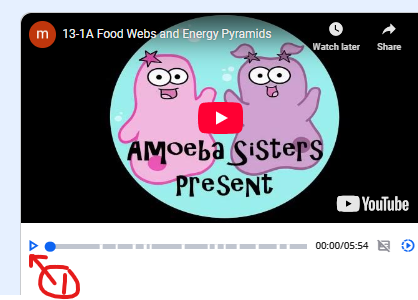
2. After the video starts, the "CC" button in the lower-right will be available - click on it.
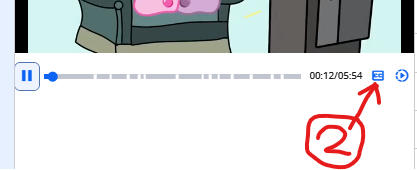
3. If closed captioning is available for the video (it's not available for the first one, but it is for the 2nd one), it will allow you to select the language you want to see (obviously, choose English).
You are able to attempt this up to four times - all of your correct answers will be saved.
Each video is approximately 5-7 minutes in length.
You need to watch and listen to each video very carefully and answer each question based on each video.
The video will pause to permit you to answer the questions to the right of each video.
You cannot scroll the video ahead, but you may scroll it backward.
When you are complete, submit your questions; then you can see your score. If you score below a 70% (17/25 or less), you should reattempt this.
Closed Captioning (unfortunately, it's not available for all videos; the video author would have had to added it before I embedded it here):
1. Click "play"
2. After the video starts, the "CC" button in the lower-right will be available - click on it.
3. If closed captioning is available for the video (it's not available for the first one, but it is for the 2nd one), it will allow you to select the language you want to see (obviously, choose English).