Copy of 7.) Models - Movement of Particles through a Membrane (5/28/2026)
star
star
star
star
star
Last updated 3 months ago
13 Nsɛmmisa
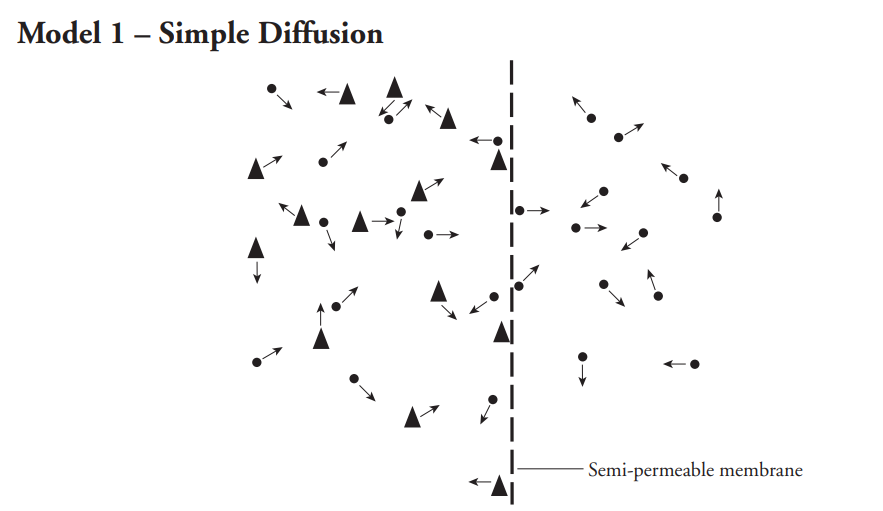
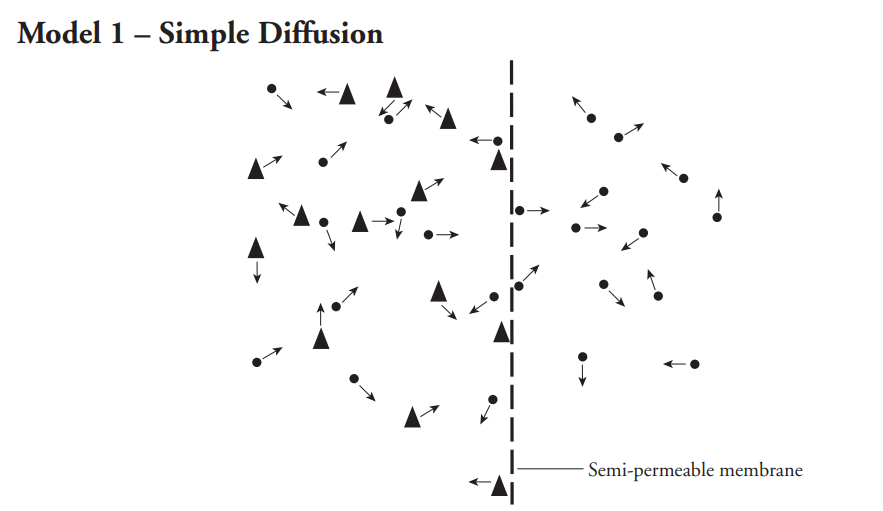
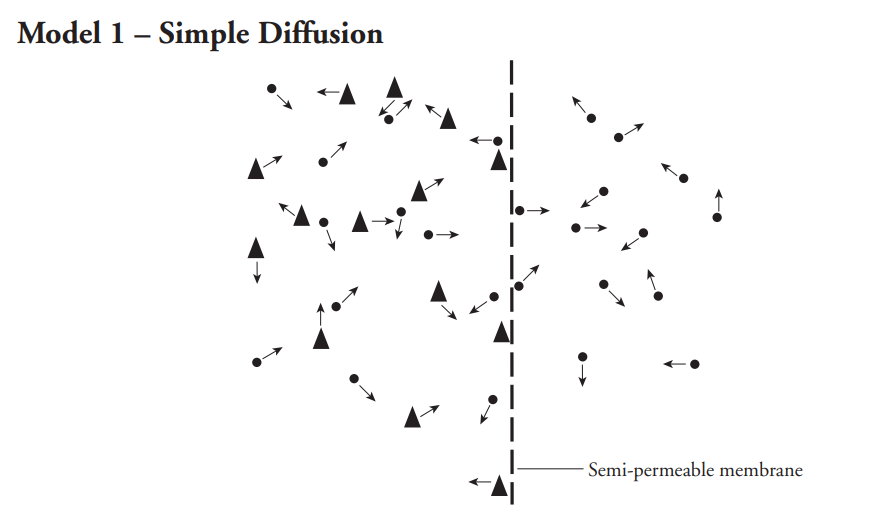
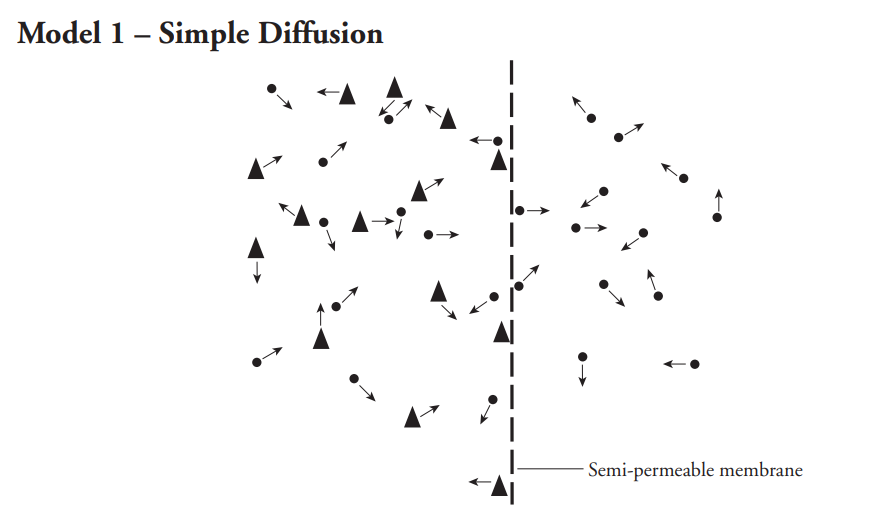
Model 1
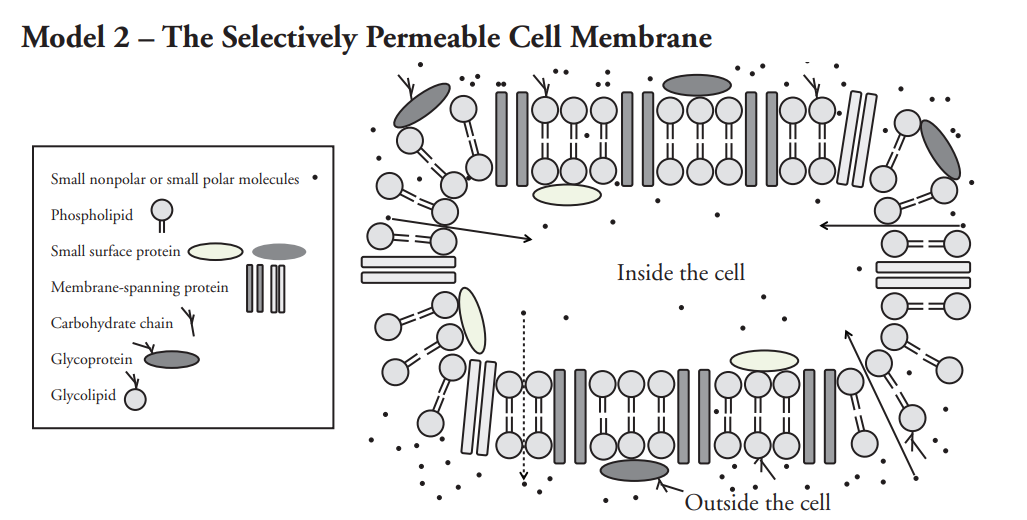
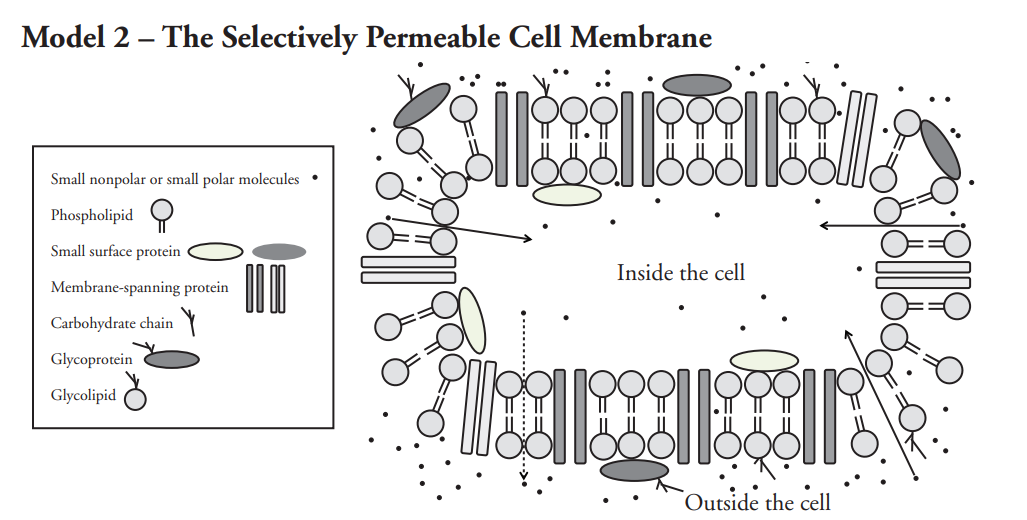
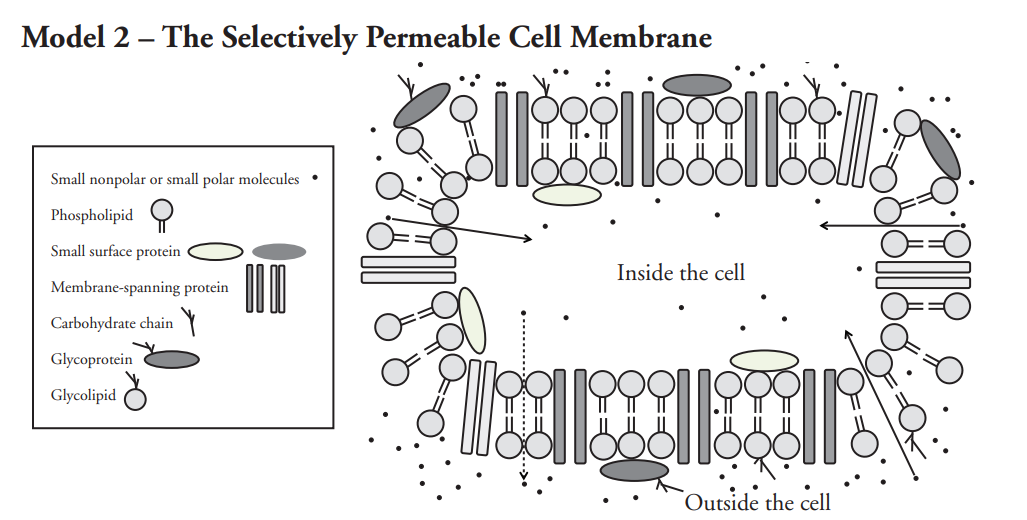
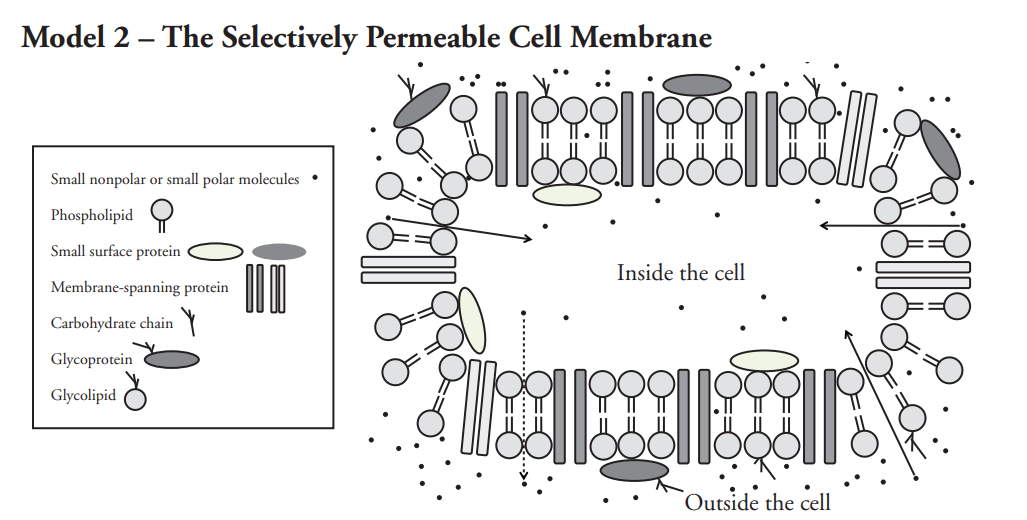
Model 2
2.5
Model 3
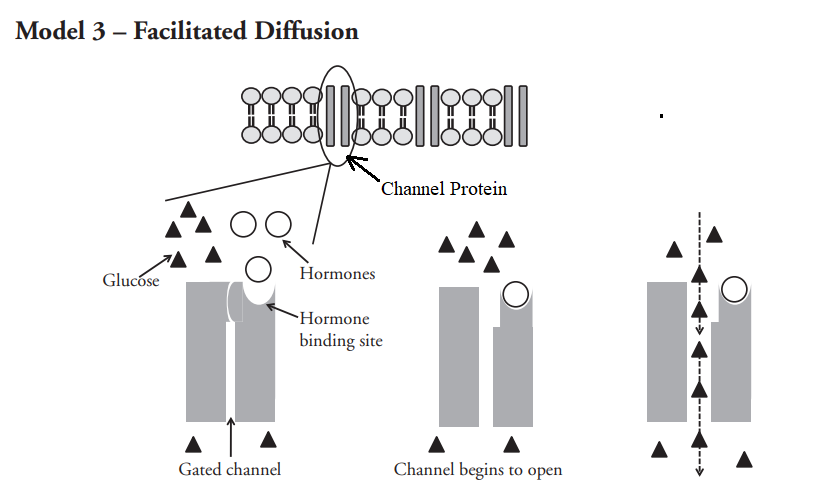
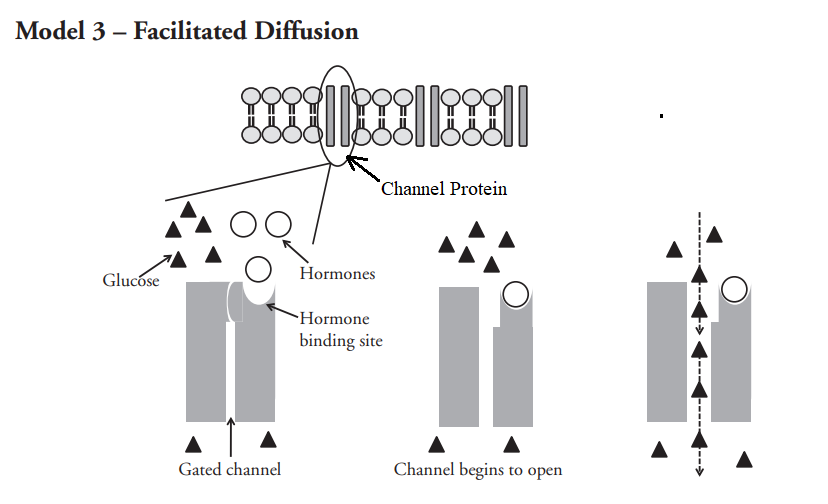
Sports drinks, such as Body Armour, Vitamin Water, and Gatorade, are widely advertised in various forms. These beverages claim to aid in the restoration of electrolytes, fluids, and vitamins that your body loses during exercise. However, have you ever wondered about the mechanisms through which the vital molecules present in these drinks swiftly enter your cells to facilitate post-exercise recovery?
3
Asemmisa {{asɛmmisaAhyɛnsode}}
1.
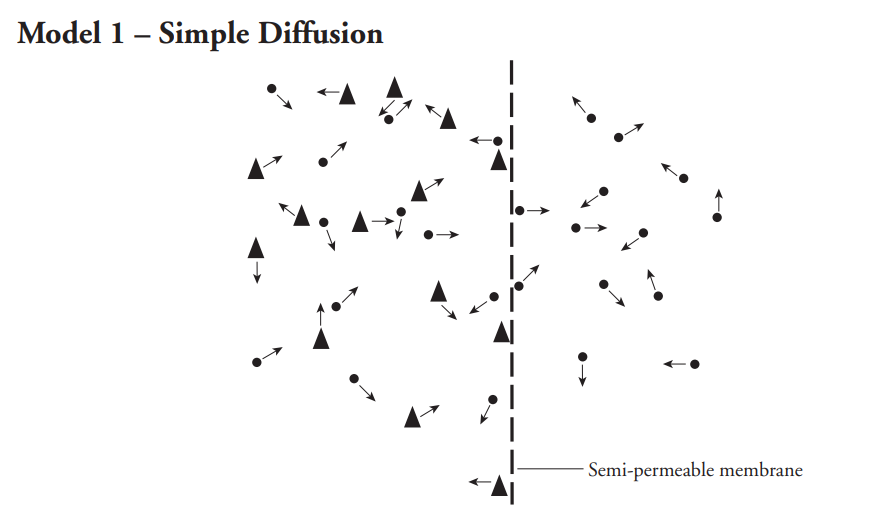
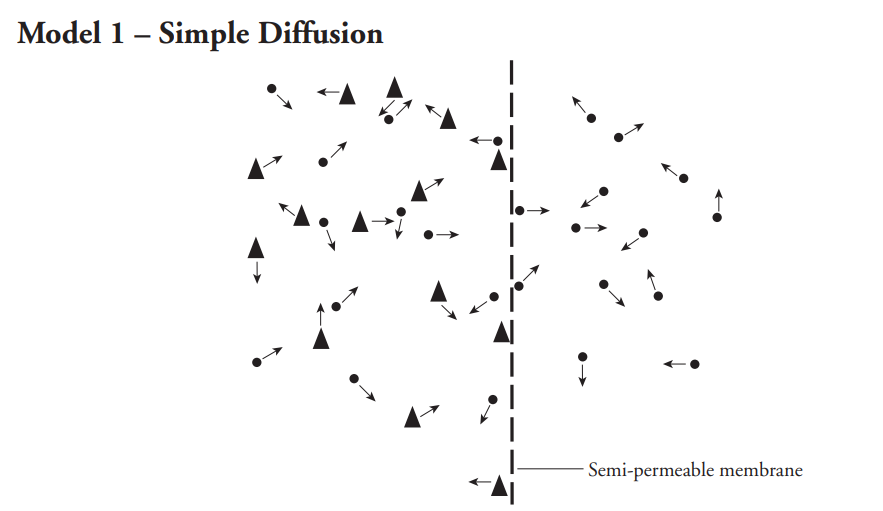
a.) How many different types of molecules are shown in Model 1?
b.) Count and record the number of triangles and circles on each side of the membrane.
Triangles on left:
Triangles on right:
Circles on the left:
Circles on the right:
c.) Which shape is the largest?
d.) Which shape appears to be able to move through the semi-permeable membrane?
e.) Which shape cannot?
1
Asemmisa {{asɛmmisaAhyɛnsode}}
2.
Describe the direction of the movement of the molecules in Model 1?
1
Asemmisa {{asɛmmisaAhyɛnsode}}
3.
Look back at your answer to 1e? Explain why this is the case.
1
Asemmisa {{asɛmmisaAhyɛnsode}}
4.
If you left this for an extended period of time and then viewed it again, would you expect to find any changes in the amount (concentration) of the molecules on either side of the membrane? Justify your answer.
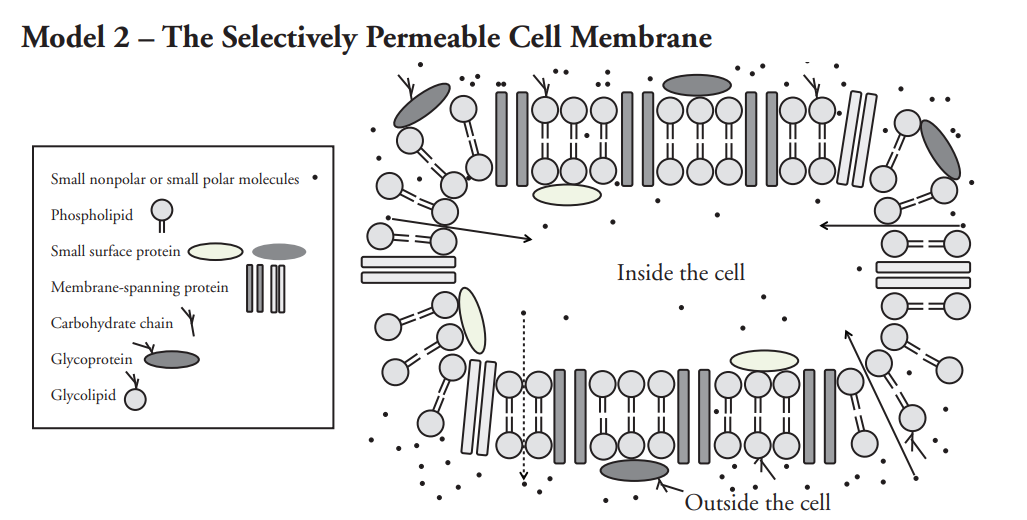
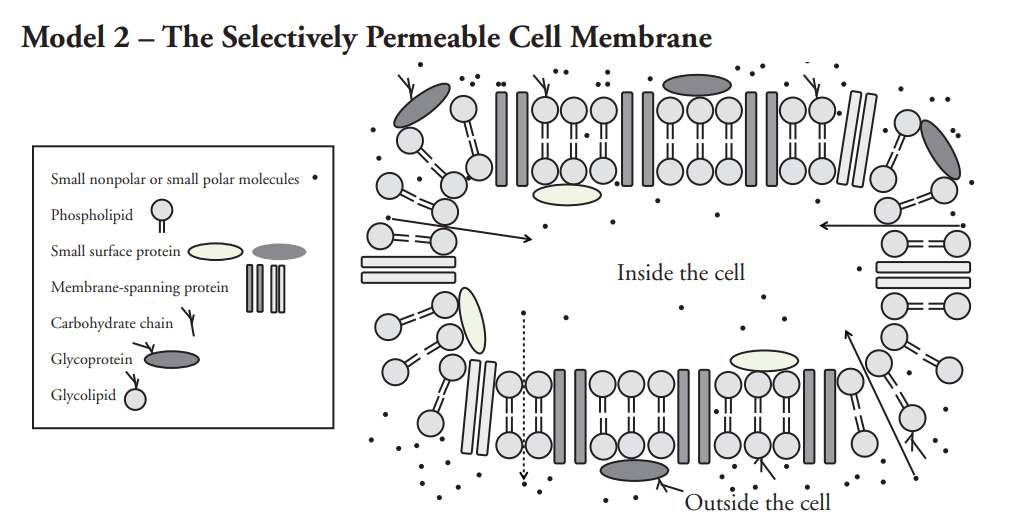
Recall that there are four macromolecules (biomolecules) in living things — carbohydrates, proteins, nucleic acids, and lipids. Many of these can be found in the cell membrane of all living things.
3
Asemmisa {{asɛmmisaAhyɛnsode}}
5.
a.) What two major types of biological molecules compose most of the cell membrane in Model 2? and
b.) How many different protein molecules are found in Model 2?
1
Asemmisa {{asɛmmisaAhyɛnsode}}
6.
What is the difference between the position of the surface proteins and the membrane-spanning proteins?
2
Asemmisa {{asɛmmisaAhyɛnsode}}
7.
a.) What is the structure called
when a carbohydrate chain (a
"glyco-") is attached to a
protein?
b.) When a carbohydrate (a "glyco-")
is attached to a phospholipid,
what is the structure called?
c.) What types of molecules are
shown moving across the
membrane?
d.) Where exactly in the membrane
do these molecules pass through
(what structure are they
squeezing between)?
1
Asemmisa {{asɛmmisaAhyɛnsode}}
8.
How does the concentration of the small molecules inside the cell compare to that outside the cell?
1
Asemmisa {{asɛmmisaAhyɛnsode}}
9.
Because particles move in unpredictable patterns, molecules tend to move across the membrane in both directions. Does the model indicate that the molecules are moving in equal amounts in both directions? Justify your answer.
A concentration gradient emerges when there is an uneven distribution of a specific particle across a membrane. The particles naturally move from areas of high concentration to areas of low concentration, driven by this gradient, until a state of balance is achieved. Once equilibrium is reached, there is no overall movement in a particular direction. However, the particles continue to cross the membrane in a one-to-one pattern (one moves in, and one moves out), this is called dynamic equilibrium. The collective movement of particles along the concentration gradient is known as diffusion.
1
Asemmisa {{asɛmmisaAhyɛnsode}}
10.
Read the paragraph to the left.
Look back at Model 1. Which particles are moving by diffusion across the membranes shown?
Asemmisa {{asɛmmisaAhyɛnsode}}
11.
Select the correct response to each blank using all the information from the previous models, paragraphs, and questions.
A concentration gradient emerges when there is an uneven distribution of a specific particle across a membrane. The particles naturally move from areas of high concentration to areas of low concentration, driven by this gradient, until a state of balance is achieved. Once equilibrium is reached, there is no overall movement in a particular direction. However, the particles continue to cross the membrane in a one-to-one pattern (one moves in, and one moves out), this is called dynamic equilibrium. The collective movement of particles along the concentration gradient is known as diffusion.
a.) Diffusion is the net movement of molecules from an area of concentration to an area of concentration.
b.) The molecules will continue to move along this until they reach .
c.) Once equilibrium is reached, molecules will continue to move across a membrane in.
1.5
Asemmisa {{asɛmmisaAhyɛnsode}}
12.
a.) In the model, which part of the cell membrane is shown in more detail?
b.) What is the gap between the proteins called?
c.) What type of particles attach to the protein?
1
Asemmisa {{asɛmmisaAhyɛnsode}}
13.
Briefly explain what happens that permits the glucose (triangles) to pass through.