Log in
Sign up for FREE
arrow_back
Library

Copy of Cell Membrane Quiz (20 Questions; Timed - 25 minutes) (5/28/2026)

star
star
star
star
star
Last updated about 2 hours ago
20 questions
Note from the author:
Required
1
Required
1
Required
1
Required
1
Required
1
Required
1
Required
1
Required
1
Required
1
Required
1
Required
1
Required
1
Required
1
Required
1
Required
1
Required
1
Required
1
Required
1
Required
1
6
Question 1
1.

Question 2
2.

Question 3
3.

Question 4
4.

Question 5
5.

Question 6
6.

Question 7
7.

Question 8
8.

Question 9
9.

Question 10
10.

Question 11
11.

Question 12
12.

Question 13
13.

Question 14
14.

Question 15
15.

Question 16
16.

Question 17
17.

Question 18
18.

Question 19
19.

Question 20
20.

Draggable itemarrow_right_altCorresponding Item
arrow_right_alt
arrow_right_alt
arrow_right_alt
arrow_right_alt
arrow_right_alt
arrow_right_alt
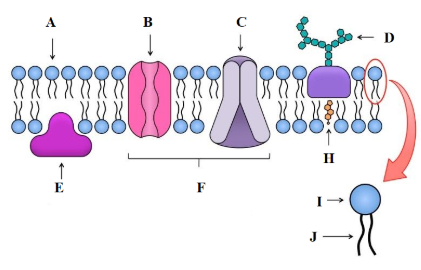
What is an alternative term for the cell membrane?
Nuclear membrane
Plasma membrane
Endoplasmic reticulum
Cytoplasm
What is the primary role of the cell membrane?
To store genetic material
To transport essential substances into the cell and remove waste
To generate energy
To synthesize proteins
What are the main components that make up the cell membrane?
Nucleic acids and lipids
Proteins, carbohydrates, and a phospholipid bilayer
DNA and RNA
Sugars and salts
Which model best represents our current understanding of membrane structure?
Rigid framework model
Fluid mosaic model
Static model
Membrane channel model
What is the most significant component of the cell membrane?
Proteins
Carbohydrates
Phospholipid bilayer
Cholesterol
What are the two primary components of a phospholipid?
Glycerol and amino acids
Phosphate head and fatty acid tails
Sugar and protein
Cholesterol and nucleic acids
Which section of the phospholipid is characterized as hydrophilic?
Fatty acid tails
Phosphate head
Lipid bilayer
Embedded proteins
What properties do the fatty acid tails of a phospholipid exhibit?
Hydrophilic and polar
Hydrophobic and nonpolar
Water-soluble
Charged
In the lipid bilayer, which direction do the hydrophilic heads face?
Inward, towards the center of the bilayer
Outward, towards the cell's exterior and interior
Randomly in all directions
Only towards the cytoplasm
What function does cholesterol serve in the lipid bilayer?
It acts as a structural protein
It helps maintain the fluidity of the bilayer
It provides a carbohydrate source
It supplies energy to the cell
It reduces the space between phospholipids
It raises the number of cholesterol molecules
It solidifies the membrane
What occurs to cholesterol levels in the lipid bilayer at elevated temperatures?
It increases to ensure stability
It decreases to lessen fluidity
It remains unchanged
It becomes insignificant
What challenge does a cell membrane encounter at low temperatures without adequate cholesterol?
It becomes overly fluid
It becomes too rigid
It loses structural integrity
It increases permeability
What is the main role of cholesterol in the cell membrane?
To supply energy
To uphold stability and fluidity
To aid in protein synthesis
To store genetic information
What sets integral proteins apart from other membrane protein types?
They are not attached to the membrane
They extend across the entire lipid bilayer
They are only found on the membrane's surface
They contribute to energy production
What function do peripheral proteins serve in relation to the cell membrane?
They span the lipid bilayer
They are located on the membrane's surface
They facilitate ion transport
They provide energy for the cell
What is a key function of membrane proteins in multicellular organisms?
They store energy
They help identify the cell to avoid immune responses
They produce hormones
They assist in cell division
What are glycolipids?
Proteins linked to lipids
Carbohydrates attached to a phospholipid's head
Nucleotides linked to proteins
Lipids without any attachments
What role do carbohydrates play in cell membranes?
They provide structural support
They aid in cell recognition and adhesion
They store energy
They facilitate protein synthesis