Ionic Bonds
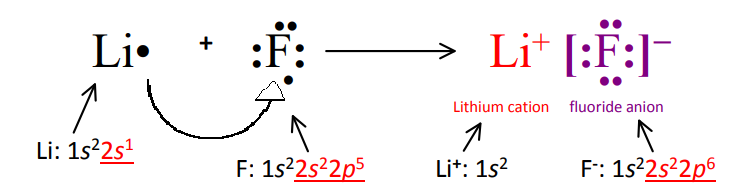
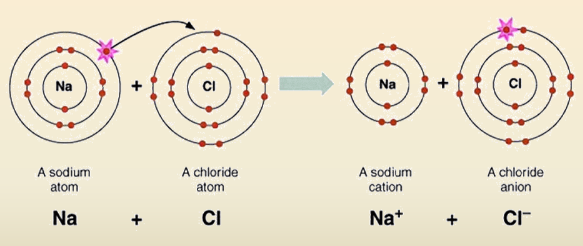
Formed by - transfer of electrons to form ions.
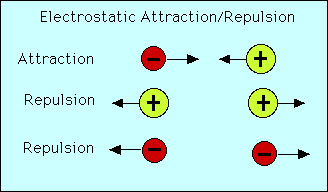
Opposite charged ions are electrostatically attrated to one another.
Formed between metals and nonmetals.
Chemical bonds - attractive forces that hold atoms together.
Occur between valence electrons of different atoms.
Two ways bonds form - transfer or the sharing of electrons.
Purpose of bond formation - to fill the valence energy level of each atom (makes them stable)
Two primary types of bonds - ionic and covalent.
Formed by - transfer of electrons to form ions.
Opposite charged ions are electrostatically attrated to one another.
Formed between metals and nonmetals.
Transfer of electrons - to have a full valence energy level.
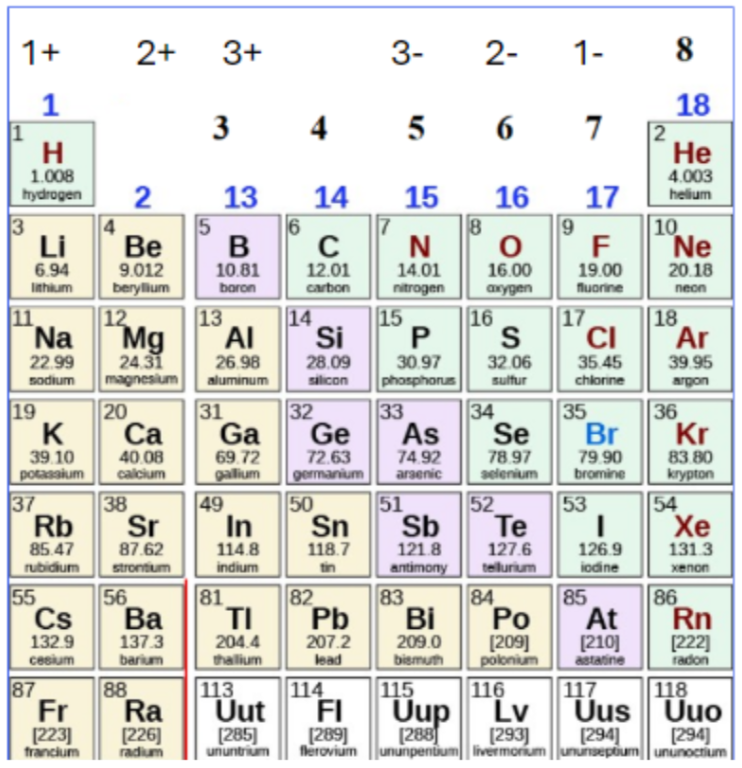
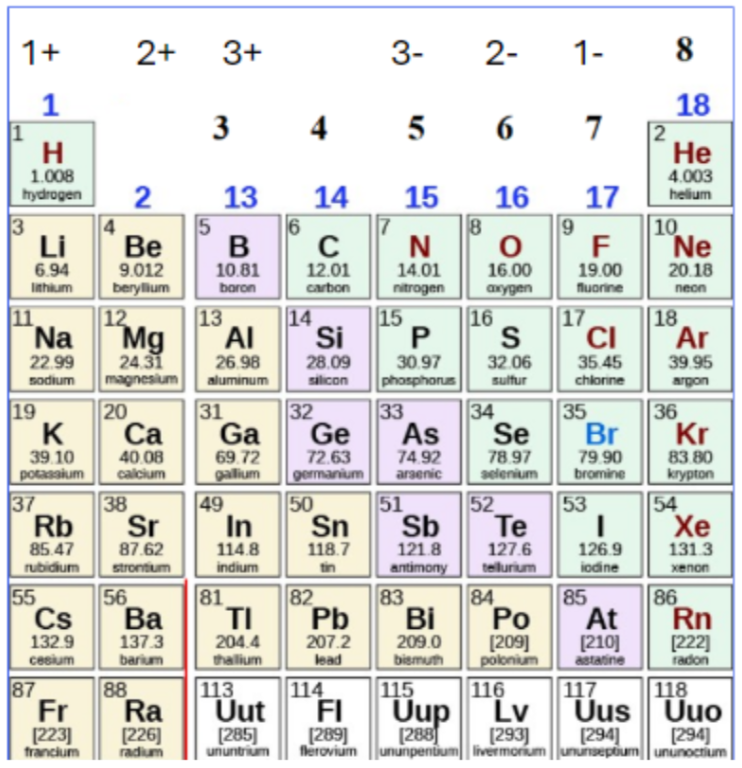
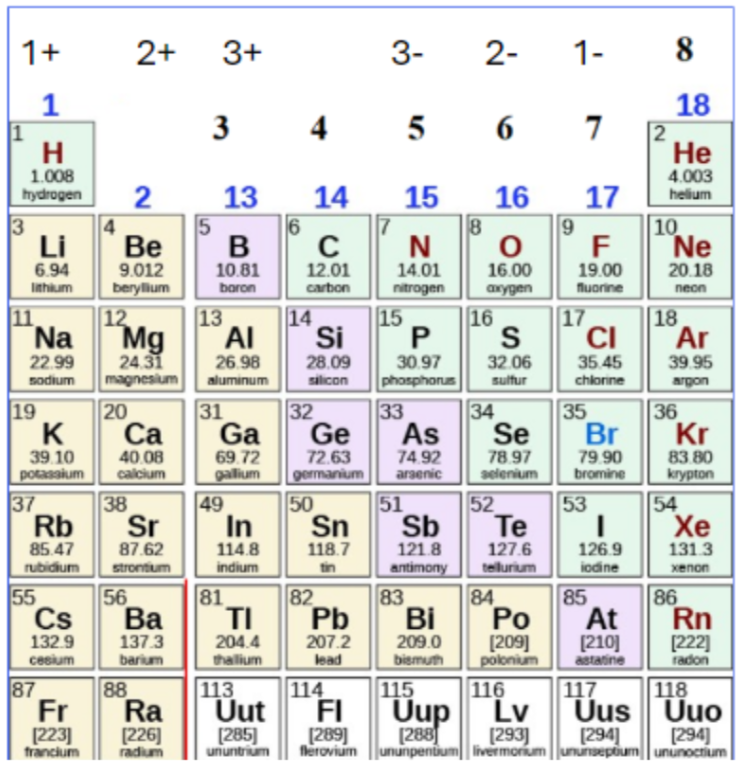
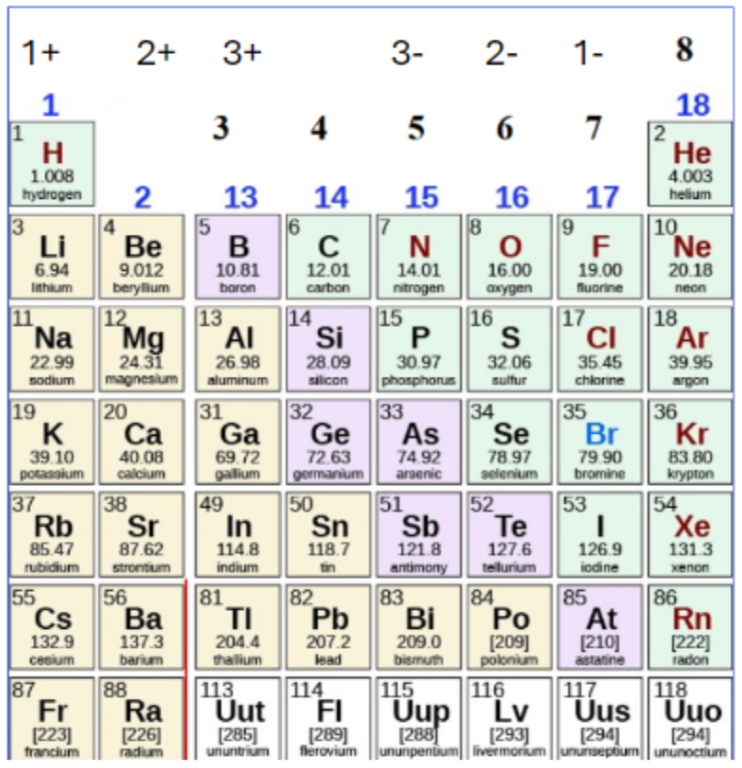
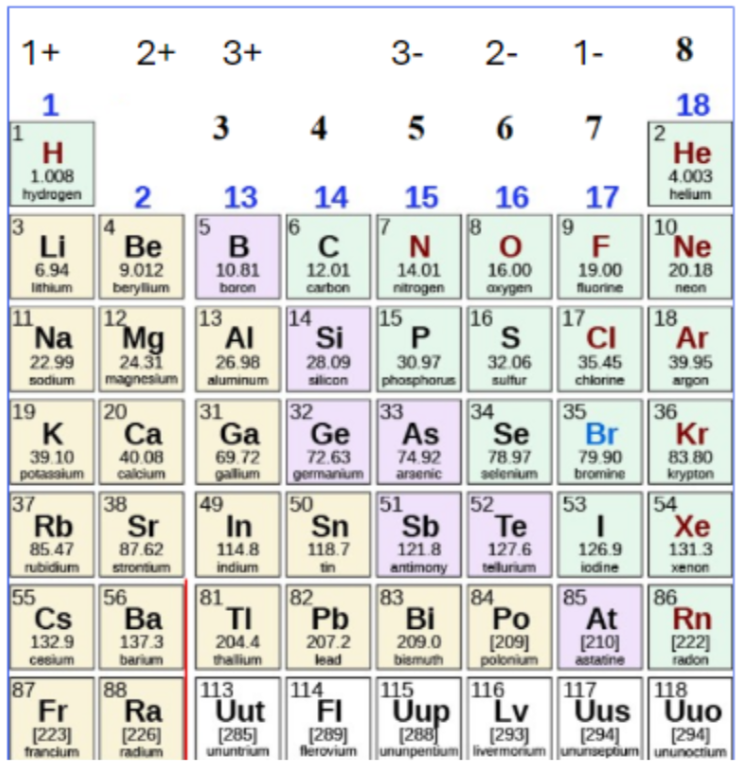
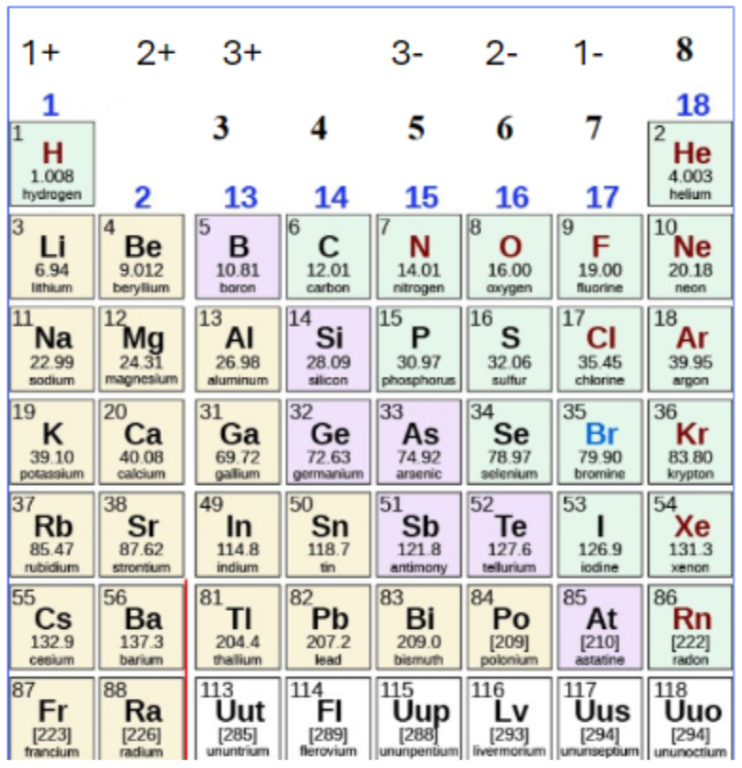
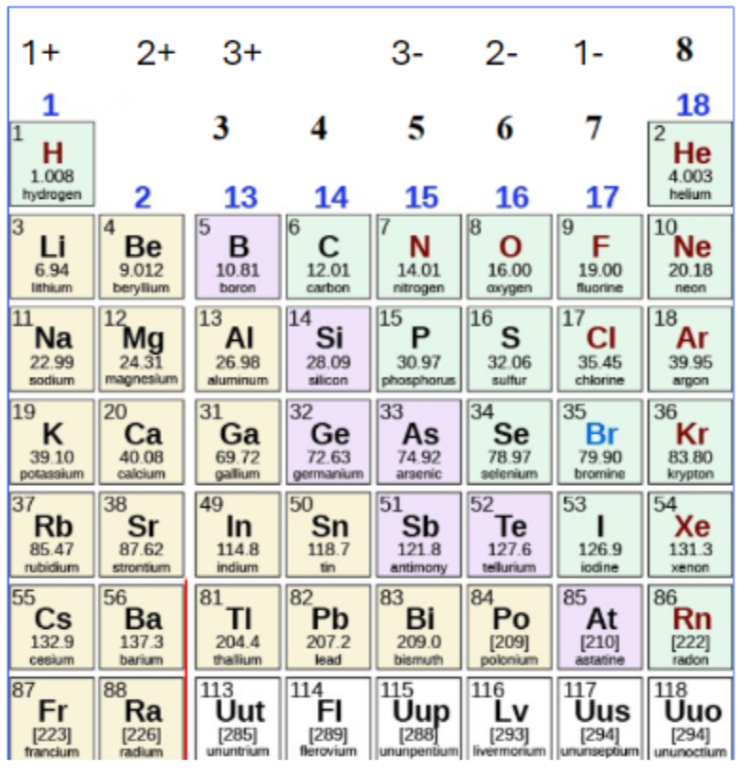
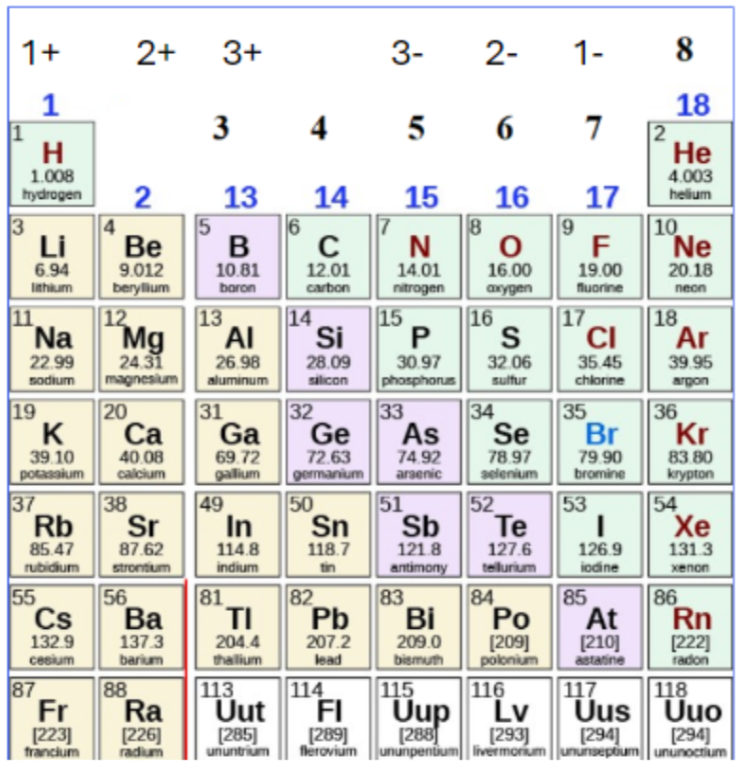
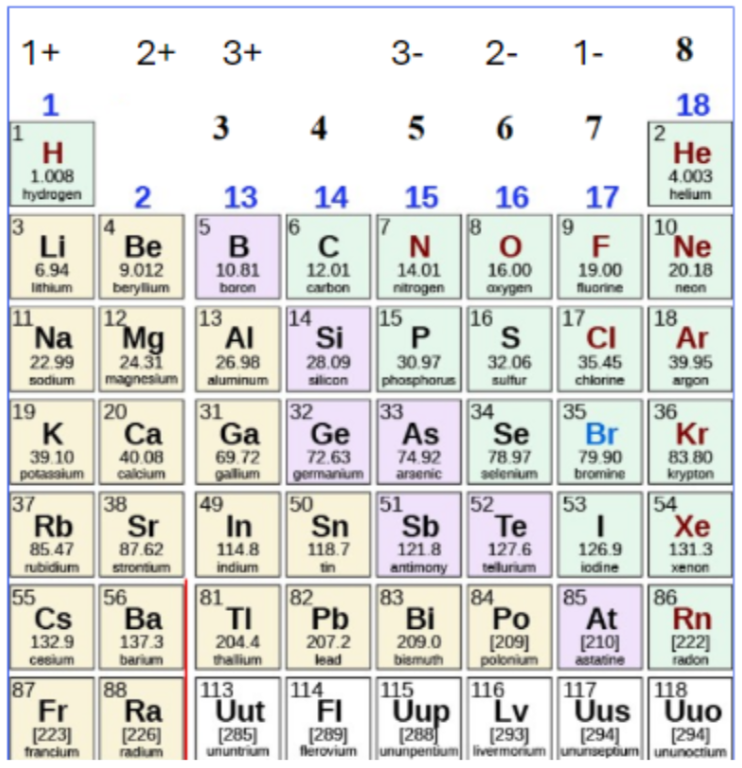
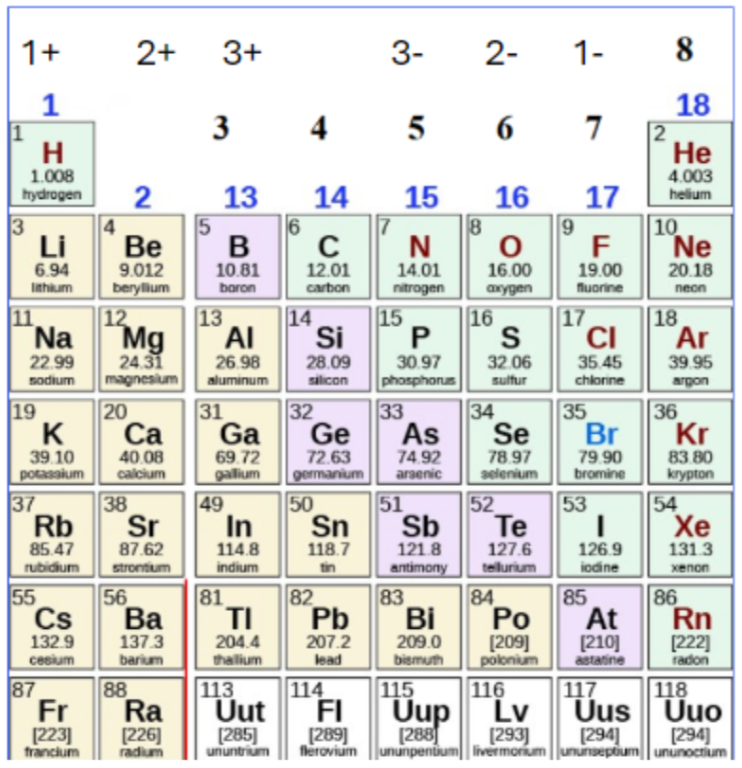
Metal - donate 1-3 electrons (cation)
Nonmetal - accept 1-3 electrons (anion)
Once the cation and anion form, they will bond via electrostatic attraction.
The metal is written, first, the nonmetal, second.
The name of the nonmetal will be altered, the last syllable will be changed to end in 'ide'.
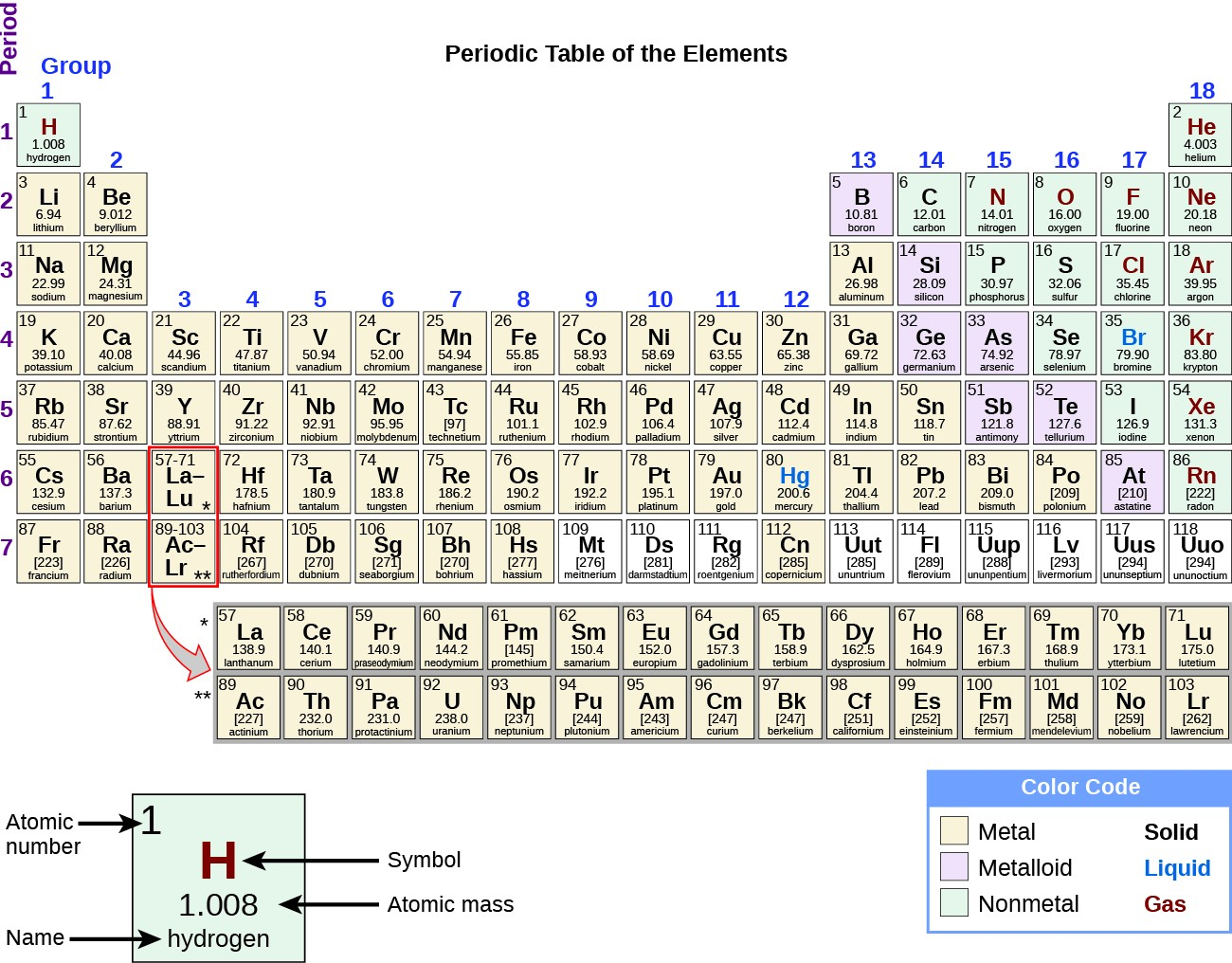
Writing the chemical formula of ionic compounds using atomic abbreviations from the periodic table.
Subscripts are used to denote how many of each atom is in the ionic compound.
Record the abbreviation of the metal, followed by the nonmetal.
Subscripts - determined by the charge of each ion - the overall charge of the compound must be neutral.
Subscripts go to the bottom-right of the atom they are assigned to.
Example 1:
Lithium + Chlorine
Li + Cl → Li+ + Cl- → LiCl
Name: Lithium chloride
Example 2:
Barium + Oxygen
Ba + O → Ba2+ + O2-→ BaO
Name: Barium oxide
Example 3:
Aluminum + Flourine
Al + F → Al3+ + F- → AlF3
Name: Aluminum fluoride
Example 4:
Sodium + Nitrogen
Na + N → Na+ + N3- → Na3N
Name: Sodium nitride
Calcium + Oxygen
Ca + O → (ions)
Name of ionic compound:
Beryllium + Fluorine
Be + F → (ions)
Name of ionic compound:
Potassium + Fluorine
K + F →
Name:
Magnesium + Sulfur
Mg + S →
Name:
Aluminum + Chlorine
Al + Cl →
Name:
Sodium + Oxygen
Na + O →
Name:
Lithium + Nitrogen
Li + N →
Name:
Magnesium + Fluorine
Mg + F →
Name:
Lithium + Oxygen
Li + O →
Name:
Sodium + Phosphorus
Na + P →
Name: