3
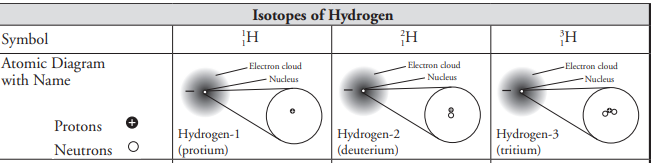
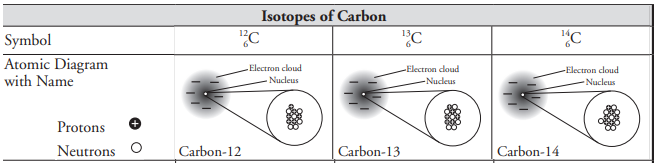
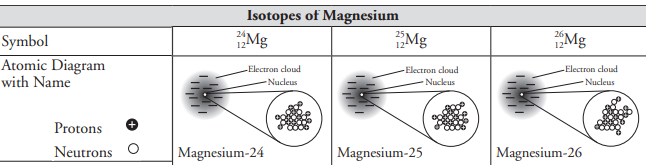
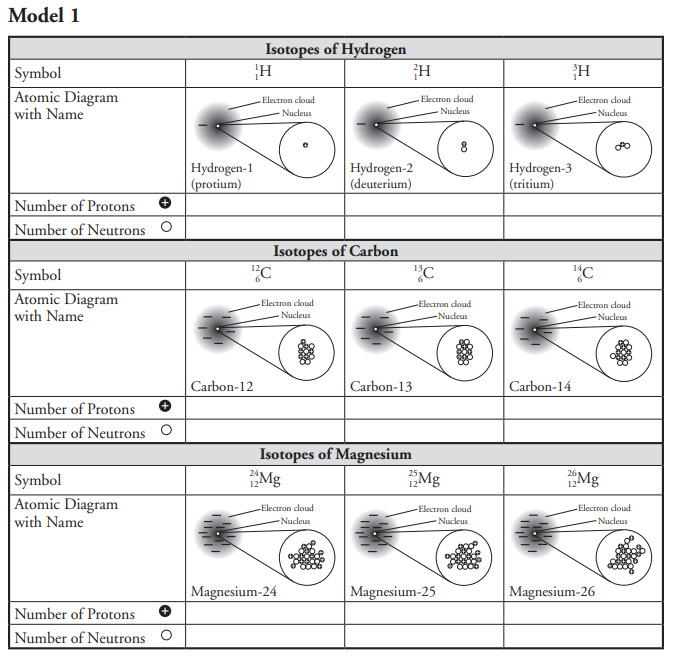
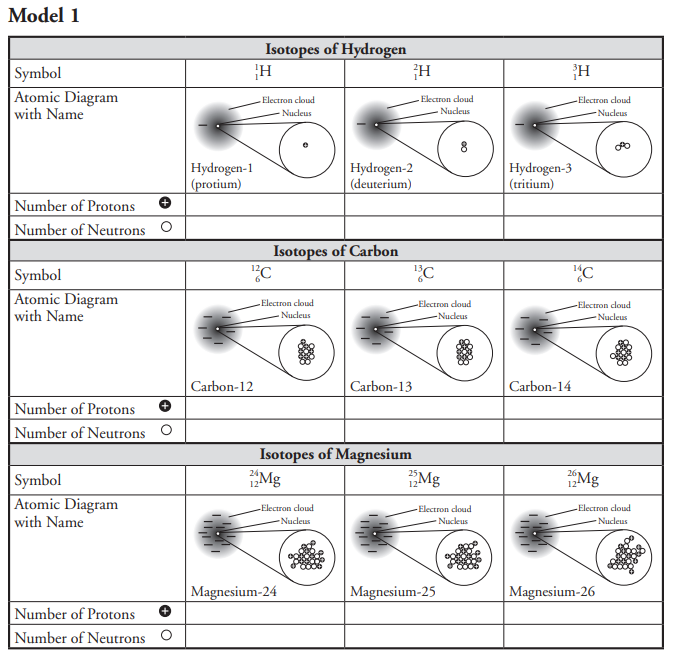
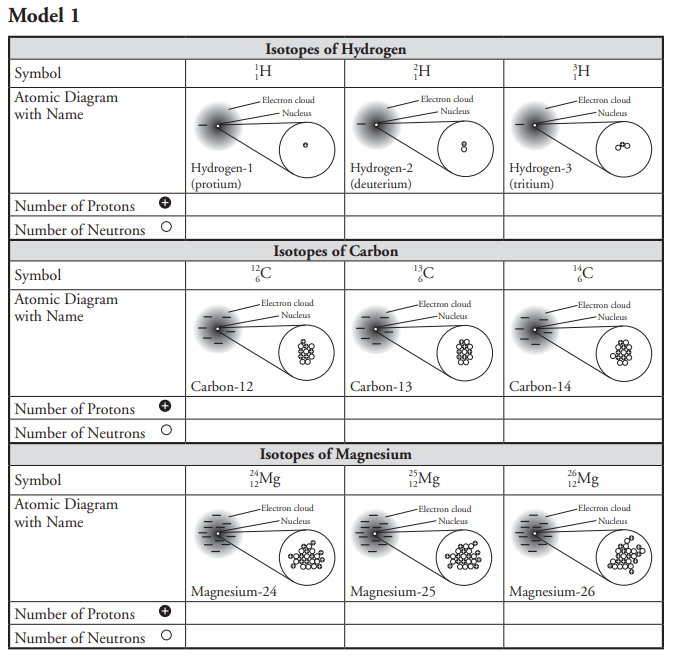
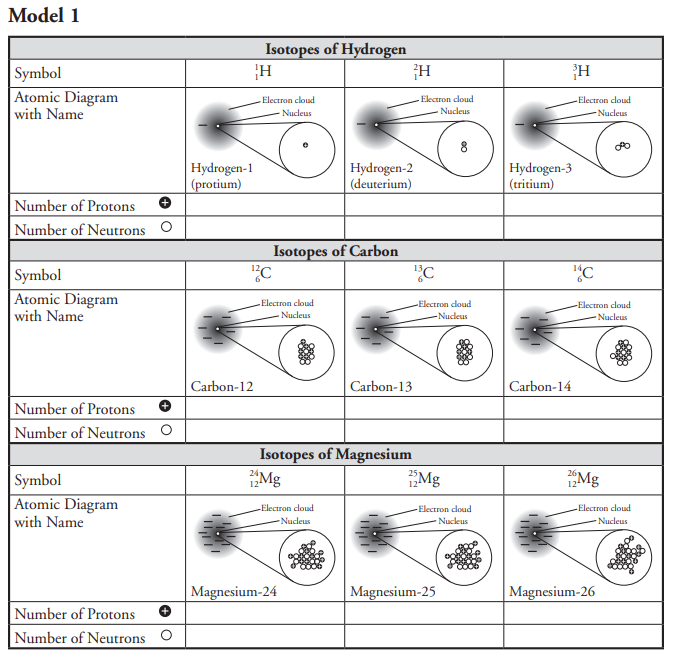
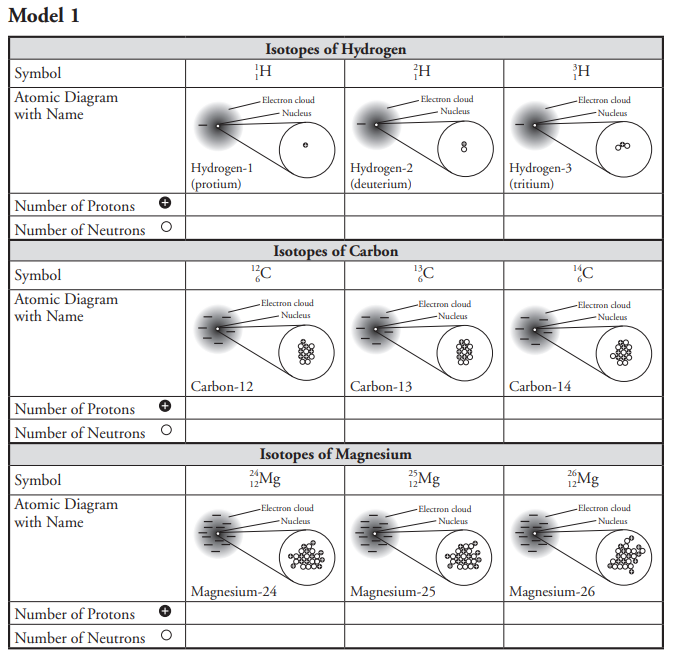
Refer to Model 1. What subatomic particles do the following symbols represent in the Atomic Diagrams?
Refer to Model 1. What subatomic particles do the following symbols represent in the Atomic Diagrams?
Hydrogen-1
protons
neutrons
Hydrogen-2
protons
neutrons
Hydrogen-3
protons
neutrons
Carbon-12
protons
neutrons
Carbon-13
protons
neutrons
Carbon-14
protons
neutrons
Magnesium-24
protons
neutrons
Magnesium-25
protons
neutrons
Magnesium-26
protons
neutrons
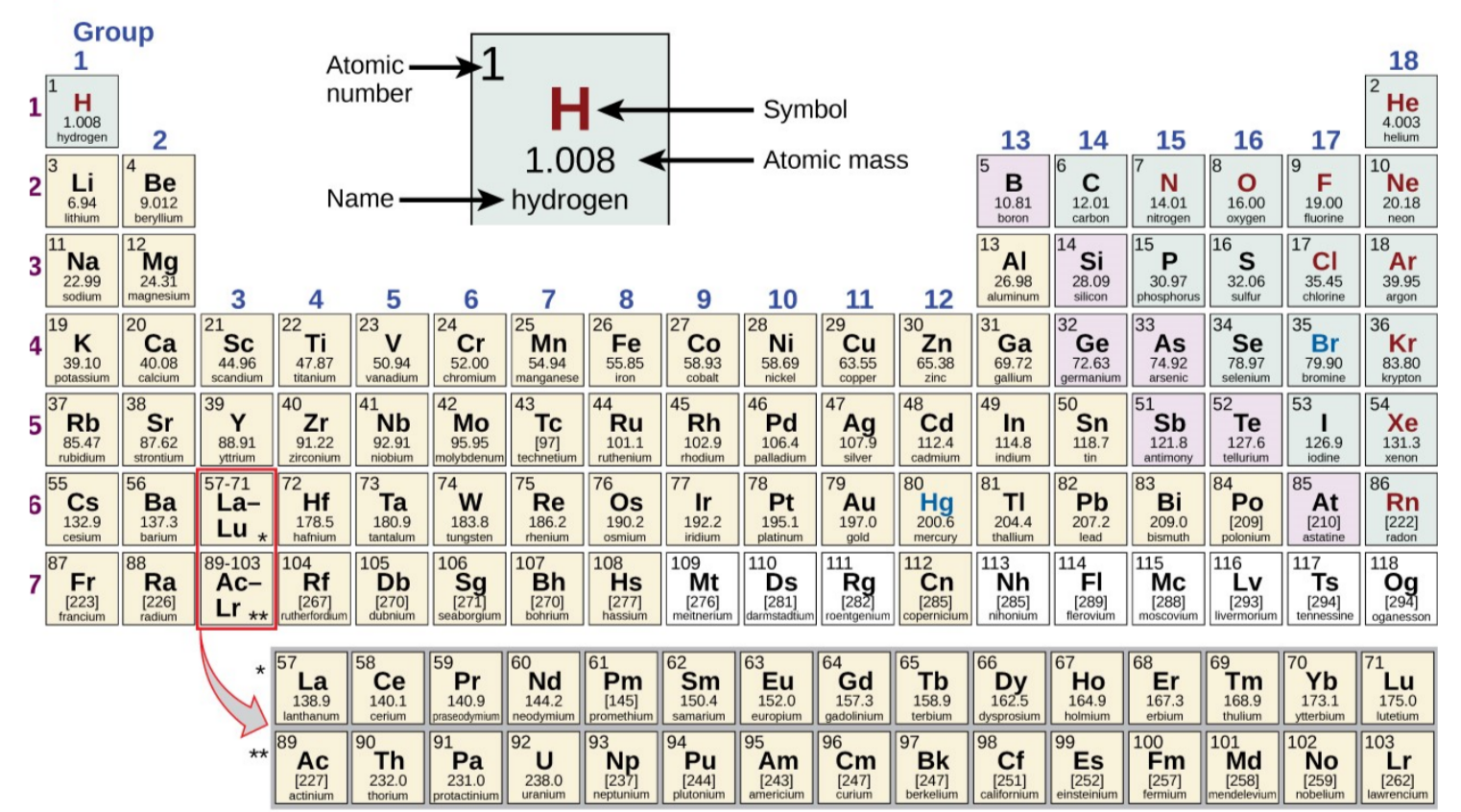
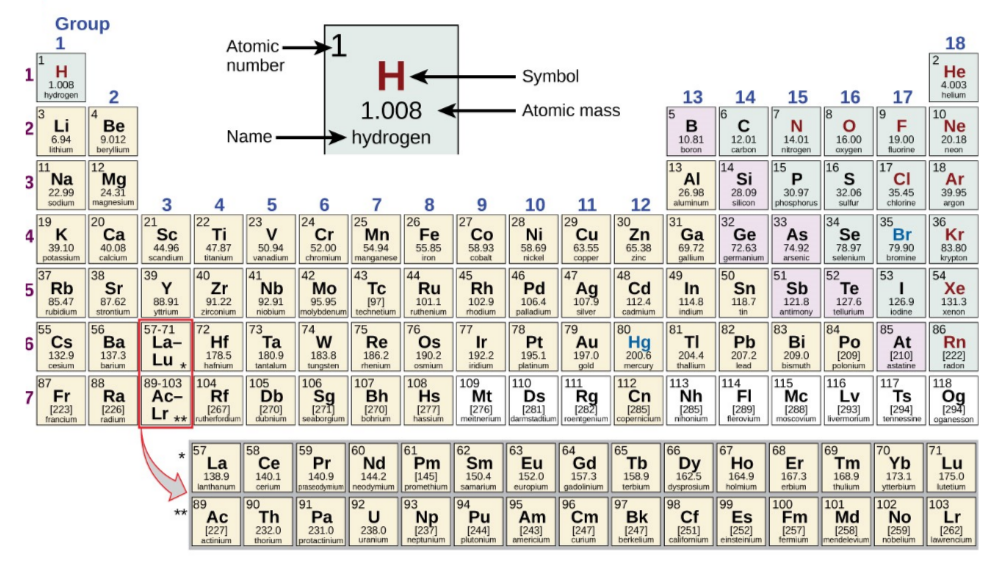
Find, H, C, and Mg on the periodic table.
a.) What whole number is shown for each element of Model 1 that is also shown as a decimal on the periodic table? (what is it called - not the actual number)?
b.) Refer to the element symbols on Model 1. Where is the atomic number located on the isotope symbols?
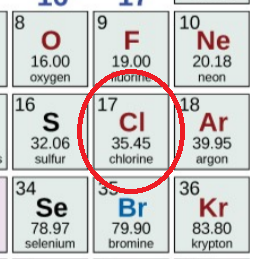
Refer to the piece of the periodic table, to the left.
How many protons are in all Cl atoms?
Someone stated, "I think some chlorine atoms have 16 protons." Explain why this person is incorrect.
Refer again to Model 1. In the isotope symbol of each atom, there is a superscripted (raised) number. This number is also used in the name of the atom (i.e., carbon-12). It is called the mass number.
a.) How is the mass number (atomic mass) determined?
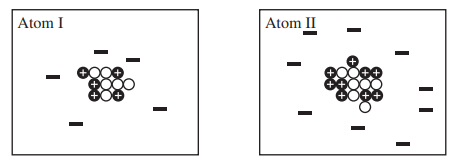
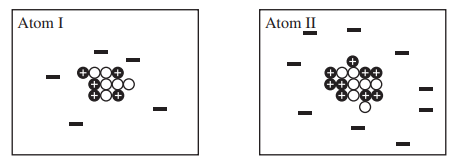
Consider #1, where you defined each subatomic symbol (electrons, protons, and neutrons). Use that knowledge as well as what you know about how the mass number is calculated to complete the following for Atom I and II (left):
Atom I:
Protons
Neutrons
Mass Number
Atom II:
Protons
Neutrons
Mass Number
Refer to Model 1.
a.) Which corner of the isotope symbol contains the mass number?
b.) How is the mass number of an isotope expressed in the name of an atom?
Consider how the mass number and atomic number is expressed around an isotope symbol (refer to the isotope symbols of Model 1, if necessary - prior question). Think about the isotope symbols that would exist for Atom I and II (left).
Atom 1:
What number would go to the upper-left?
What number would go to the lower-left?
Atom 2:
What number would go to the upper-left?
What number would go to the lower-left?
Examine the isotope for potassium (K) and answer the following:
a.) Atomic #
b.) Mass #
c.) # p+
d.) # n
Examine the isotope for fluorine (F) and answer the following:
a.) Atomic #
b.) Mass #
c.) # p+
d.) # n
The following is known about an isotope:
Atomic # 16
# n = 15
Use the above information to answer the following:
a.) Mass #
b.) # p+
c.) Use the periodic table to identify the atom.
Refer to Model 1.
a.) Do all isotopes of an element have the same atomic number?
b.) Provide one example from Model 1 to support your answer.
c.) Do all isotopes have the same mass number?
d.) Provide one example from Model 1 to support your answer.
Consider your answers to #15 and create your own definition of "isotope," using your own words - this means, do not look anything up.
Identify all of the following that are isotopes of each other.

In answering question 17, which part of the isotope symbols were the most helpful to you.