Copy of Energy Pyramid/Food Web Articles (5/28/2026)
star
star
star
star
star
Last updated 3 months ago
20 Nsɛmmisa
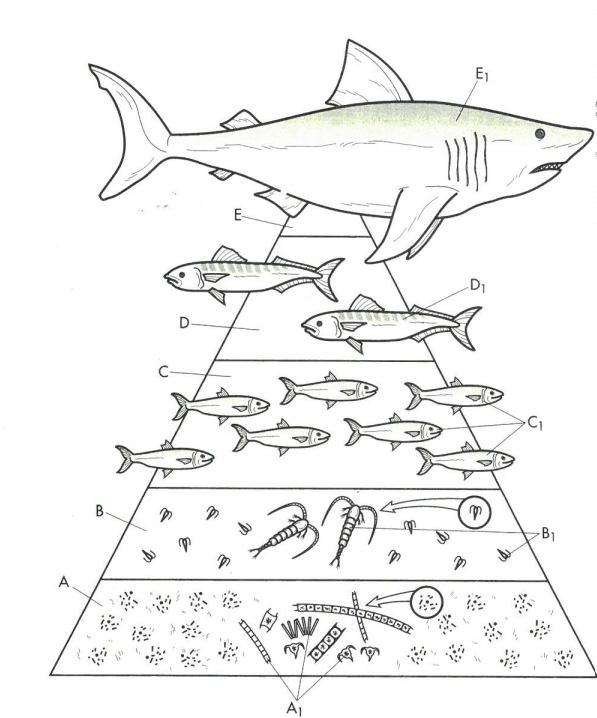
Energy Pyramid
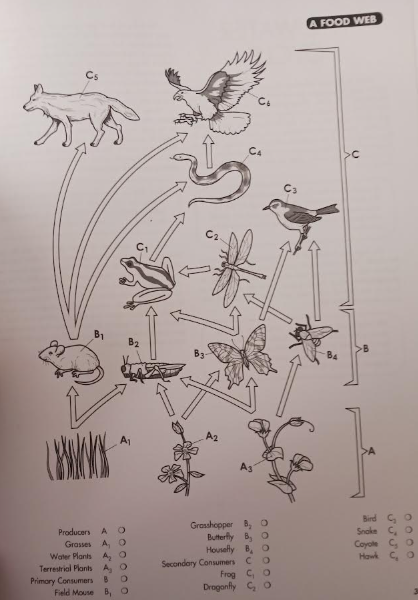
Food Webs
Key to the Image -
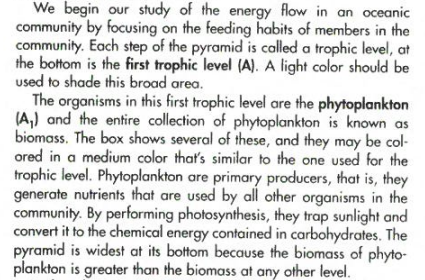
A: First Trophic Level
A1: Phytoplankton (small, photosynthetic marine organism)
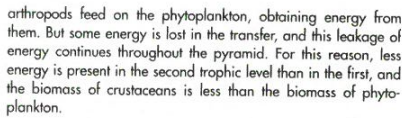
B: Second Trophic Level
B1: Zooplankton (small crustaceans)
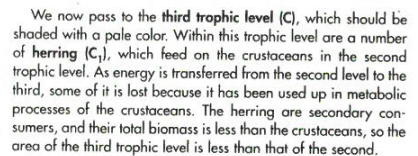
C: Third Trophic Level
C1: Herring (small fish)
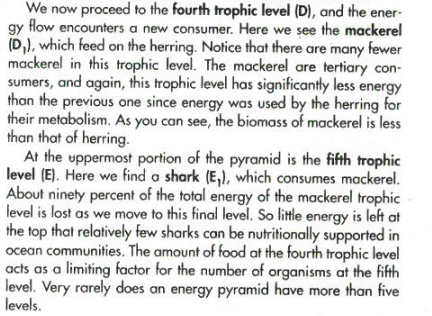
D: Fourth Trophic Level
D1: Mackeral (large fish)
E: Fifth Trophic Level
E1: Shark
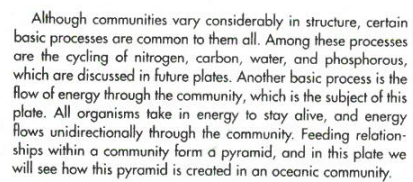
Energy pyramids are formed by
The flow of energy through a community is
Organisms can obtain energy and nutrients from multiple locations at the same time in order to survive.
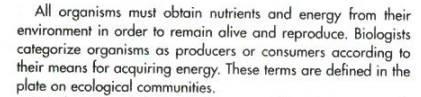
Organisms within an ecosystem are classified according to how they obtain
Each distinct part or step of an energy pyramid is referred to as a
The organism that serves as the primary producer in this pyramid is the
As you move up the energy pyramid, the amount of available energy
The small crustaceans in the 2nd trophic level aquire their energy from the
One reason that not all of the available energy passes from one trophic level to the next is that some of it is used during
The overall energy and
As we continue to move up the energy pyramid from one trophic level to the next, two things continue to decrease. They are -
According to the reading,
The relationships between predators and prey in an ecosystem form
All of these food chains in an ecosystem will form a
Food chains are more complex than food webs.
The organisms at the bottom of a food web have the name from the prior question because they engage in
Secondary consumers are organisms that feed on
All of the possible predator-prey relationships in this ecosystem were displayed in this food web.