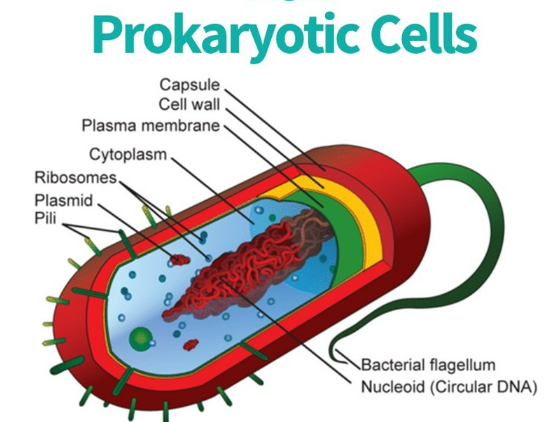
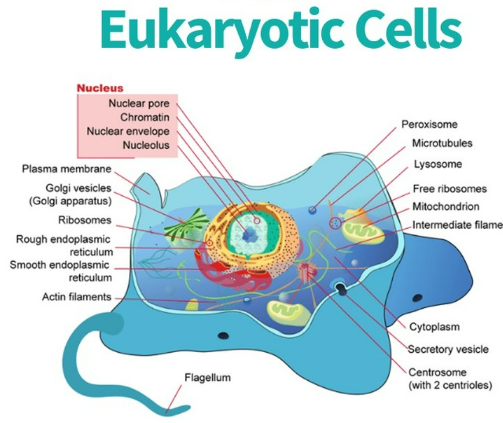
Complete the table, below, by answering "yes" or "no" for each blank.
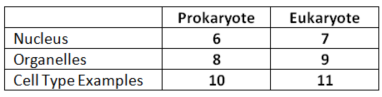
The blanks correspond to the number in each cell.
1
1
1
1
1
1
As best as you can define the following words (please do not look these us on the internet, just tell me what you think):
Nucleus
Organelle
DNA
Which one of these cells is the most unlike the other two?
What terms did you put in the nucleus to show they are possessed by eukaryotes?
Complete the table, below, by answering "yes" or "no" for each blank.
The blanks correspond to the number in each cell.
Which of these objectives do you feel like the activity has accomplished so far?
Directions for Reading:
You are going to read some information to give you a deeper understanding of prokaryotic and eukaryotic cells. As you read, you will complete short tasks to help you process what you've read.
Your goal is to collect evidence from the text - you will be provided a space to take notes and record as much evidence as you feel is necessary to compare and contrast prokaryotes and eukaryotes.
Different Types of Cells
There are different types of cells. For example, within your body, there are blood cells, skin cells, bone cells, and even bacteria. All cells will be from one of two types. It all depends upon how the cell stores its DNA.
Two Types of Cells
There is another basic cell structure that is present in many, but not all, living cells - the nucleus. The nucleus of a cell is a structrue within the cytoplasm that is surrounded by a membrane (nuclear membrane) and contains and protects the cell's DNA.
The presence or absence of the nucleus is the primary determining factor in classifying a cell as a prokaryote or a eukaryote.
Prokaryotic Cells
These are cells without a nucleus. The DNA in prokaryotic cells is in the cytoplasm rather than enclosed within a nucleus. Prokaryotic cells are single-celled and encompass all bacteria. Ribosomes, the site of protein synthesis, is the only other structure, other than the DNA, found within the cytoplasm of a prokaryote.
Eukaryotic Cells
Eukaryotes are cells that contain a nucleus. Eukaryoticells are usually larger in size than prokaryotes and are primarly found within multicellular organisms - such as, humans, plants, and fungi.
They also contain membrane-bound organelles, other than the nucleus. An organelle is a structure within the cytoplasm that carries out a unique and specialized function. Orgnelles include - mitochondria, Golgi body, endoplasmic reticulum, and the chloroplast. Organelles allow the eukaryote to carry out more functions than prokaryotic cells can.
Use this space to record differences and similarities of prokaryotes and eukaryotes that were discussed in the reading.
Click on "show your work" to open this question.
Use the tools provided on the left of the screen to draw a prokaryotic cell and label where it stores its DNA.
Click on the scribble tool to draw.
Click on the T to type a label.
Click on the line (in the same menu as scribble) to draw a line.
In some ways, a cell resembles a plastic bag filled with Jell-O. Its basic structure around the outside of the cell is the
Word bank:
nucleus
cytoplasm
plasma
organelles
ribosome
Which of these do ribosomes specialize in producing?
Which of the following cell structures do prokaryotic and eukaryotic cells share?
Which of the following structures would eukaryotic cells have, but prokaryotic cells lack?
Which of the following is a common feature of prokaryotic cells (select all that apply)?
Which of the following is a structure(s) that are present in prokaryotic cells but not in eukaryotic cells (select all that apply)?
Which organelle(s) do eukaryotes have that prokaryotes do not have (select all that apply)?
Components of a eukaryotic cell includes which of the following (select all that apply)?
Where do prokaryotic cells store their DNA?
Which of the following is found in eukaryotes but not in prokaryotes?
Complete the labels for the eukaryotic and prokaryotic cells.
Use the "T" button to type labels.
Use the "line" button to make a line.
Provide one to two things that you learned in this activity.
How has your confidence regarding this concept changed?
What terms did you put in the cytoplasm to show they belong to both prokaryotes and eukaryotes?
What terms did you put in the purple bacterium to show they only relate to prokaryotes?